



Kodai Senga has finally returned to health, and the Mets' ceiling for the new season will hinge on him.



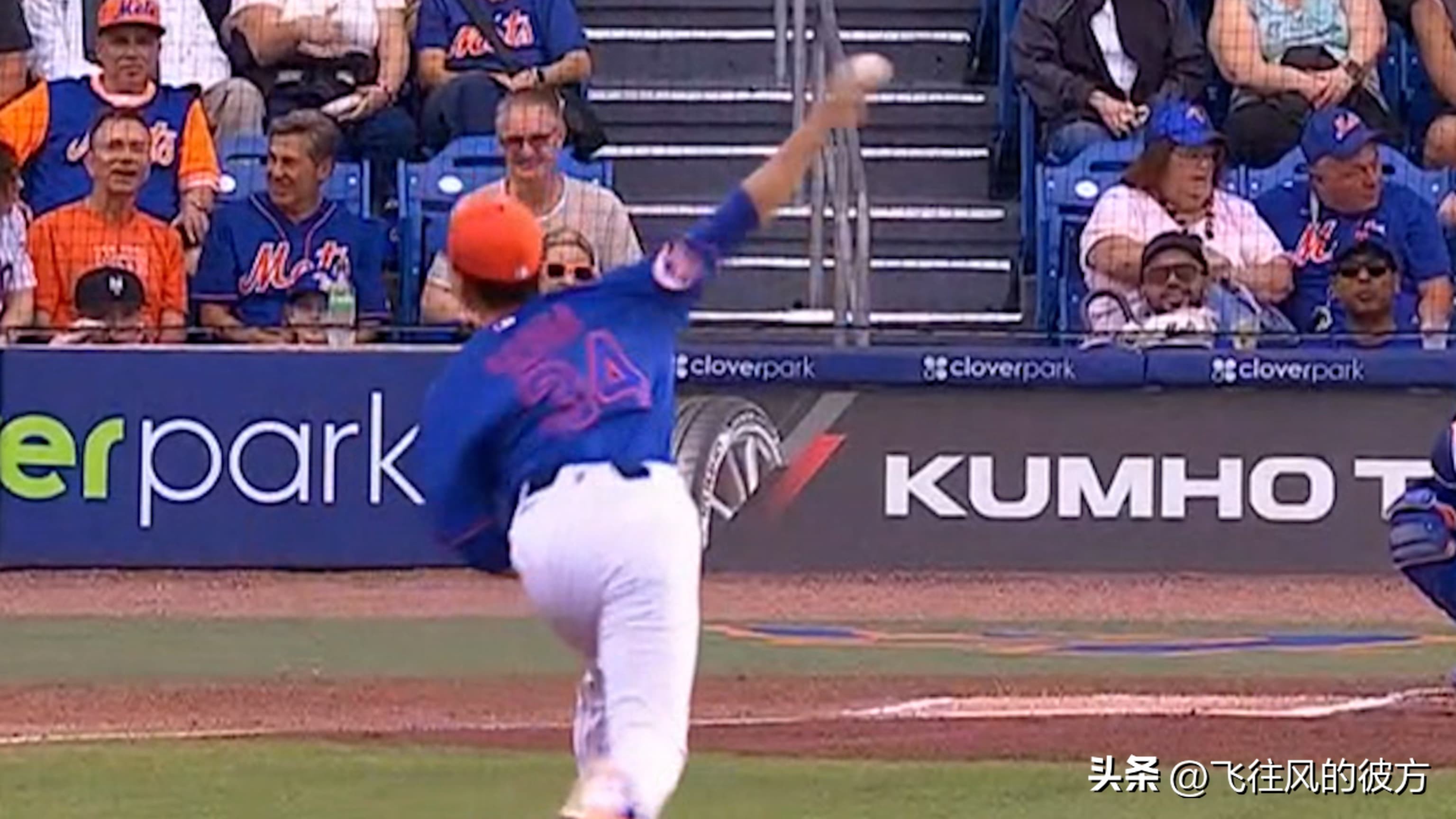
The exasperation occasionally experienced by New York Mets fans and the organization regarding Kodai Senga originates from his innate ability. When at his best, Senga is a dominant presence on the pitching mound, capable of throwing 99 mph and wielding one of the most lethal complementary pitches in baseball. During his worst phases, he falls short of qualifying for the major league lineup. He rarely settles anywhere between these polar opposites.
How far the Mets can go this year partly depends on which version of Senga takes the mound. If he performs as he did in today's 0-1 loss to the Miami Marlins, they will be in a pretty good position.
At Clover Park, Senga pitched three flawless innings against the Marlins, touching 99 mph with an average velocity of 97 mph, showcasing seven different pitches. His peak form left the Mets management in awe.
“I haven’t seen the best Senga,” said manager Carlos Mendoza, who has only witnessed Senga over the past two seasons. “Last year he was quite good, but we haven’t seen this version—with velocity, aggressiveness, and movement. There’s a lot of positive stuff there.”
Senga was in such good form that he needed to throw an additional 30 pitches in the bullpen to meet the prescribed workload.
“I am healthy,” Senga said via translator. “I believe that is the most important thing.”
For the first time in at least nine months, Senga feels this good. Last June, he strained his right hamstring after 13 starts with an ERA of just 1.47, altering the course of his entire season. Although Senga returned to the mound a month later, he was a different pitcher, posting a 5.90 ERA over his next nine appearances. His velocity dropped, and he lamented his inability to maintain consistent mechanics. By September, things deteriorated so much that Senga agreed to a minor league assignment and never returned to the majors.
This pattern feels familiar in his Mets career. In 2023, Senga was an All-Star, appearing fully worthy of his five-year, $75 million contract. In 2024, shoulder and calf injuries ruined his season, disrupted his pitching mechanics, and prevented him from regaining his form. Early in 2025, Senga seemed close to normal until a hamstring injury and the resulting mechanical issues derailed him again.
This rocky journey raised doubts that Senga might never return to his former self. But he has since worked hard to quiet those concerns, rediscovering his velocity and confidence throughout this spring training.
Senga mentioned today that during the offseason he focused on “getting every part of my body back to where it should be, connecting the brain and body parts so they can move correctly.” This appears to have worked. The Mets have also renewed their high hopes for Senga, with Mendoza stating he has proven himself worthy of being part of the six-man rotation at the start of the season.
“I want him to continue being the person who showed up on Day One—with a smile on his face,” Mendoza said. “He is healthy. But as for what we need to see? We need to see someone who can go out and pitch, give us a chance to win, and when he’s healthy, he can do that.”
Senga indeed seems to have rediscovered the joy. In the second inning on Friday, a 67.8 mph curveball appeared to miss outside—the second slowest pitch he has thrown in his MLB career. As the crowd at Clover Park murmured, catcher Luis Torrens seized the opportunity to challenge via the ABS system, causing Senga to grin. When the call was overturned, resulting in a strikeout, Senga began laughing. Asked about it postgame, Senga smiled again. “Torrens has good eyes,” he quipped.



 Links
Links
 Contact
Address:UNIT 1804 SOUTH BANK TOWER, 55 UPPER GROUND,LONDON ENGLAND SE1 9E
Number:+85259695367
E-mali:[email protected]
 App
App


