



Verlander's Detroit return debut proves challenging as Tigers fall to Diamondbacks


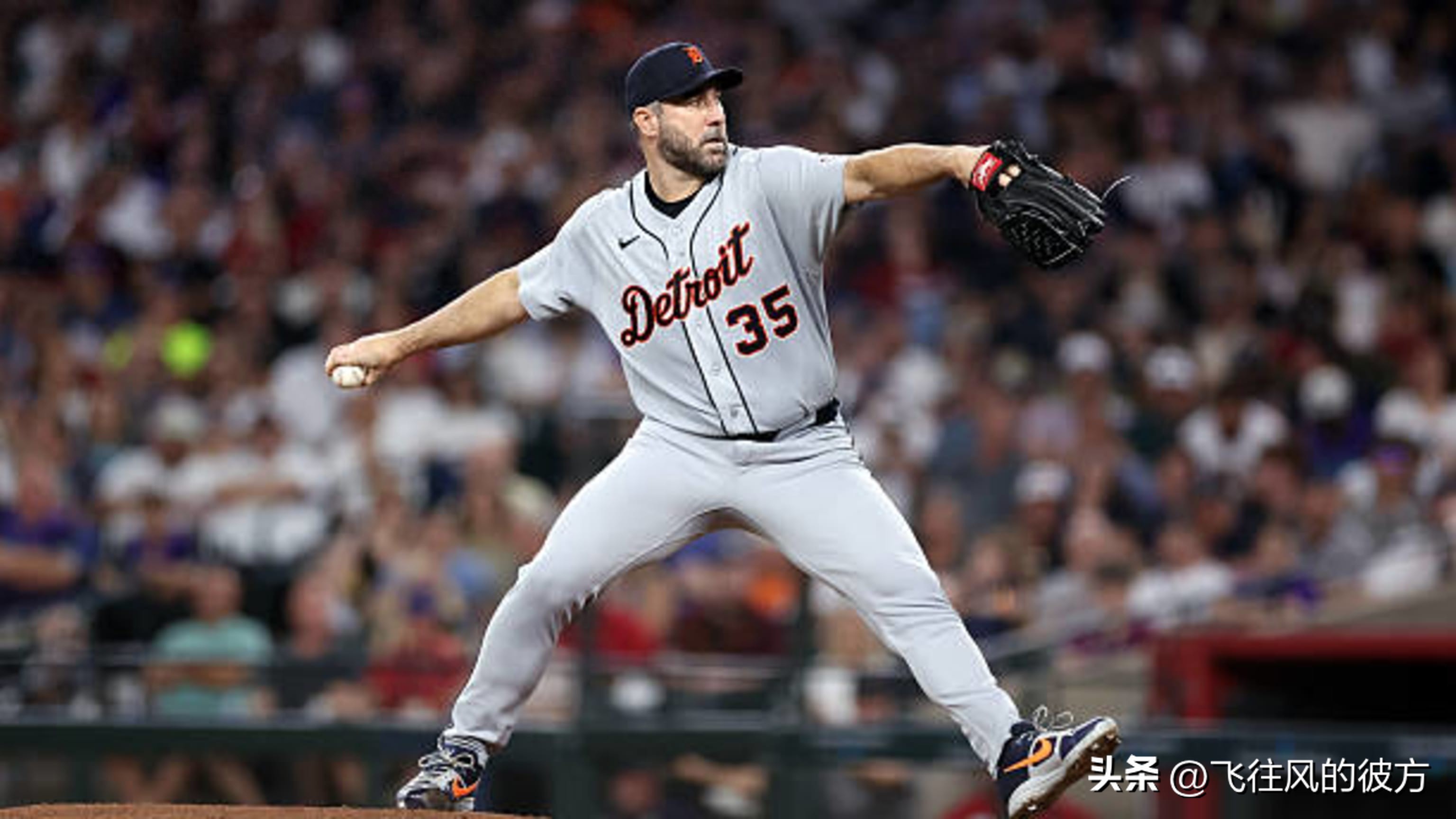
Justin Verlander maintained his serious demeanor, headphones on and fully concentrated while walking to the field. This is one of the iconic images from his illustrious career, reflecting his deep thought and dedication to the game.
"Today we'll give him a little space," manager A.J. Hinch said before the game. "Considering he's wearing headphones and is highly focused."
However, his pitching performance later at Chase Field was far from classic. Verlander turned to watch Corbin Carroll's three-run homer fly over the wall, then shook his head and looked down. His slider, which seemed to be a decent secondary pitch early in the game, vanished at the worst moment, allowing the Diamondbacks to take a five-run lead in the second inning with two outs and two runners on base.
In the fourth inning, leaning against the dugout railing after recording 11 outs and facing eight runners, he was pulled. He briefly discussed with Hinch the issues he encountered on the mound. He was already contemplating solutions.
This wasn't the script for Verlander's return to the Detroit Tigers. But reunions, no matter how perfect they may seem, don't always follow the script.
"Obviously this wasn't the result I wanted, and I'm more disappointed with myself than anyone else," Verlander said after the Tigers' 6-9 loss to the Diamondbacks. "As I've done throughout my career, I'll go back and think about what went wrong, how to fix it, why it happened, and then prepare for the next game."
When Verlander took the mound today, it was 3135 days since his last regular-season start for the Tigers (August 30, 2017). He joined Don Sutton as one of only two pitchers in MLB history to make at least 380 starts for their original team, then make 175 starts for other teams, and return to start again for their original team. Sutton, like Verlander, re-signed with his original team at age 43, returning to the Dodgers in 1988 after seven years with other clubs. Sutton made three starts in the Dodgers' rotation before securing his first win back in Los Angeles.
Today's game served as a reminder that bringing back Verlander doesn't mean regaining his peak-era 99 mph fastball, sharp curveball, and slider. During spring training, Verlander worked hard to adjust his arsenal, not just his fastball velocity but his overall condition. He made progress, but by the end of spring training he was still hoping regular-season adrenaline would help him complete the final adjustments.
From Verlander's first pitch, it was a struggle. Ketel Marte led off with a line-drive single, and after Carroll battled through seven pitches (including a wild pitch), he launched a 94 mph fastball onto the right-field wall for an RBI triple. Carroll later scored on a fielder's choice, but Verlander stabilized and ended the 28-pitch first inning.
In the next inning, consecutive one-out hits from the bottom of the order put Verlander in trouble again. Shortstop Javier Báez made a diving catch on Marte's fly ball in shallow left field, giving Verlander a much-needed out. But Carroll seized an inside slider, crushing a 403-foot homer to right field, putting the Tigers down 0-5.
Carroll joined former Twins and Nationals speedster Denard Span as one of only two MLB players to hit both a triple and a home run off Verlander in the same game. Span frequently troubled the Tigers during his Minnesota days, but his game against Verlander occurred on August 9, 2018, when Verlander was with the Astros and Span was with the Mariners.
Verlander then retired six of the next seven batters, leaving Gabriel Moreno stranded after a leadoff double in the third. But in the fourth, after a two-out walk to Matt, Hinch emerged from the dugout to make the change. There was no protest like in Verlander's earlier years, only disappointment over the game slipping away.
"Later in the game, I felt my control of the fastball started to improve a bit, which is good," Verlander said. "But they had too many good swings on most of my pitches. That needs to be corrected."
Verlander started this game for 3.2 innings, allowing 6 hits and 5 runs, with two walks. His strikeout of Alek Thomas was the only strikeout of the game and one of the few flashes of his classic curveball. His average fastball velocity was 93.2 mph, but it generated 11 called strikes. Four of his six swing-and-misses came from the slider.
"It's just one game," Verlander said. "One thing I'm good at is staying objective. I won't sit here and say spring training was fine and today was just bad luck. I don't think I can sustain pitching like I did today. If hitters are handling me like that, I need to be sharper."
Catcher Dillon Dingler said: "I think some pitches just didn't land where he wanted them, and instead ended up in their sweet spots... Obviously he's thinking about something different, his mechanics or something. But I believe the issue was execution."
During spring training, Verlander mentally prepared himself that his quest for better form (including velocity) might extend into the season. Even in his best years, he sometimes adjusted through April, consolidated in May, and then surged into summer. His next start could be one of the most adrenaline-filled regular-season games in years—returning to Comerica Park for a nationally televised Sunday night game against the Cardinals.


Wonderfulshortvideo
she came to say WASSUP 🖤 Todo el mundo ama a Young Miko


I love you Dominican Republic 🇩🇴🙌🏻❤️.
El mejor equipo y el que más se goza 🤣🇩🇴: arriba RD. 🇩🇴
Run it back, YEONJUN!
Venezuela 🇻🇪 vs Italia 🇮🇹…( felicidades Venezuela, Dominicana 🇩🇴 puso todas la Esperanza y fuerza en ustedes ) 🙌🏻🙏.
Venezuela elimina ah Japan 🇯🇵👀🚨.
Venezuela se corona 👑 Campeon del classico mundial 2026 🤯🇻🇪🚨.
 Links
Links
 Contact
Address:UNIT 1804 SOUTH BANK TOWER, 55 UPPER GROUND,LONDON ENGLAND SE1 9E
Number:+85259695367
E-mali:[email protected]
 App
App


