



Unveiling the Clippers' comeback secret: Kawhi's relentless dedication mirrors Kobe, Harden's confidence unleashes his full potential



On January 31st Beijing time, the Clippers have secured 16 victories out of their last 19 games, standing as the NBA’s most in-form team. From early-season struggles to their current strength, what drives the Clippers’ resurgence? ESPN’s analysis points to Leonard as the key, whose determination mirrors Kobe’s, while teammate Harden’s confidence maximizes Leonard’s overall performance. Here is the detailed content—
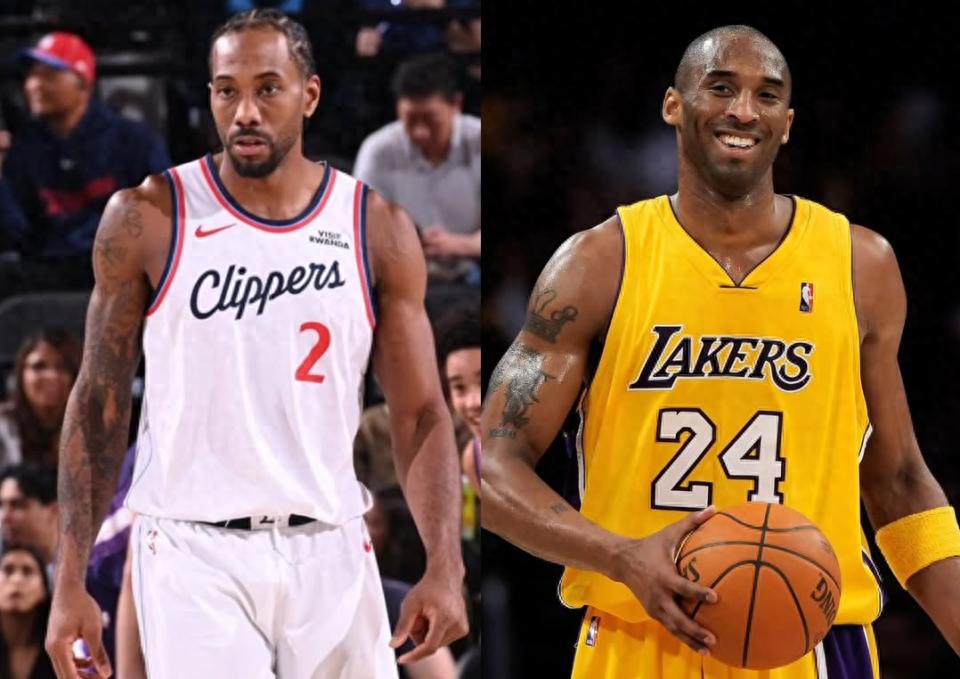

Clippers assistant coach Brian Shaw usually avoids comparing anyone to Kobe Bryant. Yet, as one of the few in the league who both played alongside and coached Kobe, he is considered an authority on this subject despite his reluctance.
Shaw admitted he sees Kobe’s influence in a current NBA superstar’s recent performances. Since December 21, this player quietly topped the league in scoring and steals, leading the Clippers from early-season struggles to a rebirth — and that player is the Clippers’ cornerstone, Kawhi Leonard.“If I had to compare the Kobe I see,” Shaw told ESPN, “it’s the incredible professionalism both display once they make up their minds.”
Shaw can recount countless stories supporting this view, but the first that comes to mind is from Kobe’s early career. At that time, Shaw was a veteran sitting at the end of the Lakers’ bench. On January 7, 2003, the Lakers traveled to Seattle to face Gary Payton’s Supersonics.
“During pregame shooting practice,” Shaw recalled, “a local Seattle reporter told Kobe, ‘My daughter really likes your style, but she thinks you have a weakness — your three-point shot.’ Kobe turned to the reporter and insisted he tell his daughter to watch that night’s game.”
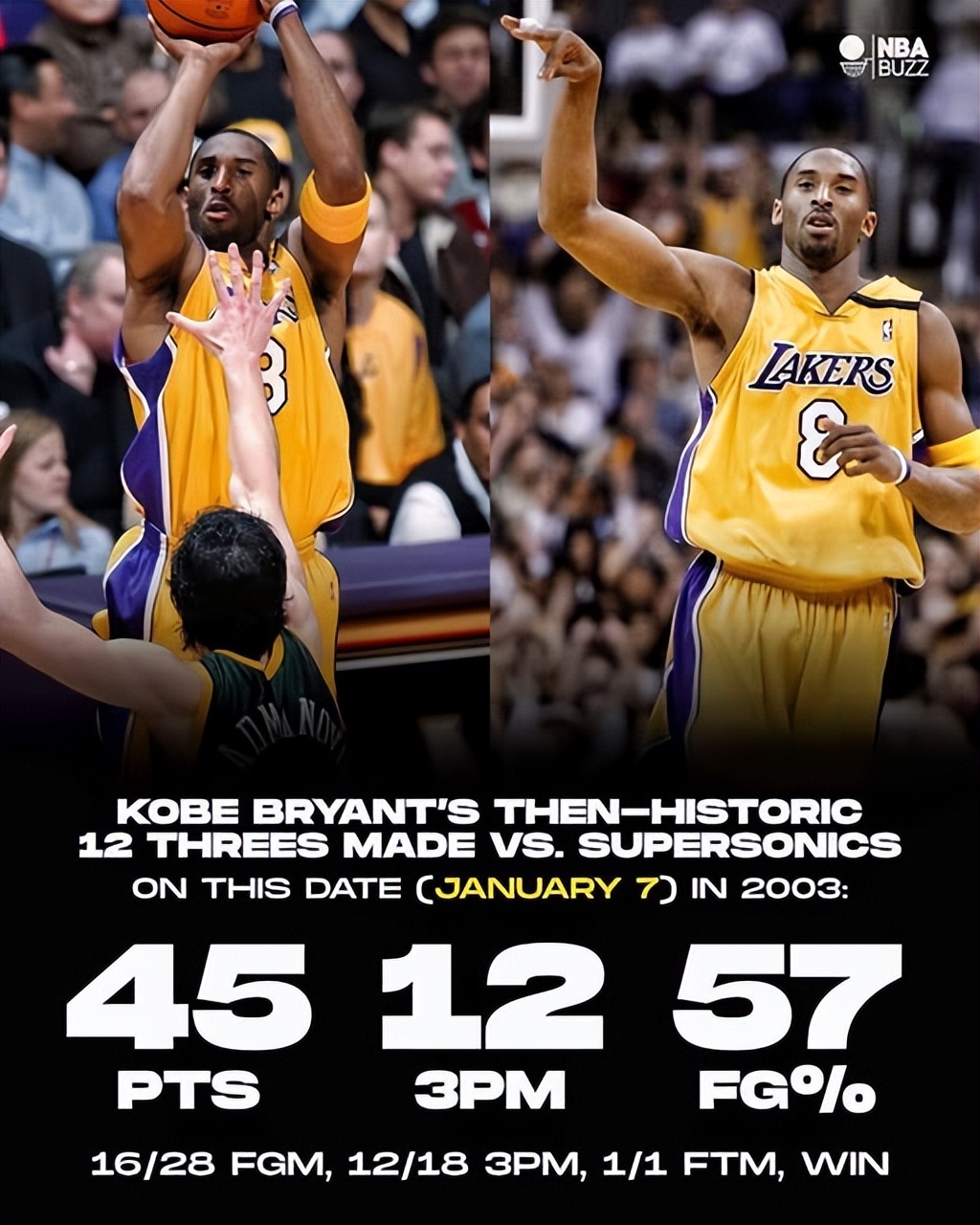
Shaw continued, “After that, Kobe stayed on the court, shooting threes from every spot one after another.”That night, Kobe made 12 three-pointers, setting an NBA record at the time.As Shaw explained, Kobe’s motivation was to “prove people wrong when they said he couldn’t do it.”
This brings us to today’s Leonard. Although his motivation differs from Kobe’s two decades ago, his relentless drive is identical, and the results are equally impressive. Back then, the Lakers won by 21 points; now, despite the Clippers’ dismal 6-21 start, they have transformed into the league’s hottest team.
The root cause is Leonard and his significant improvement in outside shooting.
For nearly two years, the Clippers’ coaching staff have encouraged Leonard to extend his shooting range. They know he’s comfortable with mid-range shots and prefers dominating inside the paint, but also realize that expanding his offensive threat beyond the arc would dramatically enhance the team’s offense. They also considered Leonard’s careful physical maintenance, hoping reducing his frequent inside contact would lower injury risks.
Assistant coach Chauncey Billups has been guiding Leonard’s training since his Spurs days. Head coach Tyronn Lue affectionately calls Billups Leonard’s “personal communicator,” as he always finds the right way to connect with Leonard, who willingly accepts his advice.
Finally, last December, when they discussed how Leonard, now in his thirties, should evolve his game and addressed the Clippers’ poor offensive performance, Leonard resolved to take on this responsibility.
“I told Lue, I’m going to shoot 12 threes per game,” Leonard recalled. “He asked how I planned to do it, and I just said, ‘Wait and see.’”
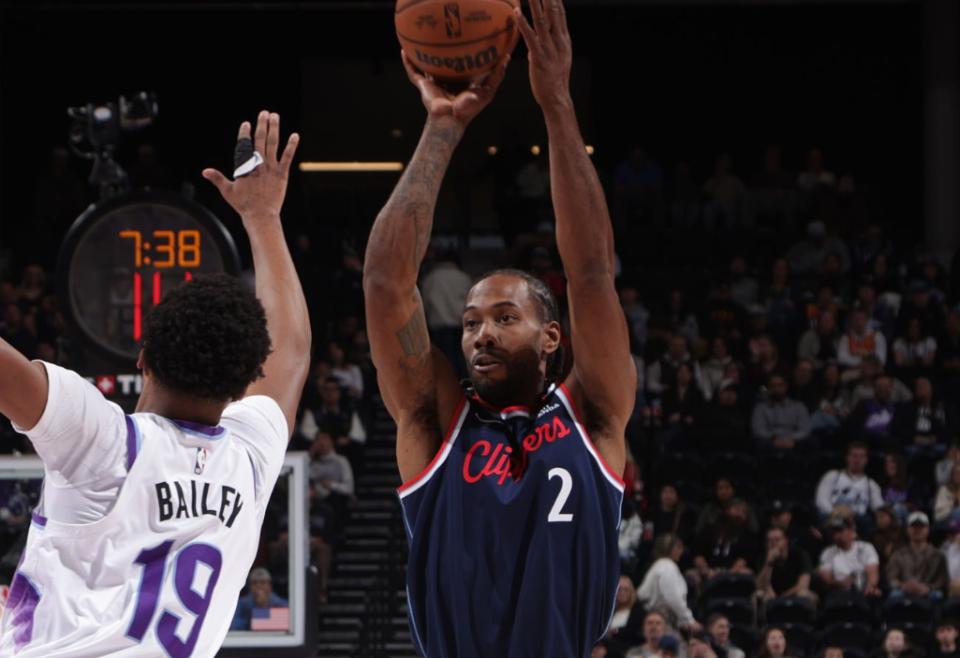
The rest unfolded like Kobe’s promise years ago in Seattle—Leonard followed through perfectly on his commitment.
This season, Leonard’s average three-point attempts per game reached a career-high seven. Since the December 21 win over the Lakers, where he took 12 threes in a single game, his average attempts have climbed to nearly nine per game.
Leonard explained he heeded Lue and Billups’ advice because the team was in dire straits and needed a fresh approach. “We were in a tough spot,” Leonard said, “so I wanted to find the team’s problem, and I believed increasing three-point attempts was the change we needed. Even if I missed, I’d keep shooting to encourage teammates to take shots regardless of their rhythm.”
Since Leonard decided to boost his outside shooting, the Clippers’ offense has come alive instantly.Before December 21, the Clippers ranked 23rd in offensive efficiency; afterward, Leonard’s three-point shooting percentage exceeded 43%. This forced defenders to extend coverage beyond the arc, creating more space for him and his teammates to drive or cut. The Clippers’ offensive efficiency soared to second in the league, scoring nearly 8 more points per 100 possessions, winning 16 of their last 19 games.
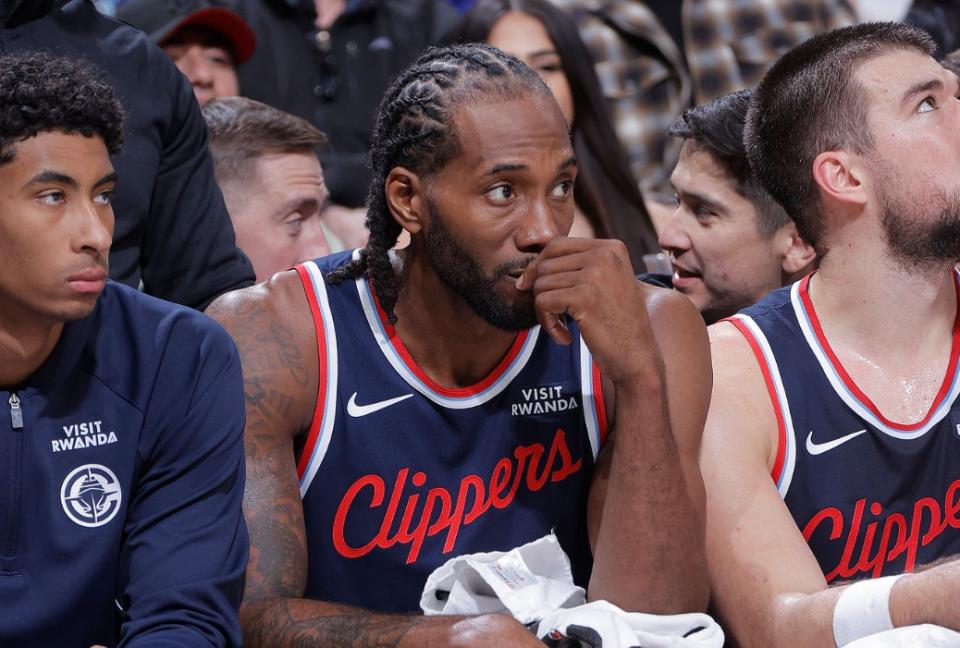
At the same time, this style has eased the strain on Leonard’s body.Leonard’s career has been defined by two extremes: dazzling elite performances and injuries that cripple the team. “Since I joined the Clippers’ coaching staff, Tyronn has been urging him to try easier scoring methods rather than forcing every attack,” Shaw said.
“Leonard already has top-tier professionalism and training discipline. Now, by increasing his three-point attempts and practicing daily with Jeremy (Billups), his focus is truly remarkable.”
When Leonard stays healthy and plays at this level, expectations for him and the Clippers’ season skyrocket. That’s why the Clippers’ 2019 gamble on Leonard has been heartbreakingly disappointing — because every year, he has stretches of health and dominance that give the team hope for a championship.
Since joining the Clippers in 2019, the team’s win rate exceeds 66% when Leonard plays, but drops to 49% when he’s absent.“This is my fifth season with the Clippers,” Shaw said, “and after seeing Leonard’s true ability, I believe if he and the team stay healthy all season, we have a chance to compete for the title every year.”
This is the eternal dilemma surrounding Leonard, one fundamentally unsolvable. When healthy, he remains one of the most influential players of this era; when injured, the Clippers’ fate is controlled by forces beyond their grasp or full understanding.
Harden’s locker is right next to Leonard’s. Recently, Harden has felt he might be Leonard’s closest teammate in his career. But that doesn’t mean they are close friends — in fact, neither has ever visited the other’s home in Los Angeles.
“I’m still trying to crack his ‘code,’” Harden told ESPN.
From shared experiences and empathy, Harden believes he might understand Leonard better than anyone else. “Being neighbors (locker-wise), I think I can unlock more of his potential than others,” Harden said. “Honestly, I even feel like,since he entered the league, I might be the teammate who brings out his full strength the most.”
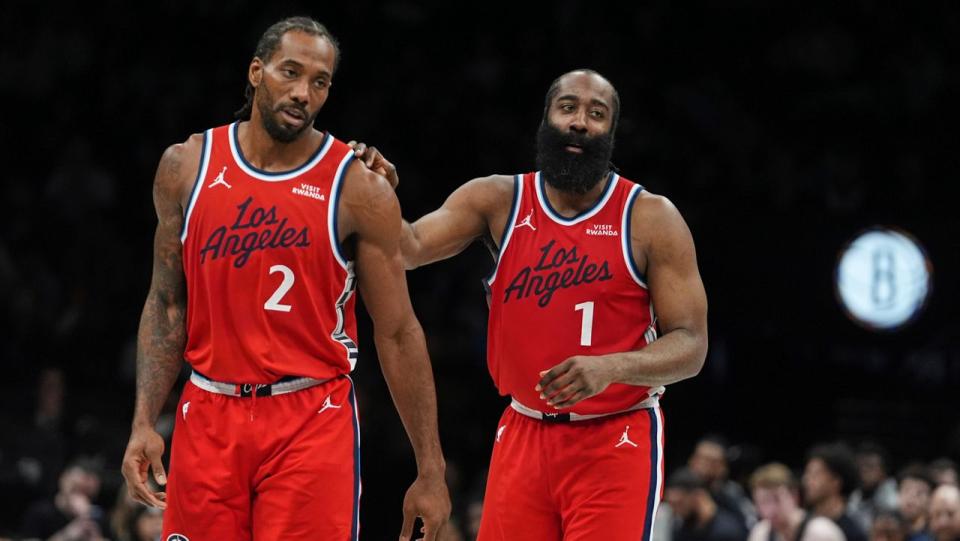
Tyronn Lue credits the Clippers’ recovery from the early-season slump to the combined efforts of Harden and Leonard.According to ESPN stats, among all pairs with at least 700 minutes played together, Harden and Leonard rank eighth in offensive efficiency; excluding the Nuggets’ duo, they rise to fourth.
From Harden’s perspective, Leonard’s entire world revolves around one core mission — optimizing every ounce of effort in his basketball career so that when the Clippers enter the fierce playoffs, he can be in peak physical condition.
Leonard never drinks sugary beverages and maintains an extremely healthy diet.During last year’s playoffs, he famously removed several Gatorade bottles from the podium at a postgame press conference, sparking widespread discussion. “Kids shouldn’t be drinking that stuff,” he said at the time.
In October last year, he invited 30 local high school students to the Clippers’ home arena for a mindfulness meditation event that included gentle yoga and sound bath therapy. Demonstrating the Reverse Warrior yoga pose, Leonard told the students, “If you practice daily, muscle soreness and discomfort will gradually fade away.”
The words sound simple and plain, but Leonard seems to believe deeply in them — or at least hopes they will one day apply to him.
“Most people don’t have the mental strength to return to the court repeatedly after so many injuries; they give up early,” Harden said. “But Leonard keeps pushing.”
While praising his teammate, Harden glanced at Leonard’s locker. On the top shelf sat six elegant bottled waters. Upon closer inspection, these glass bottles contained water from a brand called Harschstein, a premium alkaline water sourced from the Austrian Alps, retailing at $71 for six bottles.
“This is the best water in the world,” Leonard told ESPN. “It’s naturally alkaline with no artificial processes to raise pH. Packaged in glass bottles, it avoids plastic pollution or harmful substances.”
Leonard’s preference for alkaline water dates back to his Spurs days. He especially enjoys heating it and mixing in lime juice.
“Being around him, I learn something new every day,” Harden said. “I’m not sure if he tries to be mysterious on purpose, but I think that’s just who he is. Some people prefer to stay out of the public eye, deliberately keeping others from knowing too much.”
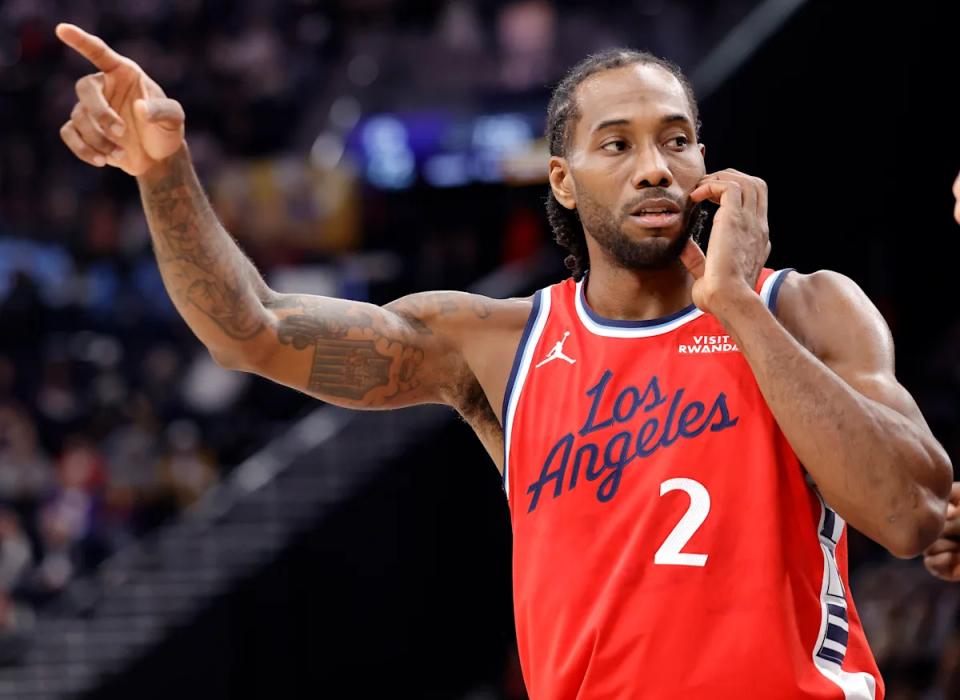
Throughout Leonard’s injury-interrupted career, one thing has never changed: teammates and staff have never questioned his professionalism or the effort he puts into returning to the court — from meditation and yoga to drinking expensive natural alkaline water. “He truly loves basketball,” Harden said, “and he fights with all his might to keep playing.”
At least so far, his efforts have not been in vain.Since the December 21 game, among players with over 500 minutes played, Leonard ranks first in net efficiency in the league.
But as with every year, the ultimate question about Leonard and the Clippers remains unresolved: how long can this hot streak last?


Wonderfulshortvideo
Steph & LaMelo shot the lights out 🤩


Who’s the most famous person in Snoop’s phone?
"It's the shhh with a hyphen." More Slovenian lessons 😂
Jaxson Hayes really brought out the eastbay slam 😱
Short… SIKE
What a FANTASTIC FINISH by the @Phoenix Suns 🤩
ON CUE 🎶 Happy Birthday LeBron James 🎶
 Links
Links
 Contact
Address:UNIT 1804 SOUTH BANK TOWER, 55 UPPER GROUND,LONDON ENGLAND SE1 9E
Number:+85259695367
E-mali:[email protected]
 App
App


