



ESPN's Trade Deadline Review: Three Teams Emerge as Big Winners, Mavericks' Former GM Clearly the Loser



On February 6th Beijing time, ESPN reviewed the just-finished trade deadline, evaluating the winners and losers. From their perspective, the Cavaliers, Thunder, and Grizzlies stood out as the main beneficiaries, whereas Anthony Davis’s declining worth after moving to the Wizards marked Mavericks’ ex-GM Harrison, who had traded Doncic for him, as a definite loser.
Trade Deadline Winners —
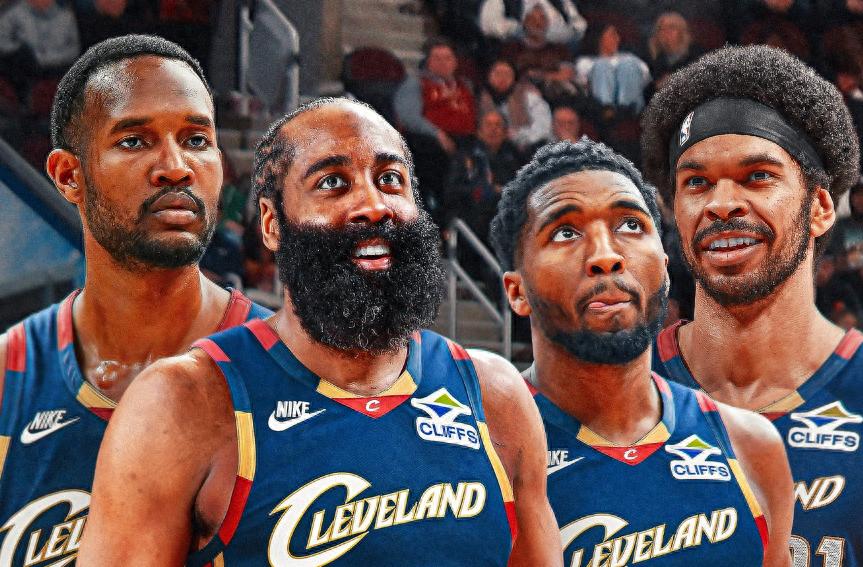
Cleveland Cavaliers
The Cavaliers have finally staged a strong comeback, posting a 9-2 record after starting the season 22-19. This team, once considered an Eastern Conference contender before the season, upgraded their roster at the deadline. Among the 11 Cavaliers players who have logged at least 500 minutes this season, the three with the worst net efficiency ratings were Darius Garland (-3.0), De'Andre Hunter (-0.9), and Lonzo Ball (+1.3). All three have now departed, replaced by James Harden, Caris LeVert, and Dennis Schröder.
Trading 26-year-old Garland for 36-year-old Harden might cost the Cavaliers in future seasons, but for now, Harden is undeniably more skilled and healthier than the former Cavalier point guard. He can also ease Donovan Mitchell’s offensive burden—Mitchell’s usage rate this season is the highest since his Utah days. Harden’s weaknesses are somewhat similar to Garland’s: neither is a highly committed defender, though Harden is taller; both have inconsistent playoff performances.
Other acquisitions at the deadline will strengthen the Cavaliers’ lineup. LeVert is the team's best defensive player in the backcourt, while Schröder serves as an “X-factor” — his recent form has fluctuated, but he might help the Cavaliers regain efficiency.
Additionally, according to ESPN’s Bobby Marks, by trading away Hunter and Ball and bringing in these two players, the Cavaliers expect to save roughly $100 million in luxury tax expenses. For a championship contender to become stronger and more cost-effective at the deadline is undoubtedly a remarkable move.
Memphis Grizzlies
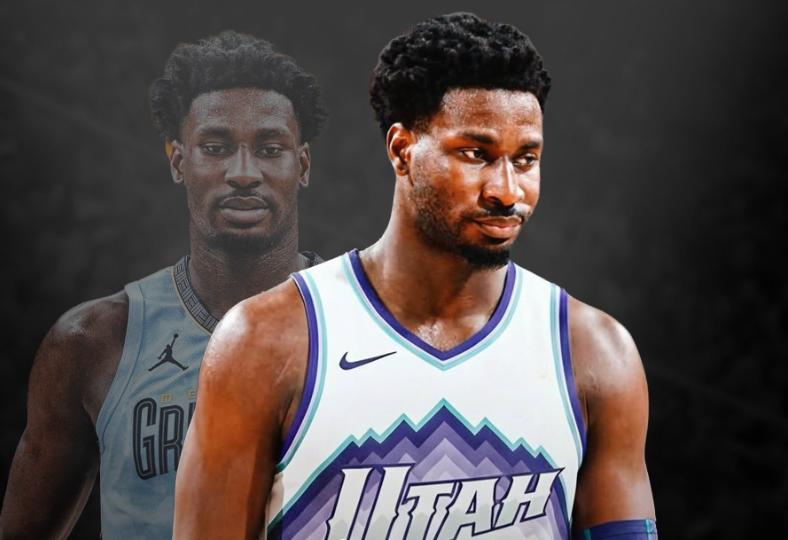
On the other side of the Jackson trade, the Grizzlies have excelled in two key rebuilding moves. Last summer, they traded Desmond Bane for four first-round picks and a pick swap option—which was a solid return for a player who never made an All-Star team. Then, they used two of those picks to draft rookie Walker Kessler.
Eight months later, the Grizzlies exchanged Jackson for three draft picks and several promising young players, including the 18th pick in 2025, Walter Clayton II. Talent-wise, Jackson, a two-time All-Star and Defensive Player of the Year, has a higher ceiling than Bane, but his performance this season has dipped. If Jackson is “good but not elite” on both ends, his upcoming four-year $205 million extension looks overpriced.
Of course, the Grizzlies’ rebuild is far from over; they still must address Ja Morant’s future. But the core trio of Morant, Bane, and Jackson has only ever won one playoff series and clearly reached its limit. The Grizzlies chose to act proactively, trading Bane and Jackson at their peak value, and now hold some of the league’s richest future draft assets.
By the way, I’ve seen some criticism that the Grizzlies didn’t get good picks in the Jackson trade: they will receive the Lakers’ 2027 pick protected for the top four, the best of the Jazz/Wolves/Cavaliers 2027 picks, and the Suns’ 2031 pick.
But it’s too early to judge. First, although the Suns have improved this season, the value of a 2031 pick is unpredictable—five years from now, team strength is impossible to forecast. Second, even with Jackson, the Jazz are likely only a play-in team in 2026-27 and might give the Grizzlies a lottery pick next year (despite the overall draft class being considered weak).
Oklahoma City Thunder
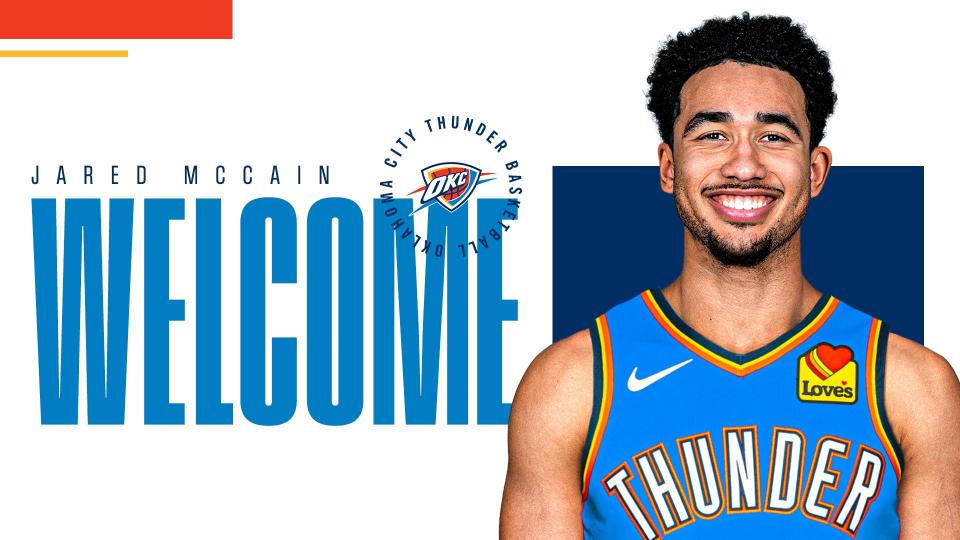
Despite a flurry of trades this week, the 2026 championship race landscape remains largely unchanged — which is good news for the Thunder, a title contender.
Top players who changed teams this season include Davis, Harden, Zubac, Jackson, Yang, Garland, and Porzingis (if healthy). Their new teams are either out of playoff contention or on the Western Conference play-in bubble; only the Cavaliers are Eastern contenders.
Meanwhile, the Nuggets avoided luxury tax with a minor trade, the Spurs and Rockets stayed put, and the Lakers only added Kessler (who improves outside shooting but cannot fix the league’s 24th-ranked defense). For the Timberwolves, Ayo Dosunmu fits well alongside Anthony Edwards and Jaden McDaniels, but overall, no Western team challenging the Thunder poses a greater threat than a week ago.
The Thunder themselves made a savvy deal, acquiring Jarred McNeill with a pick likely around 20th overall (from the Rockets). If McNeill had played more than 23 games last season, he might have been Rookie of the Year. Though his performance dipped in his second season due to knee and thumb surgeries, the Thunder got a high-potential player on a cheap rookie contract, which will be crucial in the coming years—especially as extensions for Alexander, Jalen Williams, and Holmgren will tighten roster depth.
Finally, the Thunder’s 2026 draft outlook improved. Although they gave up a late first-round pick, the Clippers—owing them an unprotected pick—have weakened after trading Harden and Zubac, making a lottery pick more likely; and the Jazz—owing them a top-eight protected pick—have improved with Jackson, increasing the chance of sending a pick (though they will try hard to keep it).
The only bad news for the Thunder this week isn’t trade-related: Alexander will miss at least until the All-Star break due to an abdominal strain. The Thunder have four games before the break and currently lead the Spurs by five games in the West and the Pistons by 1.5 games in the East.
Trade Deadline Loser —
Mavericks’ Former GM Harrison
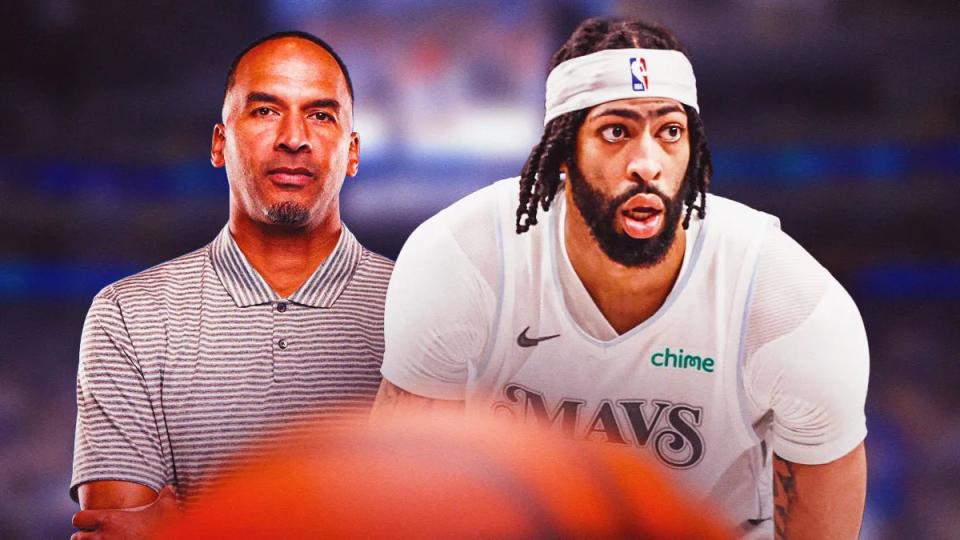
This former GM, who has already lost face, suffered further damage as his old team received minimal returns in the Davis trade. Just a year ago, Harrison shocked the league by trading for Luka Doncic and considered Davis the centerpiece of that deal. Now, the Mavericks swapped Harrison’s “favorite” for Khris Middleton, AJ Johnson, Malaki Branham, Marvin Bagley III, the Thunder’s 2026 first-round pick (likely 30th), the Warriors’ 2030 first-round pick (only 21-30 protected), and three second-round picks.
In other words, they essentially traded a generational superstar for a rotation player (Max Christie), two low-value first-round picks, and an uncertain first-round pick (from the Lakers in 2029). This return is roughly comparable to what the Grizzlies got for Jaren Jackson Jr.


Wonderfulshortvideo
Who’s the most famous person in Snoop’s phone?


"It's the shhh with a hyphen." More Slovenian lessons 😂
Jaxson Hayes really brought out the eastbay slam 😱
This was too tough 💪 💥
Wemby drains the tough middy 🔥
LeBron throws it down! 😤
WIZARDRY. Didn't count.... but watch Steph just casually hit this lefty hook from the floor 🥱
 Links
Links
 Contact
Address:UNIT 1804 SOUTH BANK TOWER, 55 UPPER GROUND,LONDON ENGLAND SE1 9E
Number:+85259695367
E-mali:[email protected]
 App
App


