



Half despair, half carnival! The sober reality behind the Chinese men's basketball team's comeback victory over Japan




When the final buzzer sounded at the Okinawa Arena in Japan, and the Chinese men's basketball team secured its first win in this World Cup qualifying round with an 87-80 comeback against the host team Japan, the excitement and relief felt by fans were powerful enough to transcend all distances. For a team mired in a prolonged slump, this against-all-odds victory carries a weight comparable to the classic battles of the 2015 Asian Championship—the comeback against South Korea and the final triumph over Iran.
No one could have anticipated that this "must-win"生死战 would unfold with such dramatic twists. A sluggish start saw China trailing 11-21 after the first quarter, shooting a mere 31.25% from the field and missing all four three-point attempts. Their defense was consistently outmaneuvered by Japan's quick ball movement and perimeter shooting, leaving the team completely被动 in terms of pace. By halftime, the 33-47 deficit—a 14-point gap—plunged countless fans watching from behind screens into despair. Comments sections were flooded with frustration and doubt. No one dared to believe that this squad, which had trained intensively through the Spring Festival holiday, could deliver such a disjointed and lackluster performance in the first half.
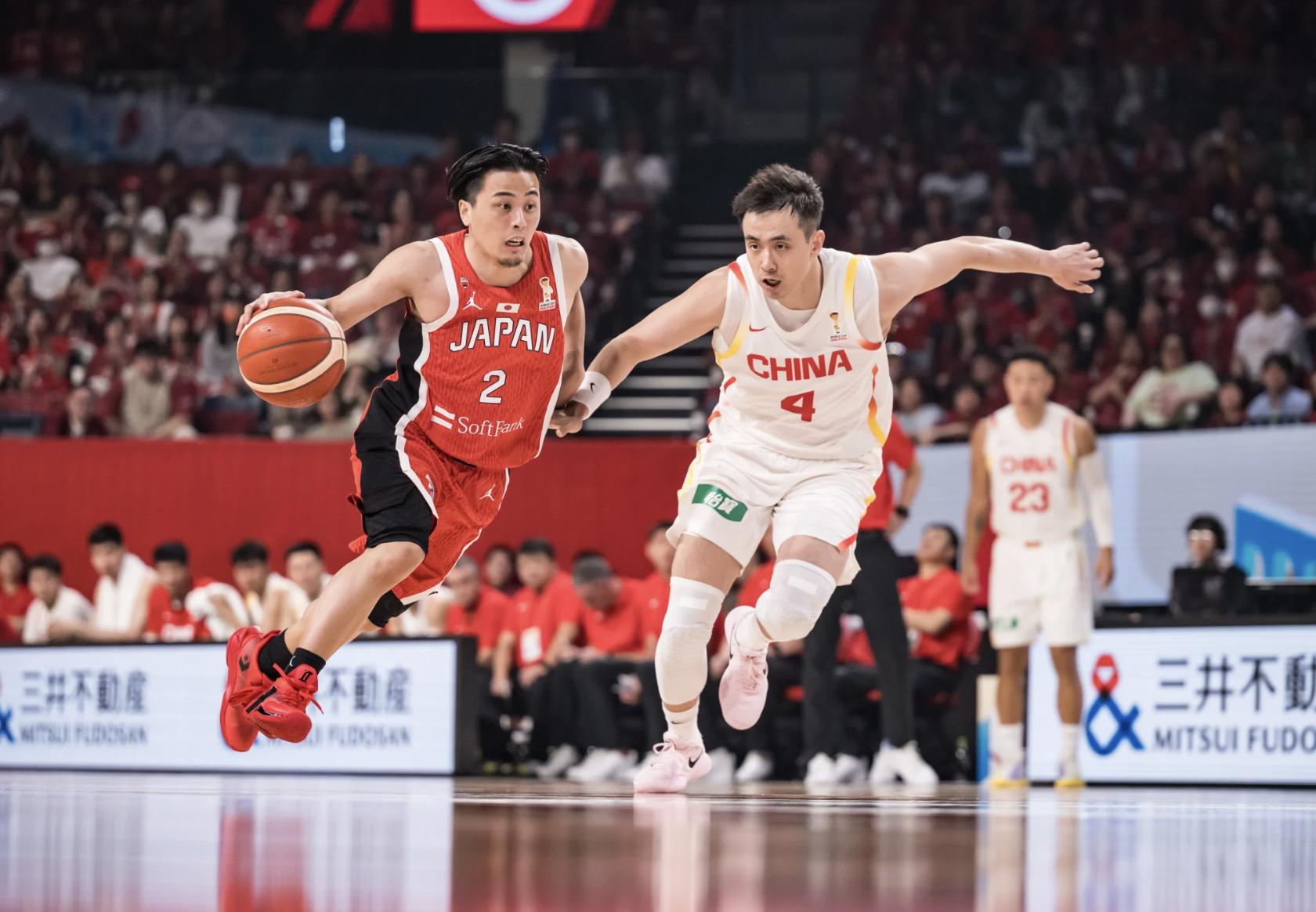
In dire straits, what is tested is never just talent, but resilience and the capacity for adjustment—this time, the Chinese men's basketball team did not disappoint. During halftime, Coach Guo Shiqiang's tactical adjustments precisely targeted the opponent's weaknesses: defensively, intensifying double-teams and pressure on key players like Yuta Watanabe, employing aggressive switching to disrupt Japan's passing lanes; offensively, encouraging players to shed their inhibitions, shoot with confidence, reigniting their outside shooting, while accelerating transition play to better integrate interior and perimeter attacks. These tactical shifts quickly ignited the players' fighting spirit and awakened the team's characteristic "emotional combat effectiveness"—the Chinese men's basketball team has always thrived on playing with high emotion. Once their offensive engine started, their defensive confidence soared accordingly.
After the excitement, it is crucial to maintain a degree of sobriety and rationality. Beyond the celebration, a pointed question remains unavoidable: after extensive training and preparation through the Spring Festival holiday, why did the Chinese men's basketball team perform so poorly and chaotically in the first half? Why must we repeatedly find ourselves relying on "against-all-odds comebacks" instead of possessing the steady confidence to "win convincingly"?

What deserves even more attention is that in another Group B match, the Chinese Taipei men's basketball team pulled off an upset victory over South Korea. This result makes the group's qualification picture increasingly complex and微妙. The upcoming match against Chinese Taipei on March 1st is similarly a must-win生死战 with no room for error.
We certainly feel exhilarated by the热血 nature of this comeback and moved by the team's refusal to give up. However, what we long for is not the侥幸 of "snatching victory from the jaws of defeat," but the从容 assurance that comes from "overwhelming strength." An occasional comeback demonstrates resilience, but consistently relying on comebacks only exposes fundamental flaws—slow starts, inconsistent execution of tactics, and mental fragility. If these issues are not addressed promptly, the team will ultimately pay the price when facing stronger opponents in the future.
This comeback victory over Japan represents both redemption and a warning. It allows us to see the potential and tenacity of the Chinese men's basketball team, while also revealing the shortcomings that still exist within the squad.


Wonderfulshortvideo
User ceshi has posted a video.


 Links
Links
 Contact
Address:UNIT 1804 SOUTH BANK TOWER, 55 UPPER GROUND,LONDON ENGLAND SE1 9E
Number:+85259695367
E-mali:[email protected]
 App
App


