



Are Lakers More Successful Without LeBron James? Data Analysis Reveals Worst Five-Man Unit: Trio Incompatibility Might Be Key Reason



On March 13 Beijing time, discussions about LeBron James and the Los Angeles Lakers have surged, particularly regarding the team's performance when he is absent. After the Lakers defeated the Timberwolves 120-106 without James, Timberwolves coach Finch also addressed this topic. It's easy to jump to the conclusion: the Lakers have recently performed more successfully without James.
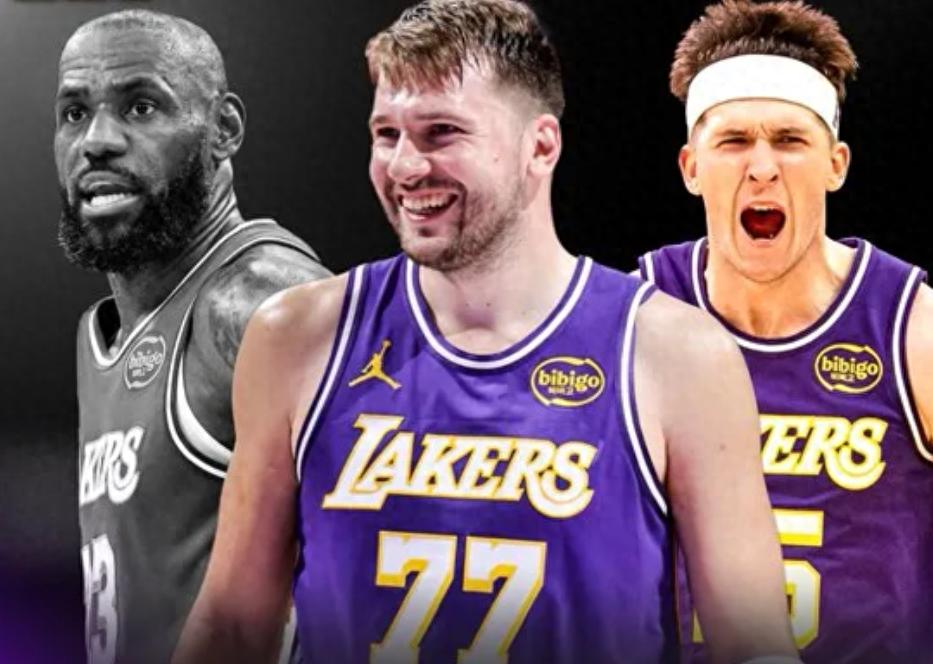
It's noteworthy that the Lakers have won three consecutive games, all achieved without James, including victories against strong opponents like the Knicks and Timberwolves.This season, the Lakers have a record of 14 wins and 7 losses without James, a 66% win rate, equivalent to about 56 wins over a full 82-game season. When James plays, the Lakers are 26-18, a 59% win rate, equivalent to roughly 49 wins.
More notably, this is the second consecutive season where the Lakers have a negative net rating per 100 possessions when James is on the court.
This season: When James is on court, team net rating per 100 possessions is -2.0
2024-25 season: When James is on court, team net rating per 100 possessions is -5.3
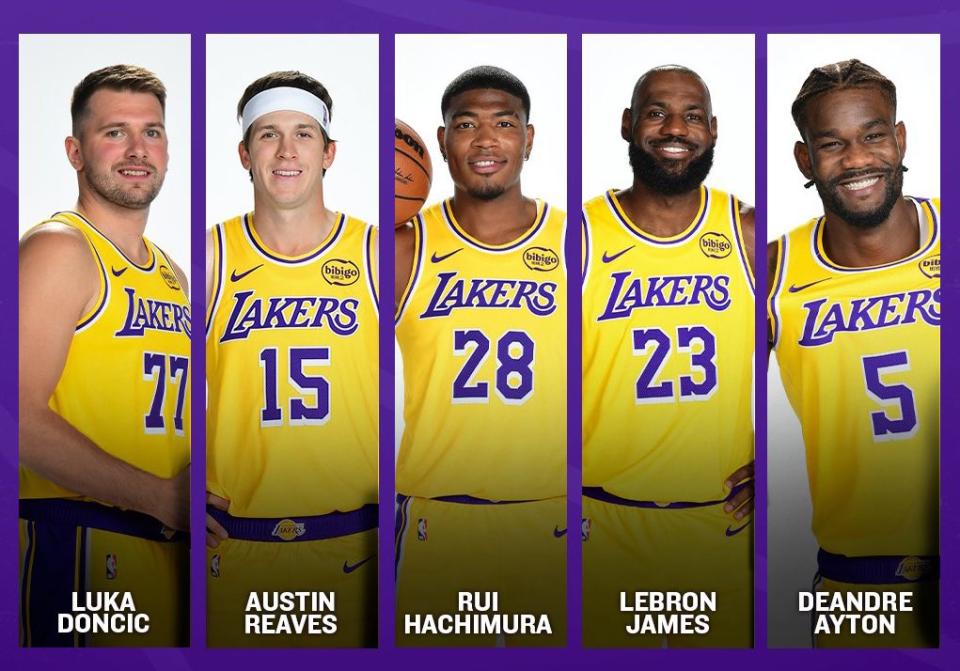
Looking at lineup data, the picture is even more striking:The Lakers' current starting five of James + Doncic + Reaves + Ayton + Hachimura is the worst five-man unit James has played with since complete data tracking began in the 2007-08 season.This unit's net efficiency when playing together is -3.9, the worst in 19 years (only combinations with at least 10 games and 20+ minutes are considered).
Before this season, James' career-worst five-man unit was: James, Joe Smith, Pavlovic, Delonte West, Varejao, with a net efficiency of -2.8.
In terms of cumulative plus-minus, this current Lakers five-man unit: -47, the worst in James' recorded career. Second worst: James, Mo Williams, Anthony Parker, JJ Hickson, Shaq, cumulative -43.
What does this data indicate? Are the Lakers better without James now?
The performance of this five-man unit is worse than that of the old Cavaliers unit with West and Pavlovic,
This suggests: The Lakers' current roster structure is inherently awkward—there are too many primary ball-handlers.After all, when in his career has James needed to share the ball with dual primary creators like Doncic and Reaves?
Cavaliers 1.0: Almost no supporting stars
Heat: Had Wade, but Bosh was the tertiary off-ball option
Cavaliers 2.0: Had Irving, but no tertiary ball-handler like Reaves; Love played the Bosh role
Early Lakers: Davis perfectly played the secondary role; championship didn't require a strong tertiary ball-handler
So the issue might be simple:
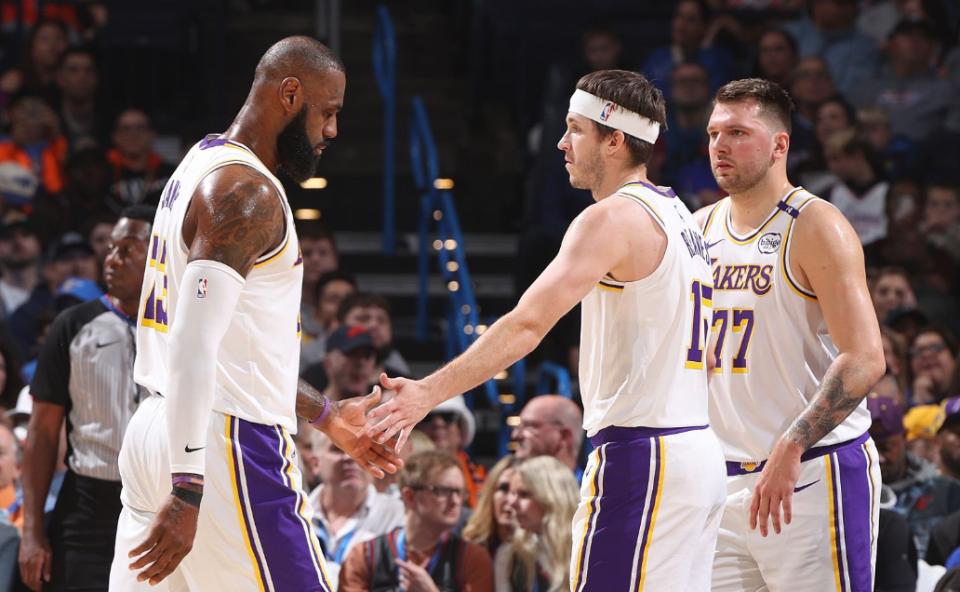
James, Doncic, and Reaves are incompatible.
A classic case of too many chefs, not enough ball—all three need the ball to maximize their impact, and the trio's defense can only be described as mediocre.
Such a five-man unit struggles to be effective.
Another possibility: James is finally showing age-related decline.
Despite his long battle against time, he is now 41, with regular-season minutes reaching a historic NBA record of 60,497 (excluding playoffs and international games).
This season's BPM (3.1): Worst since his rookie season at age 19
WS/48 (0.118): Second worst in his career
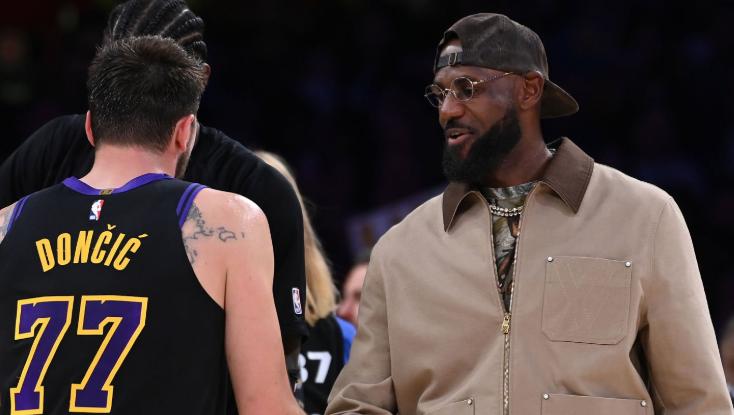
This worst five-man unit in nearly 20 years might also indicate: James is no longer the player he once was, which is understandable given his age. But then again, we've learned never to underestimate James.
Perhaps upon his return from injury, he can improve his current 31.3% three-point shooting, play better off-ball, and the Lakers' starting unit net efficiency will recover, rendering all this discussion meaningless.


Wonderfulshortvideo
@Keegan-Michael Key mic’d up during the @RUFFLES Celeb Game 😂 😂 😂


Players and coaches were honored to have President Barack Obama in the building for the 2026 NBA All-Star Game
Listen as the crowd roars at the sight of Tatum’s first run out this season! 🤩
Replying to @NBA Giannis was loving the Intuit Dome popcorn too 😭
Watch as SGA drills the game-winning three 🙂↕️
Tatum gets the putback ➡️ three as his first and second buckets back since returning 🔥 🔥 🔥
AND with .6 to spare 🔥
 Links
Links
 Contact
Address:UNIT 1804 SOUTH BANK TOWER, 55 UPPER GROUND,LONDON ENGLAND SE1 9E
Number:+85259695367
E-mali:[email protected]
 App
App


