



The most touching article in the LPL has been published! LGD's bittersweet journey of rebirth brings tears to the audience's eyes.



Recently, a hot topic in the LPL esports community is that the “phoenix team” LGD, despite being the underdog, beat WBG—a squad whose individual players are worth at least ten times more than LGD's entire roster (according to industry insiders, even WBG’s least expensive player could buy LGD’s most expensive one). After this upset, netizens across the internet have been labeling WBG players as “overpaid thieves,” while many viewers praised LGD players for their potential and ambition, suggesting they might have a chance to join stronger teams in the future.

After LGD’s victory sparked widespread discussion, their official social media account posted over a dozen celebratory messages about advancing to the Peak Group. Recently, LGD also released an exceptionally long article telling the story of their “rebirth from the ashes.” Many LPL viewers praised the article’s excellent writing, which vividly depicted the hardships and emotional struggles LGD endured during their time in the Rebirth Group. Even several prominent figures in the industry joined in to congratulate LGD.
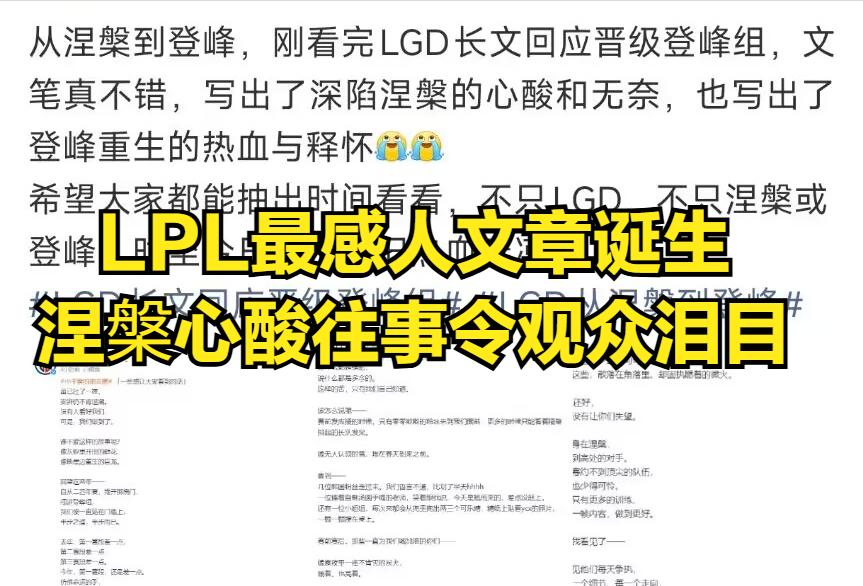
I personally read LGD’s article as well, and it’s clear that their days in the Rebirth Group were far from easy. After falling into the Rebirth Group, the word “rebirth” became a mark of shame embedded in LGD’s identity. No matter how hard the players tried, outside observers only acknowledged them with a dismissive mention of “rebirth.” Additionally, after dropping into this group, the live audience shrank significantly, with only a small group of “true fans” willing to attend in person to cheer for LGD.
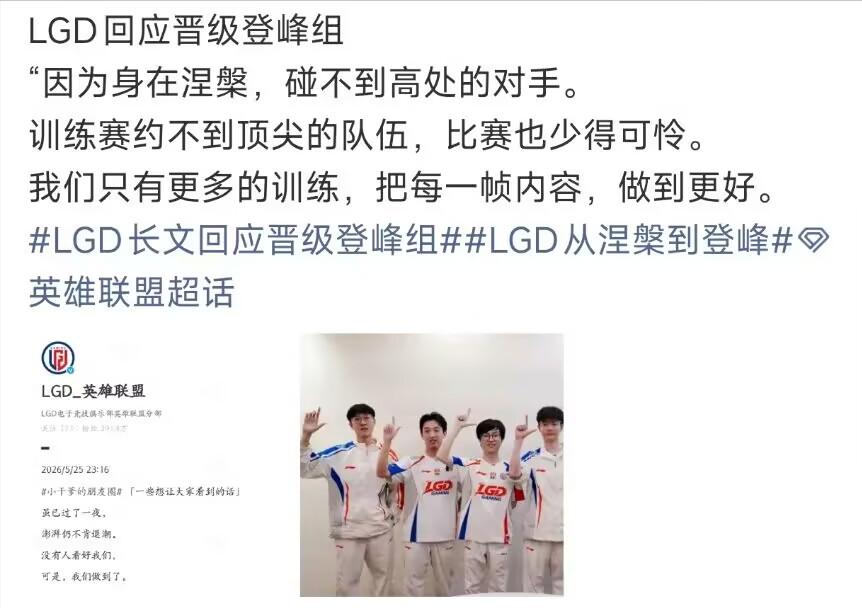
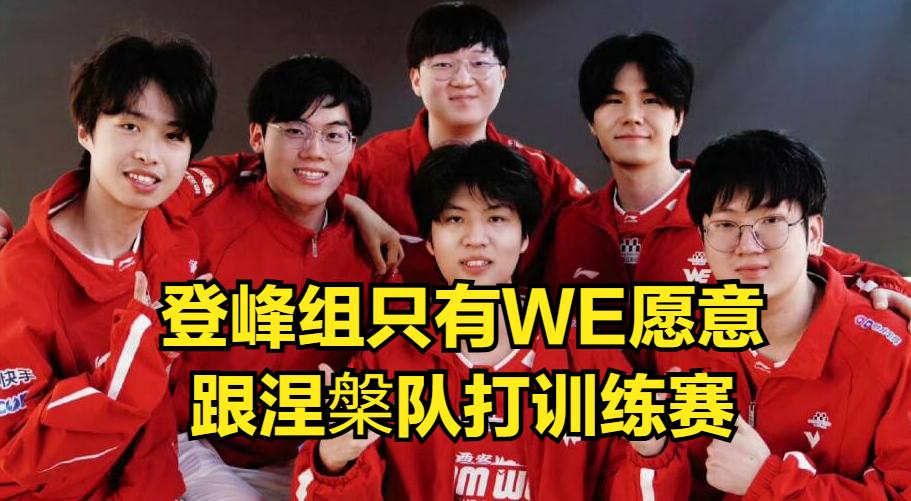
Beyond the stigma of being in the Rebirth Group, LGD also struggled to schedule practice matches with top-tier teams due to their low ranking. As a result, they approached every practice session with great seriousness. According to WE’s manager, only WE among the Peak Group teams was willing to play practice matches with Rebirth Group teams—because WE themselves couldn’t secure matches against strong opponents. Ironically, this turned out to be beneficial for WE, as they got to know the playstyles of Rebirth Group teams in advance, while other Peak Group teams, unaware of these underdogs, ended up losing their matches.
Finally, LGD’s article praised the hard work of their players. For example, top laner Burdol learned Chinese on his own every day to ensure smooth team communication—he can now communicate without any problems during matches and often plays ranked games until 5 a.m. Meanwhile, LGD’s bot lane AD carry, shaoye, stepped up during the crucial “Knight’s Path” matches. When the coach worried about the low win rate of Draven, shaoye said, “Trust me, pick it for me,” and in the decisive game, he secured three solo kills in the laning phase.
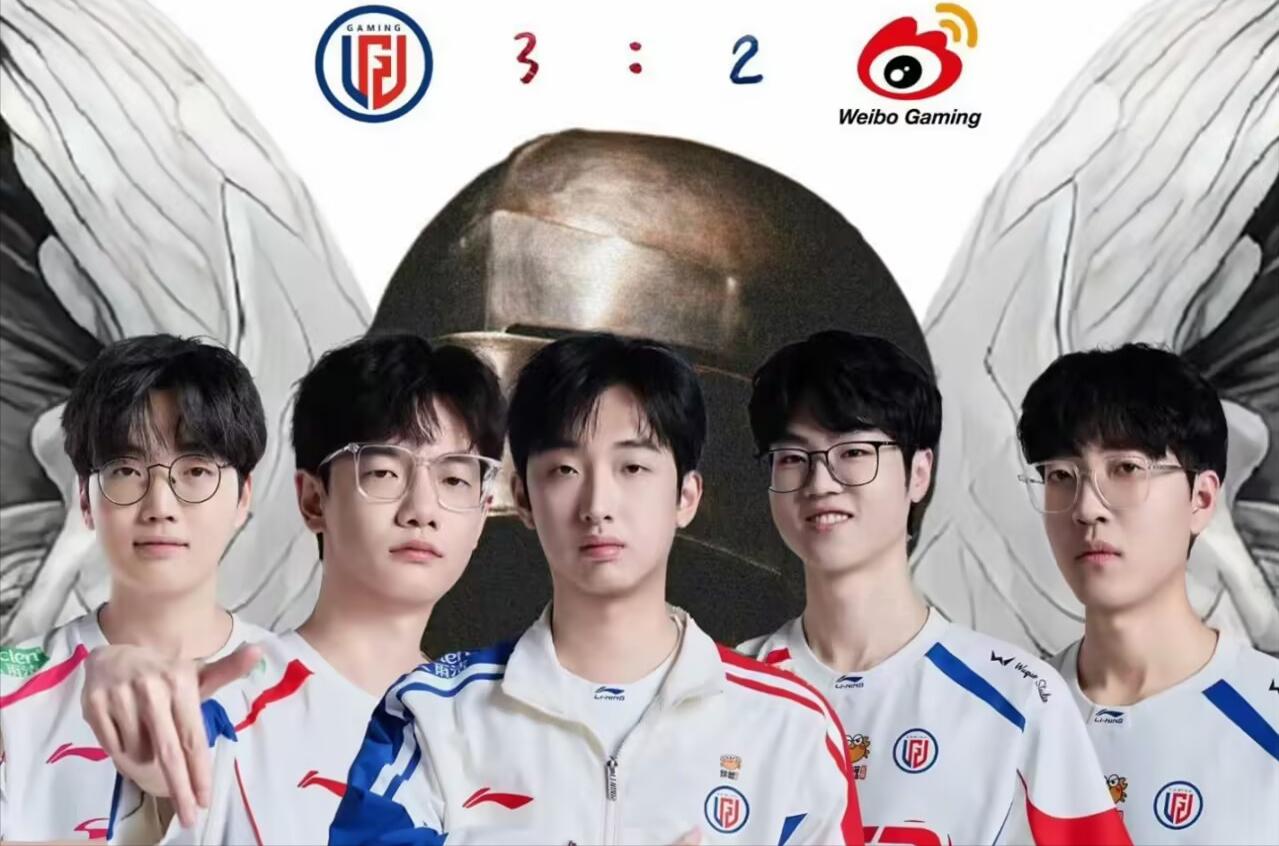
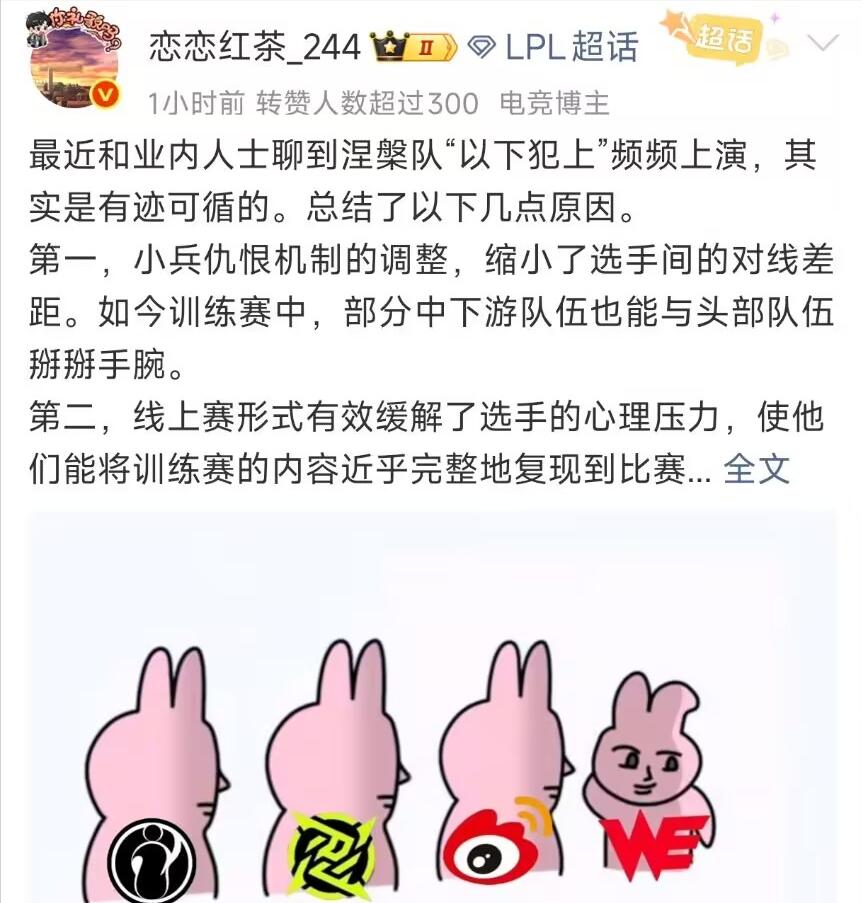
After multiple Rebirth Group teams pulled off upsets, industry insiders revealed reasons why many Peak Group teams stumbled. First, changes to minion waves in the patch reduced the gap between individual players’ laning skills. Second, playing online matches significantly lowered players’ stress, allowing them to focus more on the game. Third, there was a gap in coaching quality—some Peak Group coaches were just going through the motions, and under the global ban-pick (BP) rules, their incompetence was exposed, leading to poor draft strategies and ultimately heavy defeats.
Conclusion
LGD’s first playoff opponent is TES. Do you think LGD has any chance of defeating them? After all, as the “LPL water ghosts,” they are experts at dragging strong teams down with them. Meanwhile, with teams like WBG and IG falling into the Rebirth Group, many viewers are curious whether they can adapt to the Rebirth Group’s competition environment. For Rebirth Group teams, each split has only six matches, so it remains to be seen whether they can secure practice matches against strong teams in the future.

 Links
Links
 Contact
 App
App