



The LPL's second-tier teams suffered a crushing 0-6 defeat against Korean teams! Three teams have already secured playoff spots, highlighting the massive gap in rookie talent.



Foreword: The S16 season has officially started, and it's likely that the majority of fans have been following the recent games. With the playoffs gradually drawing to a close, the pressure in each region's matches has eased. In the past couple of days, a secondary league competition has become a hot topic among netizens—the League of Legends Asian Masters Elite Invitational has been fiercely contested. As expected, the LDL teams were once again completely dominated by LCK secondary league teams, especially on the second day, where they suffered a 0-6 record. The second teams from TES, BLG, and WBG were all defeated, and three LCK teams have locked in their playoff spots.
LPL's second-tier teams crushed 0-6 by Korean teams
Most players are quite familiar with League of Legends. Over the past two years, the esports industry has developed rapidly, with more and more participants joining the scene. However, the LPL region has experienced a gap in player development. Many veteran pro players have retired due to advancing age, while newcomers have yet to step up and take on major responsibilities. In fact, many LPL teams have been relying on foreign imports to maintain their strength, and the secondary league has hardly produced any outstanding young prospects. The main issue is the prevalence of match-fixing—a single rigged match can be worth a year's salary for these young players. The official punishment is too lenient, investigations are not thorough enough, and with the absence of live streaming, the secondary league has become a haven for match-fixing.
Recently, a new round of the Asian Masters competition has begun. A total of 12 teams participated, divided into three groups: Group A consists of CFOA, DK, EDG.Y, and TES.C; Group B includes T1A, BLG.J, FL, and KT; Group C comprises WBG.Y, SGW, NS, and DION. Both the LPL and LCK regions sent four teams each. According to the rules, the teams advancing to the knockout stage are those that finish with a 2-0 record in the group stage, as well as the team with the highest cumulative points from the second phase of the group stage. Ultimately, four teams will compete in a double-elimination BO5 format to determine the champion. However, by the second day of the competition, three teams had already secured their advancement.
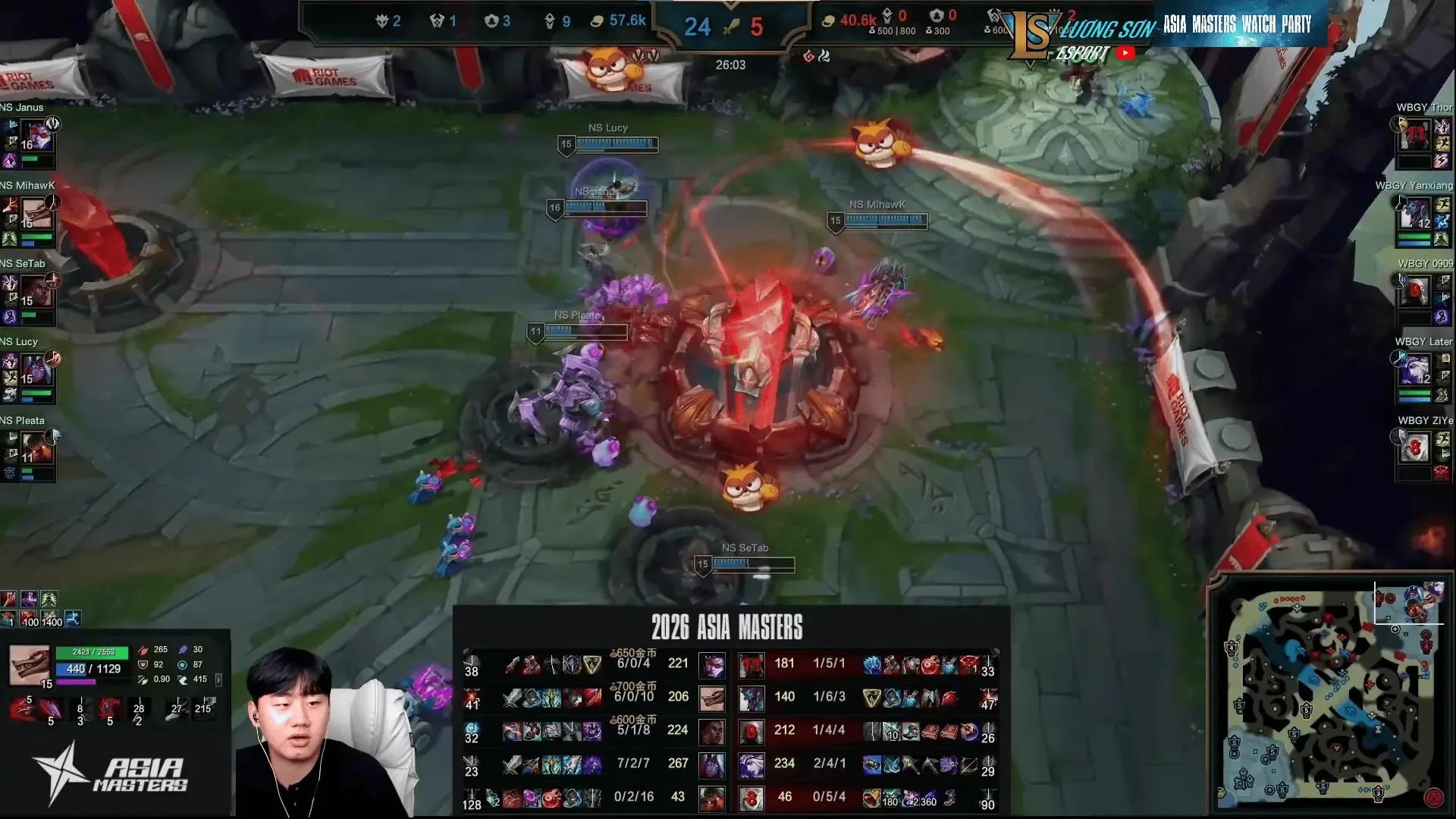
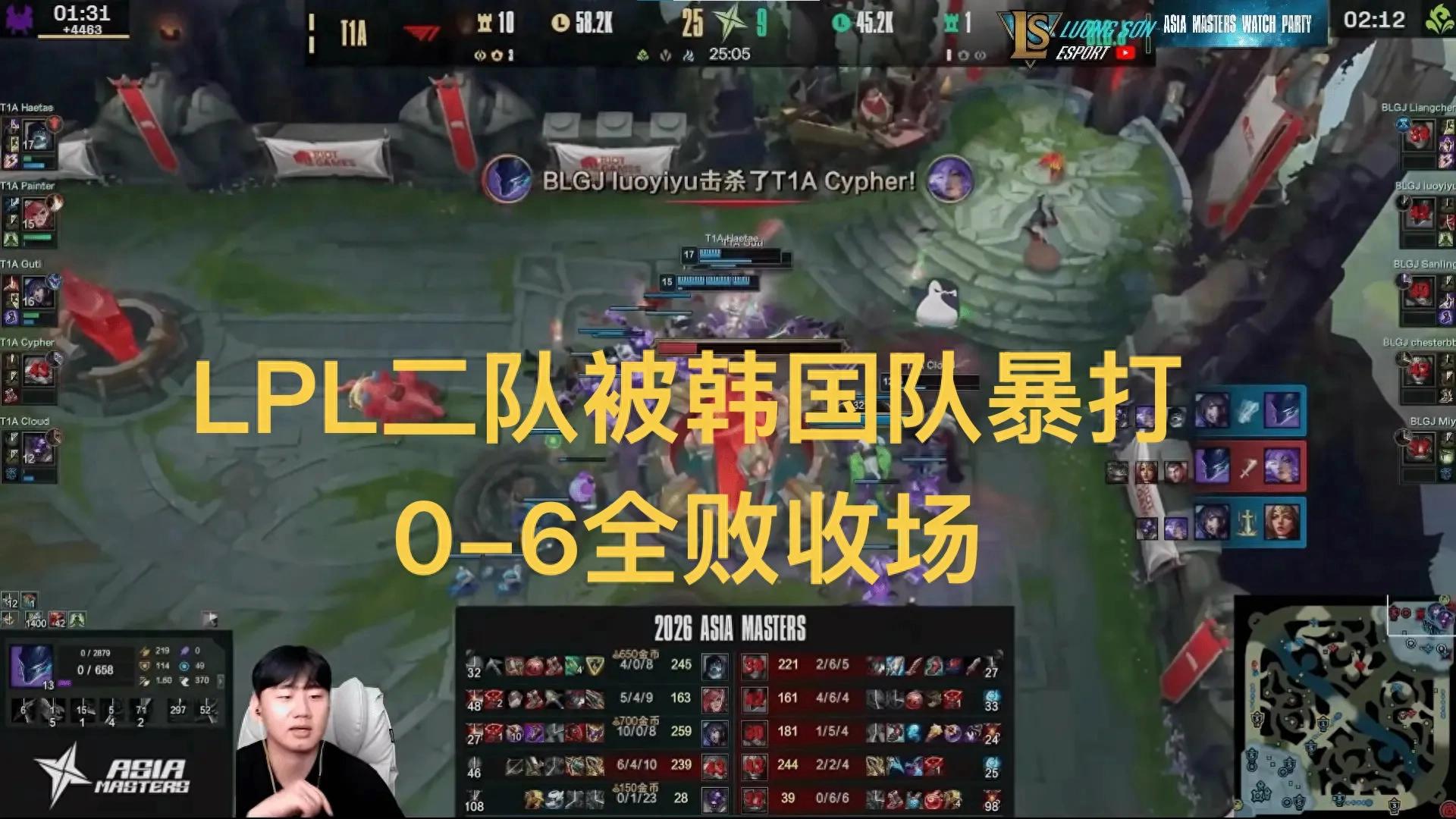
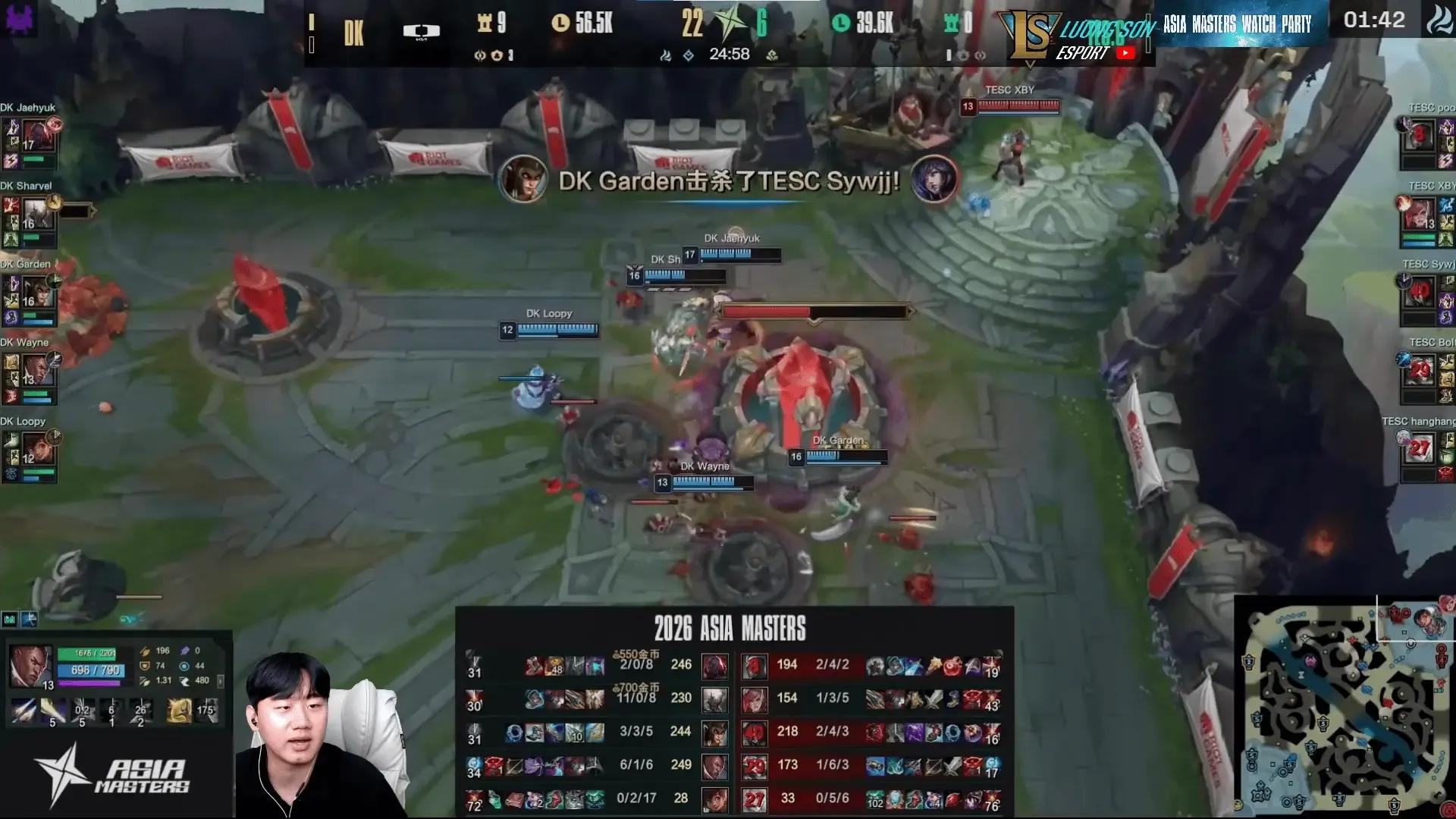
On the second day, the LPL and LCK second-tier teams faced off in three matches, and our teams suffered a devastating 0-6 loss without winning a single game. Let's look at the match durations: DK's second team vs. TES's second team took 27 minutes 43 seconds and 24 minutes 58 seconds; T1's second team vs. BLG's second team went 25 minutes 47 seconds and 25 minutes 05 seconds; finally, NS's second team vs. WBG's second team lasted 27 minutes 07 seconds and 26 minutes 03 seconds. None of the six games exceeded 30 minutes, which clearly demonstrates the huge gap between the second-tier teams. In particular, WBG's second team, seeded first, was evidently not on the same operational level as the LCK teams.
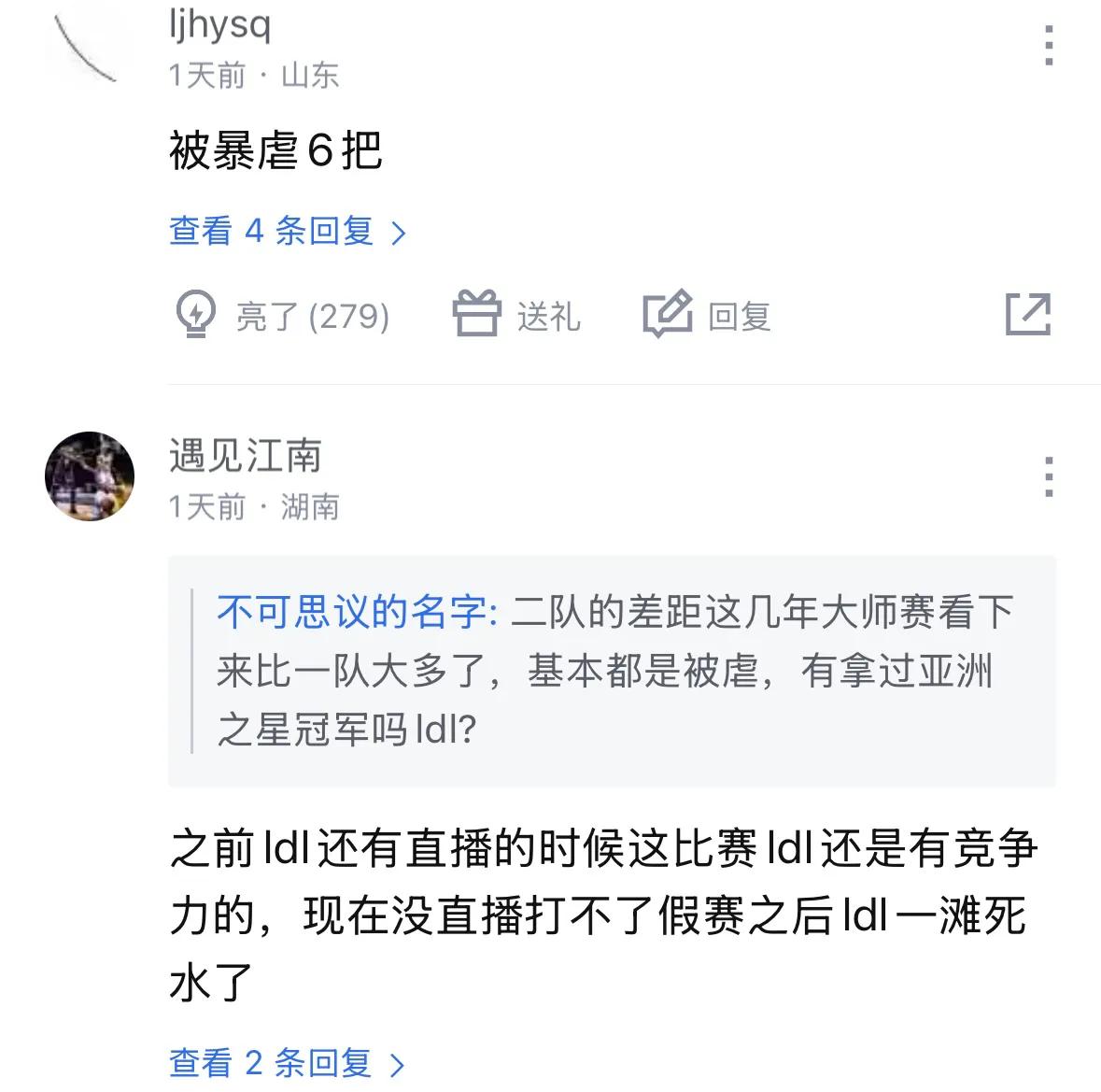
Through these three matchups, the LCK second-tier teams have already secured first place in their respective groups and advanced to the knockout stage. Barring any surprises, Korean teams are expected to dominate the entire knockout stage—just like in 2025, where all LPL second-tier teams were eliminated. This competition clearly reveals how poor the LPL's current operational system is. Relying on veteran players to recycle old hype is not a sustainable approach; instead, efforts must be made to nurture new talent. In recent days, world champion support player Liu Qingsong (Crisp) has announced his return. It is likely that the authorities will use this comeback to generate buzz again. Come, leave, come back again—does the LPL really have no other way forward?

In my opinion,
Many netizens might argue that outstanding newcomers from the LDL have gradually moved up to the LPL. To be honest, the LCK also brings in many new players, yet they still maintain the strength of their secondary league teams. This demonstrates how strict their internal oversight is. The penalties for match-fixing in the LCK are unmatched by any other region. Over the years, there have been very few—if any—reports of match-fixing in the LCK. This is what a healthy regional development should look like.
What do you, our dear viewers, think about this matter?

 Links
Links
 Contact
 App
App