



Guangzhou Conghua Football Coach Guan Weixiang: Cultivating Grassroots Women’s Football, Growing Roses with Fragrance



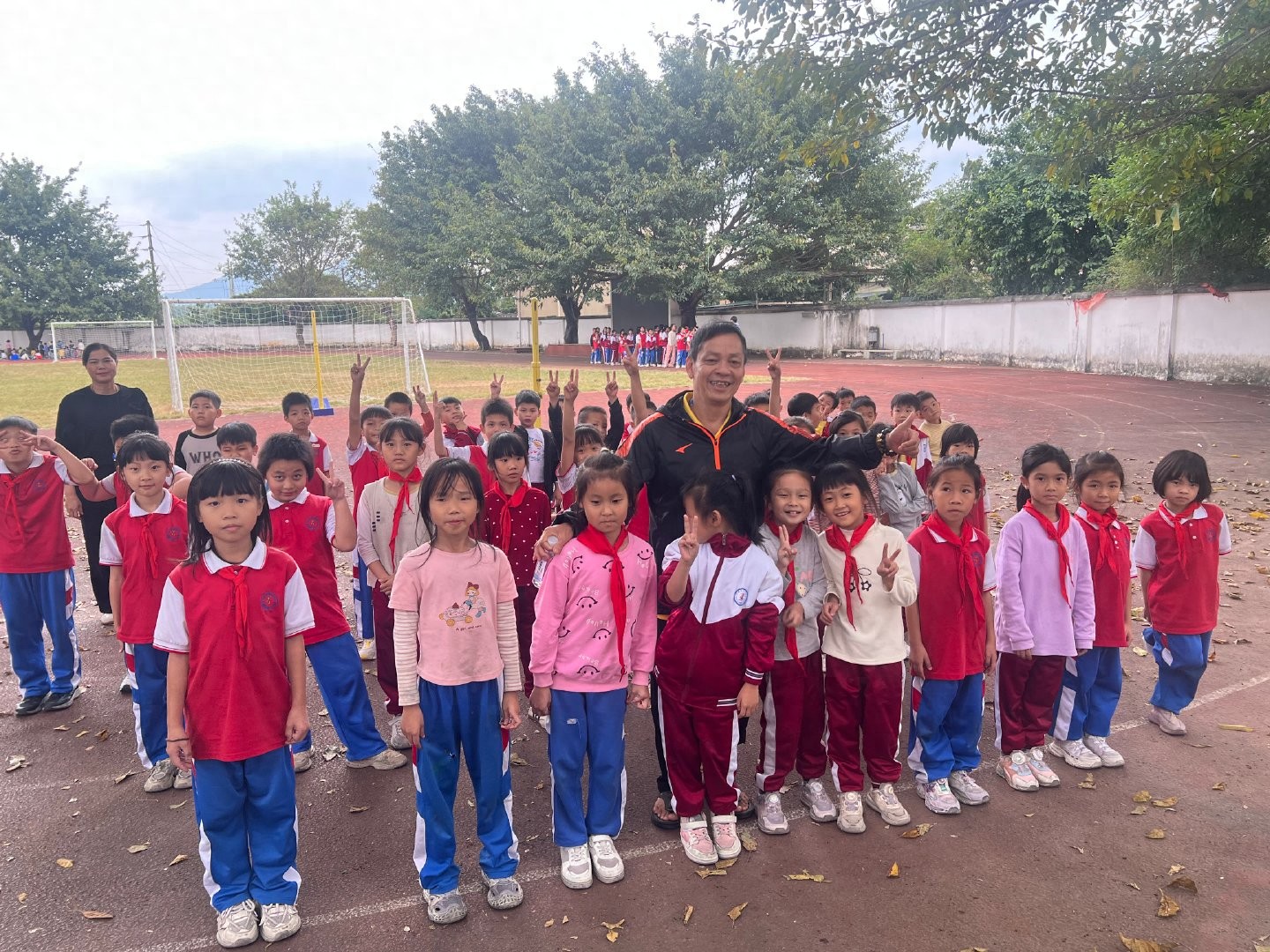
Reported by Wang Wei and intern Li Xin. As a football coach dedicated to grassroots for more than three decades, Guan Weixiang has been coaching women’s football since 2000. He has trained dozens of excellent players at the youth amateur sports school in Conghua District, Guangzhou, including national team players Zhong Xiudong, Xie Qiwen, and Zhou Chenxin. In the face of scarce equipment and tough talent scouting in Conghua, he has written a remarkable chapter in grassroots football.

In 2000, Guan Weixiang made an important decision: to switch from coaching men’s football to women’s football. This choice exposed him to the harsh reality of grassroots women’s football — a very limited talent pool. “If you pick ten girls, getting two good ones is already a success.” Parents generally did not want their daughters to play football, often citing fears of hardship and being away from home as reasons for refusal. “Finding players then was harder than climbing to the sky,” Guan recalled. Almost every promising talent he identified faced strong parental opposition.
Players Zhong Xiudong and Xie Qiwen, who later joined the national teams, were won over after Guan visited their homes multiple times to persuade their families. He communicated extensively with parents, saying, “Studying is not the only path. If your child is fast, strong, and agile, that’s a natural advantage for football. I’m confident I can develop them to the provincial or even national team level. Every path can lead to success; it depends on which one you choose to fight for.” Ultimately, through his sharp eye for football talent, sincere promises, and a principle of acting with integrity, Guan earned the trust of both parents and children.
As the northernmost district among Guangzhou’s eleven districts, Conghua is located in the northern mountainous area of Guangzhou, where football facilities and resources lag far behind those of districts like Haizhu and Tianhe. “The biggest strength of Conghua’s kids is their endurance and hard work,” Guan said.
One incident left a deep impression on Guan. When Xie Qiwen was selected for the national youth team, her family wanted to accompany her to the training camp but couldn’t afford the travel expenses. This is a common situation for children from Conghua and strengthened Guan’s resolve to pave a path for them in football.
Guan fully understands that compared to children from Guangzhou’s urban areas, Conghua players lack financial and resource advantages, but the grit forged by their tough environment is their most valuable asset.
Under Guan’s leadership, the Conghua women’s football team has achieved a series of excellent results. In the 2020 Guangzhou Youth Football Championship, Conghua’s women’s teams won the championship in both the A and B divisions; in the 18th Guangzhou Youth Games football competition in 2021, Conghua’s women’s teams claimed first place in the A and B groups and second place in the C group. Guan noted, “These age groups have a clear advantage.”
The development of player Zhou Chenxin vividly illustrates Guan’s achievements in talent cultivation. This girl from Conghua, Guangzhou, leveraged her exceptional talent and hard training to be selected for the national youth and junior teams. She was recognized as an elite athlete shortly after graduating high school. Although injuries later affected her progress, her journey confirms Guan’s belief that “every path is viable” and proves that grassroots football can open doors to higher stages for children.
Behind these achievements lies effort beyond ordinary imagination. Guan once coached three age groups alone, managing the team transitions entirely by himself. “Once one batch of players moved up, I immediately took on the next batch, never allowing myself to slack off,” he said.
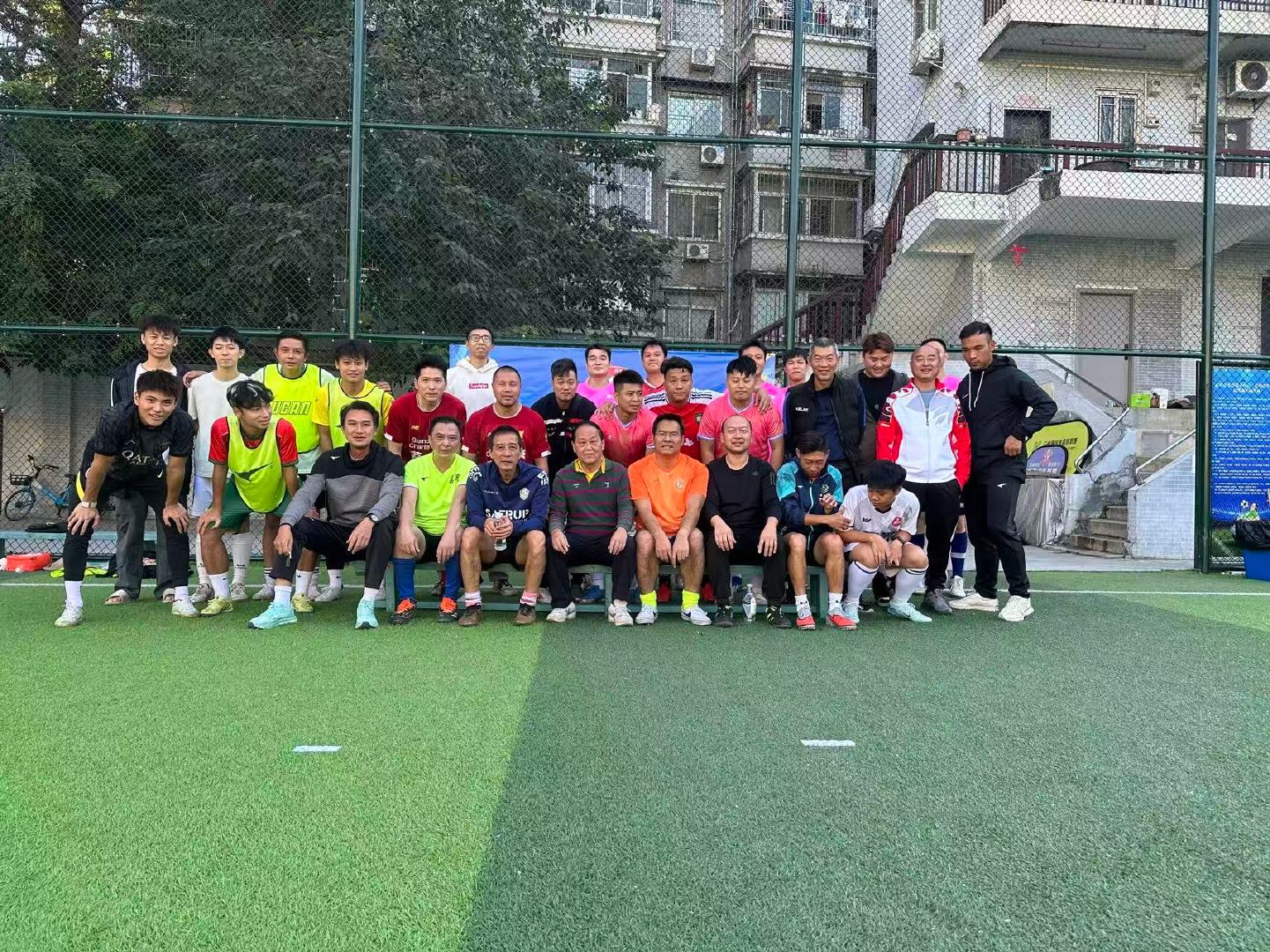

“Practicality always comes first in football training.” This has been Guan’s core belief throughout his over 30-year coaching career. He believes children’s football training should not focus on complicated formations or flashy skills but return to fundamentals. “Learn ball control first, then everything else becomes easier.” His training program is simple and efficient, with two core courses at the primary school level and gradual additions in middle school, allowing players to develop systematic abilities through practice.
Juggling the ball is an early-stage exercise to familiarize players with the ball’s behavior and also serves as a relaxation activity after basic training. “Ball feel is important, but practical skills are even more crucial.” He tailors training to each player’s characteristics: “For fast players, we strengthen counterattack skills; for agile players, we develop breakthrough techniques,” maximizing each individual’s strengths on the field. In tactics, he insists on “simplicity and practicality,” noting, “Even adults can’t grasp everything at once, let alone children.”
Beyond technical training, Guan places great emphasis on mental development. He transforms Conghua children’s “hardworking and enduring” traits into competitive advantages on the field, repeatedly stressing the fighting spirit of “Who if not me?” “We come from a less economically developed area, so we must outwork the students from ‘big cities’!” This spirit motivates the Conghua women’s team to show tenacity in matches, never backing down even against stronger opponents.
Guan also believes that mindset is a crucial factor. He once encountered a technically skilled player with a poor mentality. “Passing, dribbling, and navigating obstacles were fine in practice, but during university entrance exams, she faced significant difficulties because of nervousness.” This experience made him pay more attention to mental training to help players overcome psychological barriers.
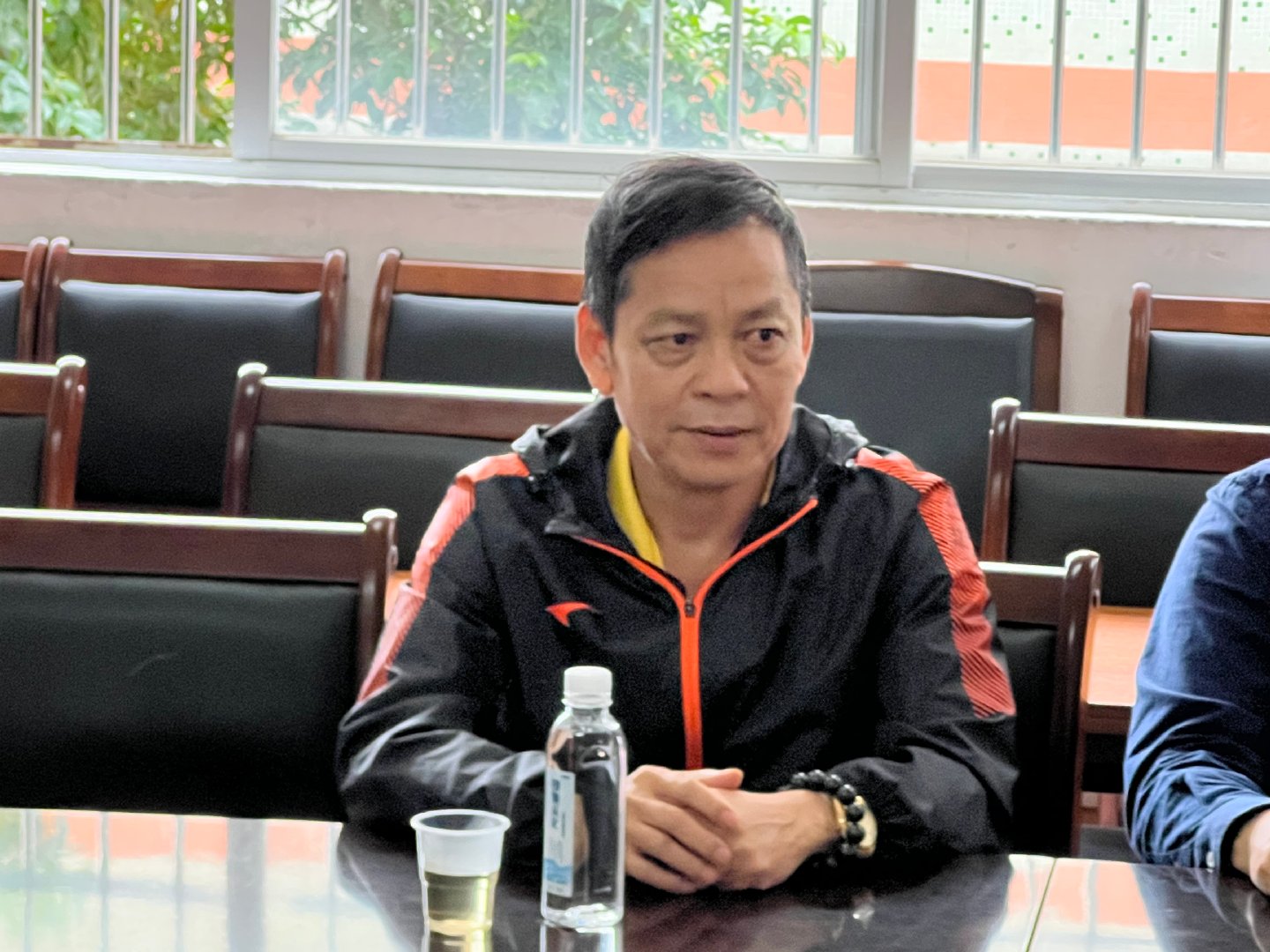
Reflecting on more than thirty years of coaching, Guan admits it “hasn’t been easy.” Compared to Guangzhou’s central districts, Conghua’s economy is less developed, the talent pool is narrow, and training resources are scarce. He single-handedly managed training for three age groups, serving as both coach and communicator with parents. Yet none of these challenges dampened his passion for football.
Guan grew up in Conghua, Guangzhou, following his parents. After retiring as a player, he chose to stay in Conghua to develop youth football. He said, “Local leaders value football development, and my own affection for this land made me decide to stay and train women’s football.” This deep connection to his hometown has sustained his silent dedication to nurturing football for over 30 years.
For Guan, he also has experience leading Guangzhou city teams in national competitions. In other words, as the coach of the Conghua women’s team, he has simultaneously served as head coach of Guangzhou’s women’s youth teams. His long-term grassroots work in Conghua has earned him recognition in the development of women’s football in Guangzhou.
In February 2018, Guan, as head coach of Guangzhou’s U14 women’s team, along with assistant coach Mai Jiewen, led the team to compete at the Wenjiang Base in Chengdu, Sichuan. Organized by the Guangzhou Football Association, the team was carefully selected from outstanding U14 female players across Guangzhou’s districts. They gave up their Spring Festival holiday to train intensively. Through scientific training and innovative guidance, under Guan’s leadership, the players made significant improvements in physical fitness, technical skills, tactical awareness, and mental outlook. “I have always had confidence in Guangzhou’s football talent development and hold hope. With everyone striving together, we will surely achieve our dreams,” Guan said.

In the eyes of players, Guan is a very strict coach who often teaches them, frequently saying, “Only effective training can lead to good results in matches.” Throughout his more than 30 years of coaching, Guan has always kept this phrase in mind, setting it as a requirement and goal for himself and his students: “Only by working hard bit by bit every day can future success be achieved.”
Years later, when his students achieved excellent results in football careers, they deeply understood the true meaning of Guan’s strict demands. His students said, “It was precisely because Guan was strict with us during training and learning, focusing on accumulating small details every day, that we developed our current attitude towards football and our positive spirit towards work. His guidance has greatly helped and directed our growth and future development.”
Guan’s student Zhong Xiudong won the women’s football gold medal at the 14th National Games and was honored as a “March 8th Red Banner Holder” by Guangdong Province. The Guangdong provincial government awarded her a third-class merit. She now works as a physical education teacher and football coach at Guangzhou University of Chinese Medicine. Xie Qiwen represents Guangdong’s women’s team in the Women’s Super League. She won the title of Guangdong Football Miss twice, in 2018 and 2020, and helped Guangdong’s adult women’s team win the bronze medal at this year’s 15th National Games. Coach Guan has cultivated many outstanding female football players for Guangzhou and Guangdong, and now his legacy flourishes widely.
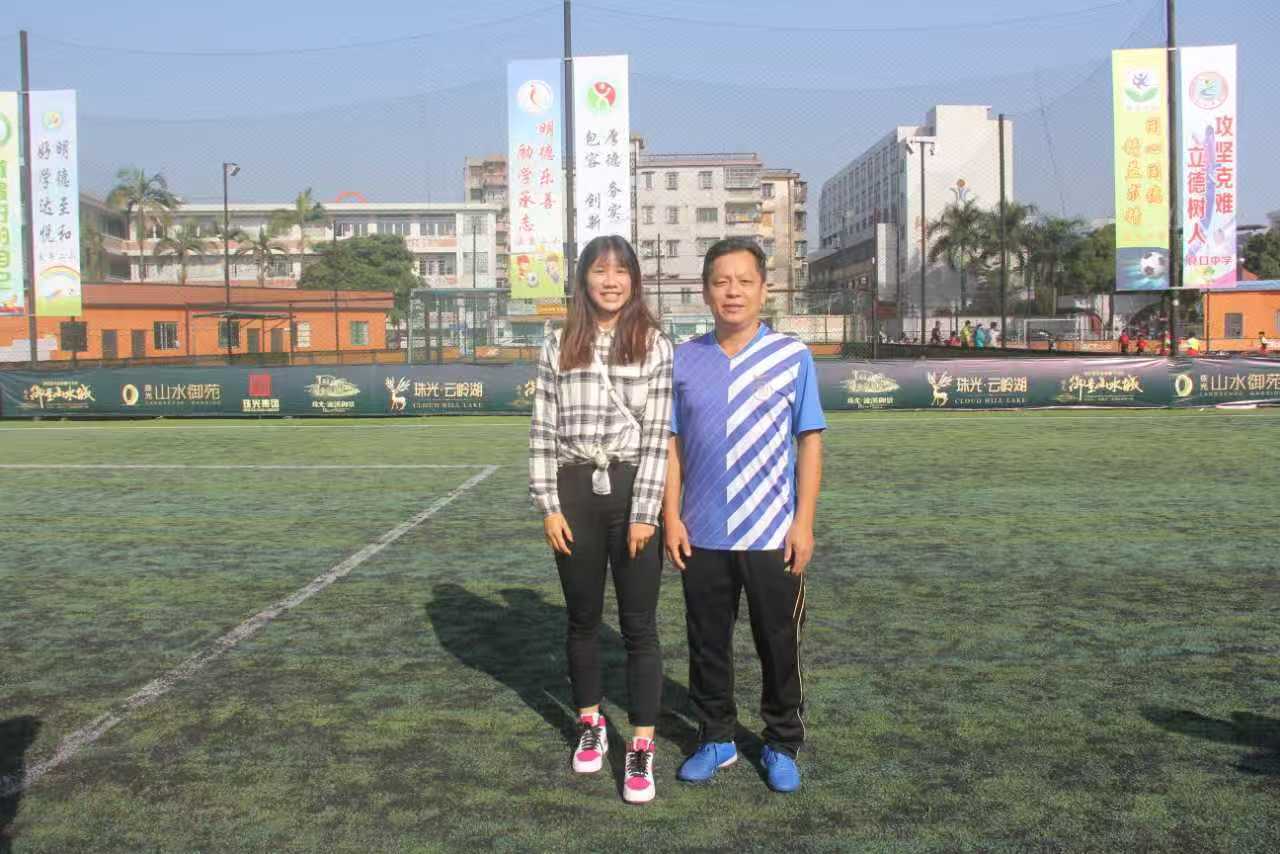
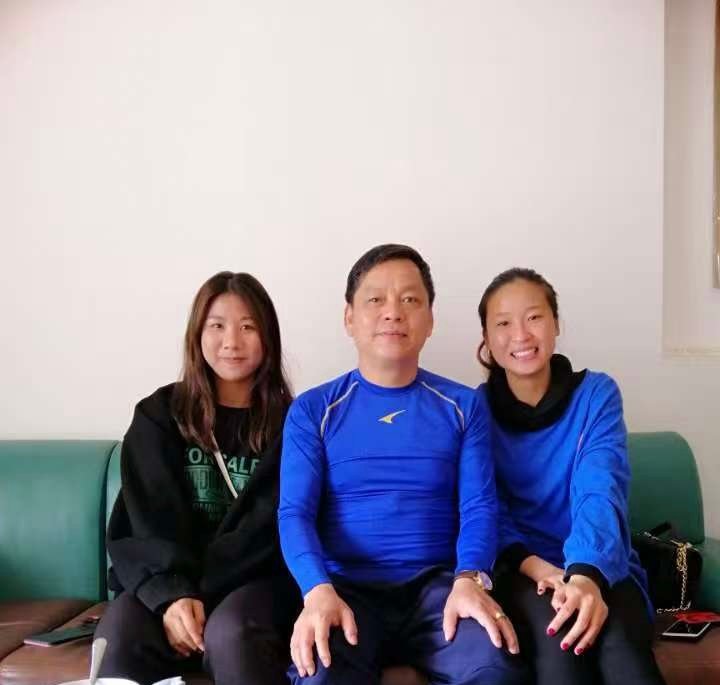
Xie Qiwen, who won the Guangdong Football Miss title twice in 2018 and 2020, visits Coach Guan.
Regarding the future of Conghua football, Guan feels both concern and hope. He believes that the key to grassroots football development lies in top-down attention; without it, there will be no resource allocation, and everything becomes empty talk. Meanwhile, he hopes young coaches will inherit a pragmatic training philosophy, “They must improve through practice, focusing on practical skills and mental cultivation.”
Guan believes the “three-concentration” model of sports schools is currently helpful for youth football talent training in China. “Concentrated training, study, and boarding ensure training time and participant numbers, and reassure parents.” He regrets that after changes in the training system, players are scattered across different schools, making it impossible to guarantee training time or gather enough players. “Before, we could ensure more than two hours of training daily; now, that’s simply unattainable.”
Guan’s message to young coaches: “I hope today’s young coaches will reach new heights, cultivating more talents for Guangzhou, Guangdong Province, and even the national teams, and do better than our generation of coaches.”


Wonderfulshortvideo
Did you get it? 🤔😅


Haaland’s movement 🥵
When you use your girlfriends shower 🚿 @Emily Bourne @LUSH
Neymar highlights neymar edit neymar lamine yamal celebration
Arsenal 1-0 chelsea havertz goal
yamal goal yamal instagram yamal dribble barcelona 2-1 albacete yamal highlights yamal edit
casemiro goal casemiro assist casemiro 6 7 celebration
 Links
Links
 Contact
Address:UNIT 1804 SOUTH BANK TOWER, 55 UPPER GROUND,LONDON ENGLAND SE1 9E
Number:+85259695367
E-mali:[email protected]
 App
App


