



Vietnam U22 at SEA Games 2025: Hard Win, Growing Concerns



Against the team rated as the weakest in the group, Vietnam U22 had to rely on the brace from their relatively "lucky" striker Nguyen Dinh Bac, who consistently performs well when called up to the national team, to secure all 3 points on opening day. However, the gold medal campaign still faces doubts about the form of coach Kim Sang Sik’s players.
Throughout the entire match, Laos U22 was almost always in a defensive mode. The opponent’s use of up to 9 players concentrated on defensive duties made Vietnam U22’s goal-scoring objective difficult, although this had been predicted since Laos currently has a fairly quality group of young players with 8 U22 players having previously worn the national team jersey.
However, that was not the biggest disappointment in this match. Facing a heavily defensive opponent, Kim Sang Sik’s team also flexibly and continuously changed their attacking approaches.
After exhausting long passes in the first 15 minutes, there were overlapping wing plays, crosses from the end line inside, followed by quick one-twos aimed directly at the central zone. The issue was that none of these solutions proved truly effective.
Holding the ball up to 79%, applying total pressure, and quickly advancing the ball toward the opponent’s goal, Vietnam U22 nevertheless had relatively few shots on target—only 5 times forcing the Lao goalkeeper to perform well.
Vietnam U22 (in white) had to work very hard to secure a win against Laos U22 (in dark kits). Photo: Tuan Pham
Looking overall, no one would think this was a team that had trained together for nearly two years, participated in two quality friendly tournaments in China, won the Southeast Asian championship, and passed through the Asian U23 qualifiers.
Scattered, inaccurate, with few coordinated plays in the penalty area bearing tactical marks in scoring, these were what Vietnam U22 left after a tough opening win.
The most notable moment was probably the last play of the match, when 3 Vietnam U22 attackers surged forward from midfield against only 2 Lao defenders, but it ended with Dinh Bac’s shot flying over the crossbar.
That missed chance felt even more uncomfortable for fans knowing that Laos U22 had only one opportunity in the match and managed to equalize 1-1.
In the 33rd minute, just 4 minutes after Dinh Bac opened the scoring with a close-range finish, Laos scored from a corner kick following a series of attacking plays. That was the only time Laos could bring the ball close to Vietnam U22’s goal, and they did not miss the chance.
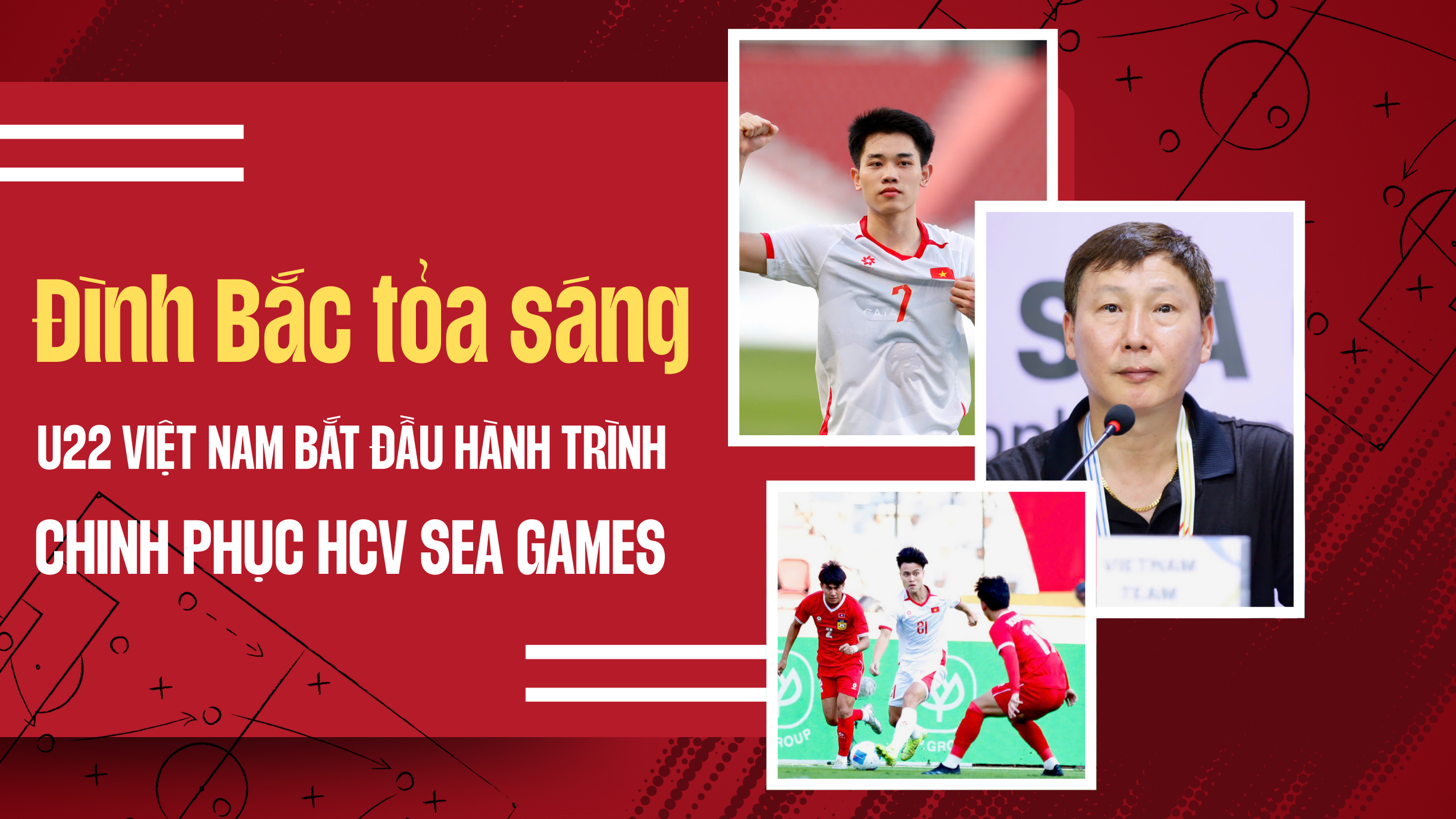
No surprises occurred; Kim Sang Sik’s team still managed to secure all 3 points thanks to Dinh Bac’s brilliance plus some luck from the referee’s decision at the 60th minute.
However, this was not Vietnam U22’s main goal against an opponent they usually beat like Laos. They should have scored at least 3 goals, taken more shots, and had more accurate solutions from second balls, with midfielders enjoying more space and time to adjust.
In a match that should have been an opportunity to build the character of a contender, show the smoothness of an experienced collective, and boost morale for the more than one-week build-up before the match against Malaysia, Vietnam U22 still seemed like an unfinished draft.
Readers interested in SEA Games 33 (2025):
The best featured articles about SEA Games 33


Wonderfulshortvideo
Did you get it? 🤔😅


Haaland’s movement 🥵
Which counterattack is
When you use your girlfriends shower 🚿 @Emily Bourne @LUSH
Neymar highlights neymar edit neymar lamine yamal celebration
Arsenal 1-0 chelsea havertz goal
yamal goal yamal instagram yamal dribble barcelona 2-1 albacete yamal highlights yamal edit
 Links
Links
 Contact
Address:UNIT 1804 SOUTH BANK TOWER, 55 UPPER GROUND,LONDON ENGLAND SE1 9E
Number:+85259695367
E-mali:[email protected]
 App
App


