



Six titles in one year, 2025 marks the “Year of Paris” in football



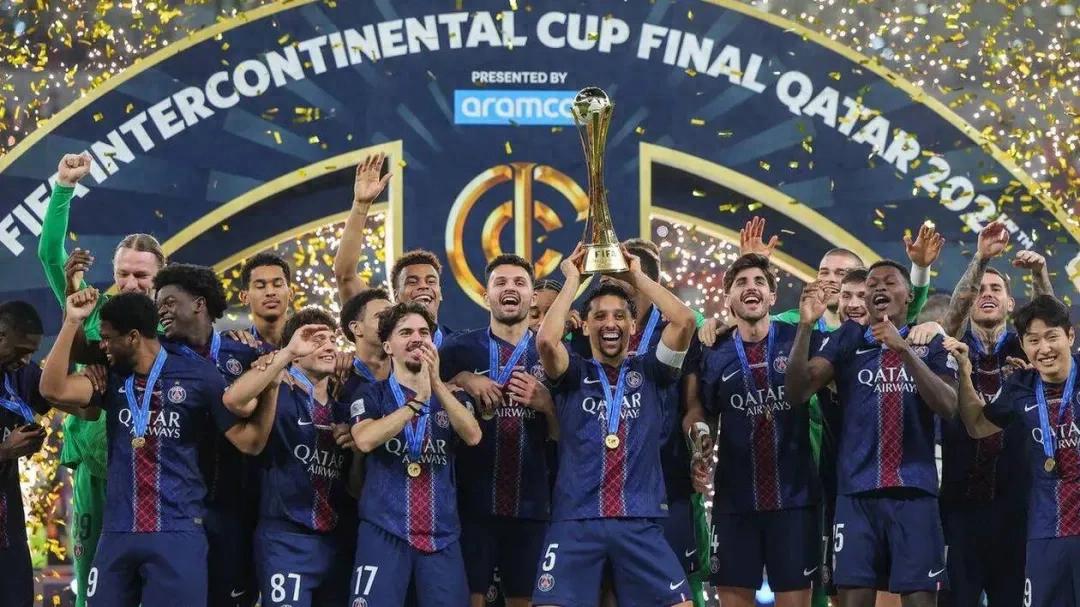
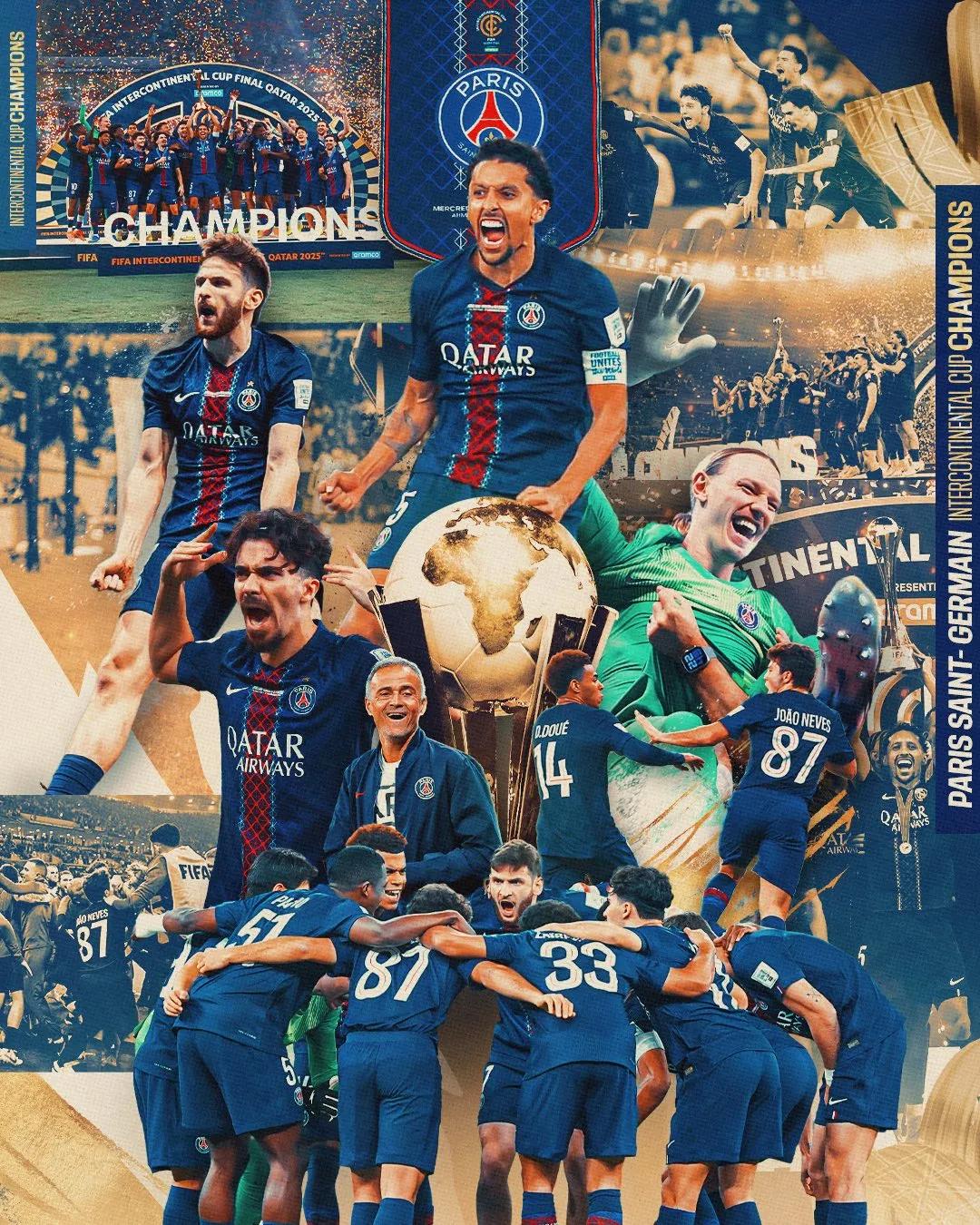
Written by Han Bing Qatar has been a sorrowful ground for French football. Three years ago, even though Mbappé scored a hat-trick in the World Cup final, France lost to Argentina on penalties and couldn’t retain the world championship. Three years later, again in Qatar, PSG’s Russian goalkeeper Safonov saved four penalty shots in the shootout, becoming PSG’s main hero in capturing the FIFA Club World Cup. Since the Intercontinental Cup began in 1960, PSG became the first French team to win this tournament or the Club World Cup. Moreover, PSG is the second team after Barcelona’s “Dream Trio” in 2009 to win six trophies in a calendar year, with Enrique leading PSG to unprecedented heights for a French club.
This is the first time in 66 years that PSG and any French team have participated in the Intercontinental/Club World Cup outside the 32-team format. Marseille, who won the Champions League in 1993, should have been the first French participant but were banned by UEFA due to a match-fixing scandal, with AC Milan, the European runner-up, taking their place. This is also PSG coach Enrique’s second time competing in the Intercontinental/Club World Cup outside the 32-team format; ten years ago in Yokohama, he led Barcelona to a 3-0 victory over River Plate. However, that year Barcelona’s Spanish Super Cup was held early in the season, so they only won five trophies in 2015.
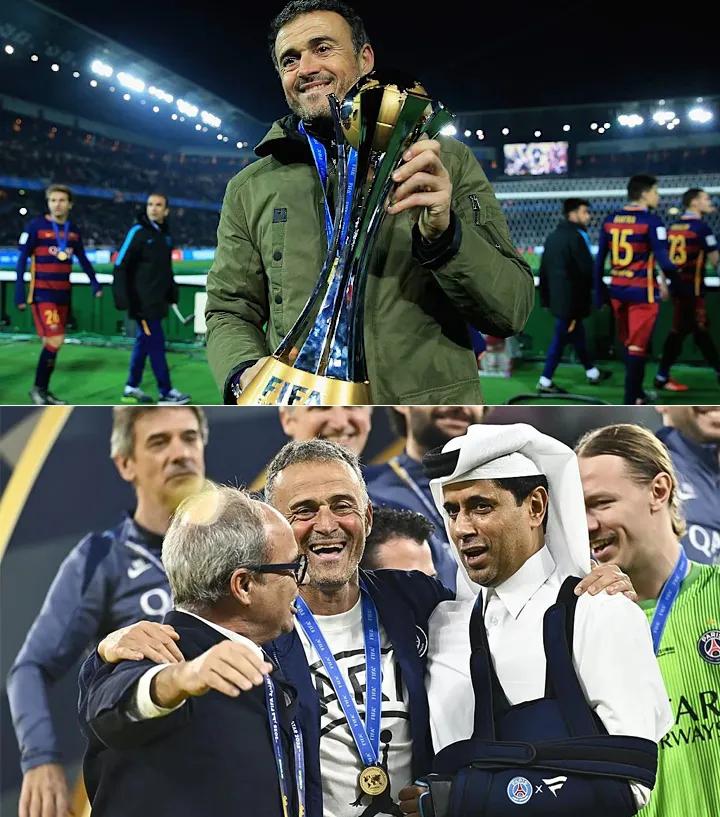
Ten years later, now as PSG’s coach, Enrique lifted the Intercontinental Cup again, but it wasn’t as easy as before. Newly crowned World Best Player Dembélé was unwell and had to remain on the bench, while Lee Kang-in played as the striker. However, the Korean star had to leave due to injury in the 35th minute, worsening PSG’s attacking situation. Their opponent Flamengo is regarded as the strongest South American team since Corinthians in 2012. Their young coach Felipe won the Copa Libertadores as a player six years ago and led Flamengo to drag European champions Liverpool into extra time in the final, only to lose to Firmino’s decisive goal.
Flamengo’s defender Danilo, midfielder De Arrascaeta, and Jorginho have all played in Intercontinental/Club World Cup finals outside the 32-team format, while PSG only had defender Lucas with similar experience, who remained on the bench the entire match. PSG almost took the lead within 9 minutes after Flamengo’s goalkeeper Rossi made a clearance error, allowing Favian to lob the ball into an empty net, but VAR ruled the ball out of bounds first, nullifying the goal. However, in the 38th minute, the Parisian club finally scored first when Rossi failed to save a shot, and Kvaratskhelia slid in to score. This marked the Georgian winger’s second goal in a major final this year after the Champions League final.
The second half became a nightmare for Marquinhos: at the 60th minute, PSG’s captain fouled De Arrascaeta inside the box. Jorginho, who sat on the bench during the Yokohama Club World Cup three years ago while playing for Chelsea, scored the penalty to equalize. Despite this, PSG still had a chance to win in stoppage time, but substitute Dembélé’s dangerous cross after dribbling was strangely missed by the unmarked Marquinhos in front of goal. Due to PSG captain’s “overacting,” the match went into extra time and eventually to penalties.
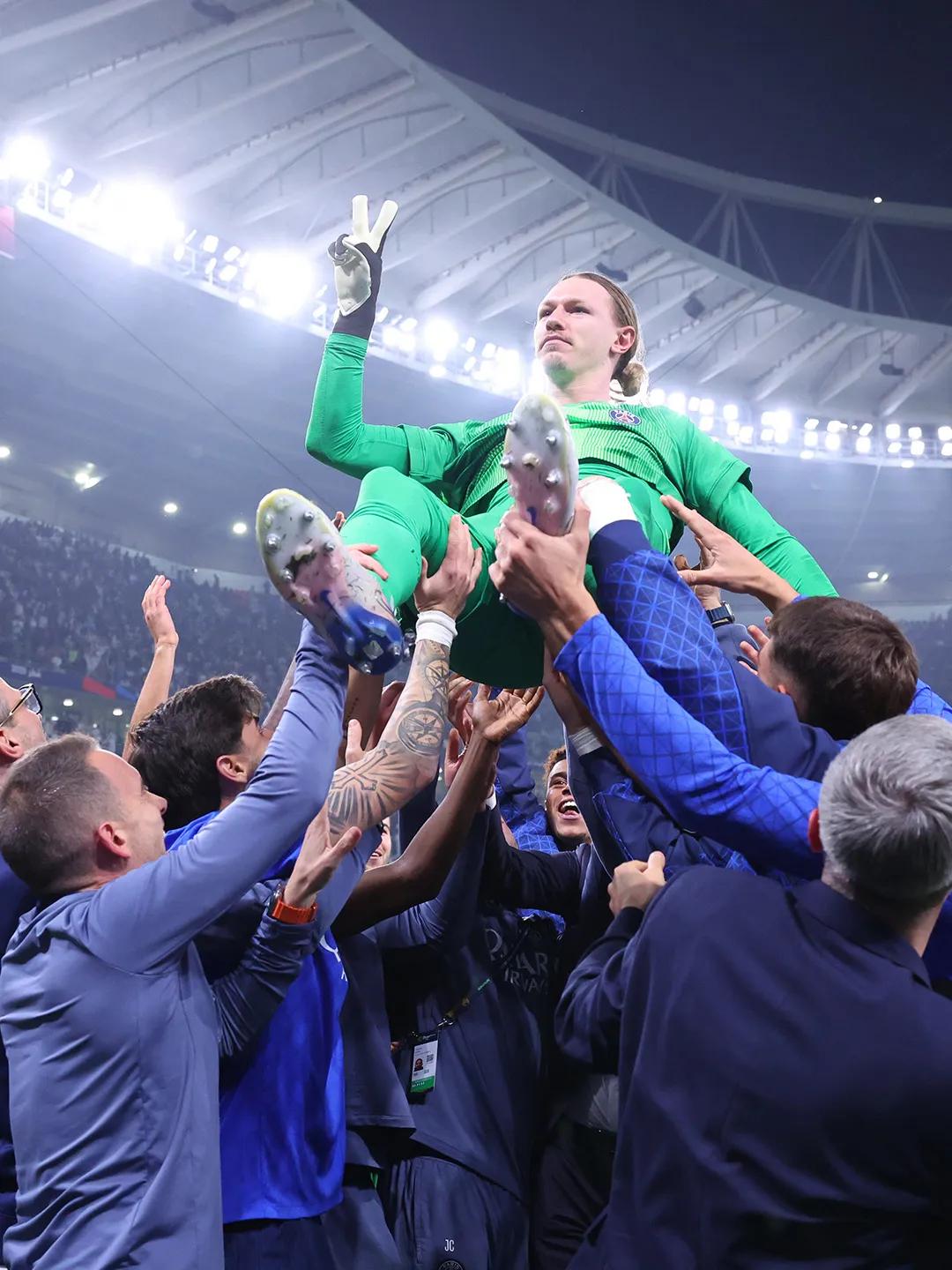
In the penalty shootout, although newly crowned World Best Player Dembélé missed his shot high, and teammate Barcola also failed, PSG’s Russian goalkeeper Safonov performed heroically, saving shots from Flamengo’s Saul, Pedro, Léo Pereira, and Araújo. He became the first goalkeeper in the Intercontinental/Club World Cup history to save four penalties in a shootout. Enrique is hailed as the king of penalty shootouts and finals, with PSG winning three consecutive international matches on penalties this year: the Champions League round of 16 second leg against Liverpool, the UEFA Super Cup final against Tottenham, and the FIFA Club World Cup final, setting a record for French teams.
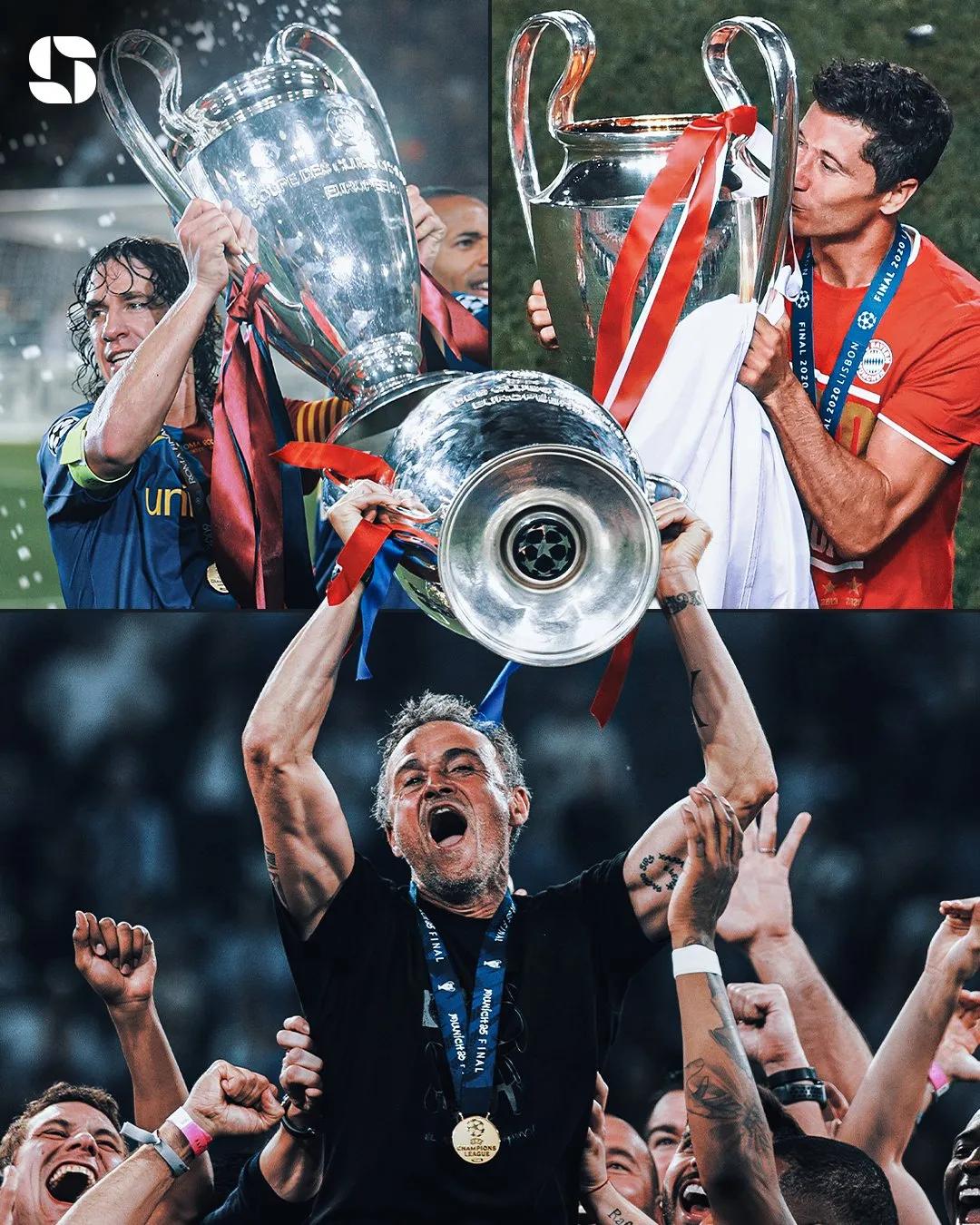
Enrique’s coaching career boasts 13 wins out of 14 single-match club finals, an impressive 92.9% success rate, with his only loss being this summer’s Club World Cup final. At Barcelona, he won all six finals (three Copa del Rey, one Champions League, one UEFA Super Cup, and one Club World Cup), and at PSG, he has won eight finals (two French Cups, two French Super Cups, one Champions League, one Club World Cup, one UEFA Super Cup, and one FIFA Intercontinental Cup).
After losing the summer 32-team Club World Cup final to Chelsea, PSG became the first French team to lift the Intercontinental/Club World Cup trophy. This is also the fourth senior world champion title for France after the national team’s Olympic gold (1984), World Cups (1998, 2018), and Confederations Cups (2001, 2003). Since the 2024/25 French Super Cup was held earlier this year, PSG set a club and French record by becoming the first French team to win six trophies in a calendar year. They are also the second team after Barcelona in 2009 to achieve this. Bayern Munich in 2020 was expected to be the second, but their Club World Cup was postponed to February 2021 due to the pandemic, resulting in only five trophies. If the French Super Cup had not been delayed to next year due to scheduling, PSG could have even challenged the world record for seven trophies in one calendar year.
Starting from the French Super Cup in January and ending with the FIFA Club World Cup in Qatar in December, PSG matched Barcelona’s record of six titles in a calendar year and reached the first 32-team Club World Cup final. Dembélé won both the Ballon d’Or and World Best Player awards, while Enrique claimed two world best coach titles. For European and global football, 2025 truly is the “Year of Paris.”
Flamengo, narrowly losing the penalty shootout, missed the best chance for a South American team to break Europe’s 13-year dominance in the Club World Cup/Intercontinental Cup. Before the Intercontinental Cup changed to the Club World Cup format in 2005, South American teams had 22 titles, ahead of Europe’s 21. However, in the following 22 editions of the Club World Cup/FIFA Intercontinental Cup, South American teams have won only four times, with the last in 2012 by Corinthians. Since then, South American teams have lost seven finals, including Flamengo in 2019 and 2025 and Palmeiras in 2021, three times pushing matches into extra time but failing to win. European teams have won all 14 tournaments they participated in during this period, maintaining their dominant status.


Wonderfulshortvideo
Did you get it? 🤔😅


Haaland’s movement 🥵
Which counterattack is
When you use your girlfriends shower 🚿 @Emily Bourne @LUSH
Neymar highlights neymar edit neymar lamine yamal celebration
Arsenal 1-0 chelsea havertz goal
When Diogo Costa made himself a hero 🧤
 Links
Links
 Contact
Address:UNIT 1804 SOUTH BANK TOWER, 55 UPPER GROUND,LONDON ENGLAND SE1 9E
Number:+85259695367
E-mali:[email protected]
 App
App


