



U15 National Youth Team Suffers Three-Goal Defeat in East Asian Cup Opener, Raising Three Major Alarms



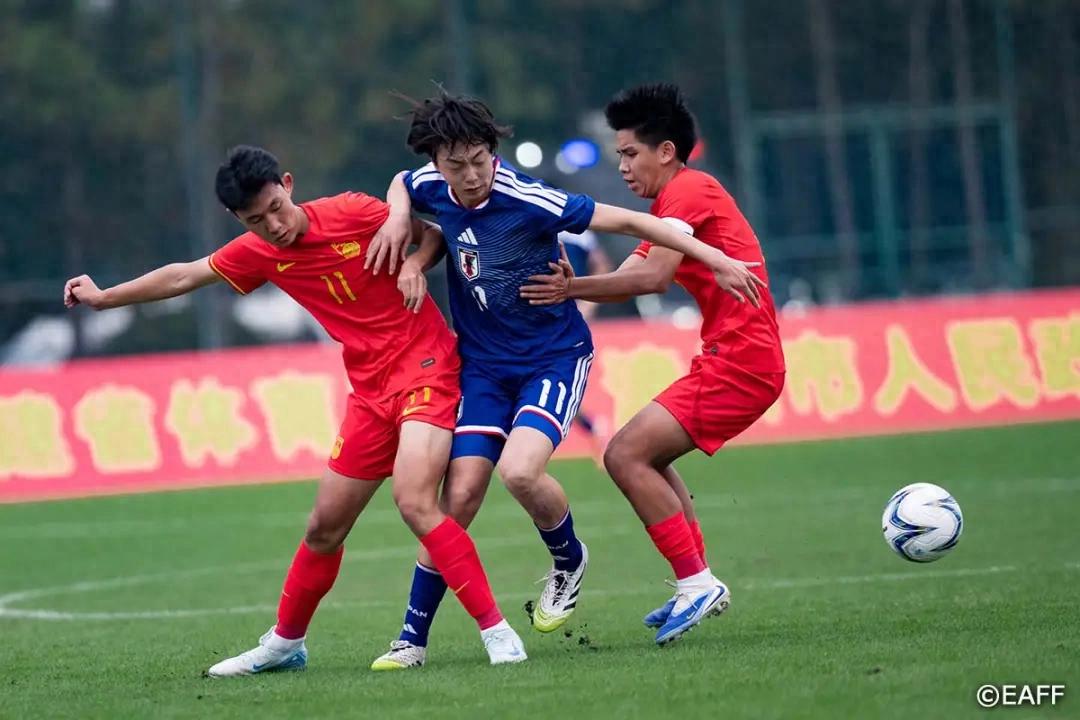
Reporter Chen Yong reports In the last U15 East Asian Cup, the 2008 National Youth Team claimed the title. This time, with fans full of expectations, the 2010 National Youth Team (referred to as the National Youth Team) was defeated 0-3 by Japan in their opening match. This loss has sounded three major alarms: weak individual defense, an unstable defensive structure, and significant fitness issues.
In this match, the National Youth Team's starting lineup featured goalkeeper Jiang Cheng’en, defenders Yang Yihuan, Bai Huajun, Li Yuanxi, and Jiang Leshang, defensive midfielders Pan Chaowei and Peng Xiran, attacking midfielders Gao Ze’en, Zheng Kangjin, and Li Yuxuan, with forward Ke Bowen leading the attack.
During the first half, the National Youth Team maintained high pressing, causing considerable trouble for Japan and frequently regaining possession in the attacking third but ultimately failing to break the deadlock. Just before halftime, Japan scored on a quick counterattack, leaving the National Youth Team trailing 0-1 at the break.
Regarding the first half, the National Youth Team’s high press was effective, and the players showed confidence. However, when opportunities arose in the attacking zone, their one-on-one breakthroughs had a very low success rate. The pressing tactic also gave Japan several counterattack chances; besides their goal, they hit the post once.
Actually, the goal conceded in the first half did not result from being outnumbered defensively, but from clearly inadequate individual defensive skills, including poor positioning and lack of focus. Early in the second half, the National Youth Team substituted Wu Bile for Li Yuxuan to boost attack quality, followed by bringing on Zhu Jiajun to strengthen offense. During this period, the team dominated at times but still could not score.
Japan scored twice more at the 50th and 56th minutes, extending the lead to 3-0. The second goal was due to a defensive clearance error, and the third came from a long ball counterattack. The National Youth Team then made several substitutions and adjusted the defense but failed to change the scoreline.
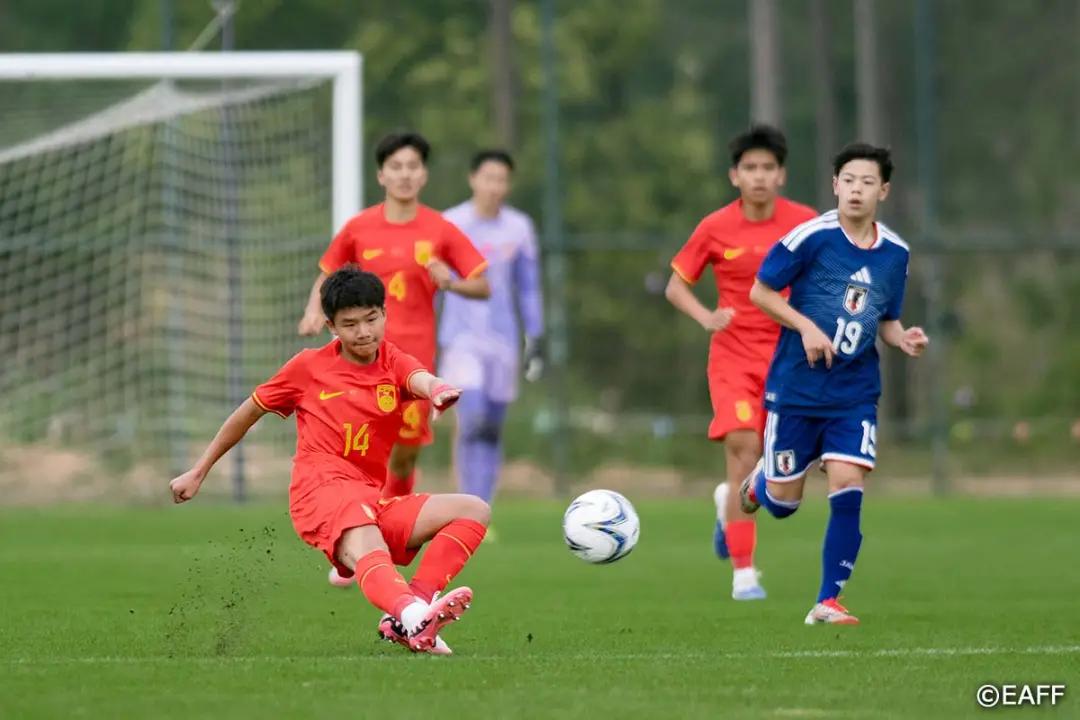
Currently, the National Youth Team shows a decent overall spirit, with some players daring to perform, and the high press is not without effect. However, the problems revealed in this opening match are clearly more numerous and have sounded three major alarms.
First, the players’ individual defensive abilities are seriously lacking. Central defenders’ positional sense, concentration, and even stamina have issues. This is something the coaching staff must address. Besides player improvement, they need to continue scouting suitable defenders or modify the defensive system to mitigate risks caused by weak individual defense.
Second, the construction of the defensive system, especially its stability after failed high pressing, needs strengthening. More precisely, the team must enhance the stability of its defense under high-intensity, fast-paced match conditions.
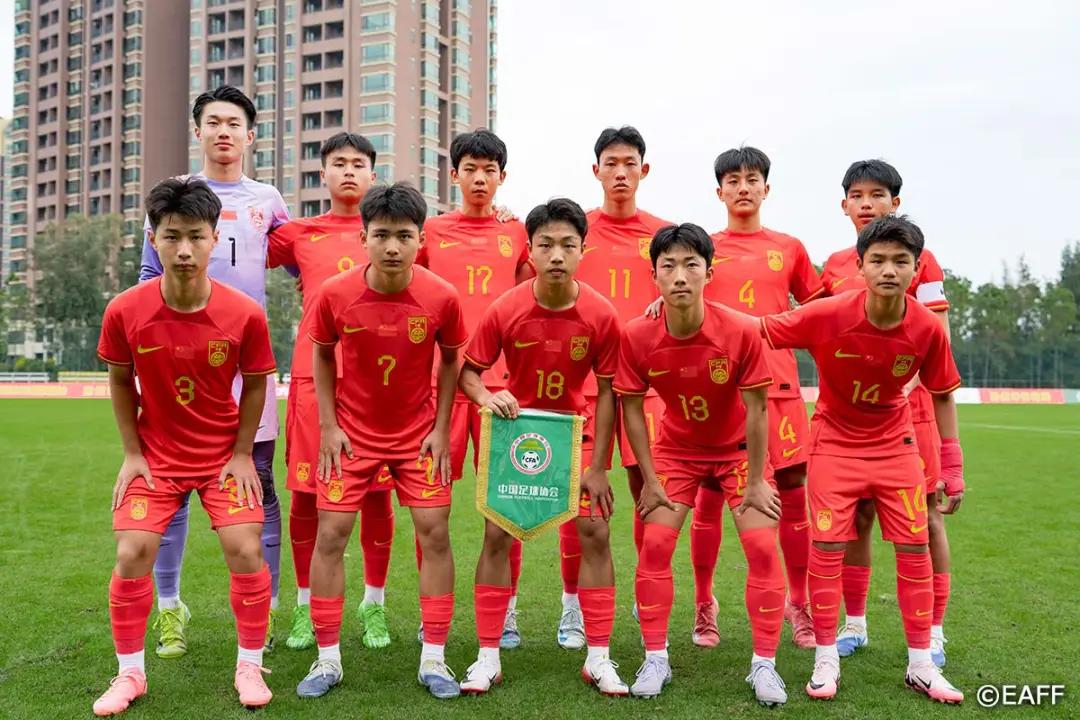
Third—and most frustrating—is the fitness problem. This U15 East Asian Cup uses a format of two 35-minute halves, which is very suitable for high pressing since the physical demands differ greatly from a 90-minute match. Yet by the 50th minute, the National Youth Team’s central defender suffered cramps, a vulnerability that Japan exploited. Of course, fitness issues relate not only to tactics and basic conditioning but also to players’ mental state; excessive tension can accelerate energy depletion.
Losing 0-3 to Japan in the opening match is naturally disappointing for fans, but it is not entirely negative for the National Youth Team. Besides reviewing the match, the team needs to arrange more high-quality games. Whether it’s individual defensive skills, the overall defensive system, or fitness, these problems require real testing through intense, fast-paced competition. According to plans, this National Youth Team may play around 20 international matches in 2026.
On the 20th, the National Youth Team will face South Korea, and on the 22nd, they will play against Hong Kong. In the first round, Hong Kong defeated South Korea 2-0.


Wonderfulshortvideo
Did you get it? 🤔😅


Haaland’s movement 🥵
Which counterattack is
When you use your girlfriends shower 🚿 @Emily Bourne @LUSH
Neymar highlights neymar edit neymar lamine yamal celebration
Arsenal 1-0 chelsea havertz goal
When Diogo Costa made himself a hero 🧤
 Links
Links
 Contact
Address:UNIT 1804 SOUTH BANK TOWER, 55 UPPER GROUND,LONDON ENGLAND SE1 9E
Number:+85259695367
E-mali:[email protected]
 App
App


