



From "Engine Seizure" to Endurance Battles: How Does South Korea’s Youth Training Forge Match Fitness through "Game-like" Training?



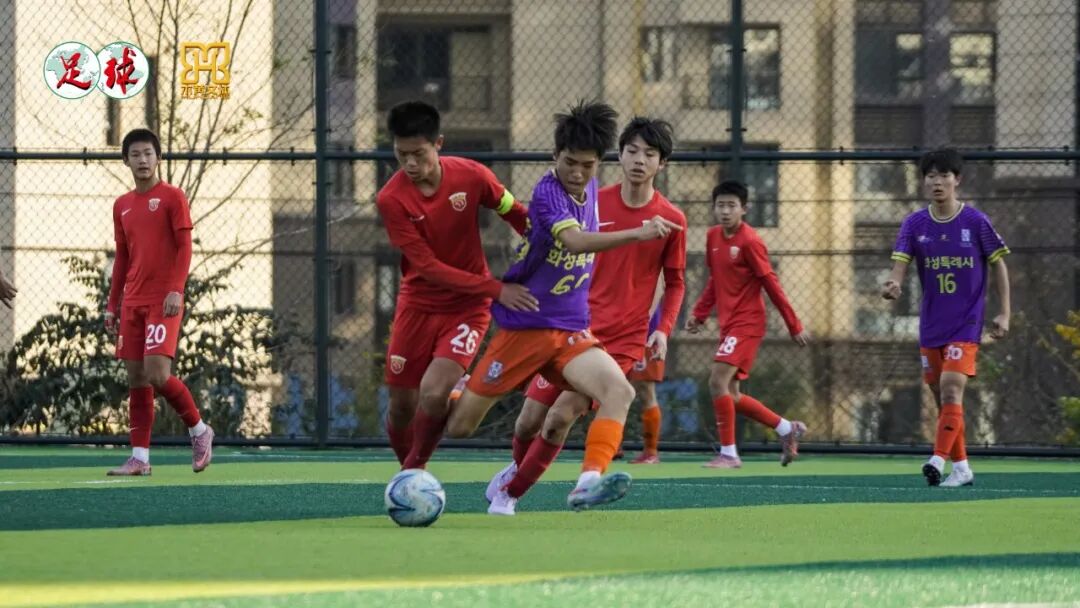
Nan Nan reporting from Dingnan, Jiangxi On day one of the inaugural "462 Cup" China-Korea Youth Football Elite Challenge, HSFA Hwaseong U15 played a high-tempo offensive game against Zhejiang FC’s U15, a leading domestic youth team. Four days later, Zhejiang’s head coach Feng Yang confessed that after the game, the team’s stamina dropped significantly, likening it to an engine seizure in a car.
In this challenge, many Chinese teams were able to compete evenly with Korean teams in the early stages, but as the match progressed, numerous Chinese sides were gradually worn down in the tug-of-war, becoming exhausted. Only elite teams such as Evergrande Football School, Guangdong Mingtu, Wuhan Three Towns, and Zhejiang FC managed to maintain a high-tempo confrontation throughout the entire game with Korean teams.
Regarding this phenomenon, Kim Si-seok, Youth Training Director of K1 League’s Incheon United, stated that overall, Chinese players tend to have better physical attributes than Korean players, but most Chinese teams fail to capitalize on this advantage or do not demonstrate it effectively during matches.

At the national team level, after over 30 years of China-Korea football confrontations, Korea has dominated, leading to what is called a "Korea phobia." Compared to the bleak results of senior national team clashes, Chinese teams perform relatively well in youth competitions against Korea. Several Chinese U-age national teams have defeated their Korean counterparts, and in the first seven rounds of this China-Korea challenge, six Chinese teams claimed victories over Korean squads.
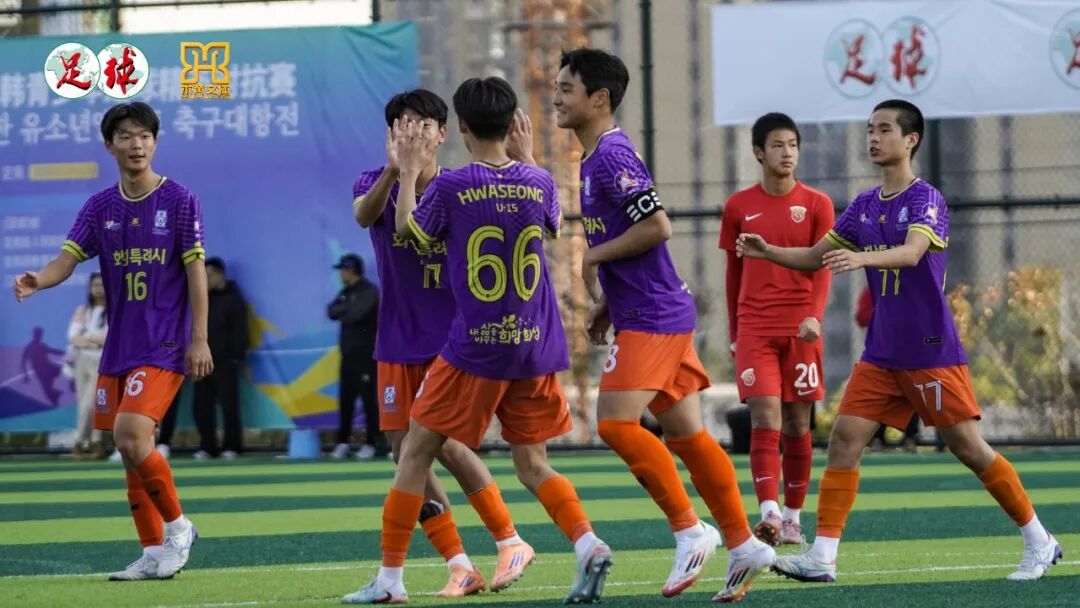
According to HSFA Hwaseong’s head coach Choi Seong-joo, many Chinese youth players possess decent technical skills but generally lack the ability to maintain high-quality passing and receiving under intense physical duress. Choi explained that Hwaseong is a team jointly established by the Gyeonggi Football Association and Hwaseong Football Association, which means their financial support does not meet professional club standards, nor can they attract top talents as well as professional youth teams. Therefore, they select children overlooked by professional teams at younger ages. Nonetheless, since Hwaseong’s founding, their results in Gyeonggi provincial competitions have been impressive, often outperforming many professional youth teams in Korea at the same age group.
Hwaseong was the most open-style Korean team in this China-Korea challenge, and all Chinese teams that faced them were impressed by their full-match fast-paced playing style. Although there was a noticeable technical gap between Hwaseong’s starting lineup and substitutes, their fitness and running abilities were quite similar. Choi noted that Korean teams’ fitness training closely resembles match conditions, using match data to design high-intensity sprinting, medium-speed running, and slow jogging combinations, aiming to simulate the actual physical demands players face during tactical play. This game-like training enables players to quickly reach familiar physical states during matches.
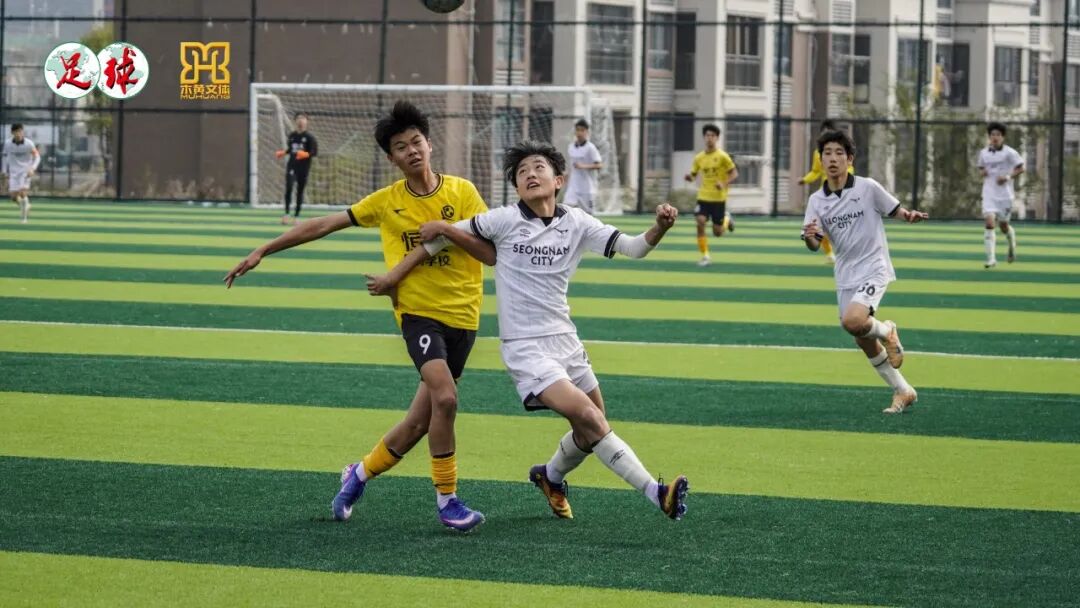
In the opening match of this challenge, Dingnan Dream fought back and forth with Seongnam FC in the first half, but after a drop in stamina in the second half, Dingnan Dream conceded consecutive goals. Similarly, Yongin FC and Ganzhou Youth Training Center’s team ended the first half scoreless, but leveraged their fitness advantage in the latter half to score twice and win. Except for a few top Chinese youth teams, other Chinese sides struggled to keep pace in the second half. Korea’s 19 wins and 9 losses in the first 28 China-Korea confrontations strongly illustrate this point.

Starting in 2024, the Korea Football Association launched the "MIK Plan" (Made in Korea). The core of this plan is to deeply integrate training content with match scenarios, continuously refining and strengthening fundamental technical skills based on the concept of simulated game training.
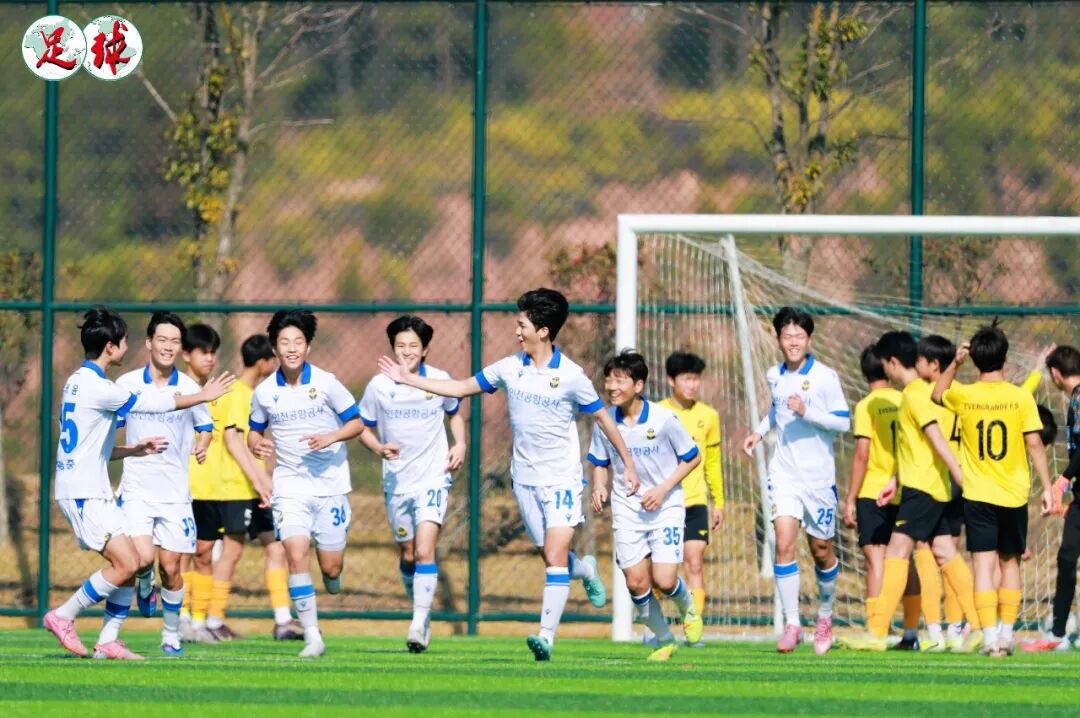
During the China-Korea challenge, Incheon United played almost daily matches plus training sessions. Their training emphasizes simulated match scenarios focusing on ball control and progression in different zones. For example, in drills involving receiving the ball and immediately passing without stopping, followed by rapid movement to receive and advance, players practice both inside-foot and outside-foot ball progression for over 20 minutes daily, even amid intense match schedules. Head coach Midal Park explained that in Korea’s regular training, more such detailed exercises exist. He believes that for 14 to 15-year-old youth players, improving the application of basic football techniques in match situations is crucial, while the comprehensive development of fundamental skills should happen at younger ages.
"Ages 10 to 13 are the golden years for developing youth players’ technical skills," said Hwaseong’s coach Choi Seong-joo. "The technical abilities a player can display in future matches depend on what they develop during this age range." Shin Gu-ron, one of Choi’s favorite players, is highly regarded; Liu Yibing, former coach of Xi’an Sports School who played in China’s Jia A league, also sees great potential in him. This left winger combines excellent ball and body coordination. Although he currently lacks top-end speed, Shin consistently uses changes in rhythm to break through defenses with a high success rate.
Recalling his childhood training, Shin Gu-ron admitted it was sometimes boring because a single movement had to be practiced repeatedly for a long time, often continuing at home. Choi emphasized that fundamental technique training is essentially about building muscle memory—using the correct part of the body to strike the ball properly. "Only with proper muscle memory can players apply it effectively in different match situations to handle the ball," he said.
In Hwaseong’s player selection system, Choi focuses more on basic technical skills. "Every year, I travel across Korea to watch elementary school football matches, hoping to find kids who already have well-developed fundamental skills, especially those who can dribble well and have strong one-on-one abilities," Choi said. "Once they join my team, there is still room to improve their basic skills, but it’s much more limited compared to the critical 10 to 13 age period."
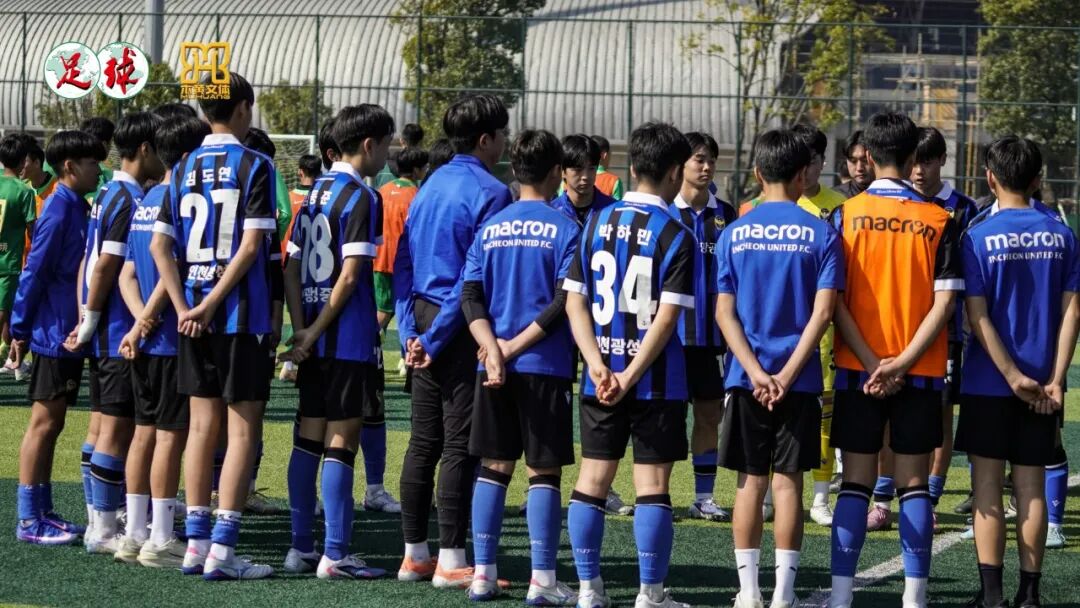
Incheon United’s Korean national youth player Liu Can-yong played five different positions during this China-Korea challenge: left winger, central midfielder, defensive midfielder, left back, and center back. Regarding this, Midal Park explained, "This talented player’s fundamental skills are relatively mature, and we want him to keep trying different positions to discover more possibilities for his football development."

Since the 2002 World Cup, South Korea’s national team had long failed to advance past the group stage until breaking through again at the 2022 Qatar World Cup. The prolonged absence of World Cup success prompted internal reflection on their training philosophy, which is one of the reasons behind the introduction of the "MIK Plan."
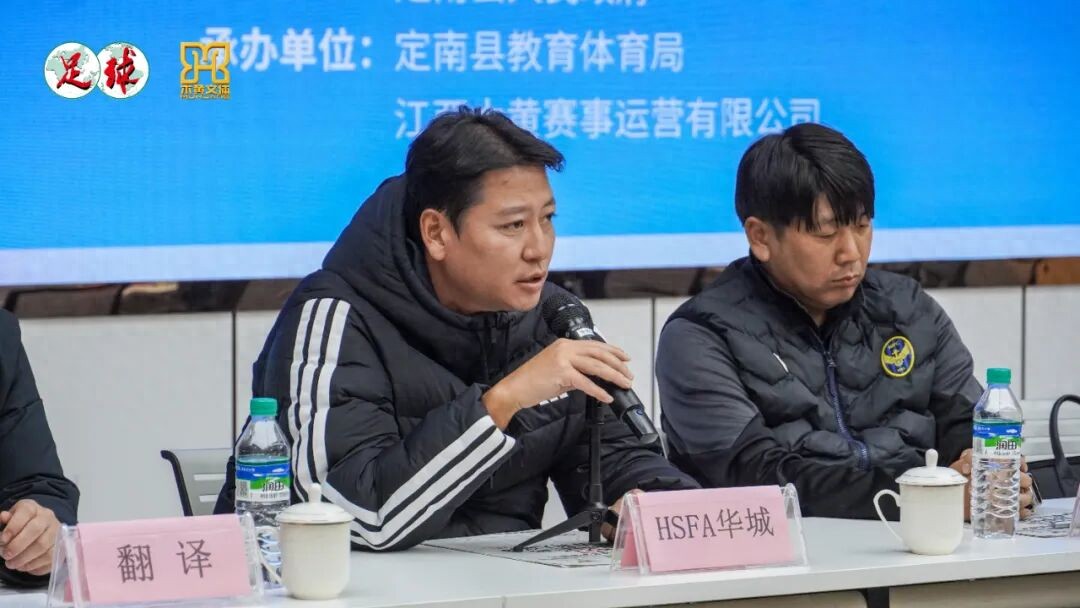
At the China-Korea coaches’ exchange meeting held on January 16 at Dingnan Training Center’s multifunctional hall, Korea Football Association Vice President Lee Yong-su pointed out that Korean football has shifted from its previous overemphasis on physical and strength training toward prioritizing fundamental technical training. Especially after the release of the "MIK Plan," Korea has adjusted the age and duration for strength training in youth football: "The Korea FA recommends gradually introducing strength training only after the onset of puberty. Even then, heavy-load strength training is not advised during the early stages of puberty."
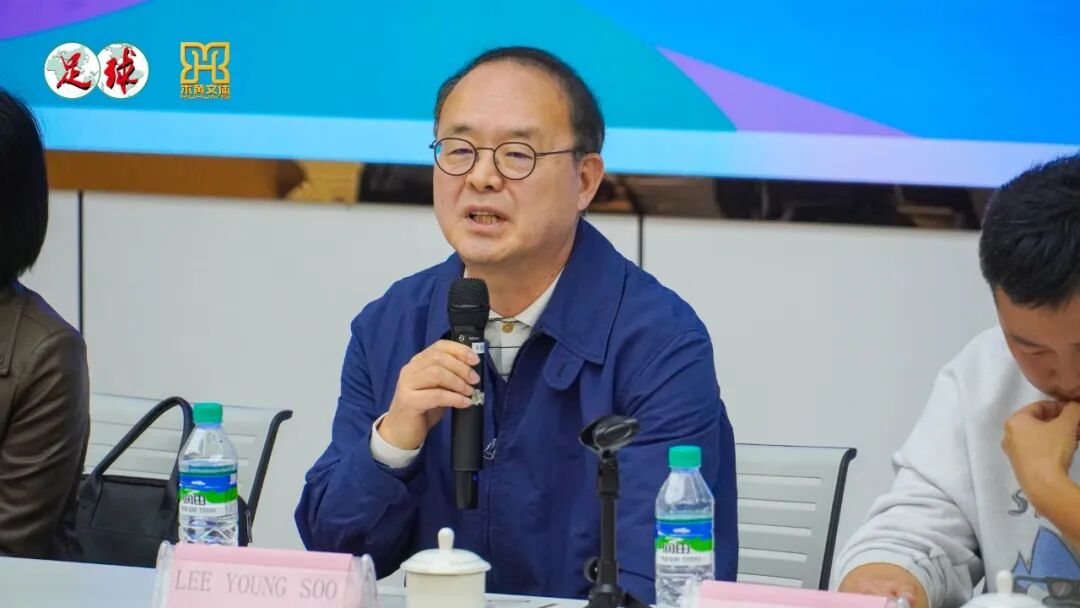
Delaying the start of strength training does not mean reducing training intensity for Korean youth players. On the contrary, the Korea FA has increased the training volume for fundamental skill development during the golden developmental period by nearly 30%. They have also increased training involving 1v1, 3v3, 5v5, and 8v8 small-sided games, and provided recommendations on the number of dominant players and touches per player in these formats to ensure every player gets ample ball contact during confrontations.
In the first 28 matches of the China-Korea challenge, Chinese teams frequently conceded multiple goals in a short span, whereas only Hwaseong among Korean teams experienced conceding three goals within eight minutes in their match against Shanghai Port.
Incheon United’s head coach Midal Park stated that conceding consecutive goals quickly is normal in youth football because young players cannot match adults in emotional control and concentration. To improve youth players’ mentality when trailing, he sets fixed scenarios and special demands during training to enhance players’ focus under different match conditions, thereby improving their performance in various game situations.
Based on discussions at the China-Korea coaches’ technical exchange and the teams’ on-field performances, Korea’s youth training philosophy has clearly shifted from emphasizing physicality, strength, running, and confrontation to a more refined, technical approach. Korean football is gradually moving from its original focus toward a more balanced development path, offering valuable lessons and reflections for our own youth training development.


Wonderfulshortvideo
The footwork, the finish 🤌


Did you get it? 🤔😅
The Wirtz x Sané link-up 🔗
Haaland’s movement 🥵
Which counterattack is
When you use your girlfriends shower 🚿 @Emily Bourne @LUSH
🤤🤤
 Links
Links
 Contact
Address:UNIT 1804 SOUTH BANK TOWER, 55 UPPER GROUND,LONDON ENGLAND SE1 9E
Number:+85259695367
E-mali:[email protected]
 App
App


