



Shadows beneath the Spotlight: Injuries, Huge Expenses, and the Birthrate Crisis — The Harsh Reality of South Korea’s Youth Football Development


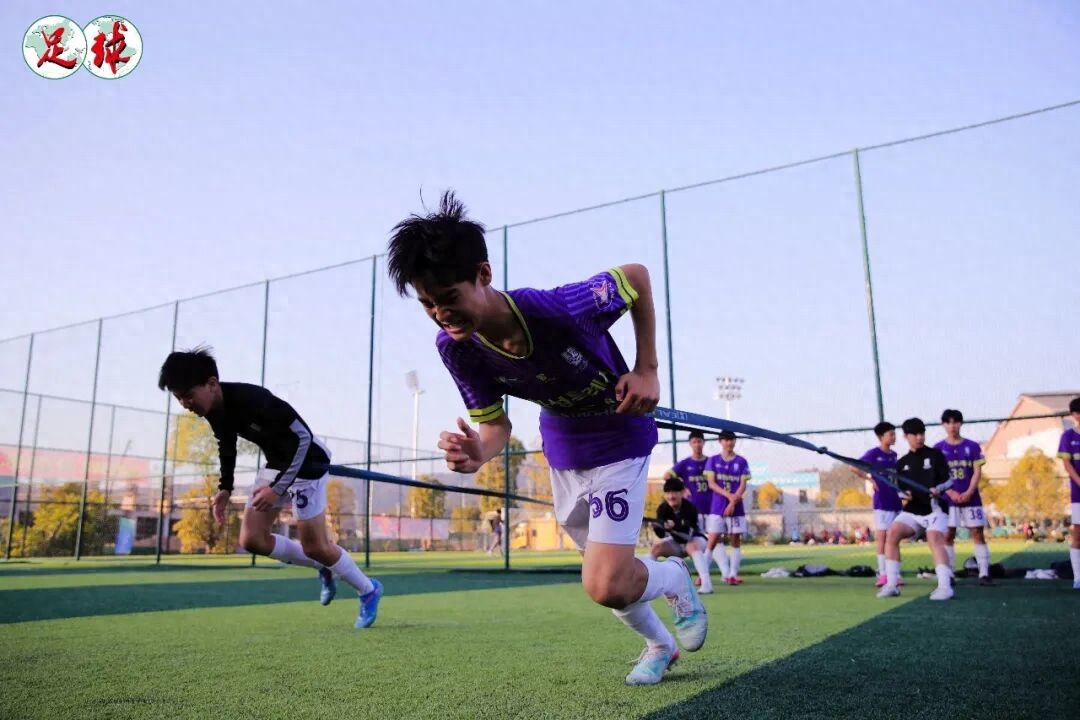
Han Bing reporting from Dingnan, Jiangxi Elite youth training has always been the genuine route for countries to cultivate talent and develop professional footballers. In South Korea, this system is primarily composed of club youth teams, local football association squads, and school football programs. Despite a large number of private social training organizations, the likelihood of these players advancing into club youth teams and turning professional remains slim. The attrition rate in South Korea’s elite football training is remarkably high.
South Korea’s K1 and K2 leagues are set to expand to 14 and 16 teams respectively by 2027, totaling 30 teams and increasing the number of professional players to 1,100. Meanwhile, the number of youth players has also risen in recent years. The pathway from elementary school, middle school, high school, and university to professional ranks is far more challenging than commonly perceived. According to a survey by South Korean media, only 0.8% of registered elementary school footballers eventually become professional players.

The elite selection in South Korean football training starts as early as age six. The I-League, established by the Korea Football Association in 2013, aims to identify football elites from the age of six, covering six age groups: U6, U8, U10, U12, U15, and U18. The U6 to U10 categories play 5-a-side matches lasting 10 minutes each half; U12 plays 8-a-side with 15-minute halves; U15 and U18 play full 11-a-side matches with 20-minute halves. In 2024, over 3,700 youth teams from 700 football associations participated in the I-League, with more than 33,000 players competing.
Notably, the U12 elementary league switched to 8-a-side matches, which plays a crucial role in honing individual skills, developing tactical awareness, and fostering team spirit among young players.
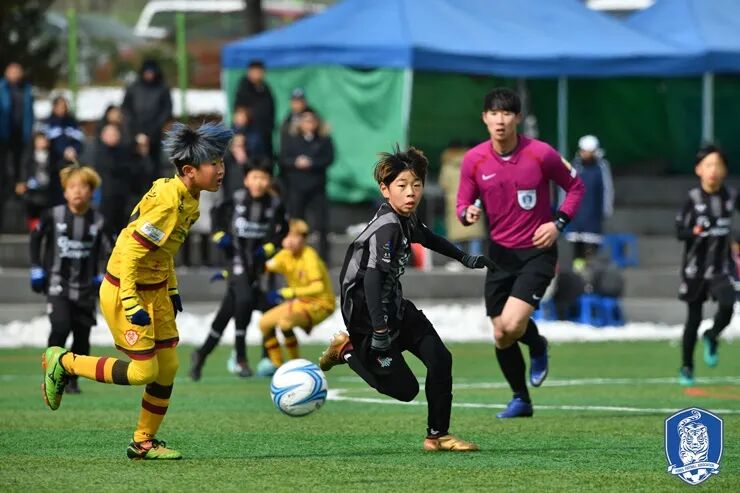
The Korea Football Association has endeavored to expand football participation starting from elementary school. Registered elementary players increased from 6,400 in 2018 to 9,700 in 2023, a growth of 53.4% over five years. Middle school registrations rose from 7,500 to 9,200, up 21.8%. High school players increased from 5,800 to 6,300, about 8.4%, and university registrations grew from 2,600 to 2,760, a 7.1% rise.
Only 28.4% of registered elementary players persist through to university, where the number of registered players remains steady between 2,600 and 2,800. Besides natural elimination due to fierce competition, injuries and waning enthusiasm for football in favor of academics, other factors also prevent young players from smoothly advancing to university. Without winning national championships or earning accolades like Golden Boot, MVP, or being named in the annual best lineup during university, it is difficult to attract professional club attention. Of the 2,600 to 2,800 university players, only about 100 are drafted by K-League clubs, meaning at most 3.8% of university players turn professional. From elementary school registration to K1 league professional player, the success rate is only 0.8%.
Statistics from the Korea Football Association differ slightly, as their data is based on the pool of elite players aspiring to turn professional. In reality, many elementary, middle, and high school players treat football as a hobby rather than a career goal. These student players typically represent their schools in local city competitions, but their information is not included in the KFA’s official database, and even if it were, it wouldn’t change the fact that most will not become professionals. Even with the K1 and K2 leagues expanding to 1,100 professional players by 2027, the ultimate success rate will likely remain around 1.1%, or about one in a hundred.
Lack of skills, injuries, conflicts with coaches, and difficult family circumstances are likely the main reasons why 99.2% of players give up football. To establish oneself in the K-League, a player needs a combination of talent, tremendous effort, and crucially, luck.
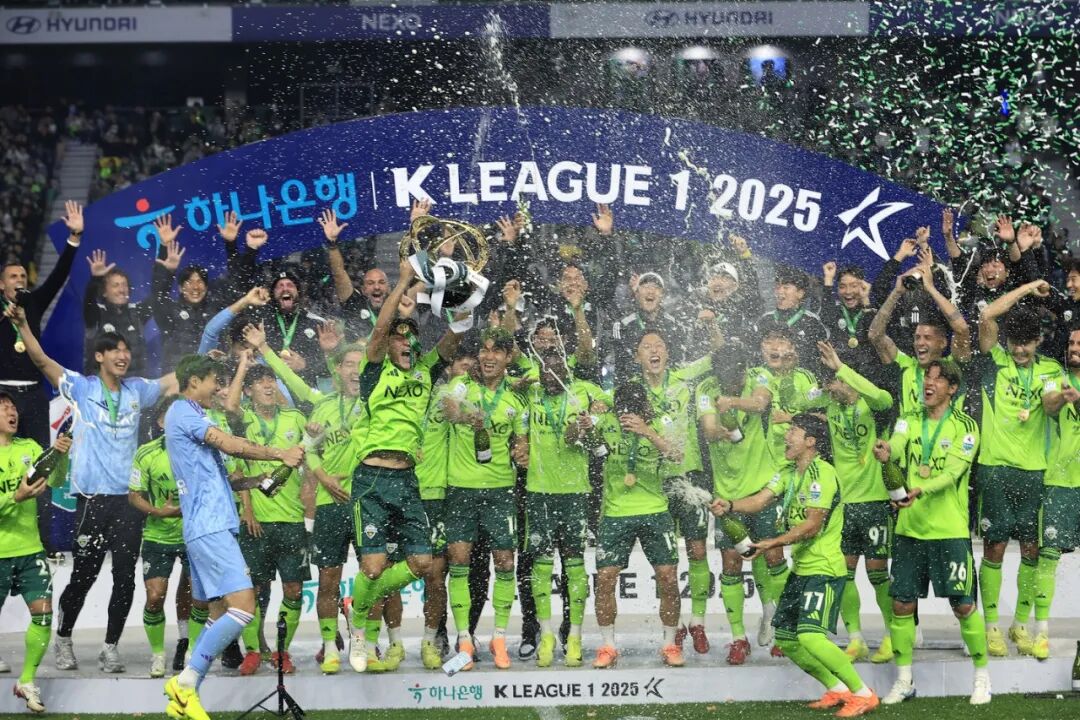

Besides the harsh “one in a hundred” elimination rate, South Korea’s elite football training faces enormous financial pressure.
In South Korea, membership fees for school clubs for children aged 7 to 10 are about 200,000 to 300,000 KRW per month (approximately 950 to 1,400 RMB). The course fee (once a week, four times a month) is 200,000 KRW, totaling around 500,000 KRW monthly (about 2,400 RMB). After age 10, players decide whether to join a Category 1 club (registered with the Korea Football Association) or a regular Category 2 club.
If joining a Category 1 club, monthly membership fees are 300,000 to 400,000 KRW (about 1,400 to 1,900 RMB), with course fees (twice a week, eight times monthly) at 400,000 KRW, totaling roughly 800,000 KRW per month (around 3,800 RMB). Over six years of elementary school, football expenses can reach 50 million KRW (about 240,000 RMB). In middle and high school, if progressing well, players may attract scouts from professional clubs. Middle school training fees are about 700,000 KRW per month (3,300 RMB), and high school fees rise to 1,000,000 KRW monthly (4,800 RMB). Additional costs for summer or winter training camps and competitions outside the local area range from 500,000 to 1,000,000 KRW (2,400 to 4,800 RMB). Personal football gear like uniforms and shoes are extra and not included in these calculations.
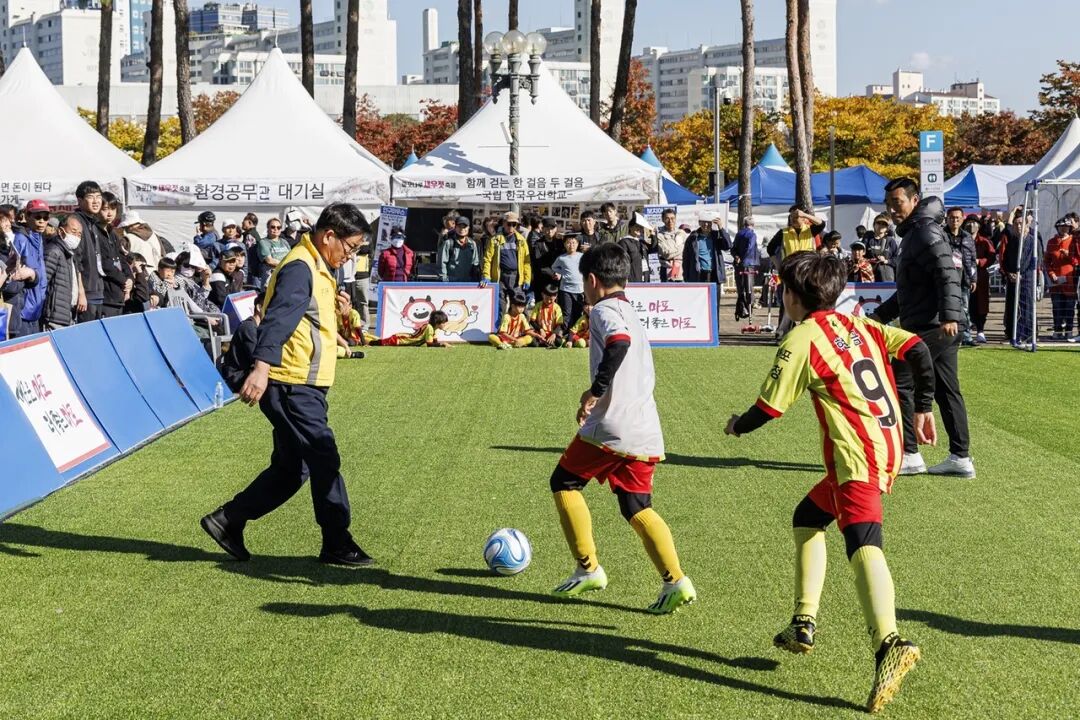
Of course, if a player’s talent is discovered in middle school, they might be signed by an agent and receive sponsorships worth tens of millions of KRW (over 48,000 RMB), but such opportunities are reserved for very few gifted players. The cost of six years of middle school football training alone exceeds 60 million KRW (about 280,000 RMB). At the university league level, monthly training fees (excluding accommodation) range from 600,000 to 1,000,000 KRW (2,800 to 4,800 RMB), totaling nearly 40 million KRW (around 190,000 RMB) over four years. This means that before becoming a professional, South Korean youth players’ football training expenses already reach at least 150 million KRW (approximately 700,000 RMB).
This figure is a conservative estimate; including 16 years of training-related consumables and additional summer and winter training costs, the total may well reach 200 million KRW (around 950,000 RMB). It’s important to note that only 3.8% of university players have a chance to turn professional, implying that 96.2% of youth players investing nearly one million RMB from elementary through university receive little to no financial return.
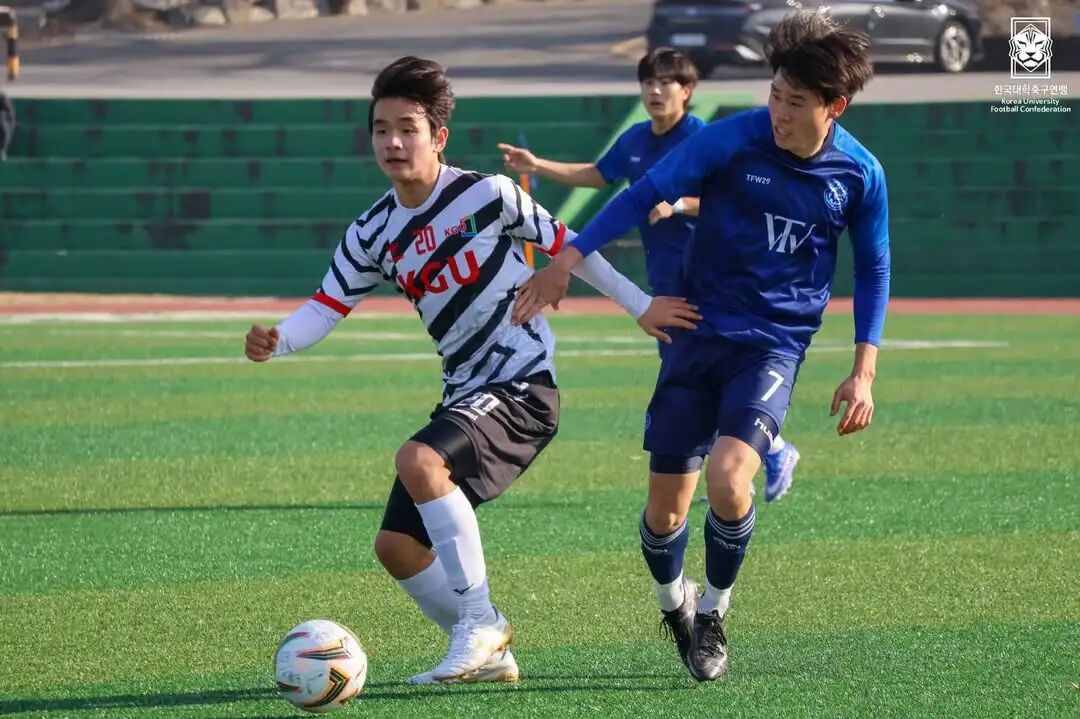
This partly explains why, in recent years, South Korea’s school football system has surpassed professional club youth teams in competing for talent resources. Under such enormous cost pressures, most choose to transition to other paths through university.

Besides the brutal “one in a hundred” competition and massive financial investment, South Korea’s elite football training also faces a serious problem: the side effects caused by a dense match schedule.
South Korea offers numerous youth football competitions, and a youth trainee can participate in up to 40 matches annually. However, the increased number of matches also raises the risk of injury — injuries are a major reason why many promising young players must prematurely abandon their professional dreams.
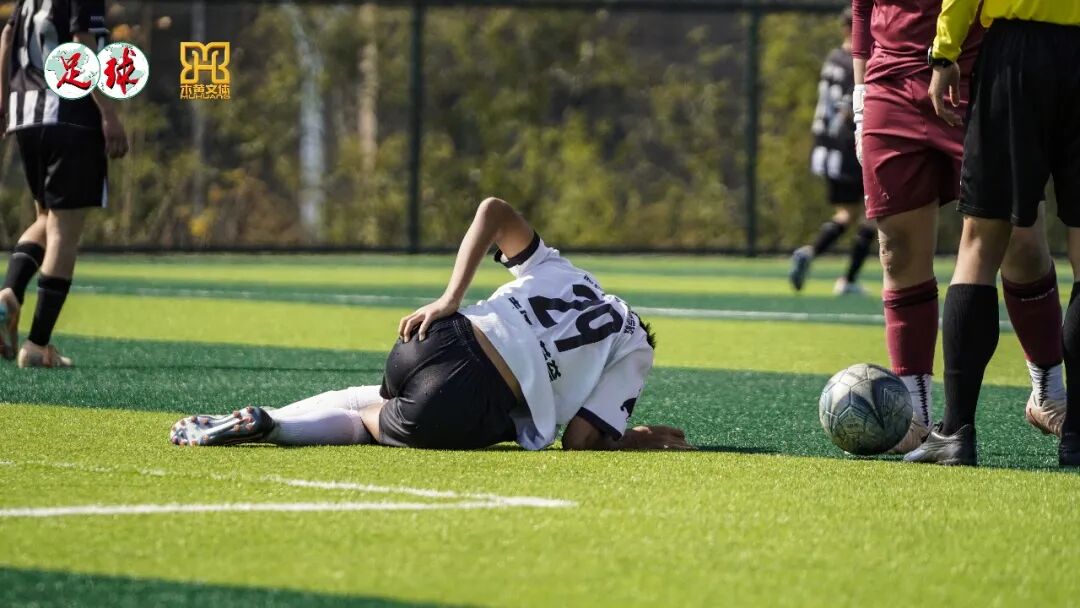
From ages 6 to 10, youth players participate in the I-League. For U12, U15, and U18 categories, besides the I-League, there are two main systems: school football leagues and K-League youth leagues. Key national competitions include the spring and autumn National Middle School Championships, age-group events at the National Sports Festival, Korea Football Association Chairman’s Cup for middle and high schools, and various nationwide knockout tournaments.
According to a 2020 injury report from South Korean media, about 5% of players in middle and high school leagues suffer severe injuries annually that force them to quit football. Many teams struggle to field squads for important national tournaments due to excessive injuries. For example, Yongin FC, which participated in the “462 Cup” Korea-China competition, had to forgo the spring National Middle School Championship because too many key players in their U15 squad were injured. The South Korean National Assembly’s Culture, Sports, and Tourism Committee has previously discussed how to help youth players who must leave football due to injury complete their education and find suitable jobs in society.
Given the high “one in a hundred” elimination rate, supporting youth players who fail to enter university has become a significant issue in South Korean society regarding continuing education. For student athletes, reaching the top of the pyramid and becoming professionals is extremely difficult. South Korea is striving to provide a solid foundation for many dropouts, helping them integrate into society rather than simply being discarded. Measures include allowing them to study football-related professions, obtain certifications as referees or coaches, and find employment opportunities in familiar fields.
South Korean football faces an even greater hidden risk: the sharply declining birthrate leading to a shortage of young population. Many schools have already closed, causing their sports clubs to disappear as well, and this situation is unlikely to change in the short term. The societal drop in birthrate inevitably affects the football player base. Some regionally focused small and medium clubs in South Korea have had to start recruiting talent nationwide, highlighting the severity of this issue.


Wonderfulshortvideo
The footwork, the finish 🤌


Did you get it? 🤔😅
The Wirtz x Sané link-up 🔗
Haaland’s movement 🥵
Which counterattack is
When you use your girlfriends shower 🚿 @Emily Bourne @LUSH
🤤🤤
 Links
Links
 Contact
Address:UNIT 1804 SOUTH BANK TOWER, 55 UPPER GROUND,LONDON ENGLAND SE1 9E
Number:+85259695367
E-mali:[email protected]
 App
App


