



Though defeated, the honor remains; the future is promising: finishing as runners-up in the U23 Asian Cup is a true “recognition” of China’s youthful football strength.



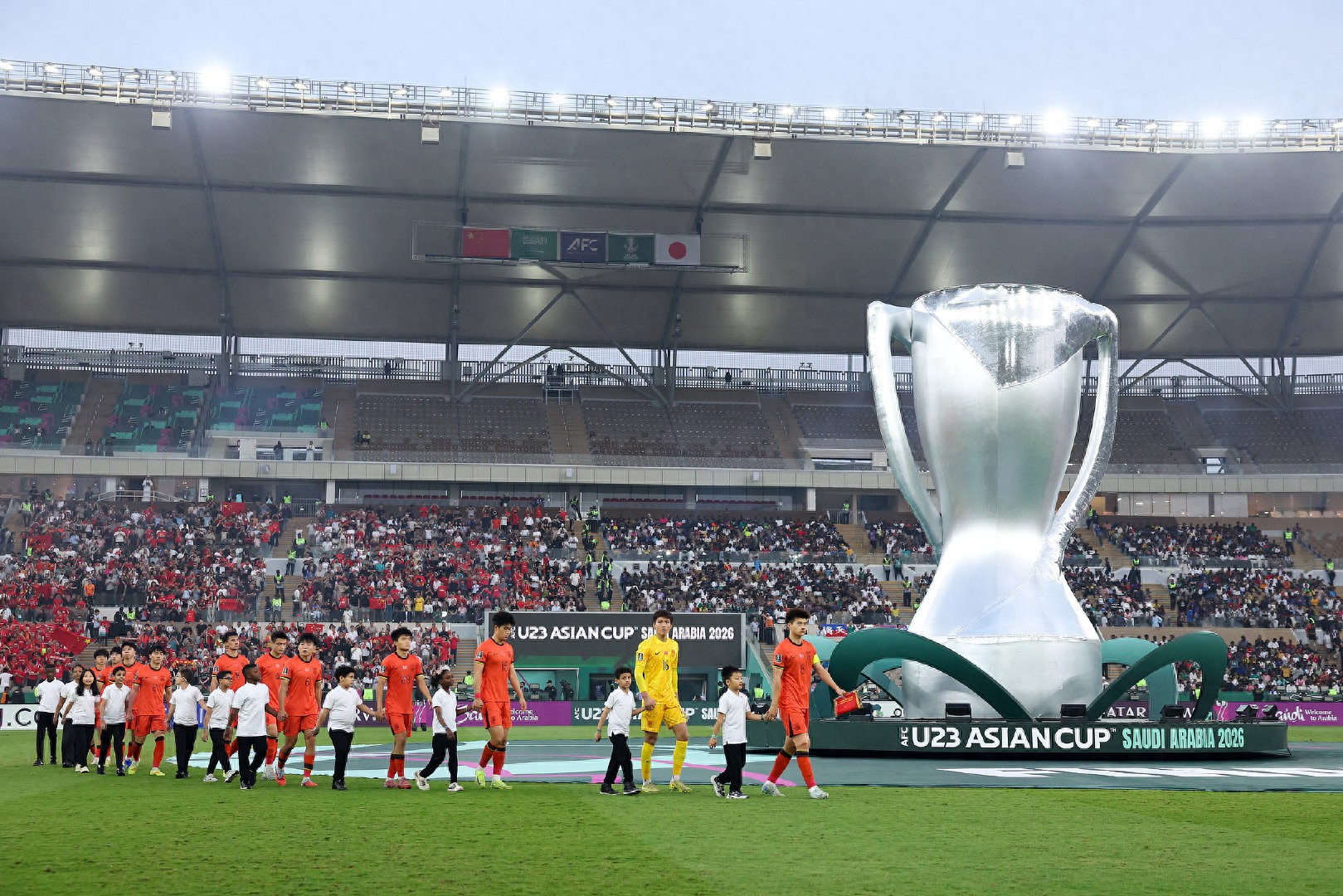
Reporter Lu Mi reports After falling to Japan in the final, China’s U23 men’s team finished as runners-up in the U23 Asian Cup. Although the outcome was somewhat regrettable, the U23 squad battled fiercely all the way, ultimately making a historic final appearance and setting the best record the team has ever had in this competition. This achievement has pleased fans, who have seen the energy and toughness of China’s football youth.

Antonio undoubtedly played a key role in the U23 team’s runner-up finish; his tactical and technical guidance enabled the players to perform at their true level.
From leading the U15 national youth team to the final stage of the AFC U16 Championship, to guiding the U20 team into the AFC U19 quarterfinals, and now steering the U23 squad to the Asian Cup runner-up spot, Antonio has proven through repeated successes that he can help young players and teams find their most suitable roles. His tactical approach has always been coherent—pragmatic and adaptable according to the match situation and opponents’ characteristics. Antonio knows this young team’s strengths and weaknesses thoroughly; he avoids unrealistic aggressive tactics and instead adopts a practical style, which has been crucial for the U23 team’s steady progress.
Antonio’s tactical foundation centers on solid defense, efficient counterattacks, and capitalizing on set pieces, all strictly enforced by the entire squad. Against strong teams like Australia and Uzbekistan, he implemented a 5-3-2 formation to build a compact defensive line, limiting opponents’ possession space and establishing a team-wide defensive discipline that denied them quality shooting opportunities.
Having coached in China for many years, Antonio is very familiar with domestic youth players. He understands that close ball control and possession are not the strongest suits of local young players. The U23 players, who have gained significant playing time in recent leagues, have improved in match experience, physical condition, stamina, and defensive awareness. Antonio maximized these advantages by tightening the positioning among defenders and midfielders for mutual support, even having forwards drop back within their own 40 meters to help defend, creating a “moving Great Wall” to repel waves of attacks. Before the final against Japan, the U23 team kept clean sheets in all five previous matches, the only team in the tournament to do so. This defensive performance is the best proof of Antonio’s tactical success.
In Antonio’s system, offense mainly relies on counterattacks, abandoning complex possession play to quickly transition through midfield and strike at the opponent’s defensive weaknesses.
The team generally held less possession during matches, but Antonio did not care about aesthetics on the field. He instructed players to launch swift counterattacks immediately after regaining the ball, using one or two passes to create shooting chances. During the U23 Asian Cup, Li Hao’s precise long passes frequently linked up the attack and generated scoring opportunities.
Set-piece tactics must be mentioned as they were a key source of goals besides counterattacks. The U23 team scored four goals in the tournament, half of which came from set pieces. Peng Xiao, using his height advantage, posed constant aerial threats in defense and was a vital participant in set-piece plays. His goal helped secure a crucial victory. Antonio admitted, “There’s no need to obsess over possession; winning and building confidence for young players is what matters most.”
Of course, Antonio’s tactics are not fixed. When most expected Vietnam’s U23 team to be tougher than Uzbekistan, Antonio quietly made major adjustments. After thoroughly studying the opponent, he boldly rotated six starters and switched to a possession-based attack formation, resulting in a 3-0 comprehensive victory. Antonio commented after the match, “I have enough quality players, and they executed the tactics perfectly. This win is vital for Chinese football.”
Despite criticism from some who labeled Antonio as overly conservative and nicknamed him “Long Kick Nio,” he remained unfazed, focusing on maximizing strengths and minimizing weaknesses. His rational tactical decisions in every game proved correct, allowing this young team to hold firm in a highly competitive Asian Cup environment. The players’ absolute obedience and flawless execution created a positive atmosphere where the coach’s vision met the players’ commitment—this was the most valuable technical and tactical gain from the journey.

A team’s victories and progress are never the work of one person alone; achieving runner-up status depended on every player’s full dedication.
The key to reaching the U23 Asian Cup final was the rapid development of a group of young players. As Antonio said, “We have plenty of good players,” which laid the foundation for the team’s success.
Unlike previous squads, over half of these U23 players are regular starters at their clubs, gaining ample league experience. Some have already joined the senior national team and accumulated significant international experience. These seasoned players have solid individual skills, good match rhythm, and strong mental resilience.
Goalkeeper Li Hao kept five consecutive clean sheets in this tournament, making 33 saves with the highest save rate, earning the nickname “The Wall of Sighs.” His 29 league starts in the 2025 season honed his skills and mentality, making him the backbone of the defense. During the quarterfinal penalty shootout, after a teammate missed, Li Hao comforted Yang Haoyu and saved a crucial penalty to help the team advance. “League experience has helped me grow; I trust myself and my teammates,” he said. Antonio praised him highly.
Nineteen-year-old Wang Yudong is the team’s core, and his growth owes much to league play. Over the past year, he has played more than 50 official matches, gradually becoming his club’s key striker. After many games, Wang Yudong has improved noticeably in shooting, passing, and playmaking, gaining valuable experience. He made a mistake in the final against Japan but apologized afterwards, posting on social media, “I gave my all; regrets will become motivation to grow.” His sense of responsibility gives fans hope for the future.
Twenty-year-old Peng Xiao is the defensive anchor, leading the tournament with 57 clearances. Last year, he started 12 times for Taishan B team and appeared 11 times (9 starts) for the first team in the Super League. Defending against strong foreign players in the league has enriched his experience, improving his positioning and tackling. Notably, his heading ability is excellent, making him a key offensive target in set-piece tactics. He scored from a set piece in the group stage and broke the deadlock with a header in the semifinal.
Twenty-one-year-old Wumitijiang has played 38 Super League matches in the past two years, starting 30 times. In this tournament, he showed stable performance as a defender, ranking fourth in clearances with 36, proving himself with solid defense. Twenty-year-old He Yiran started playing in the Super League in 2022, accumulating 51 appearances (36 starts). He recorded 30 clearances this tournament, ranking sixth in that category.
Twenty-year-old Yang Xi debuted in the Super League last season with 21 appearances and led the league with 105 tackles, earning the title “Tackle King.” At the Asian Cup, his defensive interceptions and tackles in midfield were outstanding, winning the ball precisely and creating counterattack chances for the team.
Additionally, young players Kuai Jiwen, Li Zhenquan, and Xiang Yuwang also shone in the tournament. Kuai Jiwen, like Wang Yudong, experienced disappointment at the U20 Asian Cup but actively ran and broke through in the front line during the U23 Asian Cup, creating many scoring chances. After the semifinal victory, Wang Yudong posted a photo with Kuai Jiwen, captioning “So much to say.” These six simple words reflect the growth, perseverance, and relentless pursuit of victory by these young players. Xiang Yuwang, from Chongqing Tongliang Long, was a key player during qualifiers but played less in the main tournament due to tactical changes. His attitude remained positive, and whenever given a chance, he gave his all, using his speed and impact to contribute.
It is worth noting that the average age of this U23 squad is still under 22 years old, and most have already gained playing time in the league as starters or key substitutes. This youthful force will gradually grow into the core of China’s national team.

The 0-4 loss to Japan’s U23 team in the final resulted in a second-place finish. While the result is somewhat regrettable, the overall journey was worthwhile.
This is the best result for China’s U23 men’s team in the U23 Asian Cup, reaching the final of a major Asian tournament again after 22 years, marking a rare experience. This journey not only greatly enhanced the players’ technical and tactical skills but also taught them how to handle pressure calmly. The young players gained confidence, experience, and growth. This tournament is a valuable asset for the future of Chinese football and will have a positive and lasting impact on the next U23 team and the long-term development of football in China.
“Fear of strong opponents” has long been a chronic issue for China’s national teams. Historically, Chinese men’s teams have often lost composure and seen their technique falter when facing strong Asian teams like Japan, South Korea, and Uzbekistan, leading to poor performances and many defeats. This creates a vicious cycle where losing causes mental imbalance, which then worsens performance, resulting in more losses. However, in this U23 Asian Cup, the young team showed a completely different spirit. Against teams like Uzbekistan and Australia, the players appeared calm, confident, and combative, no longer timid as before. In the future, they will respond more composedly to strong opponents.
Many fans commented, “Although you lost the final, you have won the future. You are the pride of Chinese football, and the future is bright!” Indeed, the players gained personal confidence, and the team’s overall morale improved. They set an example for other national teams, showing that strong teams are not unbeatable.
Of course, this tournament also revealed shortcomings and gaps. Facing Japan’s U23 in the final, the technical and possession differences were clear. Antonio stated, “The defeat exposed our weaknesses; with continued hard work, we will become better.”
The Chinese Football Association is forming the 2005-age group Olympic team, and Antonio is likely to continue as head coach. “We know that better players will keep emerging in the future,” Antonio said.


Wonderfulshortvideo
The footwork, the finish 🤌


Did you get it? 🤔😅
The Wirtz x Sané link-up 🔗
Haaland’s movement 🥵
Which counterattack is
When you use your girlfriends shower 🚿 @Emily Bourne @LUSH
🤤🤤
 Links
Links
 Contact
Address:UNIT 1804 SOUTH BANK TOWER, 55 UPPER GROUND,LONDON ENGLAND SE1 9E
Number:+85259695367
E-mali:[email protected]
 App
App


