



Antonio, the Segunda División top scorer delayed by unpaid wages



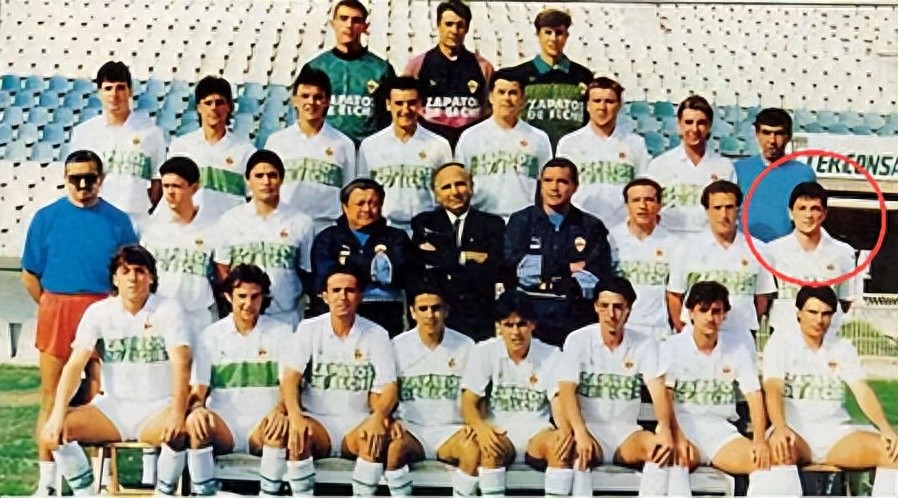
Antonio’s time at Elche
Written by Han Bing Antonio’s Puche family has deep roots in Yecla, Murcia, Spain. His father and two older brothers all started their football journeys at the local Yeclano club. The renowned Spanish coach Camacho, who once led the Chinese senior national team, also comes from Murcia.
Born in 1972, Antonio grew up playing football on the streets of his town and joined Yeclano’s youth ranks at the age of nine. As a player, Antonio was a forward, while his older brother José, who is four years his senior, played as a defensive midfielder. They shared the pitch in La Liga and Segunda División for 11 matches totaling 771 minutes, debuting together in the second half of the 1988/89 season against Sporting Gijón. The brothers played together for both Elche and Palamós. To distinguish between them, José was called “Puche I,” and Antonio was “Puche II.”
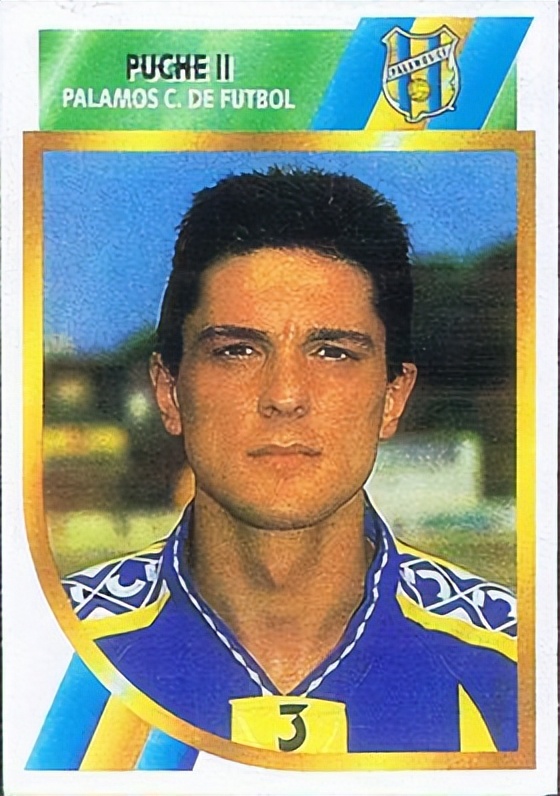
Antonio’s Palamós period
In terms of achievements as both player and coach, Antonio outshone his younger brother. During his playing days, Antonio made his La Liga debut under the guidance of Spanish legend Kubala at Elche on December 4, 1988, against Osasuna, becoming the youngest starting player in La Liga history at 16 years and 124 days old. He later represented Spain at the U16 and U20 levels, winning the Colombo Cup in Genoa in November 1988 with the U16 team and being named the tournament’s best player.
Both Elche and Palamós, where the brothers played, faced financial crises causing players to strike over unpaid wages. In the 1993/94 season, Antonio was sidelined by the coach in his first year at Palamós, but his strong-willed nature led him to refuse leaving and lodge a complaint with the Spanish players’ union demanding the club pay the owed salaries. Despite limited playing time in the following two seasons, Antonio proved his worth by scoring consistently, winning the Segunda División top scorer title with 21 goals that season. On April 9, 1995, he scored six goals in a single match against Leganés, leading to a 7-1 victory. Antonio scored 27 goals in just two seasons at Palamós, surpassing the total 24 goals his brother scored in a 15-year career.
Antonio’s career could have reached greater heights, but Palamós was relegated due to the financial crisis damaging team morale. Players’ unpaid wages remained unresolved, and the club was forced down another division due to wage arrears. As the Segunda División top scorer, Antonio attracted interest from several clubs, including Portugal’s Madeira Mariners and Chaves, as well as Mallorca in Spain’s second tier, but he ultimately chose Villarreal in Segunda División. Unfortunately, he was unable to maintain his peak form at the new club. Although Villarreal wanted to sell him for €6 million, Antonio declined. He never played in La Liga again, moving down through Segunda División and Segunda División B before retiring early in 2004 to pursue coaching.
Antonio’s early fame was marked by ups and downs throughout his playing career, but it forged his resilient character and tactical focus, laying the foundation for his later success as a coach.


Wonderfulshortvideo
The footwork, the finish 🤌


Did you get it? 🤔😅
The Wirtz x Sané link-up 🔗
Haaland’s movement 🥵
Which counterattack is
When you use your girlfriends shower 🚿 @Emily Bourne @LUSH
🤤🤤
 Links
Links
 Contact
Address:UNIT 1804 SOUTH BANK TOWER, 55 UPPER GROUND,LONDON ENGLAND SE1 9E
Number:+85259695367
E-mali:[email protected]
 App
App


