



Can this time truly touch the soul? To eliminate match-fixing and corruption, the root causes must be addressed!



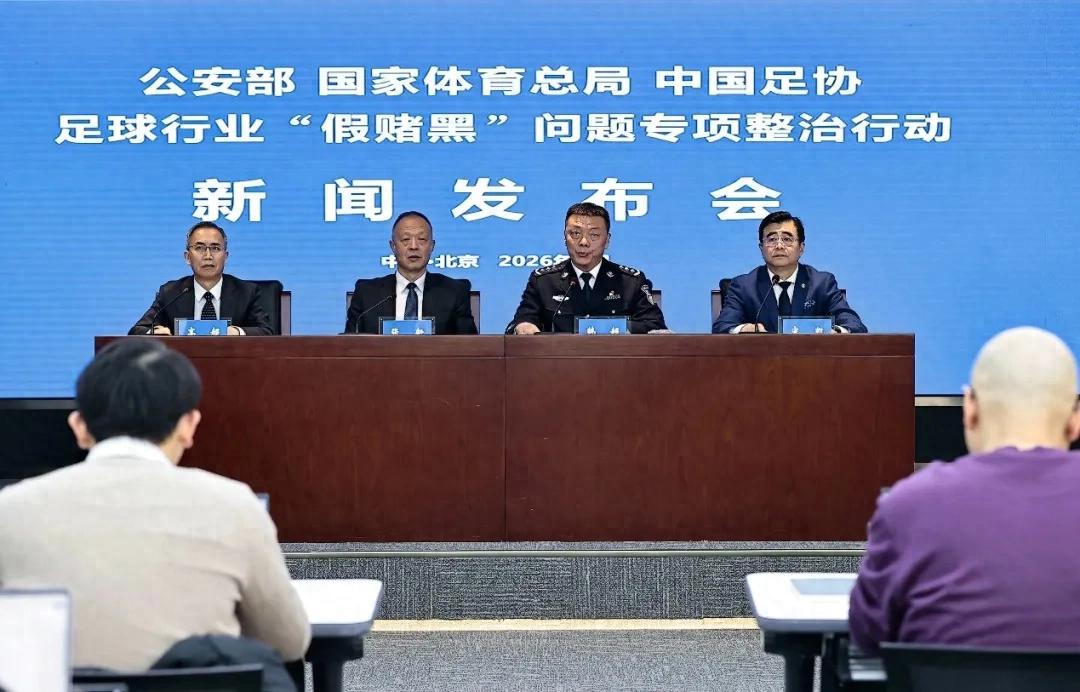
Reporter Chen Yong reports Over the past four years of combating match-fixing and corruption, the collapse seen in professional clubs is alarming: in the new season, 9 of 16 Chinese Super League clubs were punished with point deductions plus fines, and among the other 7 clubs, 6 appeared in the Super League for the first time in 2024 or later.
Due to multiple factors such as the imperfect league system (with the Super League thriving while League One and League Two remain relatively quiet), frequent changes in club ownership, and flawed club management systems, both external supervision and internal management of clubs face significant difficulties and blind spots.

The sanctions against clubs this time are based on two principles: first, punishment must follow wrongdoing, meaning industry penalties are imposed alongside judicial ones to promote reform; second, considering the league’s positive momentum and the clubs’ actual situations, extreme punishments like relegation were avoided to focus on curing and saving.
A question arises: does this widespread punishment in the special crackdown on match-fixing and corruption truly strike at the clubs’ core? The answer may not be affirmative. This governance and corresponding penalties have sounded an alarm for clubs but may not genuinely transform their management culture. The reasons are multifaceted:
(1)Currently, professional clubs experience frequent changes in ownership.Among the 16 Chinese Super League clubs, 6 are newly established clubs: 2 (Liaoning Ironmen and Chongqing Tongliang Long) are newcomers in 2026; 2 (Dalian Yingbo Haifa and Yunnan Yukun) are in their second Super League season; 2 (Qingdao West Coast and Shenzhen Xinpengcheng) are in their third. Of the other 10 clubs, 7 have completed their latest share reforms in the past six years: Wuhan Three Towns reformed ownership at the end of 2025; Zhejiang underwent reform in late 2024; Shanghai Shenhua and Henan clubs reformed early 2024; Chengdu Rongcheng joined the Super League in 2022; Tianjin Jinmen Tiger reformed in early 2021; Shandong Taishan reformed at the end of 2020. Only 3 clubs have relatively stable ownership and earlier reforms—Beijing Guoan reformed in early 2017; Shanghai Port and Qingdao Hainiu have had stable ownership for over a decade, with Shanghai Port’s last reform in late 2014 and Qingdao Hainiu’s in late 2004.

(2)Professional club management personnel change frequently.Corresponding to frequent ownership reforms, management teams—especially key roles like chairpersons and general managers—also change often, greatly weakening the stability and professionalism of club management.
(3)There are significant flaws in the management systems of professional clubs.Amid frequent ownership and management changes, many clubs have serious management deficiencies: state-owned clubs lack modern corporate governance, have unclear property rights, blurred lines between government and enterprise, and suffer from rigid, unprofessional management; private clubs tend to adopt rougher management styles and face greater difficulties in financial supervision.
All these factors severely restrict the standardization and professionalism of clubs. Violations and illegal cases include but are not limited to: club leaders or stakeholders bribing football association or league officials; clubs bribing match officials such as referees; club leaders bribing counterparts in other clubs; collusion between club leaders and coaches to gain improper benefits, etc.
Issues in club management include but are not limited to: investors injecting funds as loans, burdening clubs with heavy debts; signing abnormal contracts that don’t match players’ age or ability; colluding with agents or other companies for irregular transactions, etc.

To tackle the many irregularities in current professional clubs, multi-level supervision is imperative, including improving internal club management, coordinated oversight by provincial or municipal authorities where clubs are based, and deeper, more thorough industry regulation by the Chinese Football Association (CFA) and the Chinese Football League (CFL).
First, continuously improve the internal management mechanisms of clubs.This is closely linked to the current instability of professional clubs; new clubs and those with frequent ownership and management changes especially need to constantly enhance their internal management systems.
Second, even more importantly, is to establish genuine coordinated supervision mechanisms at the club’s local level.Currently, Chinese professional football leagues show two main trends: one, government-led or supported development, with state-owned clubs obviously supported, and private clubs also generally receiving strong government backing—there are very few clubs without any government support; two, the public and welfare attributes of clubs are growing stronger, especially their public identity, with many clubs becoming cultural landmarks for provinces, cities, or municipalities, playing key roles in urban cohesion.
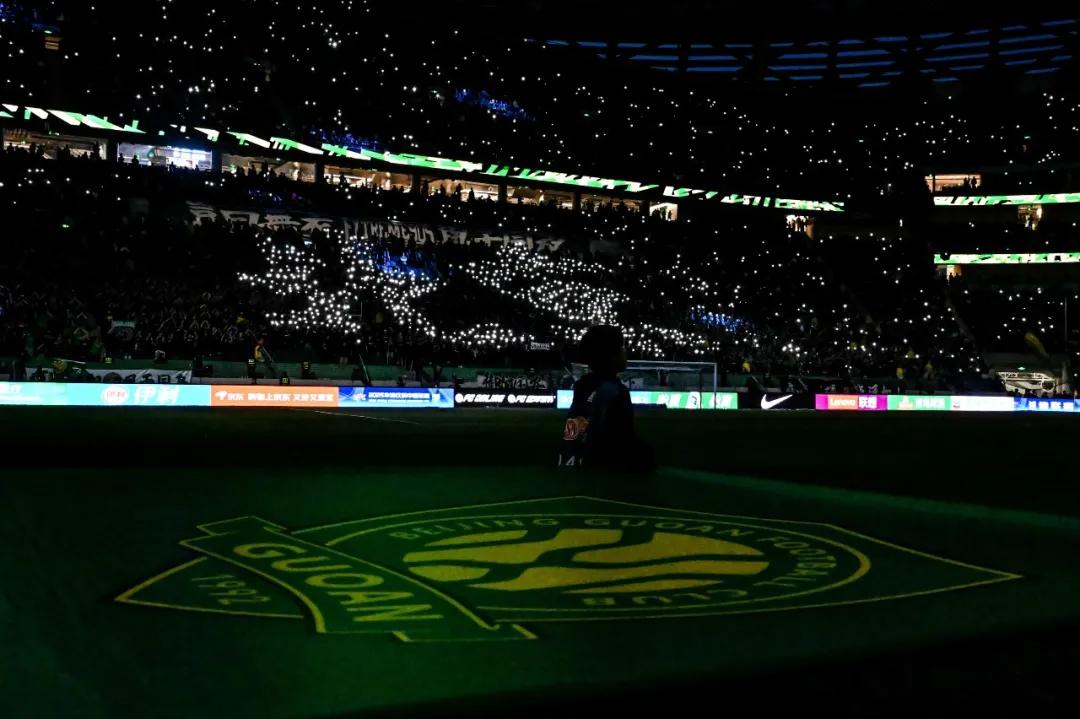
Against this backdrop, establishing coordinated supervision at the club’s local level becomes even more necessary.
(1) Improve provincial or municipal football reform and development groups, which should take primary responsibility for advancing football development strategies, club ownership reforms, financial support, and resolving difficulties in club development.
(2) Set up supervisory committees under these reform groups, composed of local government officials from publicity, judicial, state-owned assets, and sports departments, as well as representatives from local football associations and experts. Given clubs’ industry, public, and welfare attributes, invite representatives from the CFA/CFL, media, and fans to participate.
(3) The main focus of coordinated supervision should be financial oversight while also covering other areas. Financial supervision targets budgets, income, expenditures, salaries, debts, taxes, and also ensures the proper use of youth training funds. Other supervision focuses on decision-making processes, management mechanisms, and youth training development.
(4) Lastly and most importantly, ensure that supervision mechanisms are transparent and open, as this is the strongest method to eliminate corruption and the breeding ground for match-fixing and corruption.


Building on improved internal management and local coordinated supervision, establish a vertical supervision system that links “clubs—club locality—CFA/CFL.”
Within this systemic supervision, financial oversight is central. On one hand, the CFA/CFL needs to introduce more comprehensive financial balance policies; on the other, it must strengthen routine financial supervision. On December 10, 2025, the CFA/CFL issued the “Chinese Football Professional League Club Financial Audit Work Measures (Draft for Comments)” to clubs. This document is very comprehensive, stipulating annual routine audits, admission-specific audits, and temporary special audits. Core audit content includes income and expenditure management, salary payments, debt status, budget execution, and special compliance audits.
This is a very systematic financial supervision system. If fully implemented and combined with the “club—club locality—CFA/CFL” coordinated supervision, the management environment of clubs and the entire league ecosystem will undoubtedly improve comprehensively.
Anti-corruption and match-fixing governance is a systematic project, whose fundamental measure is the optimization of China’s football and professional league ecosystem, followed by industry and judicial supervision. Other system constructions include but are not limited to:
(1)Establish a more complete referee management system—for example, publishing referees’ performance data in key competitions (third-tier professional leagues, China Champions League, provincial and municipal leagues) during referee promotion processes. Transparency will encourage more outstanding referees to emerge, completely breaking the “closed circle” culture in referee selection, thus creating a fair competitive league environment.
(2)Continuously optimize the youth football development environment within professional clubs—including but not limited to youth training evaluation mechanisms, corresponding reward measures, full implementation of joint mechanism compensation and youth training compensation, to strengthen youth training and promote healthy club development. The CFA and CFL are already actively working on this, including support measures for clubs excelling in youth training.
(3)All parties must highly value commercial development—including the CFL’s ongoing efforts to enhance commercial development and local governments’ full support to ensure the survival of lower-tier professional league clubs, thereby making League One and League Two healthier and allowing clubs to face promotion and relegation with greater calm and confidence.
(4)Continue advancing the training of football professionals—beyond the commonly recognized coach and referee training, strengthen training for club management personnel at various levels, especially given frequent management turnover, to improve overall management quality. This will elevate clubs’ professionalism and minimize the breeding grounds for match-fixing and corruption.
Of course, there are many more measures, but ultimately, all institutional constructions must prioritize league ecosystem development, complemented by strong industry and judicial supervision, to truly guide the healthy growth of professional clubs and leagues.


Wonderfulshortvideo
The footwork, the finish 🤌


Did you get it? 🤔😅
The Wirtz x Sané link-up 🔗
Haaland’s movement 🥵
Which counterattack is
When you use your girlfriends shower 🚿 @Emily Bourne @LUSH
When Diogo Costa made himself a hero 🧤
 Links
Links
 Contact
Address:UNIT 1804 SOUTH BANK TOWER, 55 UPPER GROUND,LONDON ENGLAND SE1 9E
Number:+85259695367
E-mali:[email protected]
 App
App


