



The V-League serves as the foundation for Coach Kim Sang Sik's long-term ambitions.



The fierce nature of the V-League has unintentionally acted as an important driving force in forming the framework for the Vietnam national team during Kim Sang Sik’s tenure.
Following the successful period marked by the gold medal at SEA Games 33 and the historic milestone at the 2026 AFC U23 Asian Cup, the next generation of Vietnamese footballers is entering a challenging new chapter. The V-League reveals a clear divide in the competitive environment, where some young players must accept substitute roles in top clubs, while others become reluctant key players at clubs struggling to avoid relegation.
This reality shows that the development path of young players is not measured by the club’s reputation but by how they confront their specific circumstances. Only those who know how to use pressure to refine themselves can advance far. Currently, the V-League acts like a harsh test, exposing every limitation and evaluating every effort through real results.
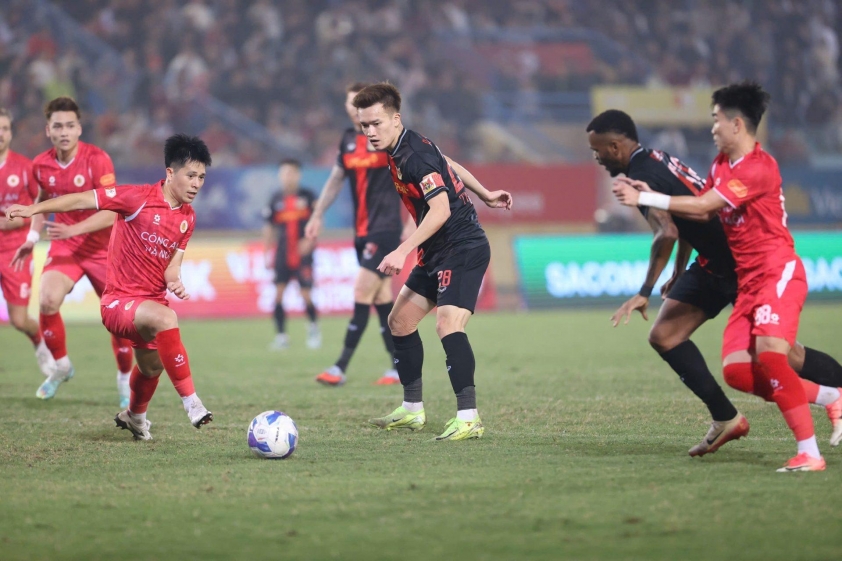
In this context, the progress of young players in less acclaimed clubs stands out as a notable highlight. Nearly half of the U23 Vietnam squad regularly plays for HAGL, SLNA, SHB Da Nang, and PVF CAND. Financial and personnel constraints force these clubs to rely on domestic players, especially young talents developed internally.
As a result, names like goalkeeper Trung Kien, Cao Van Binh, and attackers such as Phi Hoang, Duc Anh, Thanh Nhan, Xuan Bac, and Anh Quan get consistent playing time. Without much support from experienced stars, they must adapt, improve independently, and learn to survive in a fiercely competitive environment. This survival pressure has made many young players tougher, more mature, and mentally stronger than their age.
From Coach Kim Sang Sik’s perspective, this paints a picture with two contrasting shades. On one hand, he worries that some key U23 players lack playing time at major clubs. On the other, the rapid improvement of lesser-known players brings positive signals for refreshing the Vietnam national team.
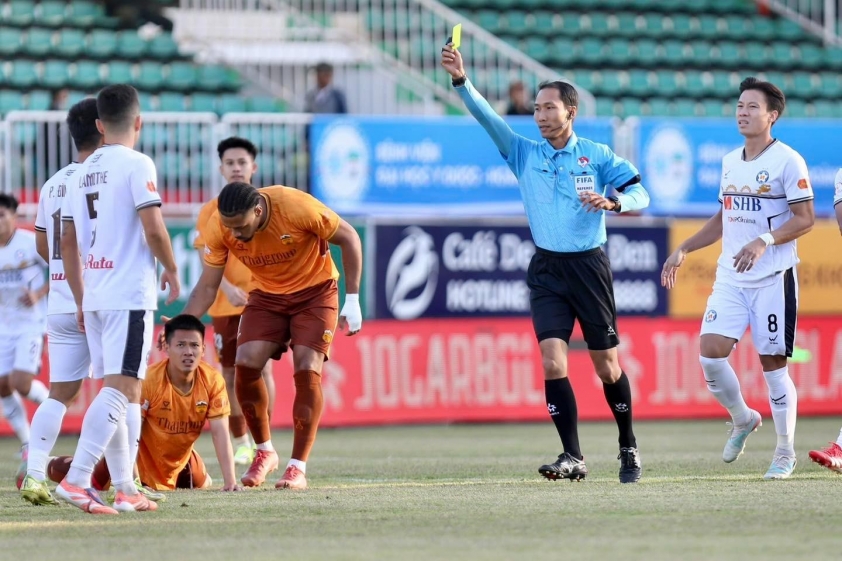
Notably, the V-League’s return has also showcased impressive performances from overseas Vietnamese players like Lee Williams, Ngo Dang Khoa, and Tran Thanh Trung. With their well-rounded foreign training backgrounds, these players bring tactical diversity and playing styles to clubs and the national team. Despite high expectations, Coach Kim Sang Sik maintains a cautious approach. He views club performance as only the initial step, while stability and the ability to maintain high standards over time ultimately determine the chance to represent Vietnam’s national team.
In this demanding cycle, Coach Kim Sang Sik has an ideal opportunity to filter the squadto forge player resilience and prepare for upcoming challenges, starting with the crucial match against Malaysia in March.


Wonderfulshortvideo
Ganglion cyst removed


Ganglion cyst removed
User SportScoop has posted a video.
User SportScoop has posted a video.
Replying to @Computer says no.
Replying to @Computer says no.
User SportScoop has posted a video.
 Links
Links
 Contact
 App
App


