



Saudi Arabian fans react unexpectedly as Ronaldo goes on strike at Al Nassr



A surge of ridicule broke out in Saudi Arabia as Cristiano Ronaldo staged a strike at Al Nassr, with supporters putting up “missing person” posters, casting more uncertainty over CR7’s future.
A strong backlash is spreading among Saudi Arabian football fans after Cristiano Ronaldo unexpectedly did not appear in the match between Al Nassr and Al Riyadh. The Al Nassr captain’s decision to “strike” is believed to be a protest against the club’s owners and the PIF investment fund, instantly making him the focus of ridicule both online and in real life.
Not limited to online sarcasm, some Saudi fans have taken their mockery to the streets. Numerous posters featuring Ronaldo appeared in public places, accompanied by taunting messages: “This is a 40-year-old man going through an excessive crying phase. His family is searching for him.” This image quickly spread widely, igniting controversy over the Portuguese superstar’s attitude.
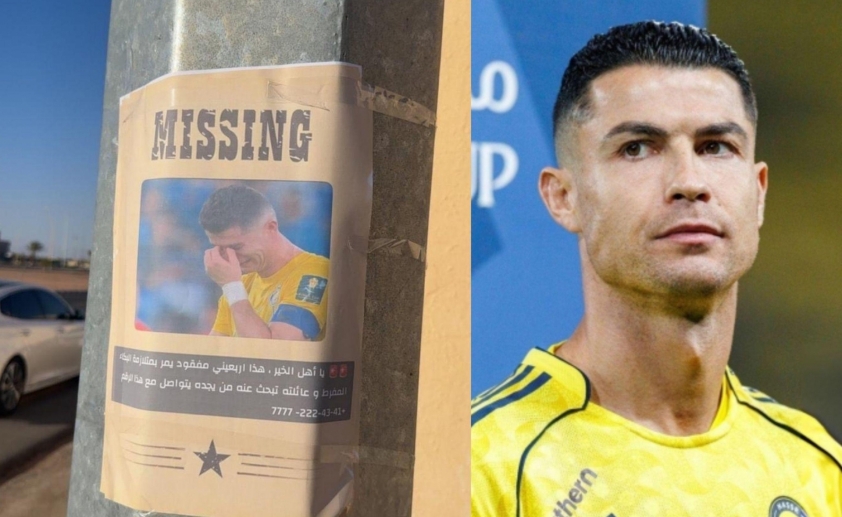
The controversy became even more sensitive as Ronaldo just turned 41 on February 5, with less than 18 months left on his contract with Al Nassr. Portuguese media widely reported that CR7 is considering leaving Saudi Arabia next summer. Sky Sports revealed the current contract includes a release clause worth 50 million euros, allowing him to leave Al Nassr at the end of the season.
Therefore, Ronaldo’s future has become unpredictablewith links to MLS or a possible return to Sporting CP — the club where he started his career. However, no final decisions have been made yet.

Commenting on the incident, former Arsenal midfielder Stefan Schwarz candidly described Ronaldo’s action as “strange.” He emphasized that the Saudi Pro League is not weak and is competitive enough for Ronaldo to approach the milestone of 1000 career goals, rather than causing a stir with protest actions.
Currently, Ronaldo is still training with the team, but multiple sources indicate he is unlikely to participate in the upcoming match against Al Ittihad. Meanwhile, the wave of ridicule from Saudi fans shows that CR7’s status in the Middle East is being challenged more than ever.


Wonderfulshortvideo
Ganglion cyst removed


Ganglion cyst removed
User SportScoop has posted a video.
User SportScoop has posted a video.
Replying to @Computer says no.
Replying to @Computer says no.
User SportScoop has posted a video.
 Links
Links
 Contact
 App
App


