



Vietnam U23 team doctor frankly explains the reasons behind the series of injuries among young stars



Following the historic achievement at the 2026 U23 Asian Championship, the physical condition of Vietnam’s young stars is raising alarm bells as many key players have had to leave the field on stretchers. Doctor Trần Huy Thọ has spoken out to explain the causes and warn about the risk of cumulative overload.
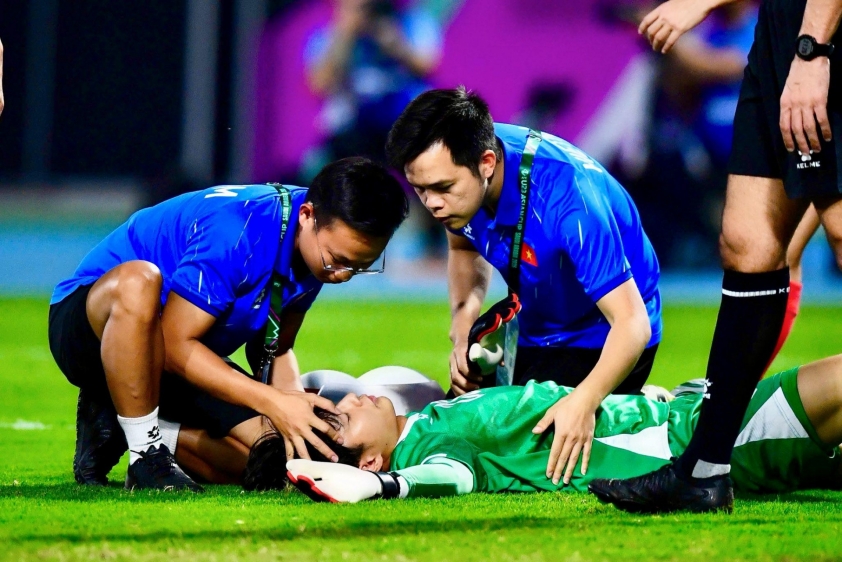
On the evening of February 4th, the image of midfielder Phạm Minh Phúc lying on the ground due to injury during the ASEAN Club Championship 2025-2026 once again sounded the alarm. Although initial tests showed Minh Phúc did not suffer a serious injury, the fact that he had to be carried off the field caused widespread concern. Previously, center-back Hiểu Minh and midfielder Thái Sơn had to leave the pitch for an extended period due to ligament tears.
Looking at this series of incidents, Doctor Trần Huy Thọ shared with Tuổi Trẻ newspaper: “From a sports medicine perspective, I believe that the high number of injuries after the U23 Asian Championship is not surprising, and the cause is not limited to a single match or tournament.
Firstly, overload and exhaustion play a major role, but this refers to cumulative overload. The players have gone through two tournaments, divided into two long phases of intense training and competition with a dense schedule, many tense matches, and even extra time. When the amount of physical activity exceeds the body’s recovery capacity over a long period, injuries become almost inevitable.”
According to the team doctor, the post-tournament phase is the most “sensitive” period for physical condition. After a cycle of high-intensity activity, if there is no proper plan for load reduction and recovery, structures such as muscles, tendons, and ligaments are very vulnerable to damage, even after light training sessions or normal daily activities.
He also emphasized: “Moreover, each player has a different tolerance threshold. Applying the same intensity and match schedule to everyone without personalization increases the risk of injury, especially for young players. Therefore, monitoring the workload of athletes after major tournaments is extremely important and should be properly assessed by specialists to minimize injury risks.”
Looking more broadly, Doctor Trần Huy Thọ evaluated that playing two major tournaments consecutively like the SEA Games and U23 Asian Championship within nearly two months, involving about 10 intense matches, many requiring extra time, poses a huge challenge for young players. Physiologically, their bodies are still developing, making them highly susceptible to cumulative overload.
However, he also acknowledged that winning the SEA Games gold and third place in Asia are proof of the team’s extraordinary effort. Yet, these achievements come with a significant physical cost.
The team doctor also noted: “The issue is not just the number of matches played but more importantly how the workload, recovery, nutrition, and adjustments are managed after each tournament. Without adequate periods of load reduction and recovery, the body can easily enter a prolonged state of fatigue, increasing injury risk.”
“In summary, such a match schedule can be considered excessive for many young players, but some athletes who have trained and competed extensively in various tournaments and built up their fitness can still meet the demands of major competitions like these,” concluded Doctor Trần Huy Thọ.
Besides his role with the national teams, Doctor Trần Huy Thọ is also a key figure in sports rehabilitation in Vietnam. Since 2019, he has been involved with Vietnamese football through many major events such as the AFF Cup, SEA Games, and World Cup qualifiers. Recently, the Sports Rehabilitation Center he founded signed a cooperation agreement with the Ho Chi Minh City National Sports Training Center, opening opportunities to improve sports medicine care quality for athletes.
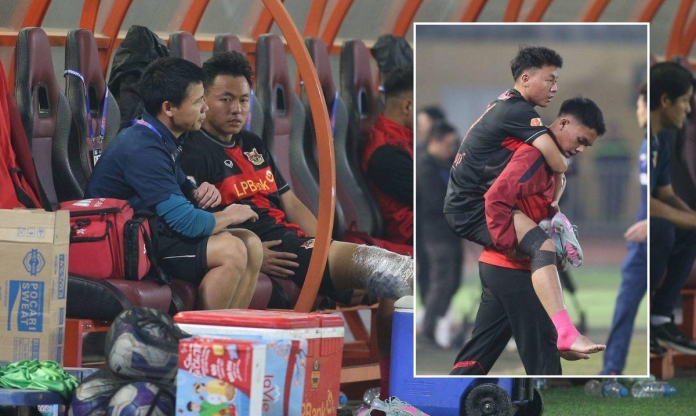
On the evening of February 4th, the image of midfielder Phạm Minh Phúc lying on the ground due to injury during the ASEAN Club Championship 2025-2026 once again sounded the alarm. Although initial tests showed Minh Phúc did not suffer a serious injury, the fact that he had to be carried off the field caused widespread concern. Previously, center-back Hiểu Minh and midfielder Thái Sơn had to leave the pitch for an extended period due to ligament tears.
Looking at this series of incidents, Doctor Trần Huy Thọ shared with Tuổi Trẻ newspaper: “From a sports medicine perspective, I believe that the high number of injuries after the U23 Asian Championship is not surprising, and the cause is not limited to a single match or tournament.
Firstly, overload and exhaustion play a major role, but this refers to cumulative overload. The players have gone through two tournaments, divided into two long phases of intense training and competition with a dense schedule, many tense matches, and even extra time. When the amount of physical activity exceeds the body’s recovery capacity over a long period, injuries become almost inevitable.”
According to the team doctor, the post-tournament phase is the most “sensitive” period for physical condition. After a cycle of high-intensity activity, if there is no proper plan for load reduction and recovery, structures such as muscles, tendons, and ligaments are very vulnerable to damage, even after light training sessions or normal daily activities.
He also emphasized: “Moreover, each player has a different tolerance threshold. Applying the same intensity and match schedule to everyone without personalization increases the risk of injury, especially for young players. Therefore, monitoring the workload of athletes after major tournaments is extremely important and should be properly assessed by specialists to minimize injury risks.”
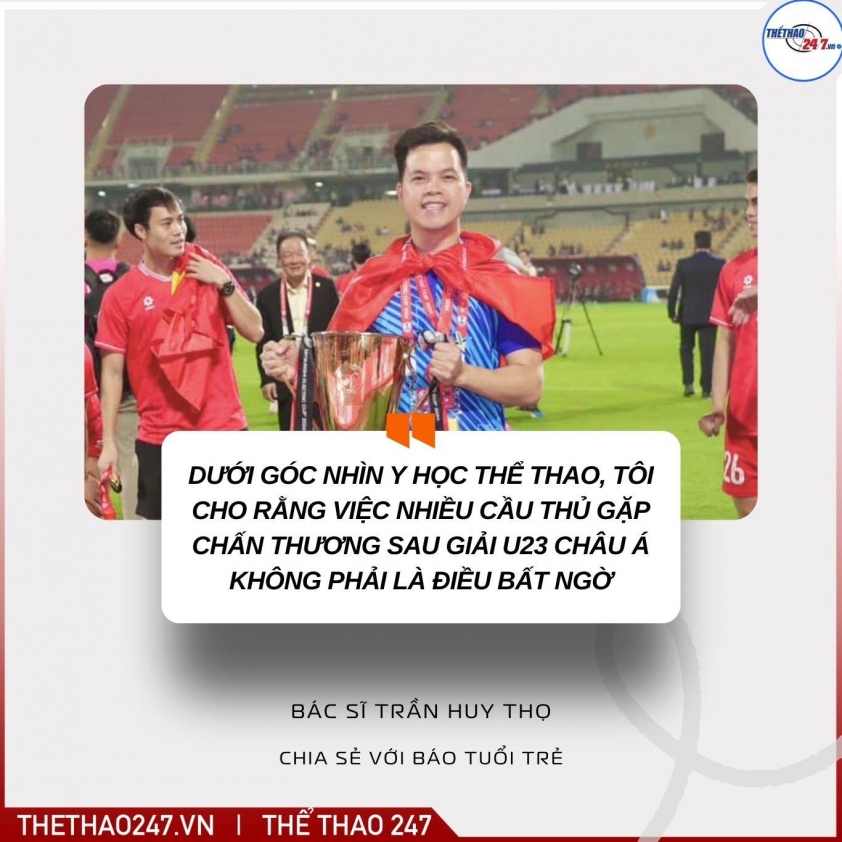
Doctor Trần Huy Thọ has accompanied Vietnam U23 through two major tournaments (Photo: FBNV).
Looking more broadly, Doctor Trần Huy Thọ evaluated that playing two major tournaments consecutively like the SEA Games and U23 Asian Championship within nearly two months, involving about 10 intense matches, many requiring extra time, poses a huge challenge for young players. Physiologically, their bodies are still developing, making them highly susceptible to cumulative overload.
However, he also acknowledged that winning the SEA Games gold and third place in Asia are proof of the team’s extraordinary effort. Yet, these achievements come with a significant physical cost.
The team doctor also noted: “The issue is not just the number of matches played but more importantly how the workload, recovery, nutrition, and adjustments are managed after each tournament. Without adequate periods of load reduction and recovery, the body can easily enter a prolonged state of fatigue, increasing injury risk.”
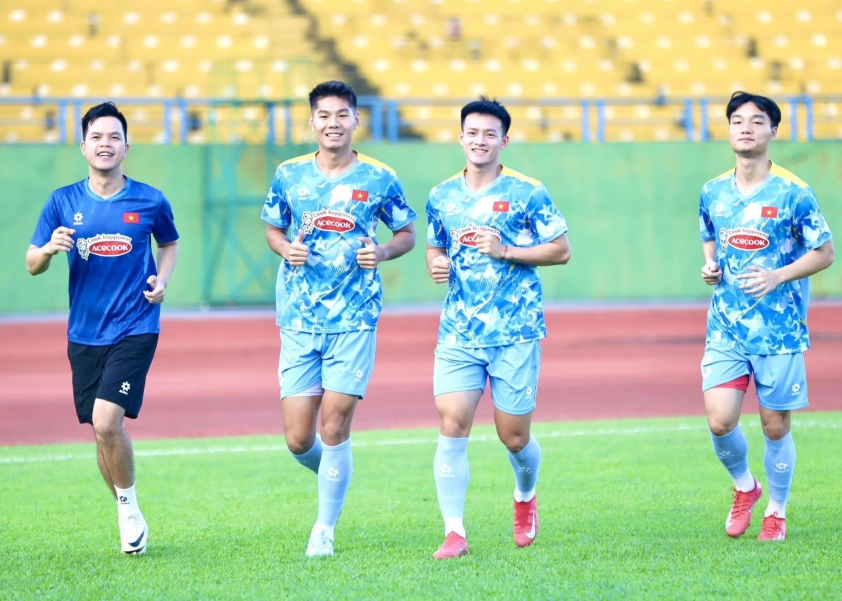
The Vietnam U23 team doctor stresses the necessity of proper load reduction and recovery phases for players (Photo: FBNV).
“In summary, such a match schedule can be considered excessive for many young players, but some athletes who have trained and competed extensively in various tournaments and built up their fitness can still meet the demands of major competitions like these,” concluded Doctor Trần Huy Thọ.
Besides his role with the national teams, Doctor Trần Huy Thọ is also a key figure in sports rehabilitation in Vietnam. Since 2019, he has been involved with Vietnamese football through many major events such as the AFF Cup, SEA Games, and World Cup qualifiers. Recently, the Sports Rehabilitation Center he founded signed a cooperation agreement with the Ho Chi Minh City National Sports Training Center, opening opportunities to improve sports medicine care quality for athletes.




Wonderfulshortvideo
Ganglion cyst removed


Ganglion cyst removed
User SportScoop has posted a video.
User SportScoop has posted a video.
Replying to @Computer says no.
Replying to @Computer says no.
User SportScoop has posted a video.
 Links
Links
 Contact
 App
App


