



A unified strategy across the province: How Guizhou is playing its moves — Investigation into the 2026 Guizhou Province Football Youth Training "Winter Training and Winter Competition"



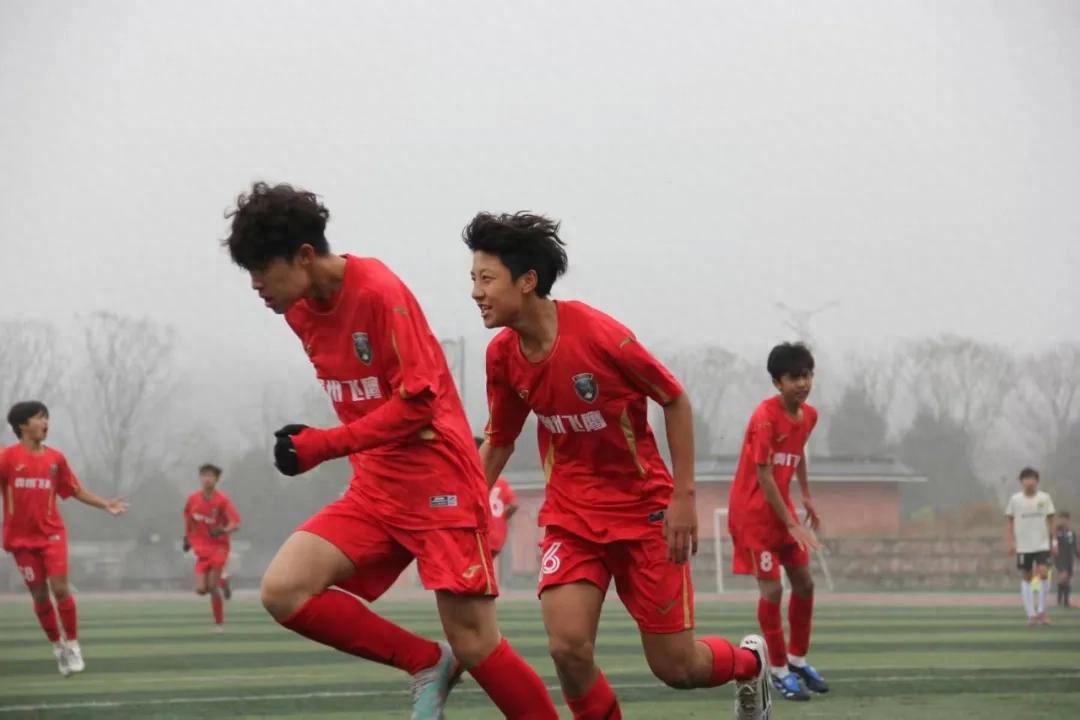
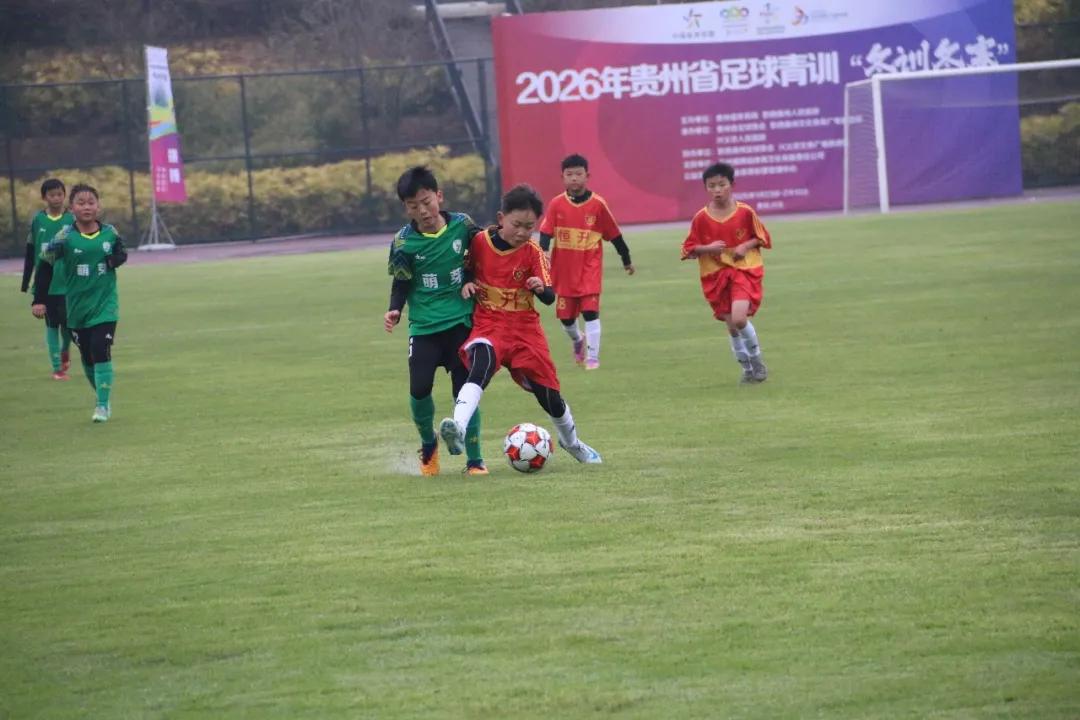
Nan Nan reporting from Xingyi, Guizhou On February 4th, in Lutun Football Town, Xingyi, Qianxinan Prefecture, Guizhou Province, a light mist lingered. The fog was caused by drizzle that began late on the 2nd. “This is not typical winter weather for Xingyi; it seldom rains here during winter. Luckily, the fog was mild, so the games were hardly disrupted,” explained Luo Dihu from the Qianxinan Football Association. The matches he referred to are part of the 2026 Guizhou Province Football Youth Training "Winter Training and Winter Competition," which features three age groups and spans from January 23rd to February 10th. This event is unprecedented in Guizhou’s youth development history, gathering top teams from across the province for large-scale winter training and competition — a move that is quite rare nationwide.
On January 28th, Ma Lei, Secretary of the Party Committee and Director of the Guizhou Provincial Sports Bureau, visited Xingyi City in Qianxinan Prefecture to conduct on-site supervision and research on the 2026 Guizhou Province Football Youth Training "Winter Training and Winter Competition." He also chaired a special symposium to deeply discuss key topics such as the system and mechanisms for building elite youth football teams across the province and the selection and cultivation of reserve talents. As the governing body for football development in Guizhou, the Provincial Sports Bureau attaches great importance to this “Winter Training and Winter Competition.”
“The 2026 ‘Winter Training and Winter Competition’ marks a milestone in the development of youth football in Guizhou Province. It signifies that after completing the youth competition system, we have entered a new phase — building elite teams and organizing elite competitions,” Director Ma Lei stated. “Selecting elite teams is a crucial step in Guizhou’s province-wide unified approach to football development.”
To truly understand the significance of this “Winter Training and Winter Competition” for Guizhou football, we must clear the fog over Mingjing Lake and observe from a higher vantage point how the overall layout of Guizhou football is being arranged.
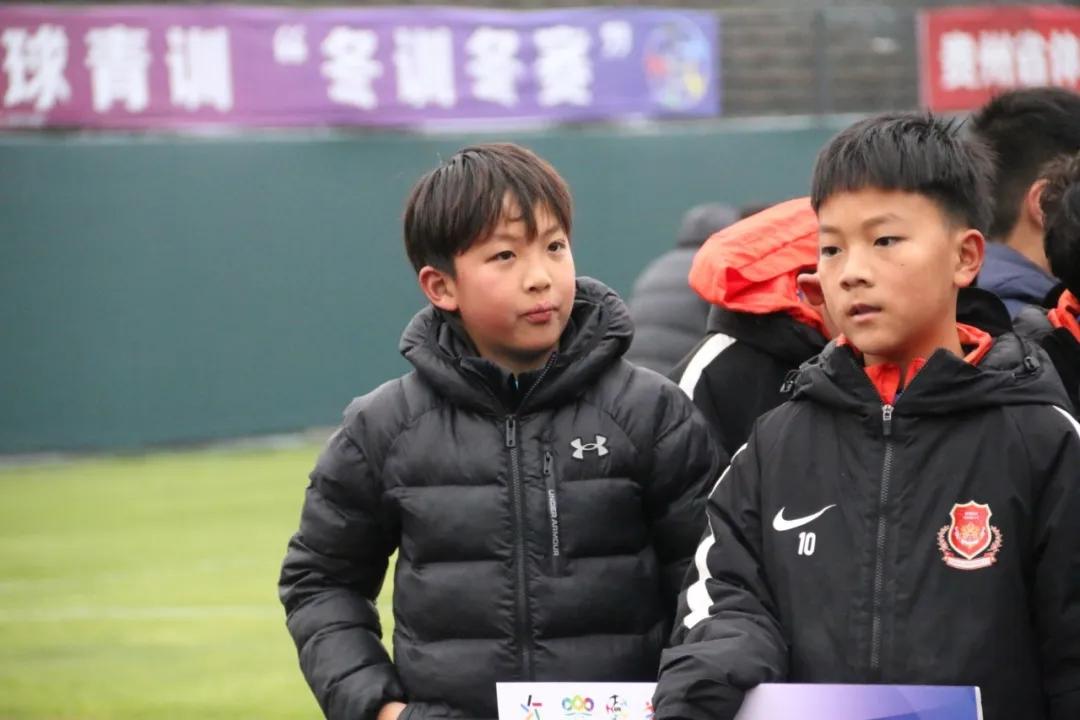

Rewinding the clock to the end of December 2023, the signing ceremony for the Western Region Sports-Education Integration Football Youth Training System Pilot (hereafter “Western Youth Training Pilot”) was held in Beijing, with Bijie, Guizhou selected as one of the first eight pilot areas. Supported by national policies, the construction of a new football youth training system in Guizhou Province was fully launched. Before Bijie was chosen as a pilot, Guizhou’s youth football training was mainly concentrated in the provincial capital Guiyang and Zunyi. Guiyang’s youth training benefited from two Chinese Super League clubs locating their home stadiums there, which fostered a top-level professional league atmosphere promoting youth football development. Zunyi was the first city in Guizhou to complete the merger of sports and education functional departments, and the establishment of its Education and Sports Bureau accelerated football growth, especially women’s football, where the Zunyi Sports School’s girls’ team holds a strong advantage within the province.
After Bijie was selected as the “Western Youth Training Pilot,” the Guizhou Provincial Sports Bureau quickly established a regional layout of “one main, four auxiliaries,” with Bijie as the main hub and Guiyang, Zunyi, Qiannan Prefecture, and Qianxinan Prefecture as auxiliaries. Supported by national policies and matching funds at both national and provincial levels, projects such as the Bijie City Youth Training Center began full-scale construction, ensuring the development of Bijie’s football youth training from a hardware perspective. On the software side, the Provincial Sports Bureau leveraged its coordinating and scheduling functions to export high-level youth training coaches from the traditional stronghold Guiyang to Bijie. This both facilitated the establishment of high-level social youth training clubs within Bijie and strengthened the training of local coaches to elevate their professional standards.
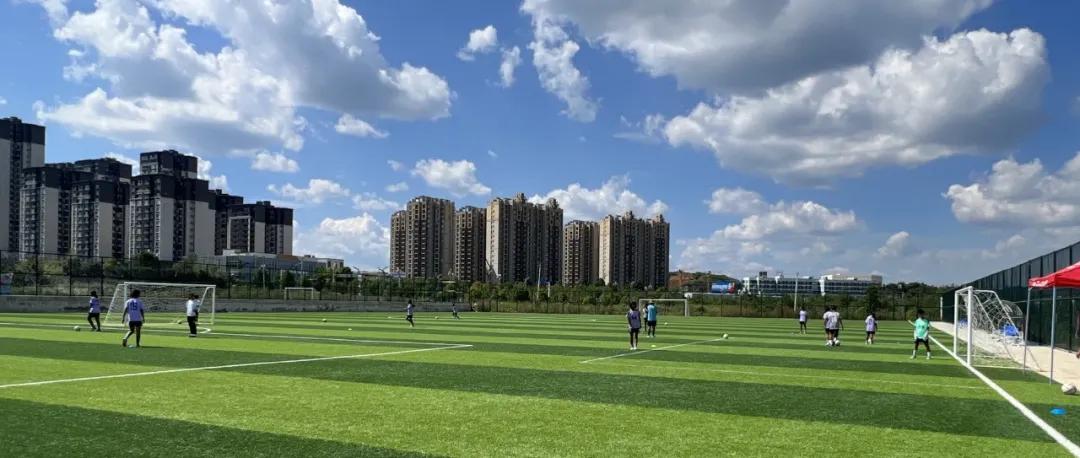
In fact, the Provincial Sports Bureau’s “one main, four auxiliaries” layout is not simply about the four auxiliary regions supplying resources to Bijie, but involves a coordinated and planned effort to comprehensively improve football youth training levels across all designated areas. In September 2024, the Guizhou Provincial Sports Bureau officially launched the Western Program Football Spark Project, the first large-scale football teaching volunteer service nationwide. The project selected 138 volunteers with sports-related majors, football skills, or a commitment to football teaching, deploying them to provide football teaching services in primary and secondary schools across 27 counties (cities, districts) in Bijie, Zunyi, Qiannan, and Qianxinan. The project is ongoing.
Qiannan Prefecture, one of the “four auxiliaries,” has greatly benefited from the Spark Project. In 2024, only eight youth training coaches in the prefecture held AFC/Chinese Football Association C-level coaching certificates. After one year of the project, by the end of 2025, the number of such certified coaches doubled to sixteen. This improvement in coaching quality has rapidly raised the level of youth football in Qiannan. The gap between the U15 girls’ team from Qiannan and the province’s strongest team, Zunyi Sports School, has significantly narrowed. “In 2024, we lost to Zunyi Sports School 1 to 10; last year it was 1 to 7; this time it was 1 to 3. The progress is clearly visible,” said Jiang Zhenghao from the Qiannan Sports Bureau, who accompanied the team.
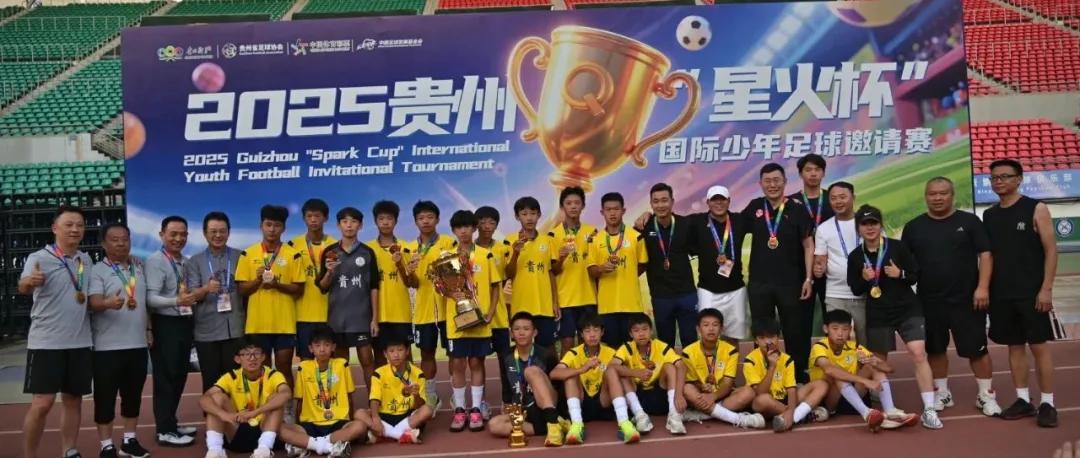
Beyond the “one main, four auxiliaries” regions, the popularity of the “Village Super League” in Rongjiang County, Qiandongnan Prefecture, also offers another avenue for Guizhou football youth training. Promoting youth training through mass sports helps advance competitive sports development. In this “Winter Training and Winter Competition,” Rongjiang County had four teams across three age groups qualify, making it the region with the most participating teams. Although these teams still lag behind the province’s top teams in strength, the thriving local grassroots football atmosphere is beginning to positively impact youth training.
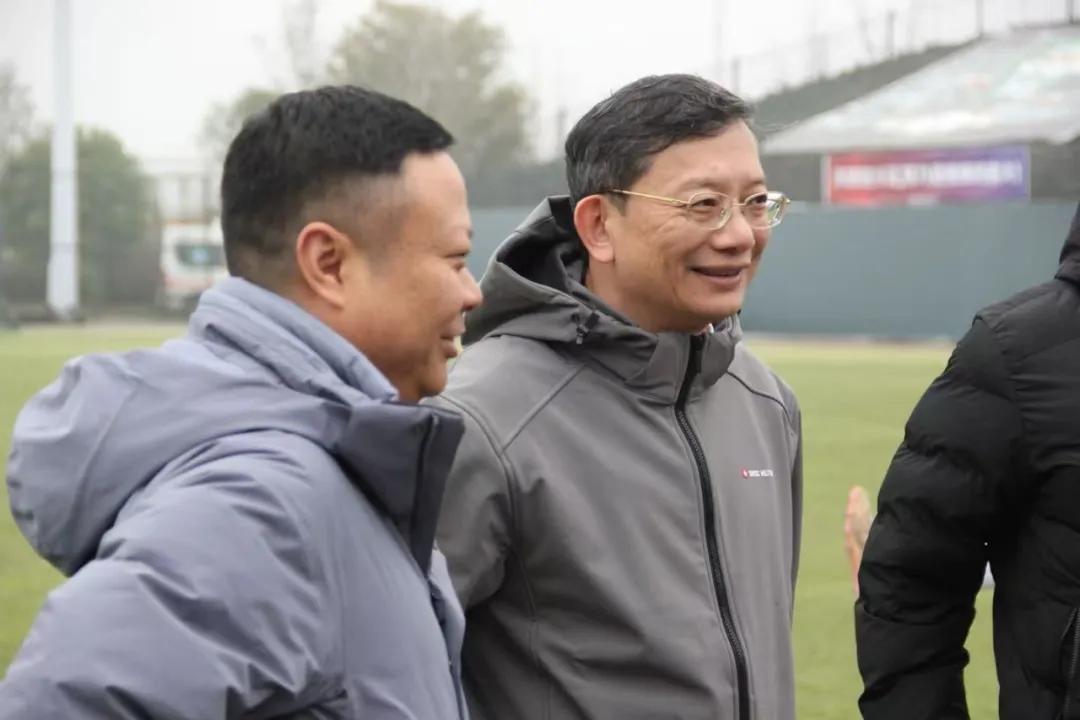
Overall coordination is a crucial step in Guizhou’s football youth training layout. At the special symposium during the Xingyi “Winter Training and Winter Competition,” Ma Lei (pictured right), Secretary of the Party Committee and Director of the Provincial Sports Bureau, emphasized the need to further promote high-quality development of Guizhou football youth training. For cities and prefectures with solid youth training foundations and notable achievements in U-series team building, efforts should focus on consolidating results and optimizing mechanisms; for weaker areas, increased resource allocation and policy support are necessary to drive coordinated development across the province.

The “one main, four auxiliaries” regional layout combined with enhancements in both hardware and software has quickly yielded positive results for Bijie’s football youth training. At the inaugural “Western Youth Training Cup” held in Wuhan at the end of 2024, Bijie’s men’s and women’s teams placed sixth and third respectively. At the second edition of the tournament late last year, Bijie’s men’s team reached the final while the women’s team again made the semifinals, firmly establishing Bijie as a stronghold of football youth training in western China.
Bijie’s youth training achievements over the past year are not only due to Guizhou’s overall football development strategy but also the comprehensive enhancement of the province’s youth competition system. The “Spark Cup” has become a key youth football tournament series at international, provincial, and municipal levels, while other national tournaments like the “Zunyi Cup,” “Habi Cup,” and “Starshine Five Continents Cup” have gained increasing influence. In 2024 and 2025, the annual average number of youth football matches in Guizhou exceeded 3,500.
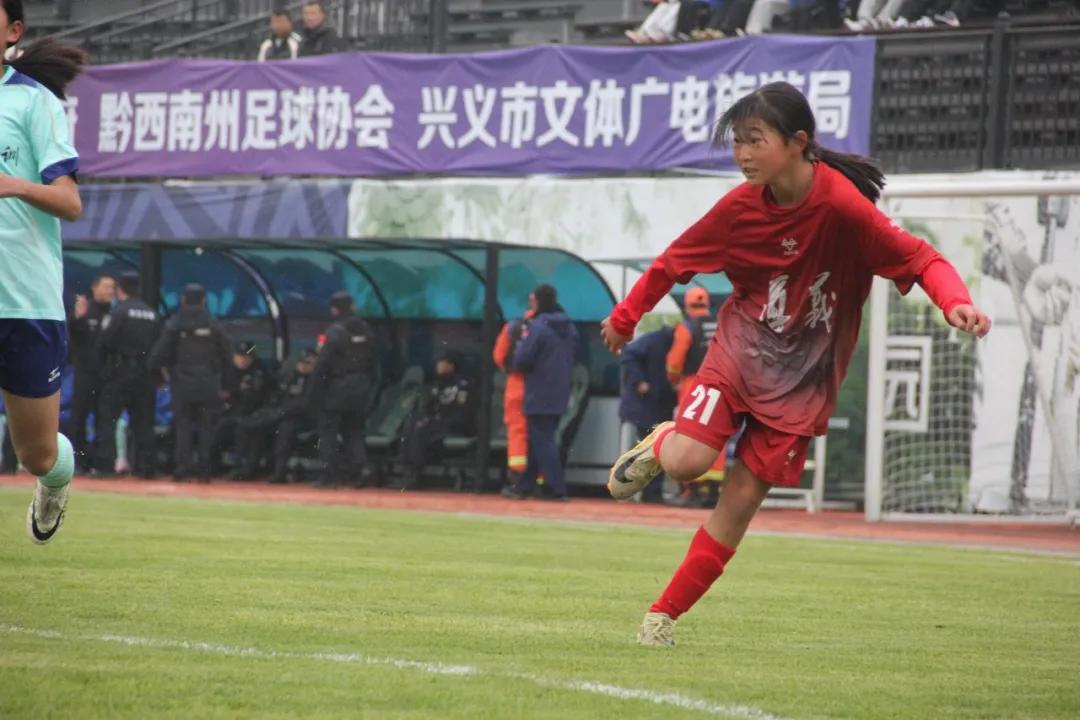
“We definitely have enough youth matches within the province, but there is still room to improve quality,” said Tian Jian, head of the competition department at the Guizhou Football Association. The large number of youth competitions of various types within Guizhou laid a solid foundation for this “Winter Training and Winter Competition.” The 36 participating teams were all top-three finishers in provincial competitions or ranked within the top eight in national tournaments in 2025. In other words, the mature competition system built over two years in Guizhou served as the selection mechanism for this event. In fact, this “Winter Training and Winter Competition” is not only a selection of outstanding teams and players but also a new strategic move advancing Guizhou’s football development into the midgame stage.
In 2025, the Guizhou Provincial Sports Bureau began engaging multiple parties to introduce high-level foreign coaching teams. In the second half of that year, after careful comparison and consideration, they chose to collaborate with Lee Jang-soo, a well-known figure with deep knowledge of Chinese football and extensive football resources in South Korea, to jointly promote Guizhou’s football youth training development. Their cooperation covers introducing a high-level Korean coaching team, improving Guizhou’s youth training system and training standards, forming elite teams, building coaching staff, optimizing competition systems, and fostering international exchanges. According to preliminary plans, the Korean coaching team is expected to arrive by the second quarter of this year. Thus, this “Winter Training and Winter Competition” serves not only as a competition and training opportunity for Guizhou’s youth football but also as a self-assessment before the arrival of the Korean coaching team, and thorough preparation for the next steps in the province’s overall football development.

On January 27, 2026, the “2026 Guizhou Provincial Government Work Report” (hereafter “Work Report”) was released. The report’s work plan for 2026 explicitly states, “…introduce a batch of high-level domestic and international sports events, and ensure quality youth sports ‘summer training and summer competitions’…” After two years of refinement, Guizhou has leveraged its unique climate advantages to initially establish a football “summer training and summer competition” system. The “one main, four auxiliaries” regional youth training centers continue to improve, providing a solid foundation for the province’s comprehensive planning of large-scale “summer training and summer competitions.”
Choosing Xingyi City in Qianxinan Prefecture as the site for this “Winter Training and Winter Competition” is also an attempt by the Guizhou Provincial Sports Bureau to expand the event system by adding “winter training and winter competitions” based on the existing “summer training and summer competitions.” Xingyi enjoys a mild winter climate; Lutun Football Town is located near the scenic Mingjing Lake. Since the opening of the Xingyi South High-Speed Rail Station last year, Xingyi has become one of the selected venues for Guizhou’s “Winter Training and Winter Competitions.”
At this point, Guizhou Province has venues for both summer and winter training and competitions. With ongoing improvements to supporting conditions, Guizhou can enable its provincial teams to complete both summer and winter training and matches without leaving the province each year, while also laying the groundwork for introducing high-level domestic and international football events at different times.
From the “Western Youth Training Pilot” to the “one main, four auxiliaries” layout, from grassroots football’s “Village Super League” to elite youth training selection, and from competition systems to competition platforms, every step of Guizhou football’s development reflects a coherent strategy and logic. Although Guizhou football has yet to achieve notable honors, its province-wide unified approach to football development is worth deep reflection. In 2025, our newspaper visited Dingnan, Jiangxi, advocating for football rooted in counties; in early 2026, Guizhou’s overall football development strategy similarly offers inspiration. When every county manages its football development well, and every provincial football administrative unit adopts a holistic planning approach, Chinese football may finally build a nationwide system on a higher dimension.


Wonderfulshortvideo
User SportScoop has posted a video.


 Links
Links
 Contact
Address:UNIT 1804 SOUTH BANK TOWER, 55 UPPER GROUND,LONDON ENGLAND SE1 9E
Number:+85259695367
E-mali:[email protected]
 App
App


