



Lionel Messi 2025: The Final Dance and an Immortal Legacy



In 2025, Lionel Messi not only claimed titles but also carved an everlasting legacy in football history with his brilliant final performance.
Main Content
As the lights at Hard Rock Stadium gradually dim and the cheers of MLS fans become part of modern football’s heartbeat, the world realizes we are witnessing some of the most privileged days in the history of the beautiful game. The year 2025 is no longer about Messi proving himself through individual awards or debates over the "GOAT" status (Greatest Of All Time).
Instead, this year is about enjoyment, measured yet lethal runs, and the moment El Pulga puts the finishing strokes on his vast legacy in America. Every time Messi touches the ball, a new chapter is written—romantic as a ballad, dramatic as a Hollywood action film.
1. Leader of Inter Miami: When the MLS Dream Comes True
Messi’s first and brightest mark in 2025 was leading Inter Miami to the pinnacle of North American football: The MLS Cup championship. If 2024 was a promising start, 2025 was when Messi truly mastered the league with his timeless football intelligence.
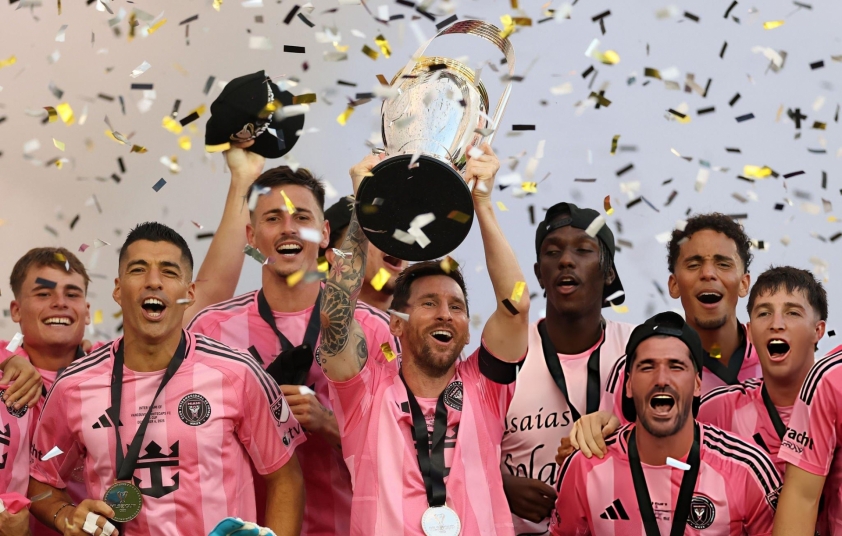
In a thrilling final, Messi didn’t need to run excessively, yet every touch sent the opponent’s defense into turmoil. With 23 assists and 35 goals throughout the campaign, he secured the club’s most prestigious trophy. The image of Messi lifting the silver cup amid fireworks in Miami was not only a personal milestone but a powerful declaration: wherever Messi goes, glory will follow. He transformed a team that once languished at the bottom into a dominant force, completely changing the status of American soccer on the global map.
2. Personal Records: The Endurance of a 38-Year-Old "Phenomenon"
The second mark lies in the stark but weighty statistics. At 38, an age when many peers retire or move to less competitive leagues, Messi maintained an astonishing scoring and assisting rate. With 29 goals and 19 assists in the 2025 season, he not only won the Golden Boot but also claimed the MVP award for the second consecutive time (Most Valuable Player of the league).
However, Messi’s value in 2025 went beyond goals. It was how he controlled the game’s tempo, created space for young teammates like Benjamin Cremaschi, and drew defenders’ attention to free up Luis Suarez. Messi in 2025 evolved into a true "architect" on the pitch. He played with his mind more than his feet, using sharp tactical vision to compensate for his reduced speed. Each match became a masterclass in football intelligence, where fans came not only to witness goals but to see a genius orchestrate the game.
3. Argentina’s "Beacon" on the Road to the 2026 World Cup
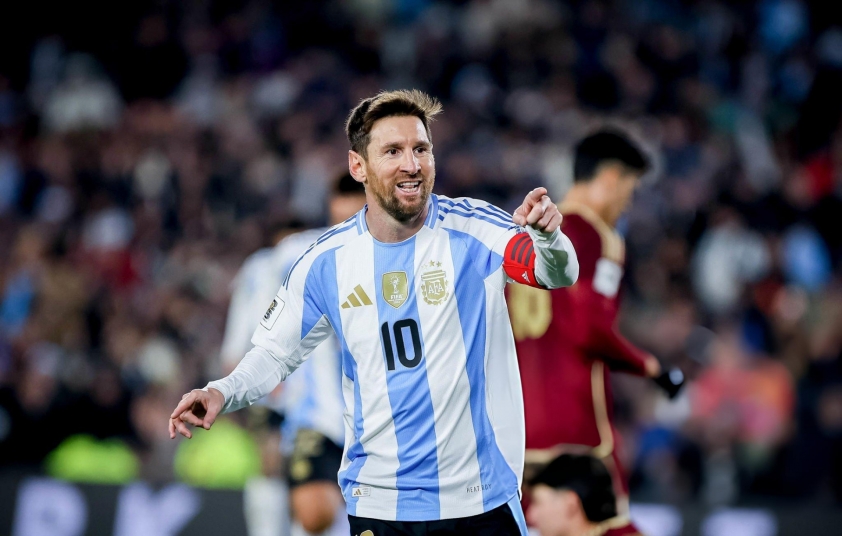
Though playing in the US, Messi’s heart remained with his homeland Argentina. 2025 marked a crucial phase in the 2026 World Cup qualifiers, and Messi remained the irreplaceable soul of the national team. Even as coach Scaloni began rejuvenating the squad, Messi’s role as the senior leader and spiritual captain remained invaluable.
The 1987-born superstar no longer played full 90-minute matches every game, but his presence on the field was a powerful psychological boost for younger players like Julian Alvarez and Enzo Fernandez. Argentina’s early qualification for the 2026 World Cup as the clear leaders of South America was a testament to Messi’s dedication. He is preparing for a final chapter next summer with thoroughness and the courage of a king unwilling to abdicate his throne.
4. Cultural Icon and a Promise for a New Future
Finally, the most profound and lasting impact in 2025 was Messi’s influence off the pitch. His contract extension until 2028 and public plans for his post-retirement phase sparked a huge wave of excitement. Messi is not just playing football; he is building an empire.
In 2025, the "Messi effect" drove MLS revenue to record growth, stadiums consistently sold out, and soccer became the top sport in the US, surpassing traditional games like baseball. Messi became a global cultural icon, connecting generations of fans worldwide. His confirmation that Inter Miami will be his final club is also a gesture of gratitude for the warm welcome from the local community. He chose to stay not for money or to return to Argentina or go to the Middle East, but to nurture the dream of football in a rising nation.


Wonderfulshortvideo
When you use your girlfriends shower 🚿 @Emily Bourne @LUSH


Neymar highlights neymar edit neymar lamine yamal celebration
Arsenal 1-0 chelsea havertz goal
yamal goal yamal instagram yamal dribble barcelona 2-1 albacete yamal highlights yamal edit
casemiro goal casemiro assist casemiro 6 7 celebration
Man city haaland edit haaland goal haaland goal streak haaland drought man city table premier league table
australian open final carlos alcaraz wins australian open alcaraz interview alcaraz press conference djokovic interview djokovic press conference
 Links
Links
 Contact
Address:UNIT 1804 SOUTH BANK TOWER, 55 UPPER GROUND,LONDON ENGLAND SE1 9E
Number:+85259695367
E-mali:[email protected]
 App
App


