



Format of the 2026 AFC Women's Asian Cup



Thethaovanhoa.vn provides detailed updates on the format of the 2026 AFC Women's Asian Cup, a tournament in which the Vietnamese women's national football team is participating.
Format of the 2026 AFC Women's Asian Cup
The 2026 AFC Women's Asian Cup will feature 12 teams in the final round. The teams are divided into 3 groups (A, B, C), each with 4 teams, playing a single round-robin format to determine rankings.
After the group stage, the top two teams from each group, along with the two best third-placed teams, will advance to the quarter-finals.
According to the regulations, the 4 winning teams from the quarter-finals (i.e., the 4 semi-finalists) will directly qualify for the 2027 FIFA Women's World Cup in Brazil. Teams eliminated in the quarter-finals will still have an opportunity to compete for the remaining spots through intercontinental play-offs and classification matches. This mechanism makes the race for the top 8 particularly intense right from the group stage.
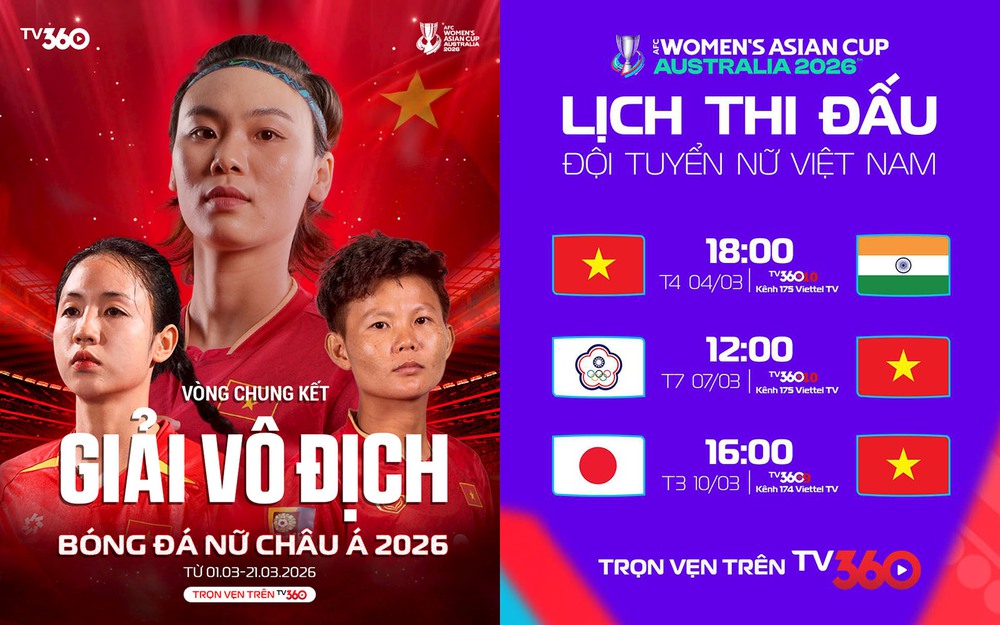
Match Schedule for the Vietnamese Women's National Team
When and where will the 2026 AFC Women's Asian Cup take place?
The final tournament will be held from March 1st to March 21st, 2026. This is the most important continental women's football competition in 2026 and also serves as the qualification pathway for the 2027 Women's World Cup.
The tournament will be hosted in Australia, a country that successfully hosted the 2023 Women's World Cup. Matches will take place across multiple cities in the host nation, utilizing international-standard stadiums and facilities.
The Vietnamese Women's Football Team's Ambition to Qualify for the World Cup
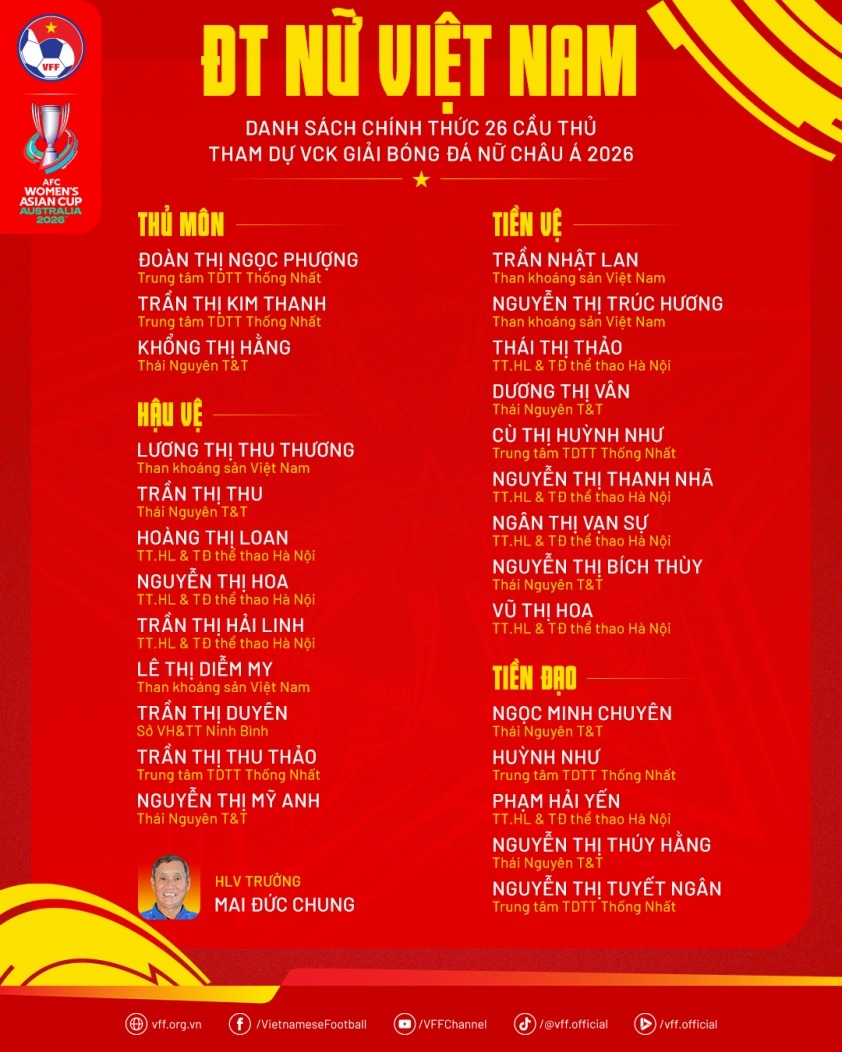
The Vietnamese women's national team enters the tournament with a clear goal: to secure a World Cup spot again. Under Coach Mai Duc Chung, the team will face India, Chinese Taipei, and Japan in the group stage. Notably, the match schedule is set at three different times of the day, requiring the coaching staff to adjust training plans, daily routines, and recovery protocols to help players adapt to the new competition rhythm.
Ahead of the tournament, the Vietnamese women's team conducted a training camp in Shenzhen, China, focusing on enhancing physical fitness, refining tactics, and testing player combinations. Friendly matches served as crucial tests to evaluate the players' adaptability to international-level competition intensity.


Wonderfulshortvideo
User VictoryVox has posted a video.


 Links
Links
 Contact
Address:UNIT 1804 SOUTH BANK TOWER, 55 UPPER GROUND,LONDON ENGLAND SE1 9E
Number:+85259695367
E-mali:[email protected]
 App
App


