



The 2026 Asian Cup has set a special record right from its opening.



The 2026 Women's Asian Cup has made a strong impression by selling over 250,000 tickets in less than a week since its start, marking a notable milestone in the history of Asian women's football.
Less than a week after the opening match, the 2026 Women's Asian Cup Finals in Australia has achieved a remarkable milestone as the official ticket sales surpassed 250,000 on March 7th. This is considered a particularly impressive figure for a national-team-level women's tournament in Asia, demonstrating the growing appeal of women's football across the region.
The sale of over 250,000 tickets not only reflects strong interest from fans but also shows clear progress in the tournament's organization and promotion. In the context of women's football steadily asserting its position, this achievement becomes a positive sign for the sustainable development of the sport in the continent.

However, the number of spectators attending matches in person still shows a gap compared to the tickets sold. After the first 10 matches of the tournament, the total estimated attendance is nearly 93,000 spectators. Nevertheless, for a continental-level women's football tournament, this is still considered an encouraging number.
The opening match between the host nation Australia and Philippines earlier created a special milestone by attracting up to 44,379 spectators to the stadium. This is the largest attendance in the history of Women's Asian Cup editions, contributing to a vibrant atmosphere from the very first days of the tournament.
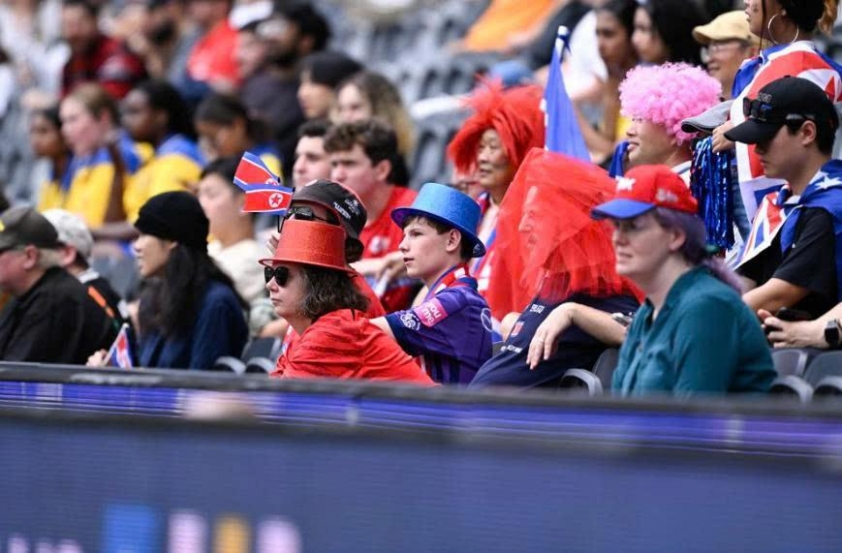
Praising the host nation's preparations, AFC General Secretary Datuk Seri Windsor John stated that the tournament in Australia has all the conditions to become a memorable Asian Cup. According to him, the enthusiastic support from fans will be a crucial factor in making the tournament a landmark in Asian women's football history.
Beyond the impressive numbers, the 2026 Women's Asian Cup also brings a festive, lively atmosphere around the stadium. Fanzone areas are organized with various interactive activities for fans before kick-off, while the participation of 12 top Asian national teams creates a multicultural space, attracting a large international community and overseas students to support their home teams.



 Links
Links
 Contact
Address:UNIT 1804 SOUTH BANK TOWER, 55 UPPER GROUND,LONDON ENGLAND SE1 9E
Number:+85259695367
E-mali:[email protected]
 App
App


