



West Asia Region Determines to Resume Playoffs, How Will the AFC Champions League Continue Amidst the Conflict?




Written by Han Bing The deteriorating situation in the Middle East has persisted for nearly four weeks, showing no signs of cessation and even expanding. Nevertheless, football in the Middle East and Asia must continue. On March 24, AFC officially announced the new format, schedule, and venue for the AFC Champions League Elite West Asia Region quarter-finals. Thus, the West Asia Region playoffs of the AFC Champions League Elite, suspended for three weeks due to the war, have finally confirmed their restart method. Amidst the conflict, they are determined to keep football going.
Due to time constraints, the West Asia Region quarter-finals have been changed from a two-leg home-and-away format to a single match, to be held in Jeddah, Saudi Arabia, on April 13–14. From April 16 to 25, Jeddah will continue to host the AFC Champions League Elite quarter-finals, semi-finals, and finals, also as single matches.
This is the most significant impact of uncontrollable factors on Asian football since the 2020 pandemic.

After the US and Israel launched military strikes against Iran on February 28, the AFC Champions League Elite West Asia Region quarter-finals originally scheduled for March 2–3 were indefinitely postponed by AFC. AFC has been considering the restart time for the playoffs of both AFC Champions League tiers in the West Asia Region, but the security situation in the Middle East remains unchanged. Even though Qatar recently resumed its league, the six national team matches originally hosted by Qatar during the March international match window were all canceled. The UAE, whose league has not been suspended, also hasn't seen fundamental improvement in its security situation.
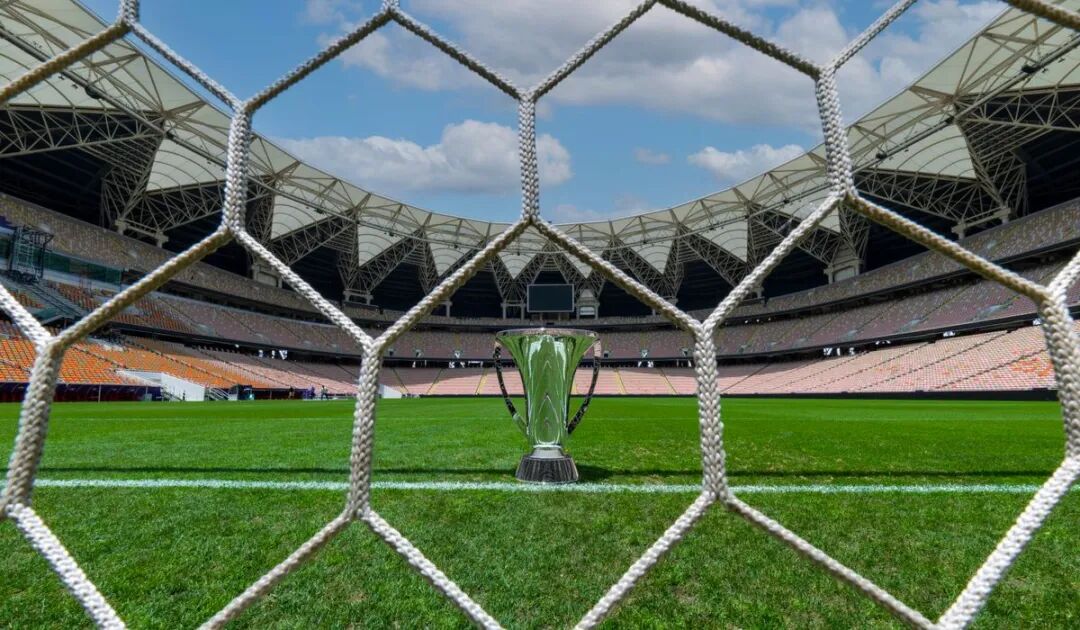
Last week, rumors suggested that due to the ongoing deterioration of the Middle East situation, AFC considered moving the playoffs of both AFC Champions League tiers in the West Asia Region to East Asia or Southeast Asia. Ultimately, however, they decided on Jeddah based on the "principle of proximity." King Abdullah Sports City Stadium (capacity 63,000) and Prince Faisal Stadium (capacity 27,000) will host the matches. The four winners of the AFC Champions League Elite West Asia Region quarter-finals can immediately participate in the AFC Champions League Elite quarter-finals locally, avoiding the long journey to East or Southeast Asia. Compared to Riyadh, which has been attacked, Jeddah is a relatively safer city in the Middle East for hosting large-scale events. Moreover, Jeddah hosted the final stages of the AFC Champions League Elite last year, possessing rich experience in event organization.
Although the AFC Champions League West Asia Region matches have been simplified and expedited due to the war, it still brings significant inconvenience to the participating teams. AFC requires the eight teams participating in the AFC Champions League Elite West Asia Region quarter-finals to arrive in Jeddah at least two days before the matches. All teams must bear their international and domestic travel, accommodation, and meal expenses during the competition period, which directly benefits the three Saudi participating teams, with Al-Ahli and Al-Ittihad enjoying host privileges. Qatar's Al Sadd and Al Duhail, UAE's Dubai Youth National and Abu Dhabi Unity are relatively close to Jeddah. Iran's Tractor Sazi, affected by the war, faces immense difficulties traveling abroad for matches, and whether its match against Dubai Youth National can proceed as scheduled remains highly uncertain.

The changes in the AFC Champions League Elite West Asia Region playoffs also affect the preparation of the four qualifying teams from the East Asia Region. Originally considered top contenders for the title, Saudi Arabia's three powerhouses—Al Hilal, Al-Ahli, and Al-Ittihad—may have to play up to seven matches within three weeks starting from April 3, potentially facing significant physical challenges. In contrast, the four East Asia Region teams have at least five days of preparation time for the AFC Champions League Elite quarter-finals, somewhat offsetting the "away disadvantage." Although the Saudi trio possesses top foreign players and home advantage, the tight schedule's impact on fitness and injuries could determine the championship outcome for both AFC Champions League competitions this season.
Currently, given the trajectory of the Middle East situation, the AFC Champions League still faces considerable uncertainty. The sudden deterioration of relations between Saudi Arabia and Iran may lead to further expansion of the Middle East crisis. At that point, even Jeddah might become unsafe. However, during the final sprint of this season, leagues across the Middle East and Asia likely have little room in their schedules to accommodate the pending conclusion of the two major AFC Champions League events.
Saudi Arabia's "Middle East Newspaper" believes that the already compressed schedules of the two AFC Champions League competitions still require preparations for possible further postponements. UAE's "The National" emphasizes confidence in the smooth completion of the AFC Champions League, stating that war should not halt football. Citing the UAE's continued league operation despite conflict impacts as an example, the newspaper highlights the Middle East populace's passion for football and football's significant influence in easing regional tensions. The Middle East situation persists, but football must continue.


Wonderfulshortvideo
🇪🇸 Spain 🆚 Argentina 🇦🇷


Arsenal goal today arsenal 2-1 chelsea arteta interview arteta press conference
When Diogo Costa saved EVERY penalty he faced in the shoot-out 🤯🤯🤯
The movement is electric ⚡️
Mbappe injury mbappe surgery real madrid 0-1 getafe mbappe return date mbappe edit
ronaldo almeria ronaldo buying new club ronaldo owner ronaldo manchester united owner
de bruyne edit de bruyne passing kdb edit kdb passing highlights rodrygo kevin de bruyne neymar kevin de bruyne
 Links
Links
 Contact
Address:UNIT 1804 SOUTH BANK TOWER, 55 UPPER GROUND,LONDON ENGLAND SE1 9E
Number:+85259695367
E-mali:[email protected]
 App
App


