



Vietnam's futsal team faces harsh reality



Even defeats against Southeast Asian opponents who did not deploy their strongest squads are placing Vietnam's futsal under immense pressure. In the journey of rejuvenation, coach Diego Giustozzi must remain patient, despite the increasingly evident issues regarding the team's strength.
The 2-3 loss to Indonesia's futsal team in the semifinals of the 2026 Southeast Asian Futsal Championship was not merely a defeat.
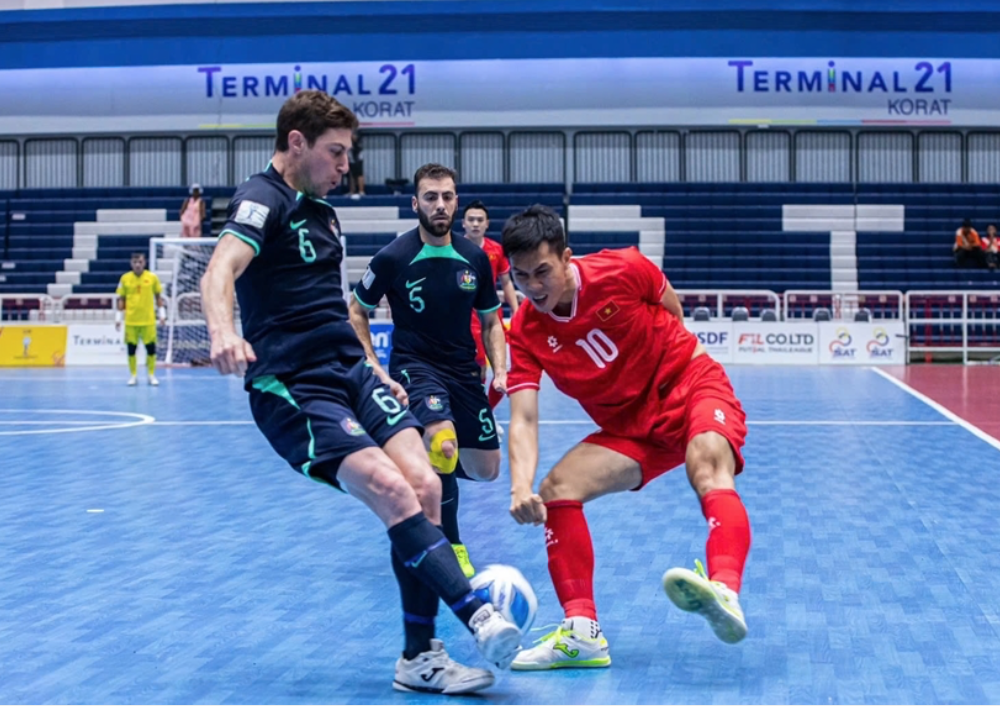
Vietnam's futsal team will face Australia in the third-place match of the 2026 Southeast Asian Futsal Championship at 5:00 PM on April 12. Photo: FAT
It resembles the straw that broke the camel's back for a series of disappointing results spanning the past two years. From the 33rd SEA Games, to the 2026 Asian Finals, and now the regional arena,Vietnam's futsalhas continuously "missed the mark" on its set objectives.
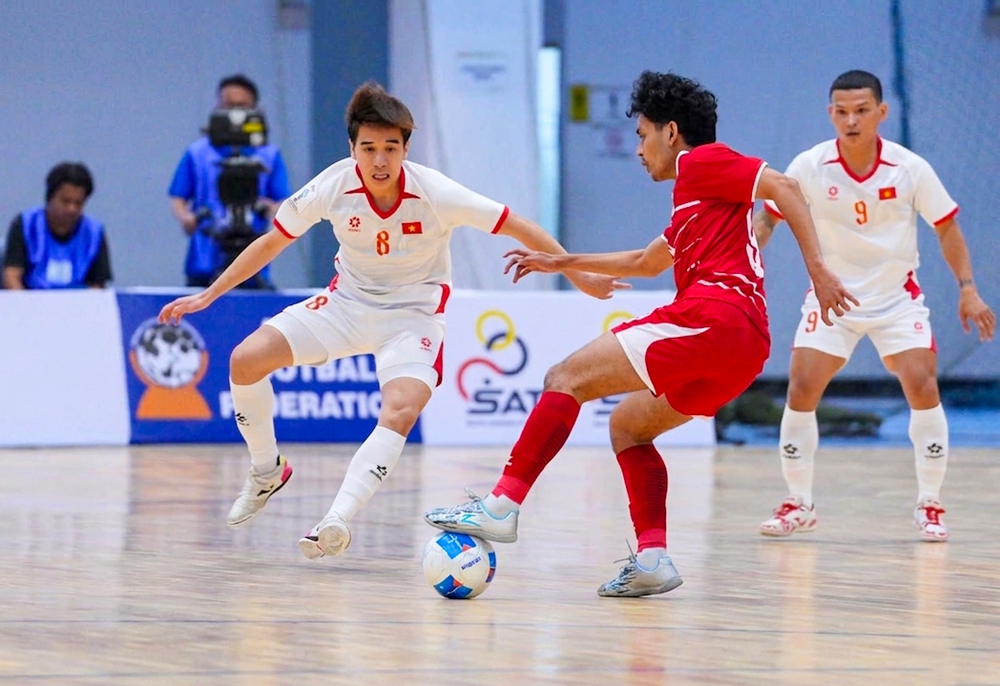
Vietnam's futsal has lost to Indonesia in three out of their last four encounters. Photo: VFF
Notably, Indonesia did not even field its strongest squad. Coach Hector Souto confidently brought his young players to Nonthaburi (Thailand) to defend the Southeast Asian championship title and prepare for the 2028 World Cup goal.
Indonesiaserves as evidence of remarkable development compared to continental futsal, thanks to a systematic plan for domestic league development.
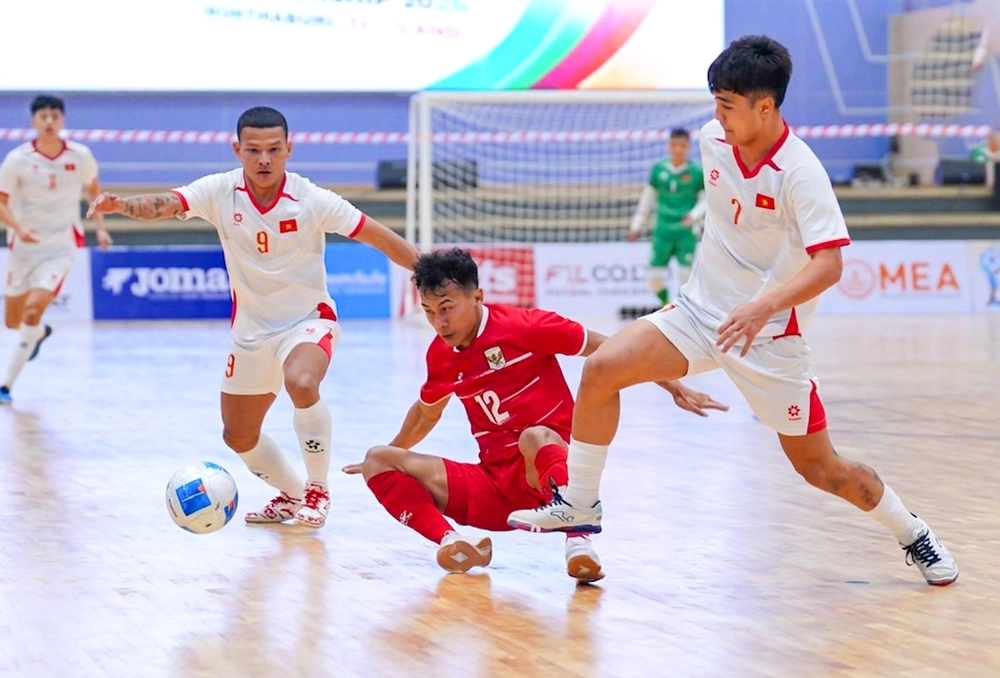
Da Hai (number 7) stood out but was insufficient to help Vietnam's futsal achieve a breakthrough. Photo: VFF
Despite recently succeeding by reaching the Asian finals (only losing to the "giant" Iran in penalty shootouts), Coach Hector Souto still had a completely different squad for the regional tournament. Yet, that young team itself caused Vietnam's defeat.
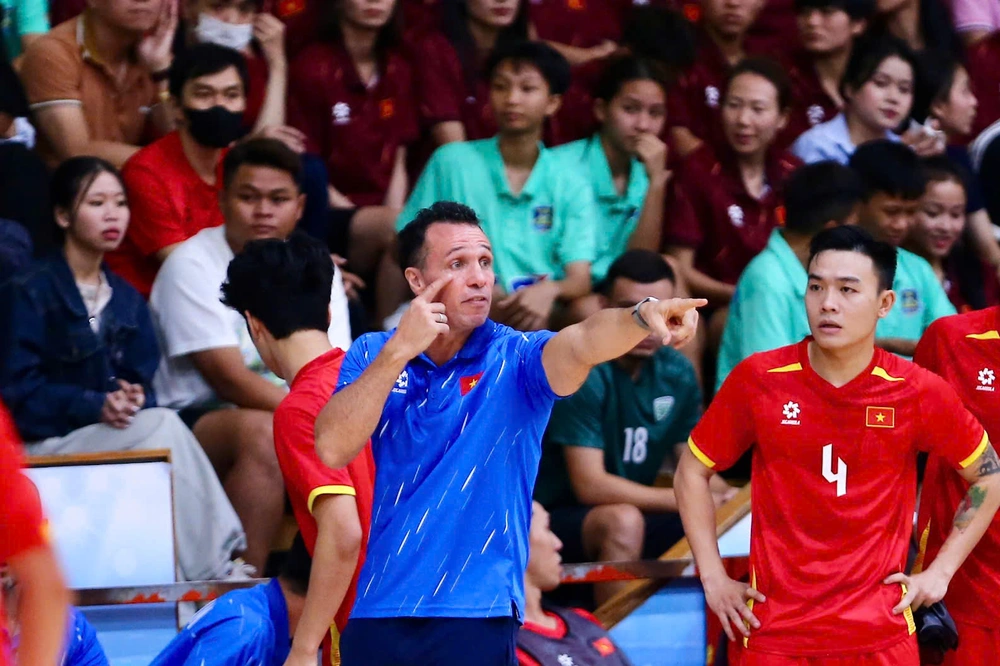
Coach Diego Raul struggles with the major goals of Vietnam's futsal amidst a context where numerous countries have developed futsal more systematically and professionally. Photo: VFF
Despite having superior gameplay in the recent semifinal, even when dominating, the inherent weaknesses of Coach Diego's players were still exposed. Ngoc Anh's individual error in handling a foul led to the first conceded goal, followed by a chain collapse. When opportunities arose, the team also failed to capitalize, and the price paid was another loss to Indonesia, the third defeat in their last four matches.
Adding the defeat against Thailand's futsal, which is also struggling to renew itself, Vietnam's futsal reveals limitations not only in tactics but also psychological pressure. When failures repeat, confidence erodes. Players, though energetic and young, lack composure at decisive moments. And when facing opponents superior in victories, the younger players could not withstand.
The capability of Coach Diego Giustozzi, who led Argentina to win the 2016 World Cup, cannot be denied. He brings modern philosophy, high-speed pressing tactics, helping Vietnam's futsal gain more confidence against strong opponents. But football, or futsal, is not just about tactics. When the human foundation and system are not strong enough, any idea remains incomplete.
After the failure in the 2026 Asian tournament, Coach Diego parted with pillars like Duc Hoa, Minh Tri, Ngoc Son to rejuvenate the squad. A new generation was given opportunities, with names around twenty like Cong Dai, Thac Hieu, Quang Nguyen. The Thai Son Bac group brought new vitality, even scoring and leaving impressions at the Southeast Asian tournament. But the transition process requires considerable time.
In reality, the current squad is not necessarily too weak. Pillars like Da Hai, Manh Dung, Minh Quang... are still at their peak, while young talents are capable of developing for the 2028 World Cup goal. Coach Diego sees clearly, but the issue lies in depth and development environment. Vietnam's domestic futsal league has lacked clubs, investment, and foreign players for years, preventing professional quality from breakthrough.
Meanwhile, regional opponents are moving in the opposite direction. Indonesia invests heavily in its domestic league, invites quality foreign players, builds a systematic structure. Thailand, despite signs of stagnation, still possesses a solid foundation. At the continental level, West Asian teams increasingly excel with financial backing and long-term strategies. As FIFA standardizes ranking systems and increases competitiveness, that gap is further widened.
The worrying aspect is not just the defeat, but how Vietnam's futsal loses. Against Indonesia, the team played not poorly, even dominating at times. But lacking cold-bloodedness in finishing, along with individual errors, rendered all efforts meaningless. That signals a collective lacking sufficient "resilience," which was once a strength of the previous generation.
Fans expect, media questions, and the players themselves understand they are at a pivotal stage. But looking long-term, this is the phase requiring the most patience. Rejuvenation always accompanies trade-offs, and there is no shortcut to rebuilding a national team.
The problem is Vietnam's futsal cannot rely solely on a skilled coach. To reach the 2028 World Cup, a root-level reform is needed, such as enhancing domestic league quality, investing in youth training, expanding competition environments. When the foundation is solid enough, Coach Diego Giustozzi's ideas will have ground to flourish.


Wonderfulshortvideo
Ganglion cyst removed


Ganglion cyst removed
User SportScoop has posted a video.
User SportScoop has posted a video.
Replying to @Computer says no.
Replying to @Computer says no.
User SportScoop has posted a video.
 Links
Links
 Contact
 App
App


