



Southeast Asian football stands before a historic milestone on the continental stage.



Southeast Asian football is presented with the chance to create a historic impression in the 2025/2026 Asian Cup season, with multiple clubs progressing far in continental tournaments.
Southeast Asian football is approaching a pivotal moment in the 2025/2026 Asian Cup season, as numerous clubs simultaneously advance and open up the possibility for unprecedented achievements. Their dense presence in the final rounds makes this region a notable highlight on the continental football map.
In the AFC Champions League, two Southeast Asian representatives, Buriram United (Thailand) and Johor Darul Ta’zim (Malaysia), have reached the quarter-finals. Both face strong opponents from West Asia, with Johor Darul Ta’zim confronting Al Ahli (Saudi Arabia), while Buriram United meets experienced teams like Tractor (Iran) or Shabab Al Ahli (UAE).

In the AFC Cup, Bangkok United (Thailand) is very close to reaching the final after securing a 1-0 win in the semi-final first leg against Gamba Osaka (Japan). Only a draw in the second leg will see the Thai representative enter the final match of the competition, continuing their hope to bring home a continental title.
Meanwhile, in the AFC Challenge League, Southeast Asian football will definitely have at least one representative in the final, as PKR Svay Rieng (Cambodia) and Manila Digger (Philippines) face each directly in the semi-finals. Following a 1-1 draw in the first leg, both teams will enter the second leg aiming to secure a historic spot for the region.
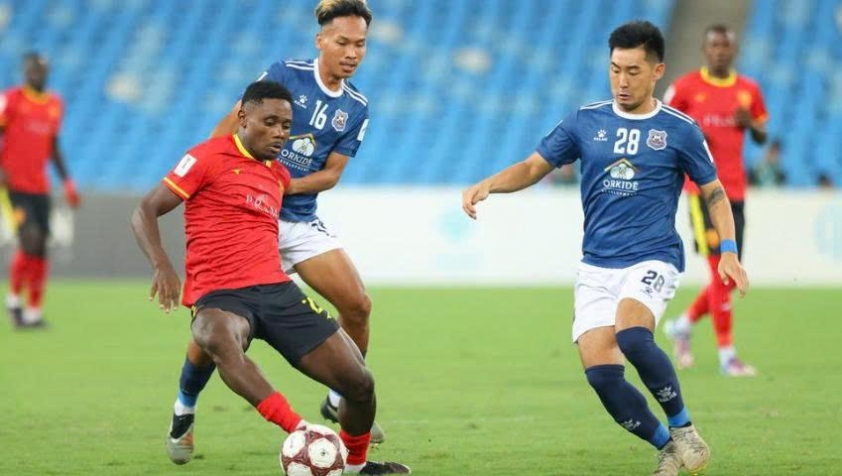
This progress clearly reflects the development of Southeast Asian football in recent years, as clubs no longer participate just to fill quotas but are capable of competing fairly in deeper rounds. However, last season still witnessed regret when Lion City (Singapore) and PKR Svay Rieng both lost in their finals.
This season, the opportunity remains wide open as many representatives still have the potential to go further. If they effectively leverage the current advantages, Southeast Asian football can indeed create a historic milestone, affirming its increasingly solid position on the continental stage.


Wonderfulshortvideo
Ganglion cyst removed


Ganglion cyst removed
User SportScoop has posted a video.
User SportScoop has posted a video.
Replying to @Computer says no.
Replying to @Computer says no.
User SportScoop has posted a video.
 Links
Links
 Contact
 App
App


