



Lima's red card appeal likely to end in failure, Manchester United plans to emphasize one key evidence! Maguire's verdict is crucial.


During Manchester United's 1-2 defeat to Leeds United on Monday night, United center-back Lisandro Martinez was sent off. He was judged to have pulled the braid of Leeds striker Dominic Calvert-Lewin, classified as "violent conduct." Red Devils manager Carrick was outraged and announced after the game that they would appeal.
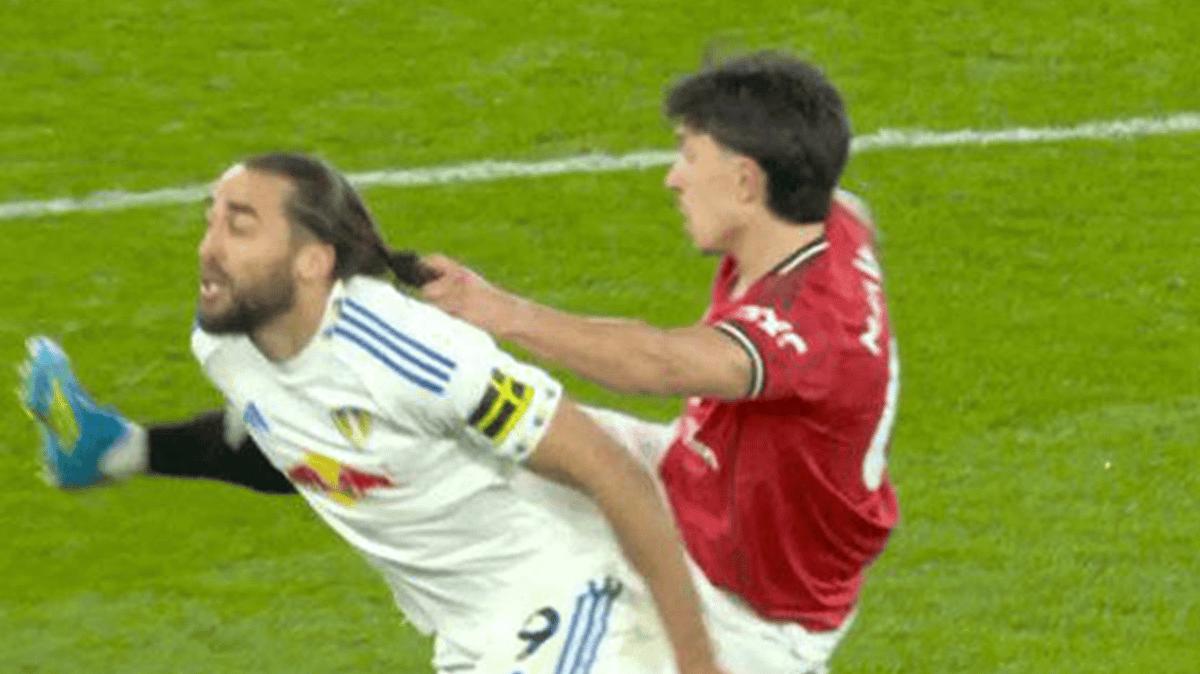
The definition of violent conduct will be the central topic of debate. Carrick believes Martinez's action was not a pull; the United manager used the word "touch," emphasizing that such contact differs from forceful pulling and therefore should not be categorized as a violent foul.
According to the official interpretation by the International Football Association Board (IFAB), violent conduct is defined as: a player using or attempting to use excessive force or brutality against an opponent when not challenging for the ball, or using force or brutality against teammates, team officials, match referees, spectators, or any other person, regardless of whether physical contact occurs.
If applying ordinary logic, Martinez's action was not violent, and it is even unclear whether it was intentional, so it might not qualify as violent conduct. However, the issue lies in that Britain is a common law country, and relevant precedents have already been established.
A memorable scene for Premier League fans occurred in August 2022, when Antonio Conte and Thomas Tuchel had an angry handshake clash at Stamford Bridge! That confrontation has become a classic moment in Premier League history.
One trigger of that incident was during the match when Chelsea left-back Cucurella's hair was pulled by Tottenham defender Cristian Romero. Referee Anthony Taylor did not whistle, and VAR video assistant referee Mike Dean did not intervene, with Tottenham eventually scoring a last-minute equalizer.
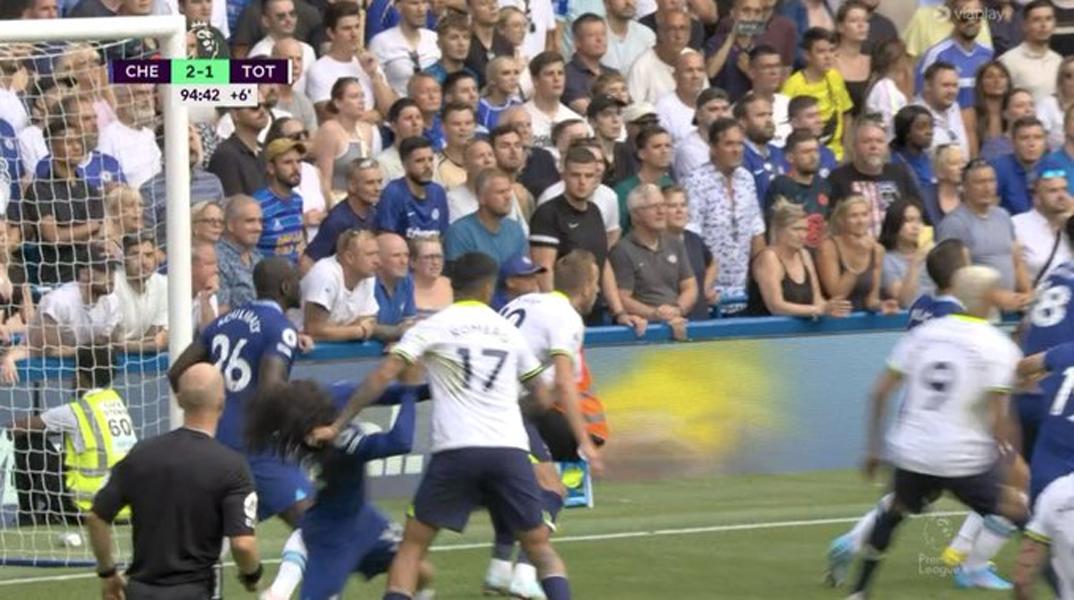
Dean later admitted he made an error, and that decision marked the beginning of increased Premier League attention on hair-pulling actions. Actually, even earlier, hair-pulling issues had occurred in the Premier League. Veteran United fans might recall in May 2016, during a match between Manchester United and Leicester City, Marouane Fellaini's afro was grabbed by German defender Robert Huth, and Fellaini retaliated with an elbow. The referee on duty missed both actions, but the disciplinary committee later sanctioned both players with three-match bans. Then United manager Louis van Gaal complained: "The rules do not allow grabbing someone's hair and pulling it back; such things only happen in sexual abuse."
Two years later, after Fellaini cut off his iconic afro, he decided to enjoy the advantage of short hair too! In a match against Arsenal, he grabbed Guendouzi's long hair and threw him down. Referee Andre Mariner called a foul but did not issue a red or yellow card.
However, following the Cucurella incident, the Premier League's official stance on hair-pulling changed. Especially since the introduction of VAR, hair-pulling fouls have become more commonly addressed, as VAR can detect such incidents and intervene in decisions.
In December 2024, Southampton defender Jack Stephens was sent off for pulling an opponent's hair. VAR spotted the action, and after reviewing the replay, the referee directly showed Stephens a red card, citing violent conduct.
Earlier this year, Everton defender Michael Keane was also red-carded for pulling Wolves forward Tolú Arokodare's hair. Like United, manager David Moyes argued that Keane's action was not violent conduct because both players were contesting a header. "Long hair is just easier to grab!" Moyes said.
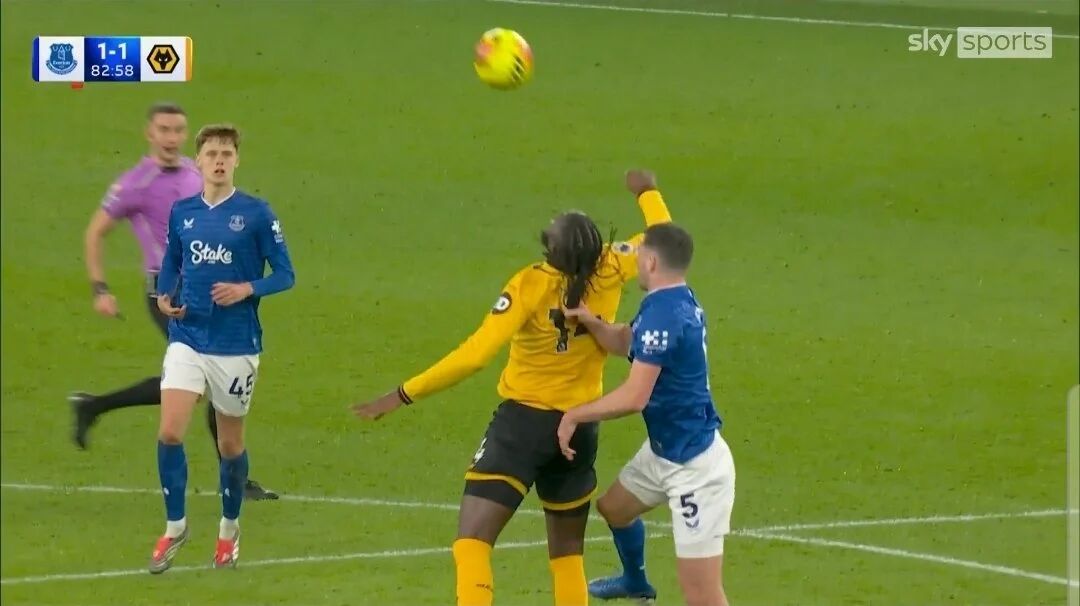
Everton appealed, and the Premier League Key Incidents Panel reviewed the case, but ultimately voted 2-1 that the red card was correct, and the three-match suspension remained. They emphasized: forcefully pulling someone's hair is not part of normal contesting in football. Moyes expressed anger over this.
There have also been "lucky ones" who escaped punishment after pulling hair. In February this year, Fulham defender Kenny Tete pulled Manchester City winger Antoine Semenyo's hair but was not sent off. Due to unclear VAR camera angles, Tete managed to avoid punishment. However, that controversy might actually disadvantage Martinez, as after such incidents, referees naturally pay more attention to the issue and handle it more strictly.
Manchester United's likely evidence for Martinez will include two key points: First, Martinez and Calvert-Lewin were engaged in intense contesting; Calvert-Lewin swung his arm back hitting the Argentine defender's face and neck, causing him to lose balance, thus incidentally grabbing the English striker's braid, but he quickly released it. Second, Martinez's action was minor,介于 touching and pulling之间, more accurately just a grab of Calvert-Lewin's braid.
Nevertheless, until the Professional Game Match Officials Limited (PGMOL) announces a change in stance, players must be aware of the consequences of casually touching an opponent's hair. Martinez's red card appears somewhat overly harsh, but he also needs to be cautious with his actions. This 175cm player indeed often employs defensive moves in gray areas in Premier League matches, such as the famous spread-eagle flying tackle against Crystal Palace.
It's easier said than done; he faces the fiercely competitive Premier League, and his physique compared to traditional tall strikers has shortcomings, forcing him to take risks. Now, United is more concerned about the disciplinary outcome for Maguire, who was charged by the FA for disrespect towards the fourth official after being red-carded in the 2-2 draw with Bournemouth.
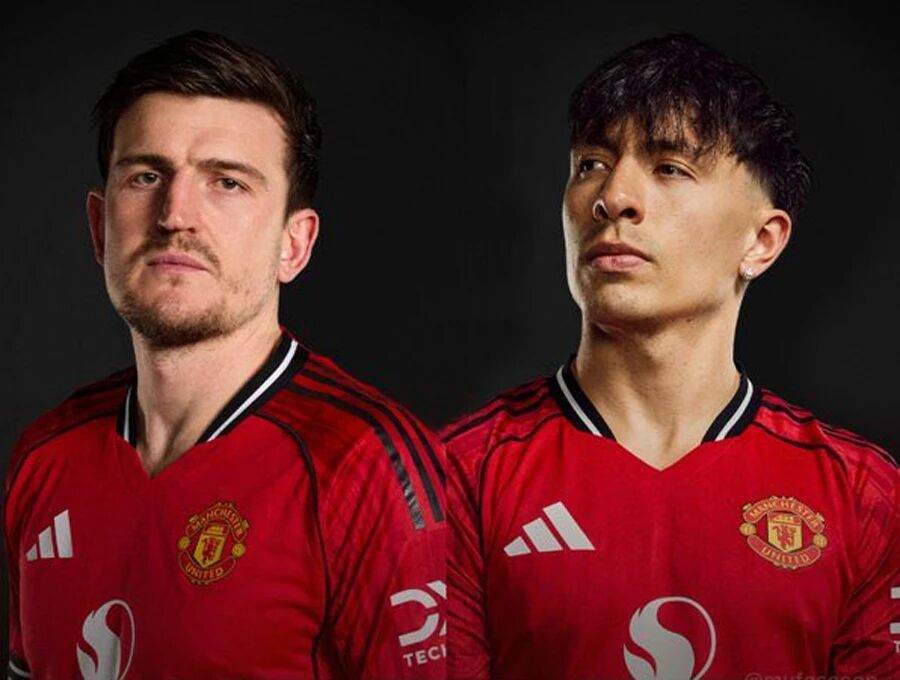
Carrick certainly hopes Maguire receives only a warning or fine without additional suspension, so that the English stalwart can be available for the match against Chelsea. Of course, the ideal outcome would be both Maguire and Martinez being able to play; their combination surely surpasses Leny Yoro. United believes Yoro was elbowed by Calvert-Lewin before their conceded goal; nonetheless, the French youngster was indeed too soft in the contest—he could have protected himself by raising his elbows when jumping.


Wonderfulshortvideo
👍 OR 👎


No mistake from Dael Fry on the second attempt 🫡
Josh Coburn equalises for Millwall against his former club and look how much he enjoyed that 👏
Josh Coburn - two goals against your former club 👏
Even the wedding ring is @arsenal 😅💍
Omer was a happy man after his side came from behind to win at the Riverside
Oldham’s Ryan Woods wild with this one 🤣
 Links
Links
 Contact
 App
App


