



Six consecutive unbeaten matches at the World Cup! Are Asian teams challenging the old order?



Written by Nino By Nino. With two-thirds of the first round of the 2026 World Cup group stage already played, Asian teams have emerged as a major talking point: they remain unbeaten after six matches, with two wins and four draws. Against European and American sides, these teams have overturned their traditional reputation as weaklings, showing they are capable of putting up a fight.
The unbeaten record of Asian teams is commendable in terms of quality, but it is impossible to ignore the impact of the expanded tournament format. Many national teams have adopted a conservative, “safety-first” approach, leading to a large number of dull draws. Nevertheless, for Asian football, this unbeaten start is a landmark declaration: the gap between Asian and European/American football has narrowed from a chasm to a mere step.


The six Asian teams that have already played in the first round deserve praise for their tactical discipline, physical conditioning, and competitive ability against European and American sides. South Korea, facing a tough and well-organized Czech Republic, showcased their signature high-intensity pressing and sharp transitions, controlling the game and scoring twice after falling behind to secure a comeback victory. Australia surprised the world by beating Turkey 2-0, a side featuring several stars including Güler. The Socceroos combined their traditional physicality, aerial dominance, and highly structured defensive low block to completely neutralize Turkey’s midfield creativity.

Japan, the highest-ranked Asian team, produced a convincing draw against traditional European powerhouse the Netherlands. Despite being without Endō, Mitoma, and Minamino, the Japanese team displayed relentless fighting spirit and tactical flexibility throughout the match, twice equalizing. They once again proved to a European giant that Japanese football has the ability and ambition to pursue “higher vistas” at the World Cup.
Three teams from the Gulf region—Saudi Arabia, Iran, and Qatar—also performed admirably. Saudi Arabia, facing Uruguay’s extremely tough and aggressive style, relied on outstanding defensive resilience and composure to earn a 1-1 draw against the South American traditional powerhouse. Qatar secured their first-ever World Cup point with a 1-1 last-gasp equalizer against a physical Swiss side. Iran, ranked 20th in the world and second in Asia, faced various off-field issues before the tournament. They twice came from behind to equalize against New Zealand, launching a strong attacking response in the second half to grab a point.

The teams yet to play are Iraq, Jordan, and Uzbekistan. Their opponents are Norway led by Haaland, Austria coached by Rangnick, and South American powerhouse Colombia. Iraq returns to the World Cup after 40 years, while Jordan and Uzbekistan are making their tournament debuts and face tough challenges in their first-ever World Cup matches.

Behind the unbeaten record of Asian teams lies a broader issue that cannot be overlooked: the expanded 48-team format has completely reshaped the risk-reward calculations of coaches in the group stage. Compared to the previous system where only the top two advanced, this World Cup adds eight third-place spots for the best-performing teams, casting a heavy shadow of conservatism over the first round’s main theme.

The numbers don’t lie: the first round has been nearly drowned in draws. So far, 16 matches have produced 47 goals, with eight games ending in draws—exactly half of all matches. This flood of stalemates is partly due to teams adjusting and adapting early in the tournament, with personnel and tactics still in a “tuning phase,” and players needing more game time to find form. But the more significant factor is the new format’s influence: as long as a team avoids losing in its opening match, it can largely preserve its mathematical chances of advancing. Coaches generally prioritize defensive organization over attacking risk. Defensive lines sit deeper, backlines are more cautious, and fewer players dare to commit forward in transitions. Teams seem content to settle for a point rather than gamble on a win.
Traditional powers from Europe and South America have encountered varying degrees of difficulty in the first round. The victories of Germany and Sweden cannot mask the defeats of the Czech Republic and Turkey. Spain, Belgium, and the Netherlands all struggled to break down opponents who appeared weaker on paper. South American teams collectively misfired: Brazil could only scrape a draw against a rising Morocco, Uruguay with its star-studded attack drew with Saudi Arabia, Paraguay was routed 4-1 by hosts the United States, and Ecuador lost 1-0 to Ivory Coast. The technical creativity and flair that South American football prides itself on have been severely limited by the highly standardized defensive organization of modern football.
With the globalization and commercialization of modern football, along with the wave of naturalized players sweeping the sport, many have predicted the arrival of a new world order. Now, in this historically significant new World Cup, as traditional giants stumble and grope at the starting line, the Asian contingent is declaring through action that the new world order is already within reach.



Wonderfulshortvideo

Shea Lacey handing out advice to Benjamin Šeško 😅



messi new club news football today ronaldo new club owner

🗣️ Man Utd boss Michael Carrick responds after the controversial goal that settled the Manchester Derby last weekend
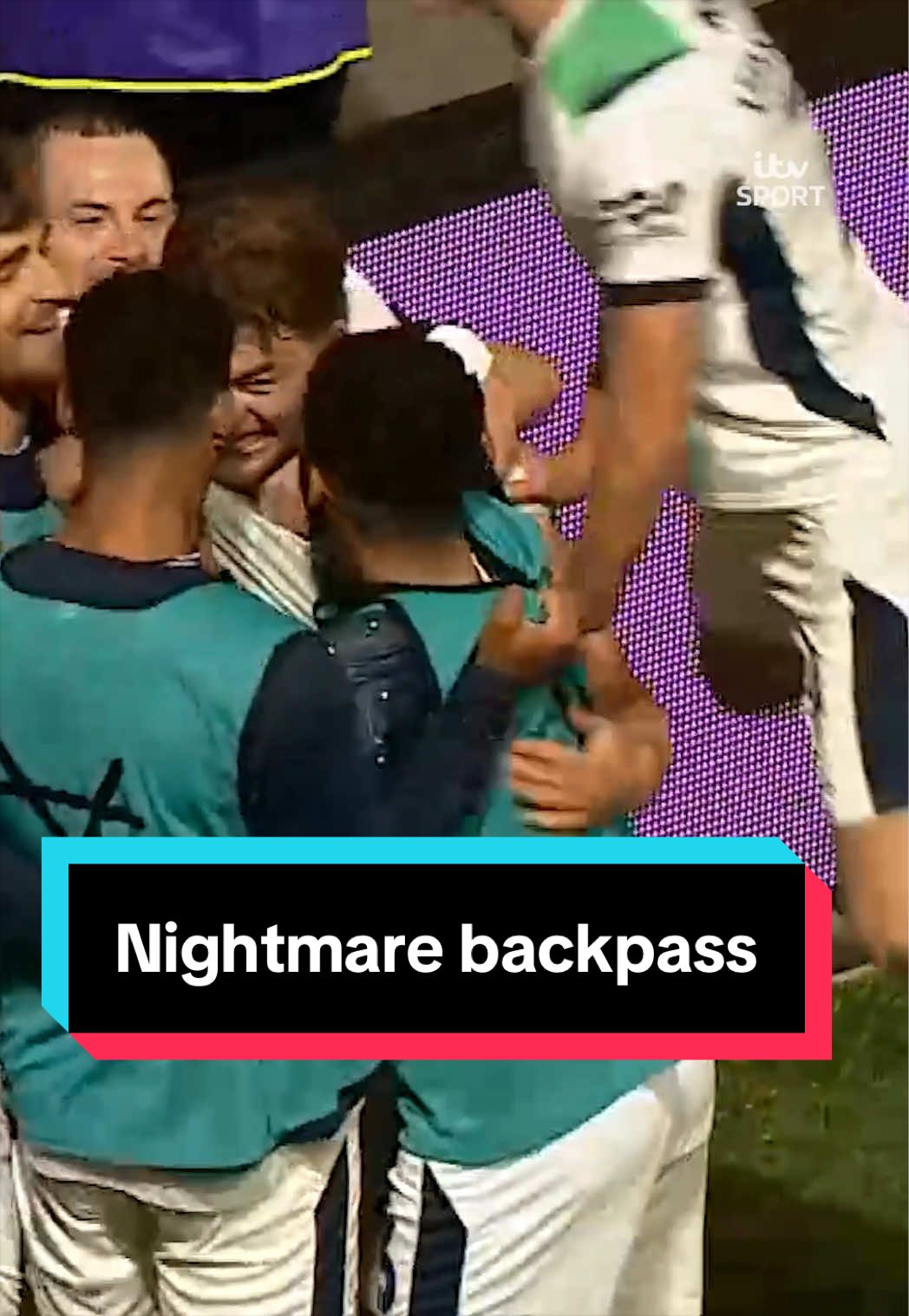
Now this backpass is every goalkeeper's 𝐰𝐨𝐫𝐬𝐭 𝐧𝐢𝐠𝐡𝐭𝐦𝐚𝐫𝐞 🫠

vinicius junior else vini jr today

🗣️ “I’ve won games playing much worse than today”

ballon d'or lamine yamal mbappe interview press conference ballon d'or winner france football edit
 Links
Links
 Contact
 App
App


