



World Cup 2026 and what inspiration does it bring for Vietnamese football?


The 2026 World Cup produced a day that people will recall for years: Cape Verde drew 0-0 with Spain, the tournament’s top candidate and current European champions. At the same time, Saudi Arabia and Iran continued Asia’s dream beginning at the 2026 World Cup.
These stories of competitive spirit and mental inspiration show that world football, or at least at the World Cup, is changing. Is there anything that could boost Vietnam’s World Cup dream?
There is no single formula for success, but there is belief. Clearly, Asia’s start in North America shows this is not a random variable. The overall level of football has risen. According to an analysis by The Guardian, Asia’s standard may have caught up with mid-tier European teams.
This is not only reflected in the results. South Korea beat the Czech Republic 2-1 after trailing. Japan equalized 2-2 in the 88th minute against the Netherlands, a team that had never lost a lead in World Cup history. Australia beat Turkey 2-0 with an average age of 24. Qatar drew 1-1 with Switzerland 1-1 in a match where VAR "gave" the European side a penalty. Saudi Arabia led against Uruguay.
means that teams in Asia’s top 10 are capable of achieving draws or wins at the World Cup, no matter the opponent. Logically, this is how Vietnam, currently ranked 15-16 in Asia, can build a feasible path for its belief. It’s not about when they will qualify for the World Cup, but what they must do to get there.
After Japan’s draw, Sky Sports commented: "A lesson from the on’t push Japan and other Asian teams into a to rise. Once they are confident, they can achieve anything."
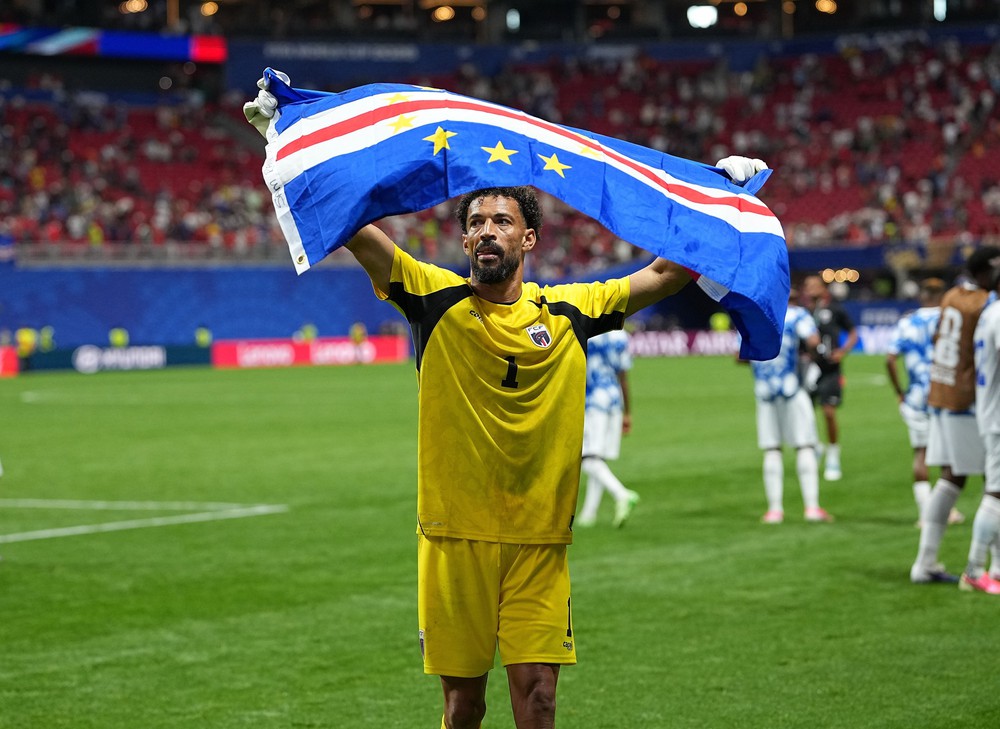
Cape Verde’s impressive performance against Spain offers many useful questions for Vietnamese football. Photo: Xinhua
The answer does not lie in any secret trick. It lies in systemic change happening across multiple layers. It has been two decades since the Japan Football Association (JFA) announced its goal to win the World Cup by 2050. At that time, it seemed like a fanciful dream. But now, they aim to achieve it far sooner. There has been a quiet but determined transformation. It comes from a world-class youth training system second only to Spain. It comes from the fact that a large number of Asian players have become pillars at top European leagues.
It’s not just Japan. of Asian players are now regularly competing in top European leagues like the Premier League, Bundesliga, Serie A, and Ligue 1. They no longer approach the World Cup with the mentality of first-time sailors on the big sea. They come as who have lived in that environment weekly, season after season. For example, Uzbekistan is a World Cup newcomer, but they have a center-back playing regularly at Manchester City.
Investment in infrastructure is also producing clear results. South Korea adapted to Mexico’s climate weeks before the tournament. Japan analyzed opponents down to every detail. Australia implemented specific tactical plans for each opponent. Saudi Arabia sent many young players to academies in Spain and France. As for Qatar, the familiar story of the Aspire Academy, known to Vietnam 20 years ago, stands out.
What Asian football is proving at the 2026 World Cup is that when determined, they can close gaps that once seemed impossible. They show that their football systems have matured enough to compete steadily with European and South American football. And this does not come from a talented star or a good foreign coach. It comes from decades of building youth training systems, from sending abroad, from data analysis, sports medicine, and a serious investment in competitive psychology.
Vietnamese football has set a target to the World Cup by 2030. That is a completely legitimate ambition, and it is not impossible. But between ambition and reality, there is a gap that cannot be filled by fighting spirit or a few impressive qualifying wins. It demands that we act, and work hard because it takes a lot of time to see results.
So, the shock that Cape Verde created against Spain may stir the hearts of football fans, but for Vietnamese football administrators, the question is: if Cape Verde, with 600,000 people, no fully professional national league, can draw with Spain, then Vietnam, with with 100 million people, a growing economy, and a dynamic football market, what is the core element they are missing to get closer to the World Cup dream?
The answer to that, perhaps, is more important than any match result.


Wonderfulshortvideo

Shea Lacey handing out advice to Benjamin Šeško 😅



messi new club news football today ronaldo new club owner

🗣️ Man Utd boss Michael Carrick responds after the controversial goal that settled the Manchester Derby last weekend

Now this backpass is every goalkeeper's 𝐰𝐨𝐫𝐬𝐭 𝐧𝐢𝐠𝐡𝐭𝐦𝐚𝐫𝐞 🫠

vinicius junior else vini jr today
🗣️ “I’ve won games playing much worse than today”

ballon d'or lamine yamal mbappe interview press conference ballon d'or winner france football edit
 Links
Links
 Contact
 App
App


