



World Cup 2026: Spain Falls Flat Without Lamine Yamal's Spark


Following their impressive win at EURO 2024, Spain was anticipated to keep displaying a modern, energetic, and highly creative style of possession football at the game at the 2026 World Cup. However…
A 0-0 draw against Cabo Verde isn't a disaster, but it is certainly a wake-up call. Spain took 27 shots, with 7 on target, generated an expected goals (xG) of 2.29, and dominated possession with over 700 passes—yet they were ultimately ineffective. They lacked the most crucial element in top-level football: the ability to turn dominance into goals.
Cabo Verde's Spirit and Vozinha's Hands
In their first World Cup appearance, Cabo Verde didn't resort to purely negative defending negatively against the tournament favorites. They defended proactively: maintaining a tight defensive shape, competing fiercely, and always ready to transition when they had the ball. The African team's defense made Spain's usual combinations slower, more restricted in space, and easier to read.
However, the biggest difference-maker was goalkeeper Vozinha.
At 40 years old, when many goalkeepers are nearing the end of their careers, Vozinha delivered one of the most memorable performances on the world's biggest stage. He made 7 saves, including 6 stops against shots from inside the box—where chances have the highest conversion rate.
Notably, Voz saves were not just based on luck. They were a combination of reflexes, positioning, and composure. He consistently appeared in the right place at the right time to deny dangerous efforts from Ferran Torres, headers, and other plays that seemed destined to break the deadlock.
That performance made Vozinha a symbol of a confident Cabo Verde side. Coach Bubista had asked his players to play without fear before the match, and they did exactly that.
In a World Cup where the gap between teams continues to narrow, Cabo Verde proved that organization, discipline, and belief can produce results that defy expectations.
Spain Loses Its Wings and Lamine Yamal's X-Factor
While Cabo Verde can be proud of Vozinha, Spain must confront a significant issue: They are no longer their most explosive selves.
La Roja's success at EURO 2024 was heavily built on their strength out wide. Lamine Yamal and Nico Williams were not mere wingers. They were tools that broke down defensive structures with pace, dribbling, and boldness in one-on-one situations. But against Cabo Verde, Spain lacked both of these two key elements.
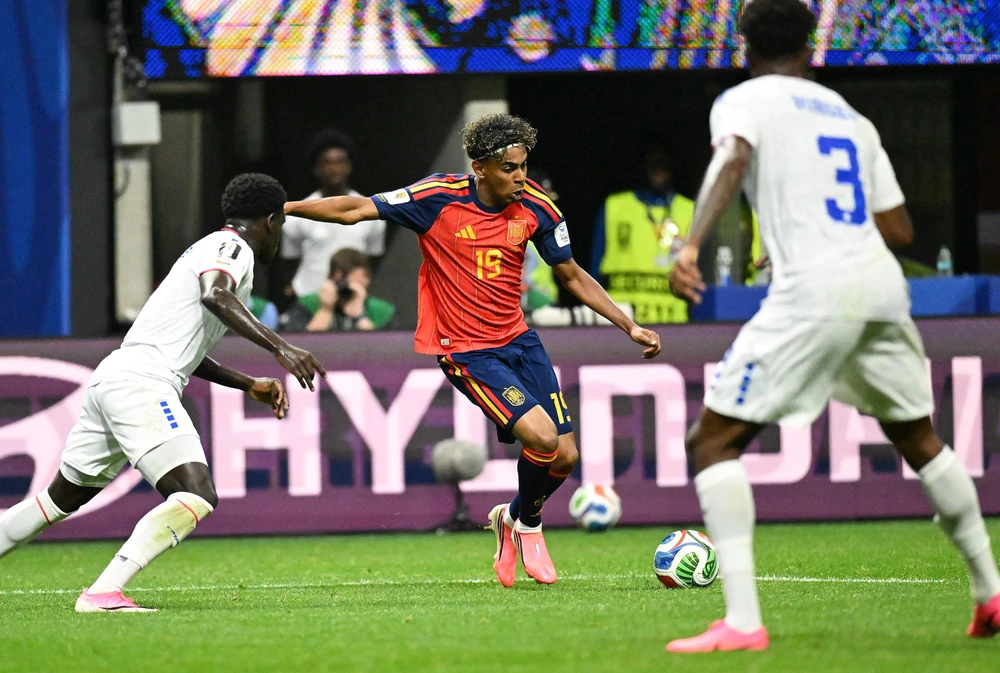
Yamal came on late and couldn't make a difference against Cabo Verde - Photo by Xinhua/VNA
Yamal is still not at peak fitness following an injury and could only play the final 20 minutes. Nico Williams was also not at his best. With their two biggest sources of inspiration not starting, Spain's attacking system immediately lost its balance.
Coach Luis de la Fuente deployed Gavi on the left wing and Ferran Torres on the right, but these weren't choices capable of fully replicating Yamal or Williams' roles. Gavi brought energy and pressing ability, but he's not a natural winger. Ferran has technique and movement but didn't create enough constant pressure on the Cabo Verde defense. The result was a Spain that dominated possession but failed to generate sufficient chaos.
De la Fuente's passed the ball frequently and circulated it continuously, but most of these passes only served to maintain control rather than create decisive space. This is a common problem for possession-oriented teams: When the opponent drops deep and maintains structure, having the ball doesn't automatically mean creating clear chances.
Spain's most dangerous came from individual moments or special plays. Ferran Torres hit the crossbar from a Cucurella pass, while other opportunities were all denied by Vozinha.
Notably, when Yamal entered the fray, the difference was almost immediate. With his first touches, the young forced Cabo Verde to alter their defensive approach. He stretched the opponent's formation, created space for his teammates, and injected the energy Spain had been missing for most of the match. But the change came too late.
The big question for De la Fuente is: Is Spain becoming too reliant on Yamal? A team aiming to win the World Cup cannot simply wait for one young player to produce miracles.
Spain Is Making It Hard for Themselves
World Cup history shows that the opening match doesn't always accurately reflect a team's championship potential. Spain in 2010 (lost to Switzerland in their opener), or Argentina in 2022 (lost to Saudi Arabia in their opener) are prime examples. So, a draw against Cabo Verde doesn't yet eliminate La Roja from the race.
However, the context of 2026 makes this result more notable. While many other contenders started strongly, Spain has reduced their margin for error in the group stage. To finish top of the group, they likely have no choice but to beat Saudi Arabia and, especially, Uruguay. The team known for its physical and high-intensity style under Marcelo Bielsa could be a real test of character.
A second-place finish also carries the risk of Spain facing a tougher path in the knockout rounds. On the positive side, La Roja still has a foundation to build upon. Rodri remains the midfield leader, Pedri can still make a difference, and Yamal has time to regain his best form. Cabo Verde created one of the biggest surprises of the 2026 World Cup through their bravery, while Spain received their first reminder on their quest for the golden trophy. Possession is just the first step. The final deciding factor remains the ability to create defining moments. That is exactly what Spain needs to rediscover, perhaps starting from the feet of Lamine Yamal.
Check the latest World Cup 2026 news
View the World Cup 2026 schedule
See the World Cup 2026 standings


Wonderfulshortvideo
Shea Lacey handing out advice to Benjamin Šeško 😅


messi new club news football today ronaldo new club owner
🗣️ Man Utd boss Michael Carrick responds after the controversial goal that settled the Manchester Derby last weekend
Now this backpass is every goalkeeper's 𝐰𝐨𝐫𝐬𝐭 𝐧𝐢𝐠𝐡𝐭𝐦𝐚𝐫𝐞 🫠
vinicius junior else vini jr today
🗣️ “I’ve won games playing much worse than today”
ballon d'or lamine yamal mbappe interview press conference ballon d'or winner france football edit
 Links
Links
 Contact
 App
App


