



World Cup 2026: Are Three-Minute Breaks Enough to Combat the Heat?



However, this decision has sparked mixed debates, with many experts arguing that the break duration is too short to effectively help players avoid health risks under harsh weather conditions.
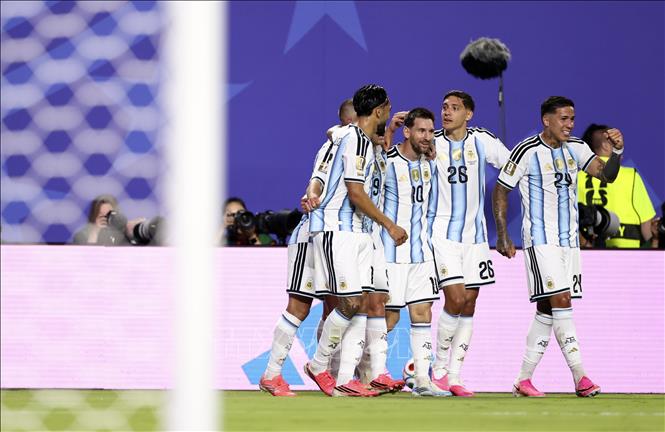
Many scientists warn that the 2026 World Cup, hosted by the United States, Canada, and Mexico, could become the hottest World Cup ever. Facing the direct impact of high temperatures on player health, FIFA has required all matches to include two three-minute hydration breaks, occurring midway through each half, regardless of weather or stadium conditions.
According to FIFA, the new regulation aims to ensure fairness for all teams and is based on experience from recent tournaments, including the FIFA Club World Cup held in the U.S., where temperatures once exceeded 35°C. However, not everyone agrees with this solution. Some coaches believe that frequent match stoppages can disrupt the game's rhythm and create opportunities for teams to adjust tactics mid-play. Meanwhile, the scientific community questions whether three minutes is sufficient for players' bodies to recover under extreme conditions.
Mr. Joshua L. DeVincenzo, an expert at the National Center for Disaster Prevention at Columbia University (USA), stated that the primary goal of these breaks is to minimize the risk of serious medical incidents on the field. According to sports medicine experts, even elite athletes can face heat stroke when competing in high heat and humidity.
In such conditions, the body experiences severe strain on the cardiovascular system, nervous system, and muscles. Common symptoms include cramps, dehydration, headaches, dizziness, nausea, reduced physical performance, and impaired decision-making. More dangerously, when body temperature exceeds 40.5°C, players may become disoriented, lose consciousness, or suffer from heat stroke—one of the leading causes of death in sports.
Ms. Yuri Hosokawa, Professor of Sports Sciences at Waseda University (Japan), believes that hydration breaks should last at least five to six minutes to achieve more noticeable effects in cooling the body and rehydrating players. Under high-intensity competition, each player can lose one to two liters of sweat per hour. Losing just about 2% of body weight due to dehydration is enough to significantly reduce athletic performance.
Mr. Ryan Calsbeek, Professor of Biology at Dartmouth College (USA), explained that the human body functions more efficiently as temperature rises up to a certain threshold. However, once that limit is exceeded, performance not only declines but drops rapidly. He noted: "Extreme heat can impair players' thinking and decision-making abilities. In top-level football, even a moment of distraction can decide the outcome of a match."
Many experts argue that the effectiveness of breaks depends on accompanying cooling measures, such as placing cold towels on players' heads, necks, backs, or arms. Still, longer break durations yield greater recovery benefits. Mr. Douglas Casa, Director of the Korey Stringer Institute at the University of Connecticut, believes that extending the break by a few minutes could make a significant difference in lowering body temperature and reducing the risk of heat stroke.
In the context of climate change causing more frequent extreme heat waves, many experts note that professional sports will be forced to adapt through changes in match schedules, venue locations, and regulations protecting athletes' health.


Wonderfulshortvideo

yamal goal today raphinha goal today hattrick today adeyemi barcelona 7-2 racing santander highlights


🗣️ “As a group we can’t accept that, I can’t accept that”

Shea Lacey handing out advice to Benjamin Šeško 😅

messi new club news football today ronaldo new club owner
🗣️ Man Utd boss Michael Carrick responds after the controversial goal that settled the Manchester Derby last weekend

Now this backpass is every goalkeeper's 𝐰𝐨𝐫𝐬𝐭 𝐧𝐢𝐠𝐡𝐭𝐦𝐚𝐫𝐞 🫠

vinicius junior else vini jr today
 Links
Links
 Contact
 App
App


