



World Cup 2026: When Dead Balls Become a Vital Weapon


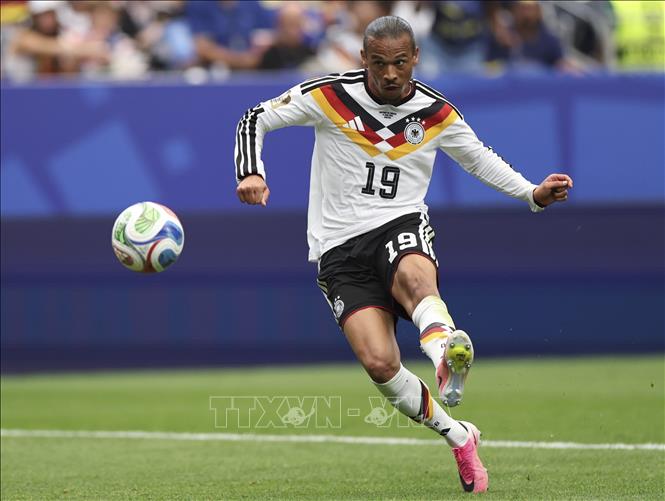
Overseeing this area is specialized coach Mads Buttgereit, 41, who has worked with the German team for the past five years. On the training ground, he meticulously designs strategies for free kicks, corner kicks, throw-ins, goal kicks, and kick-off plays. Every position, run, and movement timing of the players is carefully calculated.
Head coach Julian Nagelsmann believes that over 30% of goals nowadays come from set pieces. In his view, modern football is increasingly complex, with teams constantly changing tactics during a match, while set pieces are elements that can be practiced, standardized, and perfected.
The importance of dead-ball situations was proven during Germany's 2014 World Cup triumph, when 6 of their 18 goals came from set pieces. However, Germany failed to score from a dead ball at the 2022 World Cup and the 2024 UEFA European Championship.
Buttgereit does not see that as a failure. According to his data, at EURO 2024, Germany produced the most shots from set pieces, with 18 attempts. He focuses on the quality of chances rather than just goal tallies, using Expected Goals (xG) data to evaluate the scoring probability of each situation.
The figures show that Germany has been notably effective. An average team needs about 40 corner kicks to score a goal, while Germany requires only around 20. During World Cup qualifiers, their conversion rate from set pieces (excluding penalties) reached 0.83 goals per match, ranking first among the top 10 teams in the world.
Before each match, Buttgereit thoroughly analyzes opponent footage to identify their strengths and weaknesses in defending and attacking from dead balls. For every game, Germany typically prepares 2 to 4 corner-kick routines to avoid overloading players under pressure.
Joshua Kimmich is one of the primary corner takers. Jonathan Tah, David Raum, and more recently Nathaniel Brown also play key roles in set-piece schemes. Germany also employs a tactic of flooding the penalty area to put pressure on the opposing goalkeeper and defense. This approach resembles Arsenal, a team renowned for packing the box during corner kicks.
Buttgereit also emphasizes developing direct free-kick ability. He rates Florian Wirtz as a world-class free-kick taker, with a direct free-kick conversion rate of up to 40% according to data—far above the typical 7% for average players. Both use the Trackman application, commonly used in golf, to measure spin, contact point, and ball trajectory.
Beyond corners and free kicks, the German coaching staff also prepare plans for second balls, counter-attack prevention, and exploiting moments when opponents are less focused—such as after throw-ins, water breaks, or the start of the second half. In the high temperatures of the World Cup, short breaks are seen as opportunities to spring surprises.
For Germany, a dead-ball situation is not just a random chance. It is the product of data, analysis, and carefully prepared plans designed to make a difference in tightly contested matches.





 網站地圖
網站地圖
 聯絡方式
聯絡方式
 App
App


