



Messi Crowned as the "Undisputed GOAT" of the World Cup: He Doesn't Chase Records, He Creates an Era



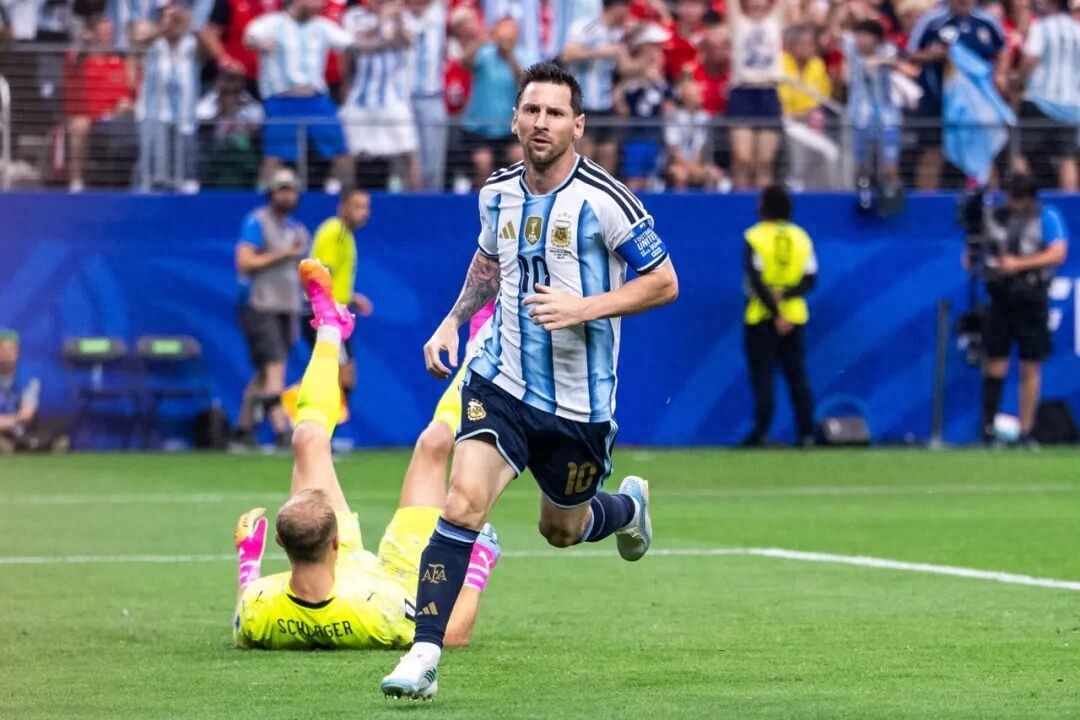
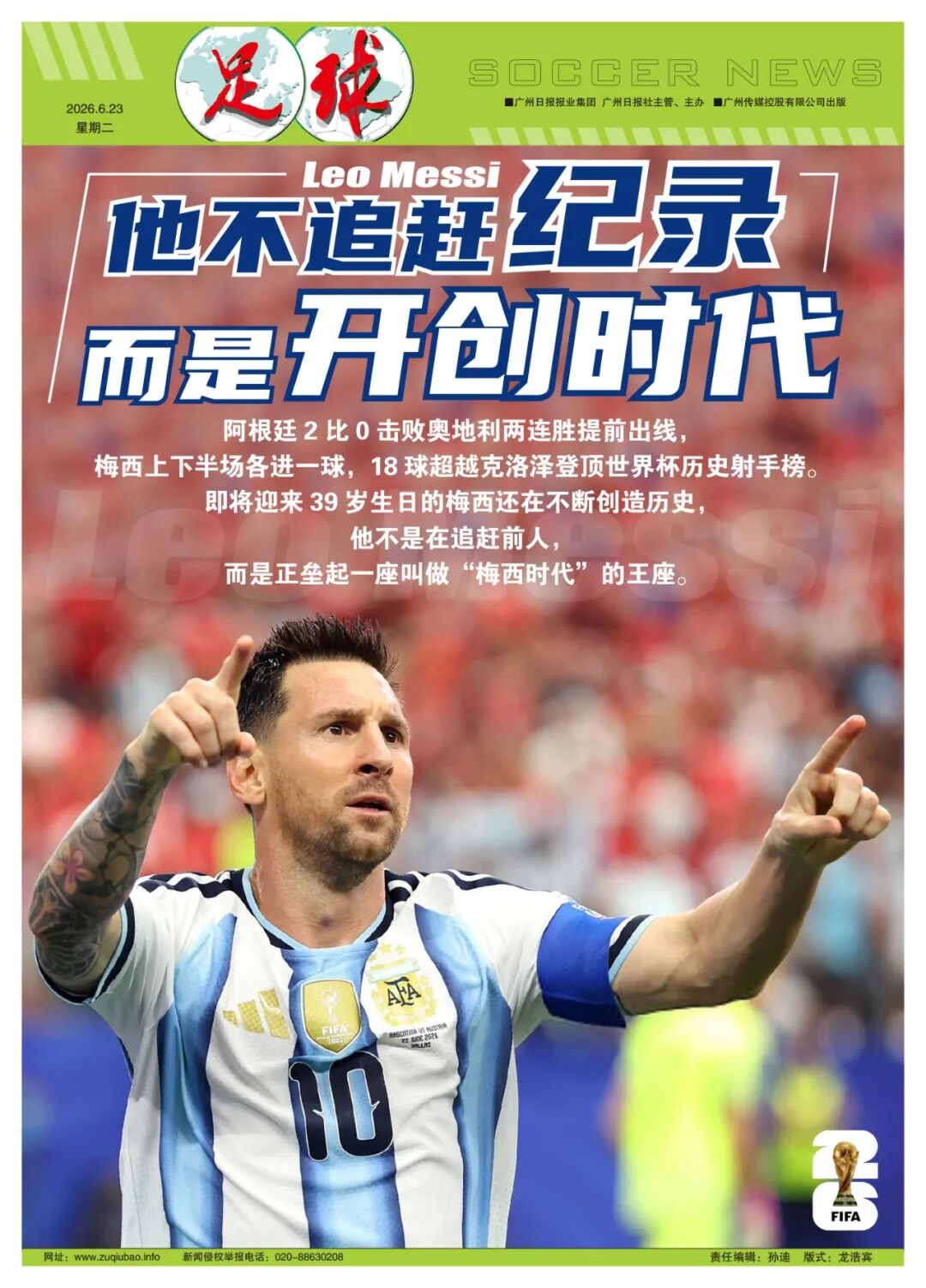
Written by Nino Shifting from Kansas City Stadium in Missouri to Dallas Stadium in Texas, Argentina once again held on to victory. Against Austria under Rangnick, they showed a well-balanced and mature temperament, and team captain Messi again highlighted his impact on the match and etched his name in the records: though he missed a penalty, he found the net once in each half, reaching 18 goals and overtaking Klose to stand alone atop the World Cup historical scoring chart. Argentina eventually beat Austria 2-0, securing qualification one round early.
Four years ago in Qatar, Messi won the World Cup, completing the final piece of his career puzzle in a crowning triumph. Four years later in the United States, Canada, and Mexico, this could become his legendary apotheosis. Coincidentally, this history-altering night fell on the same date as Maradona's "Hand of God" and "Goal of the Century" on June 22, 1986. On the same day, two generations of Argentina's number 10s have erected immortal monuments under the vast sky of World Cup history.
Messi, who will soon turn 39, has already surpassed predecessors Maradona and Pelé in statistics. Yet what truly moves people is the final blaze of passion he radiates within this "friendship-like" Argentine squad: he is not chasing those before him, but rather, with every run, every touch, and every goal, he continues to extend the already glorious "Messi era" for himself and for Argentina.
Four years ago in Qatar, Messi had already been crowned king. Now, four years later, he and his Argentina team are firmly advancing toward defending the title—two wins in a row, early qualification, and everything is just beginning.
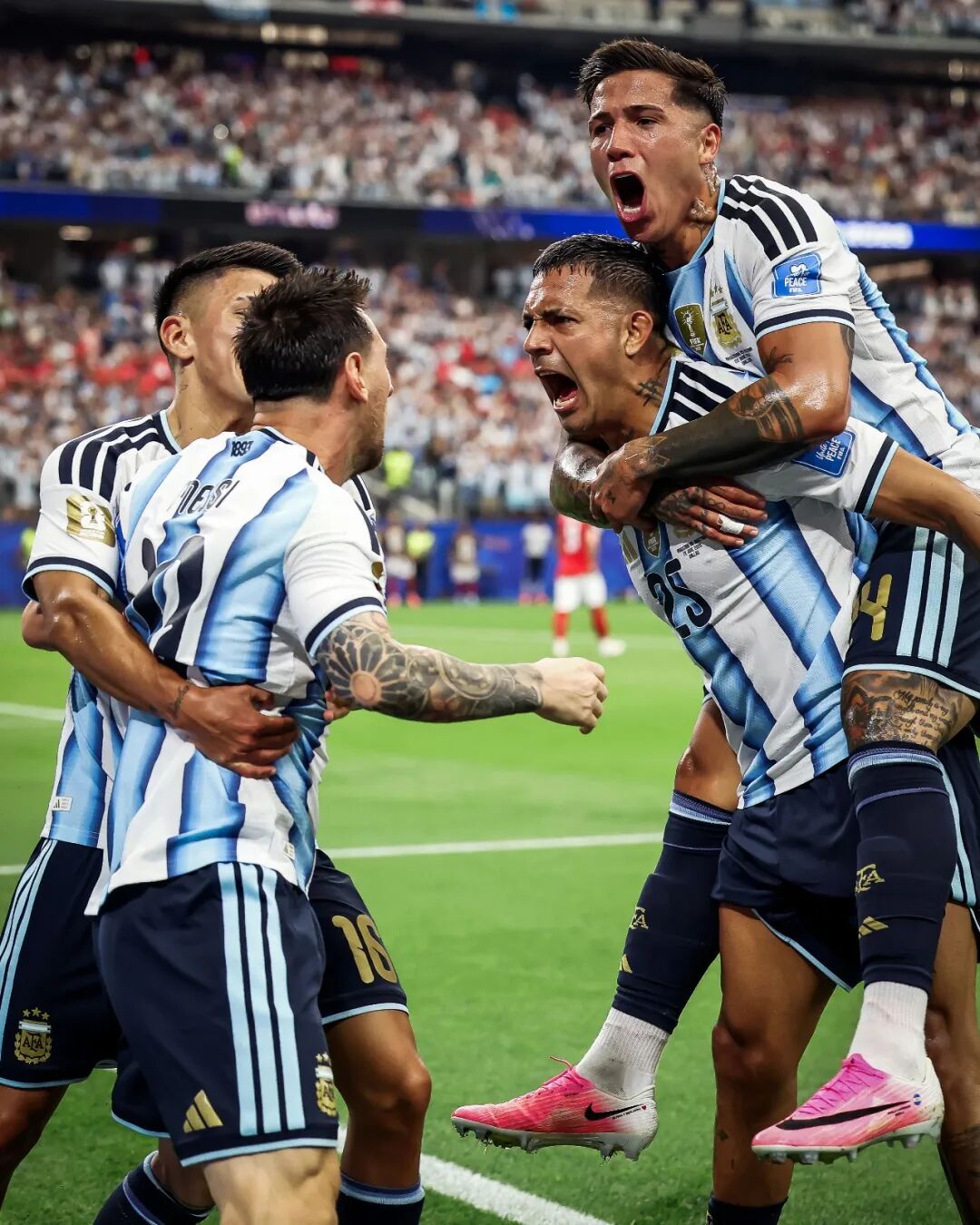

After the match against Algeria, Messi, who shed tears after scoring his first goal, thanked the entire Argentine team, saying they made him feel "very cared for." A week later, in a press conference room packed with about 200 journalists and 14 camera crews at Dallas Stadium, Scaloni spoke about Messi, who is about to turn 39. He said, "We all want him to be happy." Enzo added that they need to create space for Messi to receive the ball and let him work his usual magic.
From those few pre-match comments, you could already see the mutual devotion between Messi and this Argentina team: one is a leader whom the entire squad sincerely admires both on and off the pitch, and the other is a team that keeps Messi—already a career grand-slam winner—burning with fighting spirit in his twilight years. As Messi said after the game: "I think when this group comes together, whether it's an official match or a friendly, we really enjoy the time together, the games, training, and daily life."
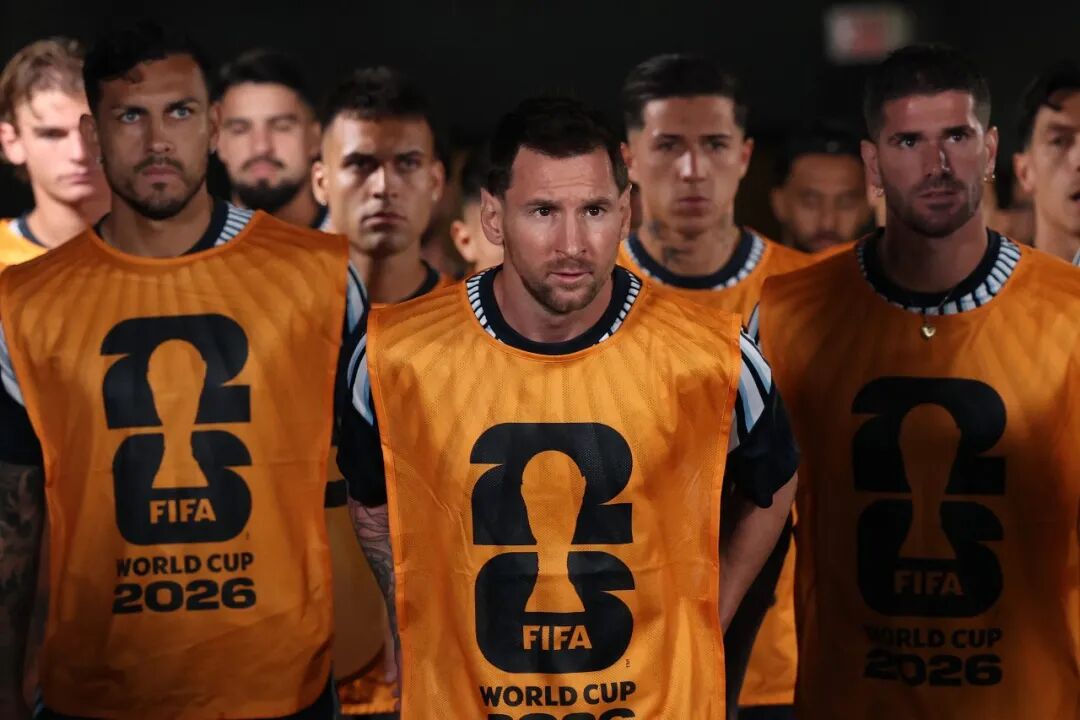
Some Argentine media believe this Argentina squad is even stronger than the one that won the World Cup in Qatar, thanks to newcomers like Almada, Barco, Julián Simione, and Medina, who have added depth to the roster, mature team management, and the chemistry built among players over four years. Scaloni recently described it as a "team of friends," and when you see the smiles on the faces of Argentine players and their warm embraces after Messi scores, you feel they are like brothers to one another.
For the starting lineup against Austria, Scaloni kept the same eleven that crushed Algeria in the opener. Youngster Almada continued to start, Molina replaced the injured Montiel, and Álvarez, Tagliafico, and Paredes remained on the bench waiting for their chance. The starting Messi extended his own record for World Cup appearances to 28. From the outset, Austria adopted an aggressive high-pressing strategy, trying to win the ball deep in Argentina's half and launch immediate attacks. However, Argentina was well prepared: Lautaro dropped deep to act as a pivot, while De Paul and Almada provided support in the half-spaces, thwarting Austria's plan.

Just two minutes into the match, Molina, De Paul, and Messi combined on the left to break Austria's press. Lautaro received a through ball from Enzo and won a penalty. Unfortunately, Messi's spot kick was too precise in its placement, striking the post. Messi thus became the first player in World Cup history to miss three penalties.
But this miss did not affect Messi or the morale of the whole Argentine team. They continued to cut through Austria's exposed backline with combination plays in the half-spaces. Messi and Almada each had good chances but failed to score. Just before halftime, Austria's midfield pushed too high, and Almada found himself facing the Austrian defense. He drove forward, laid the ball wide, and then cleverly let Medina's cross run through his legs, allowing the onrushing Messi to meet it with a trademark left-footed finish into the net.
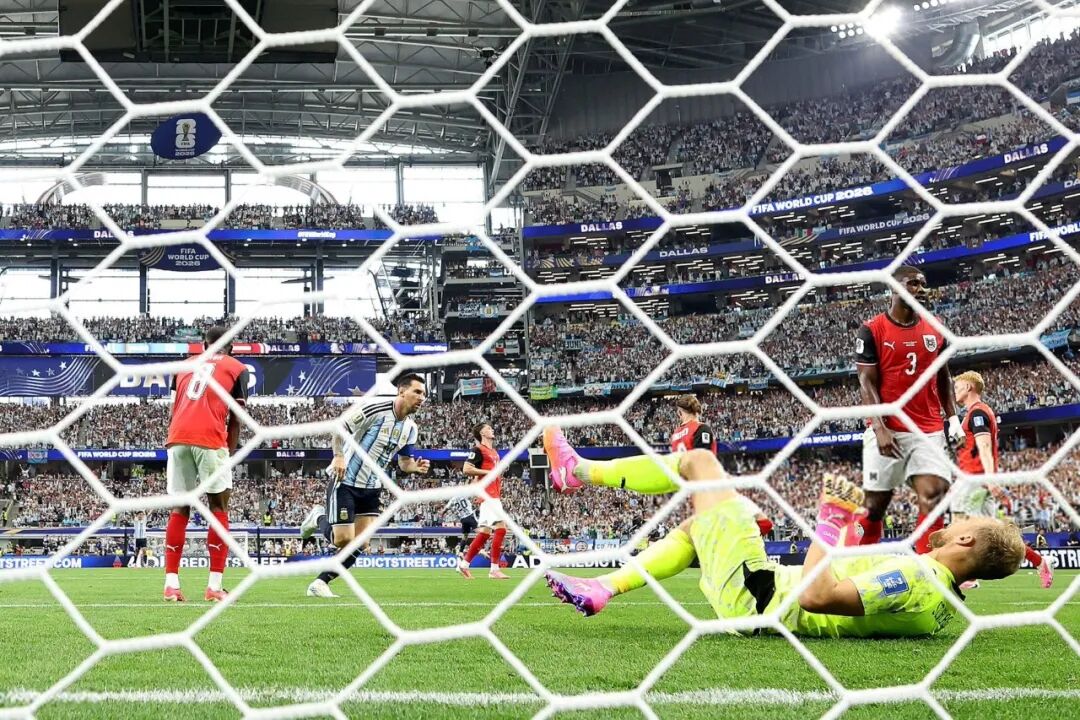
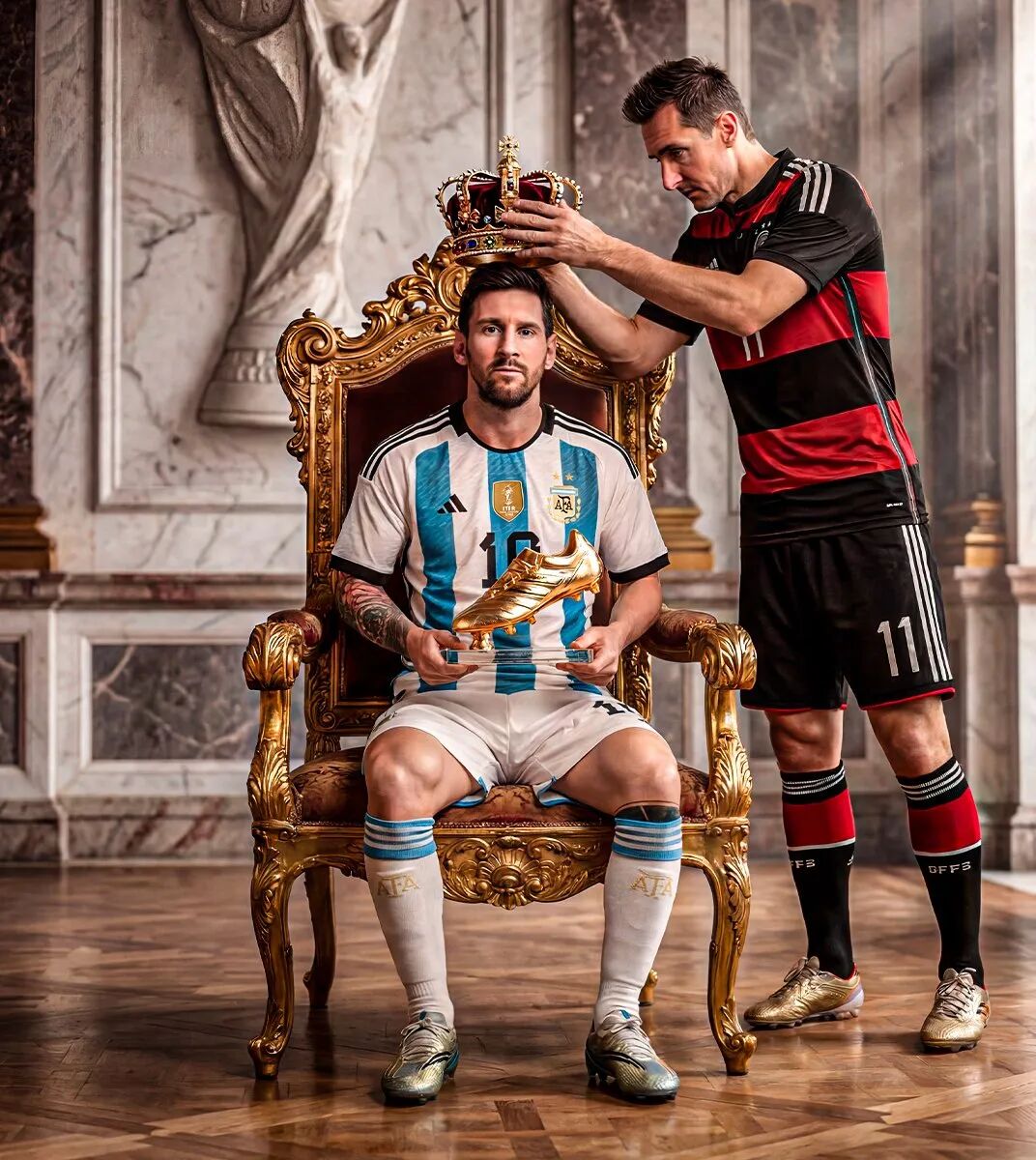
This was Messi's 17th World Cup goal—a historic one. With it, he broke Klose's record to stand alone at the top of the World Cup all-time scoring chart and became the third player after French legend Just Fontaine and Brazilian great Jairzinho to score in six consecutive World Cup matches. Klose also congratulated Messi in an interview with Germany's Süddeutsche Zeitung: "In my opinion, Messi is the greatest footballer of all time! Congratulations to him!"

In the second half, Rangnick's Austria clearly changed their approach. They dropped deeper while trying to attack through the left flank with Laimer and Sabitzer, but with limited success. Only Sabitzer managed to create chances through individual effort twice: once with a cross that Gregoritsch headed wide inside the box, and once with a direct free kick from outside the area that was saved by Martínez.
On the other side, Argentina demonstrated control of the game. Otamendi replaced Romero, who re-aggravated a knee injury. Álvarez and González came on for Almada and Lautaro, who had expended a lot of energy in the first half, to maintain freshness in the front line. The smooth interplay among De Paul, Mac Allister, and Enzo allowed them to retain possession under Austria's pressure, slow the tempo, gradually drain Austria's attacking momentum, and then accelerate for counterattacks. In the final stages, Paredes and Tagliafico returned to the pitch to regain match fitness ahead of the knockout rounds.
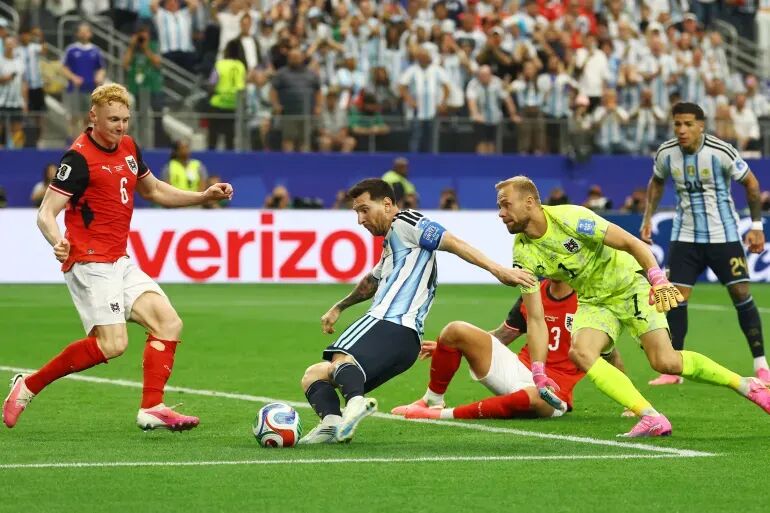
Although Rangnick brought on Arnautović and Chukwuemeka in an attempt to equalize, fate chose to favor Argentina and Messi. In stoppage time, Messi, facing the Austrian goalkeeper and three defenders inside the box, cut inside and saw his shot saved, but he quickly reacted with a second tap-in before the defenders could recover. Messi scored his 18th goal, personally adding another brick to his own monument in World Cup history: most goals (18), most wins (18), most appearances (28), and most minutes played (2,489). In the tournament's scoring chart, he also overtook Germany's Undav to take the lead, having scored all five of Argentina's goals so far.
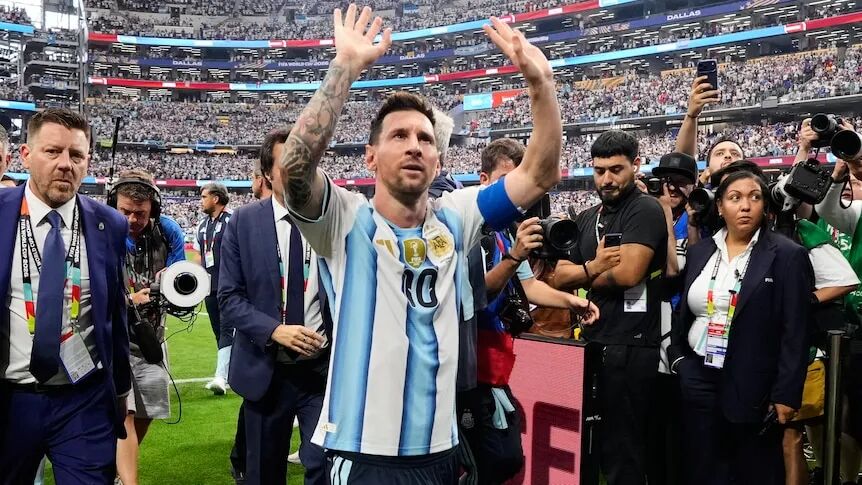

Argentina eventually beat Austria 2-0, securing their place in the round of 32 with one match to spare after two straight group-stage wins. Messi extended his career-long record of never failing to advance from a group stage—34 times in club and international competitions, all resulting in knockout-stage qualification. Speaking after the match about his stunning start to the tournament (5 goals in 2 games), Messi admitted: "To be honest, all this happening is incredible. I had a penalty today that could have extended the lead, but if I had scored that first one, maybe the other two would never have come. So anything is possible, but I'm satisfied with the result and the team's performance and effort. There was a moment when I was really frustrated about the missed penalty because it was a poor attempt. Fortunately, we turned things around, came from behind, and secured the three points—that was crucial."
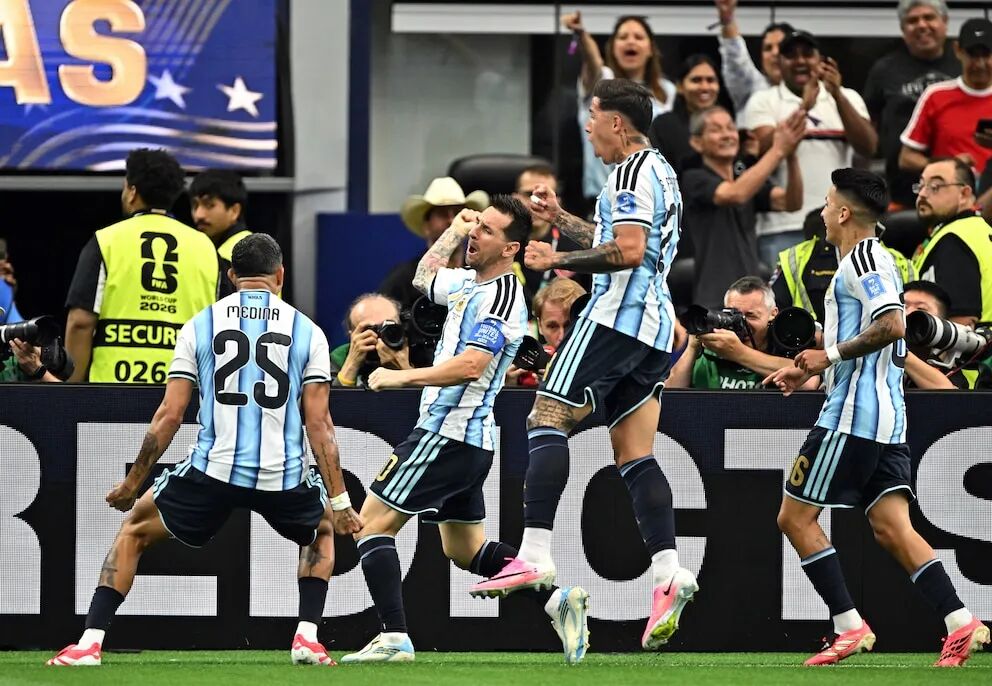
"We've already given our fans a few victories, and we'll try to keep this momentum going, just like the fans do—full of hope. Let me say it again: one step at a time, right? This is a long tournament, very tough, and we have to prepare for every match the same way, no matter the opponent or the situation."
Argentina head coach Scaloni expressed great satisfaction with the team's mature performance against a physically aggressive opponent: "I'm very happy with the whole team's display. I think the team knew how to endure pressure when they had to. Today, although Austria sometimes didn't really trouble us, we didn't have possession. We went through some tough moments, but we knew how to handle the pressure. That's down to the whole squad, even though we could have done better. The credit goes to the team—they know when to do what."
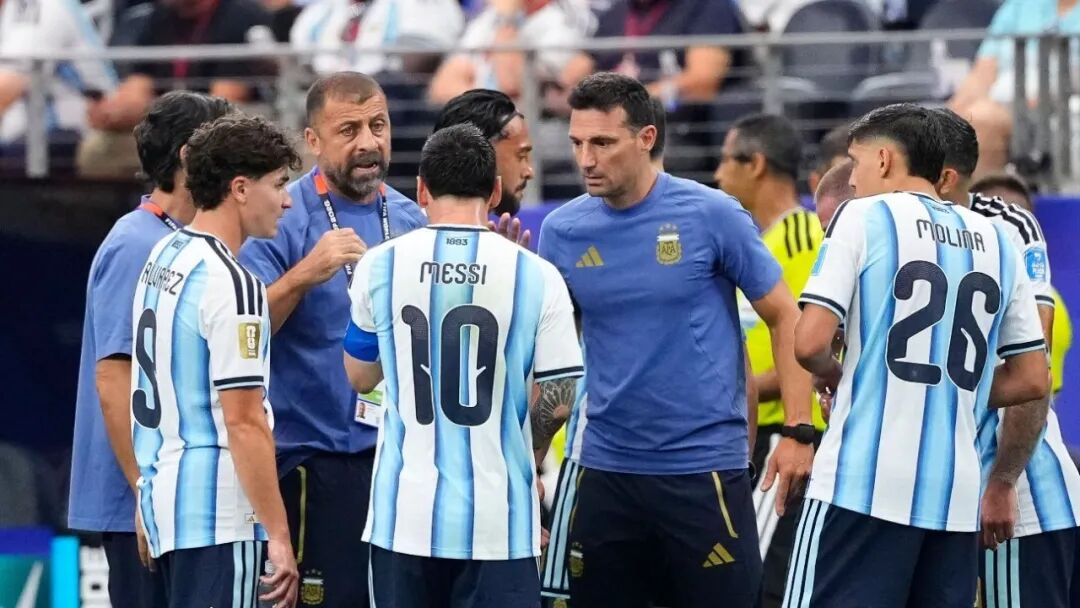
Austria coach Ralf Rangnick highlighted the advantage Messi brings to Argentina on the pitch: "If a 39-year-old can still score two or five goals at the start of a World Cup, that changes everything. Messi has proven he is the best. He doesn't need many chances to decide a game."
With Algeria beating Jordan 2-1, Argentina also secured top spot in the group. Their opponent in the first knockout round will be the second-place team from Group H, likely among Cape Verde, Uruguay, or Saudi Arabia. Argentina will return to Kansas City for their final group match against Jordan. It is expected that Scaloni will rotate the lineup to some extent, and Messi, who has started both matches, should get some rest to prepare for the crucial knockout phase.


Wonderfulshortvideo
Ronaldo’s mentality 🔝


yamal goal today raphinha goal today hattrick today adeyemi barcelona 7-2 racing santander highlights
🗣️ “As a group we can’t accept that, I can’t accept that”
Shea Lacey handing out advice to Benjamin Šeško 😅

messi new club news football today ronaldo new club owner
🗣️ Man Utd boss Michael Carrick responds after the controversial goal that settled the Manchester Derby last weekend
Now this backpass is every goalkeeper's 𝐰𝐨𝐫𝐬𝐭 𝐧𝐢𝐠𝐡𝐭𝐦𝐚𝐫𝐞 🫠
 Links
Links
 Contact
 App
App


