



While other sports continue to evolve, why does tennis seem stuck in place?



Does tennis need a rules committee? Actually, you don’t need to be an expert in tennis to suggest some rule changes that could benefit the game. For instance, why not make the short rest at the end of each set a regular feature? Or why not count a serve as a fault if the ball is tossed but the player doesn't hit it?
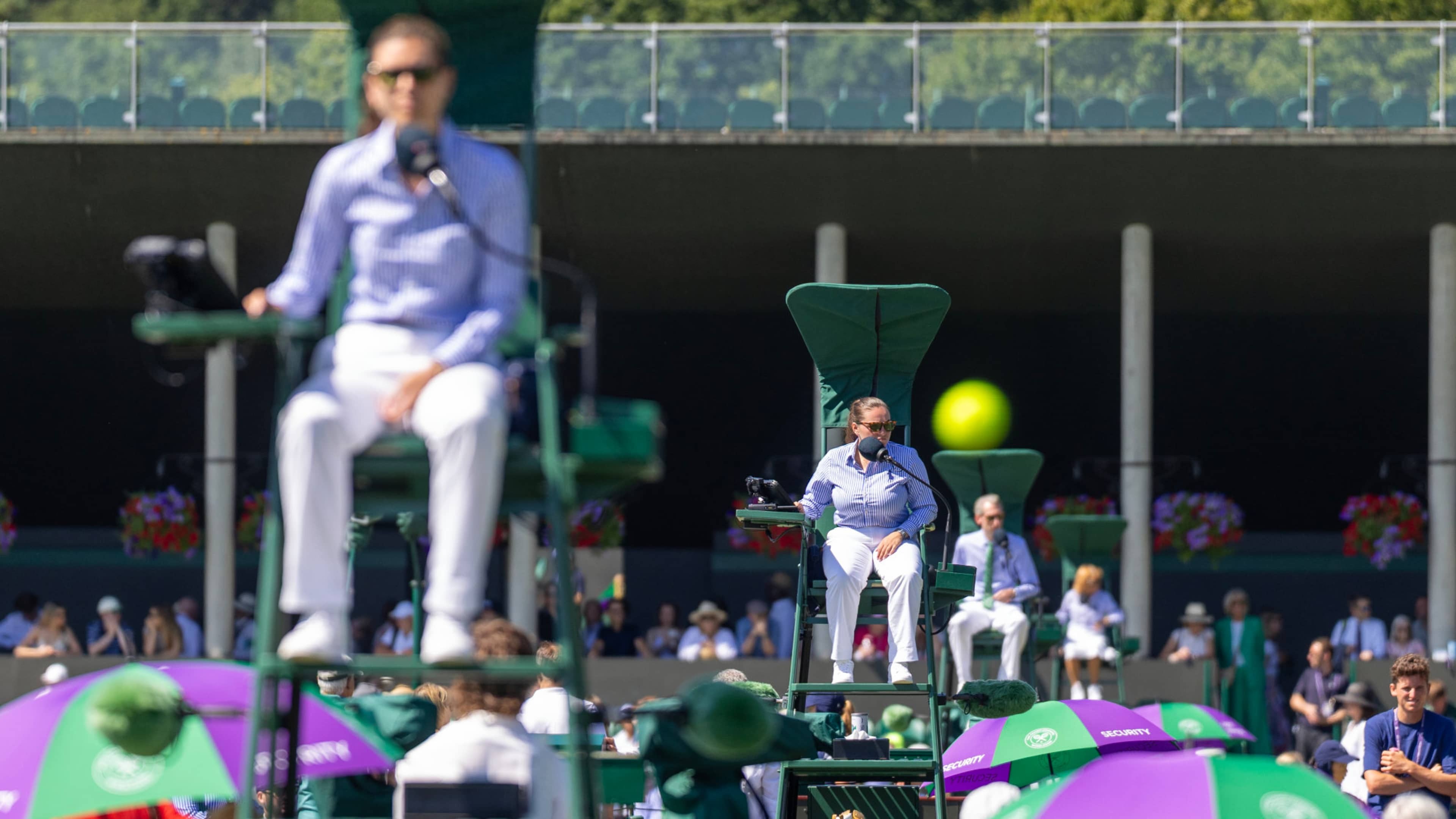
The only barrier to these and other minor rule adjustments is the absence of a true “rules committee” for the sport.
The NFL, NBA, and MLB all have such bodies, but professional tennis does not. This explains why, over the years, Grand Slam tournaments have struggled to agree on how to conclude best-of-five-set matches, and why the ATP and WTA have yet to adopt seemingly simple rules like “let serves” to continue play.
“I’m not even sure the ATP Tour has a rules committee,” said renowned coach Dave McPherson, who guided Bob and Mike Bryan to one of the most successful doubles careers in tennis history. “It seems very odd to me. I don’t understand why tennis is so conservative and unwilling to examine these issues. We don’t have an independent panel that annually studies the rules and asks: ‘How can we make singles and doubles more appealing?’”

This gap exists because, unlike major team sports, professional tennis does not have a single, clear governing “league.” Instead, rule changes are led by the International Tennis Federation (ITF), the global official body.
The ITF represents over 100 countries worldwide and has long been responsible for setting the foundational rules of the tennis ecosystem. The problem is that any rule change requires approval from ITF member associations at the annual general meeting, and reaching consensus is challenging. Different interest groups have varying, sometimes conflicting, goals and capabilities.

This system makes the rule change process slow, bureaucratic, and complicated. More importantly, other key stakeholders in professional tennis — the Grand Slams, ATP, and WTA — are highly autonomous entities themselves (which also explains why different versions of final set tiebreak rules still exist). Most of the time, they coexist peacefully, but when core interests are at stake, disagreements emerge.
Comparing this to the NFL reveals the gap. The NFL’s Competition Committee consists of 10 members, mainly head coaches, general managers, and team executives. This committee gathers broad input (including from medical experts, players, and NCAA representatives), meets during training camps, and drafts rule change proposals. These proposals are then voted on by team owners at the annual meeting (sometimes with modifications). Other professional leagues follow similar processes.

It’s hard to imagine tennis not being able to create a similar, more efficient structure dedicated to handling professional match rules at the tour and Grand Slam level. For example, regulating the time allowed between serves or managing bathroom breaks — these improvements clearly benefit all professional tennis participants. Meanwhile, junior events, tennis leagues, and other non-commercial amateur competitions can continue to be governed by the ITF’s application of rules.
Take one example: the server’s advantage has only grown over the years. At the same time, players tossing the ball repeatedly before striking it has become increasingly common. Wouldn’t a rule requiring the ball to be hit as soon as it leaves the hand make matches more entertaining?

Adopting such rules would pose almost no extra difficulty for the ATP, WTA, or Grand Slam events, including eliminating “let” serves on first or second serves. After all, servers already have a significant edge — each point comes with a “second serve” chance, an advantage that has expanded over time.
But the core issue isn’t whether a specific rule genuinely enhances the game’s value and excitement; it’s that tennis adapts to change far too slowly. More fundamentally, there is no dedicated mechanism to study, trial, and ultimately drive rule changes. If it’s impossible to involve all stakeholders in a single rules committee, then the ATP, WTA, or Grand Slam organizations should each establish similar bodies.
McPherson, who is also a devoted Australian Rules Football fan, noted that despite that sport’s long tradition, it remains open to innovation. “They are always fine-tuning rules to make the game fairer and more engaging for fans, and isn’t that what sports are all about?”(Source: Tennis Home, Author: Huohua)

 Links
Links
 Contact
Address:UNIT 1804 SOUTH BANK TOWER, 55 UPPER GROUND,LONDON ENGLAND SE1 9E
Number:+85259695367
E-mali:[email protected]
 App
App


