



How does the Australian Open implement protective measures against extreme heat?



The northern and southern hemispheres experience starkly contrasting climates.
While we are wrapped in heavy clothing, trembling in the snow, Melbourne’s tennis players are dressed in shorts and t-shirts, sweating heavily under the blazing sun.
Today, Melbourne’s temperature spans from 14 to 39 degrees Celsius; mornings and evenings are cool, but extreme heat may occur around noon. A few days ago, a ball boy collapsed from heat exhaustion. To address the heat, the Australian Open has moved the start time to 7 a.m. Beijing time.
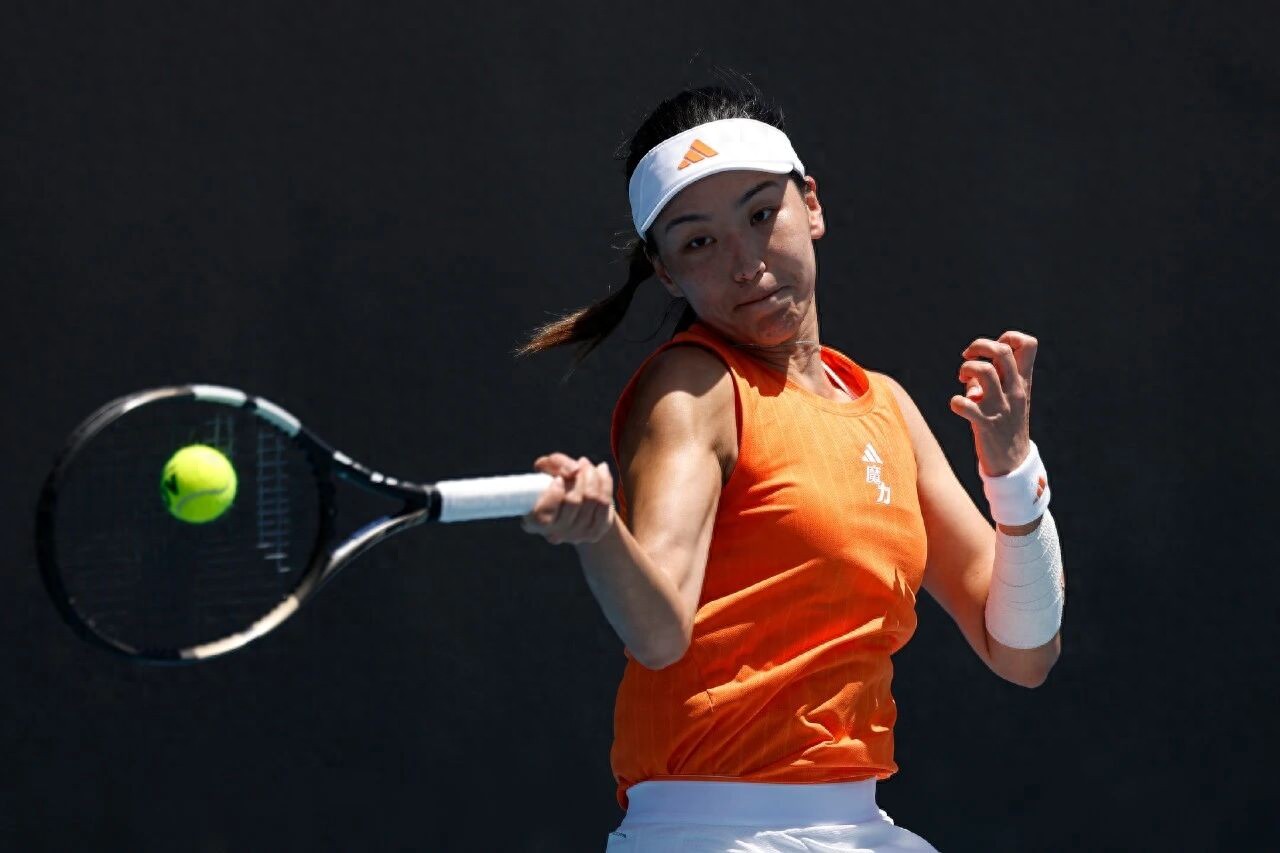
Regarding the daily schedule, the second and third matches each day are the toughest. Unfortunately, the only remaining Chinese singles player, Wang Xinyu, is scheduled for the second match on Kia Arena today, facing last year’s China Open finalist, Noskova. Before the match, Wang anticipated a tough game due to her opponent’s fast shots and rhythm, and the high temperatures today will likely increase the challenge.
At last year’s Shanghai Masters, extreme heat and humidity caused several players to retire mid-match due to heatstroke, with Sinner being one of them.
To combat extreme heat and protect players’ health, the ATP introduced heat protection measures at the end of last year, allowing matches to be suspended under certain conditions and extending players’ rest periods.
However, ATP rules do not apply to Grand Slam tournaments. Some fans worry whether the Australian Open has any measures to protect players from extreme heat.
The answer is yes.
In 2014, the Australian Open also faced extreme heat conditions, with four consecutive days of high temperatures causing many players to withdraw, ball boys to faint, and players to suffer vomiting and cramps during matches. Subsequently, the tournament developed a comprehensive heat protection protocol.
Compared to the ATP’s rules introduced last year, the Australian Open’s heat protection measures are more scientific and implement differentiated protections based on classification.
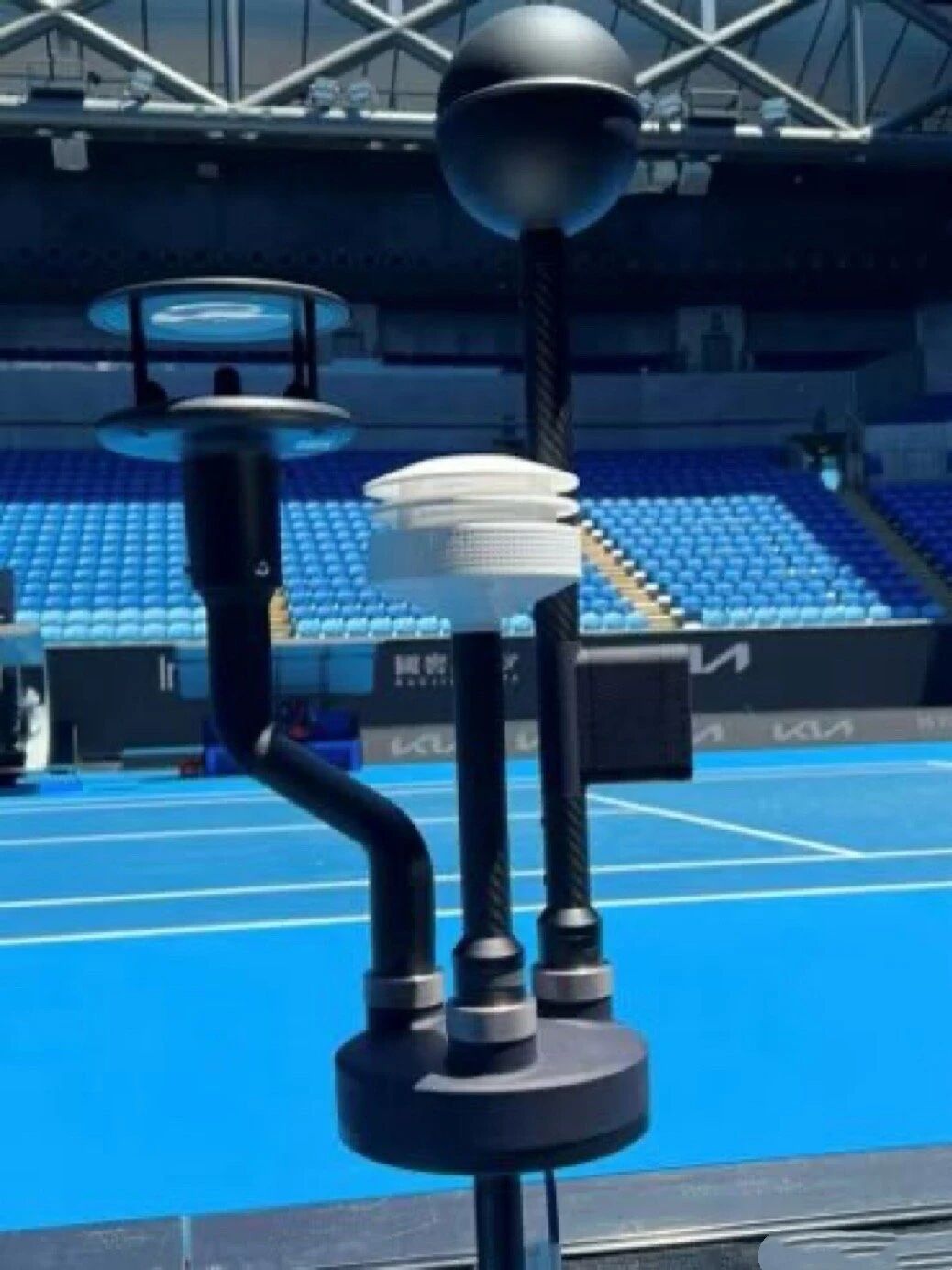
First, the Australian Open installs sensors equipped with multiple devices at several main courts and one outside court to comprehensively and accurately collect real-time weather data.
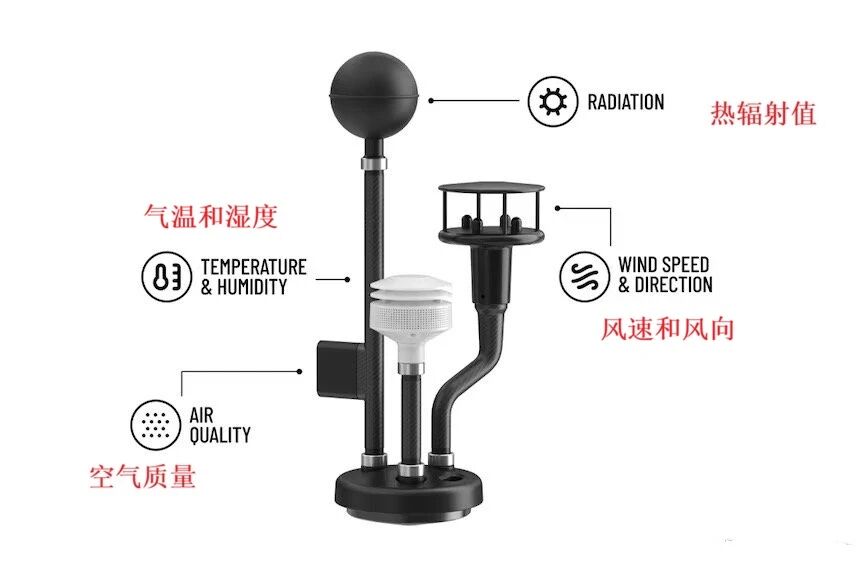
Depending on the device functions, these sensors gather real-time data including temperature, humidity, wind speed, heat radiation values, and air quality.
Temperature and humidity are the two most critical factors affecting perceived temperature. Pure heat alone is not as frightening as heat combined with high humidity. For example, this year’s Australian Open temperatures are much higher than last year’s Shanghai Masters, but humidity is much lower, resulting in a less oppressive perceived temperature. Higher humidity makes it harder for the skin to cool down.
Additionally, wind speed significantly affects perceived temperature; moderate wind helps air circulation and sweat evaporation, which cools the skin. Heat radiation includes direct sunlight and heat reflected from stands, buildings, and the ground. This radiant heat creates a sensation known colloquially as “steaming,” meaning intense heat waves.
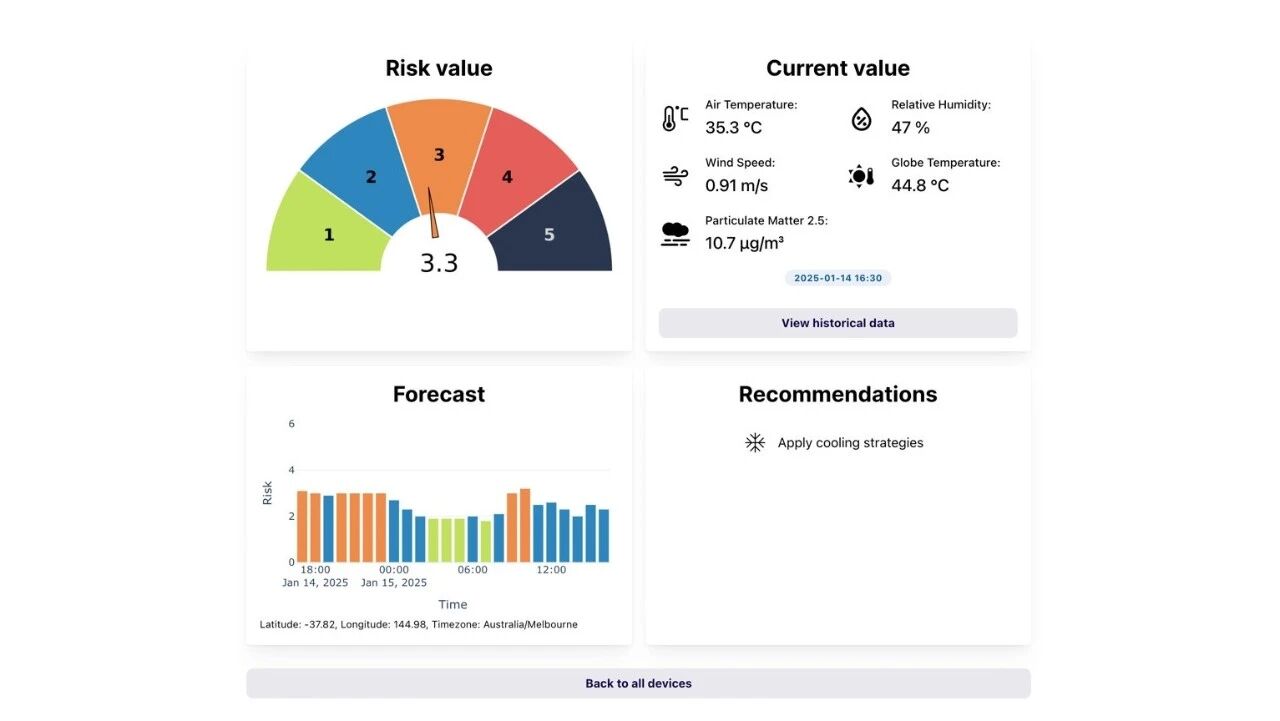
The Australian Open processes the collected data through an algorithm that calculates a heat stress scale from level 1 to 5, which is displayed in real time on a dashboard. This system can also forecast the heat stress level for the upcoming hours.
This system is called the “AO Heat Stress Scale,” reportedly inspired by forest fire danger rating systems, where higher values indicate greater risk.
When the scale reaches level 3, the system considers the weather to impose moderate stress on players’ bodies, prompting organizers to provide cooling measures such as fans and ice towels.
At level 4, the system declares a “high risk” status, triggering match adjustments that include:
Men’s singles: Players are granted a mandatory 10-minute rest after the third set.
Women’s singles, juniors, and wheelchair events: Players receive a 10-minute break between the second and third sets.
At level 5, the system signals the “highest alert” level, with extremely high risk of heatstroke. Outdoor matches are immediately suspended (the current game can be completed, but subsequent play must pause until the level drops below 5). Indoor courts with roofs will open the roofs and turn on air conditioning to cool down before continuing play.(Source: Tennis Home, Author: Yun Juan Yun Shu)

 Links
Links
 Contact
Address:UNIT 1804 SOUTH BANK TOWER, 55 UPPER GROUND,LONDON ENGLAND SE1 9E
Number:+85259695367
E-mali:[email protected]
 App
App


