



Tearing shirts, eating grass, pretending to hang up calls, doing the splits: An in-depth analysis of Djokovic’s celebration gestures and their motives and meanings



On January 24th, Djokovic overcame Dutch opponent Van de Zandschulp 6-4, 6-4, 7-6(4) in the Australian Open third round, achieving his 400th Grand Slam main draw win and reaching the Grand Slam last 16 for the 70th time. Yesterday afternoon, Czech youngster Menšík withdrew due to an abdominal muscle injury, allowing Djokovic to advance to the Australian Open quarterfinals without playing.
With Menšík’s withdrawal, Djokovic gets to skip a match and rest for two extra days, which greatly helps conserve energy for the next round. Taking advantage of this break, let’s review Djokovic’s career celebration moves and interpret their underlying motives and significance.
From tearing his shirt at the Australian Open, to eating grass at Wimbledon, to mimicking a phone hang-up at the US Open, continuing through the splits in 2025 and violin-playing at the 2026 Australian Open, Djokovic has showcased a variety of celebration styles over his 20-plus year career.
These celebrations are not only emotional releases after victories but also serve as documentary markers of Djokovic’s different ages and situations. They are deeply tied to specific tournament moments, reflecting his psychological traits as a great champion, his cultural identity, and changes in his life stages.
Tearing shirts: The violent aesthetics of breaking limits
Djokovic’s first shirt tear happened after beating Federer in the 2008 Australian Open semifinal. At 21, Djokovic was seen as a challenger and disruptor to the “Fedal” dominance, winning in straight sets over world number one Federer. This marked his growth from uncertainty to control and fulfilled his ambition to break the “Fedal” pattern. After this pivotal semifinal victory, Djokovic defeated Tsonga in four sets in the final to claim his first Australian Open title.
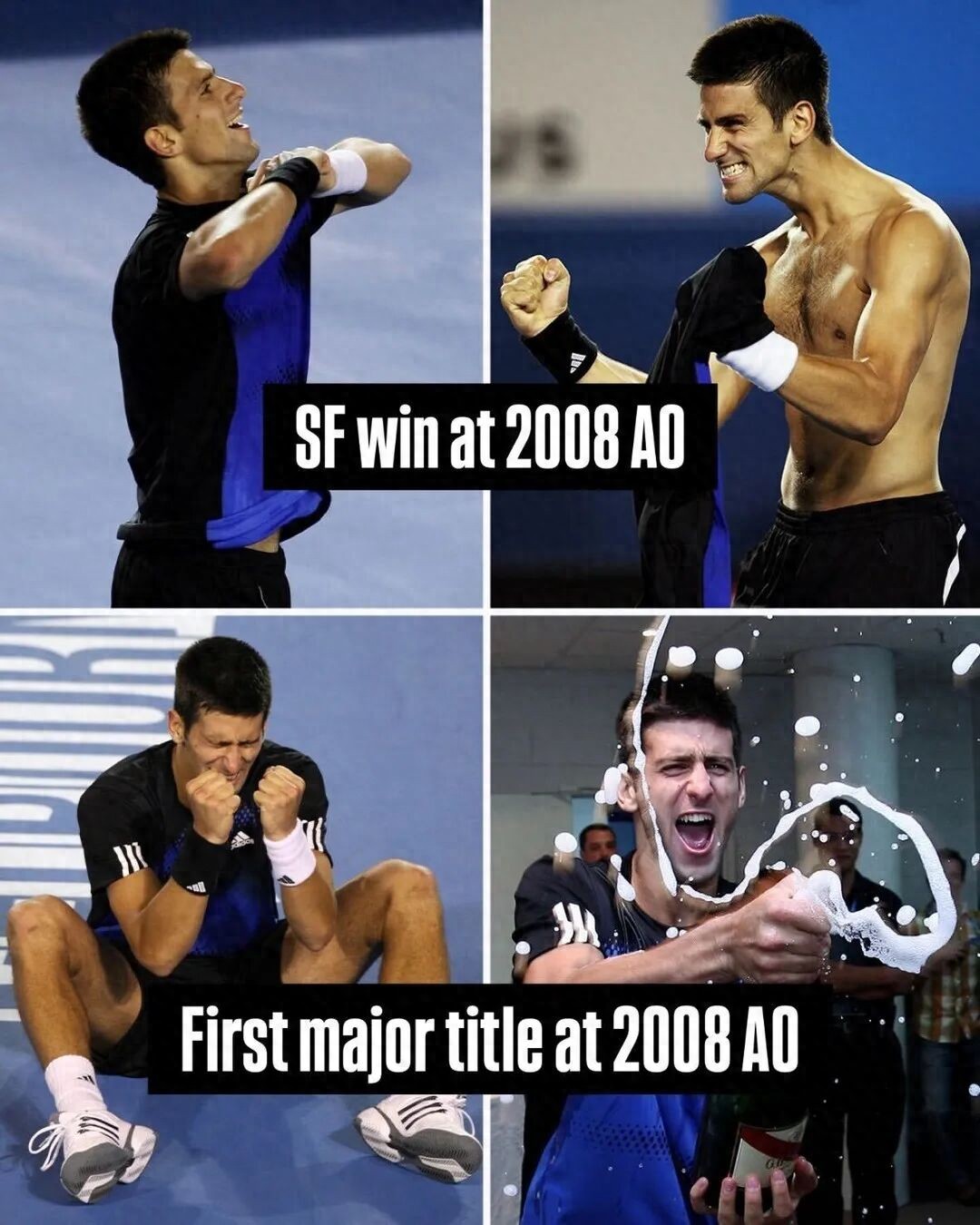
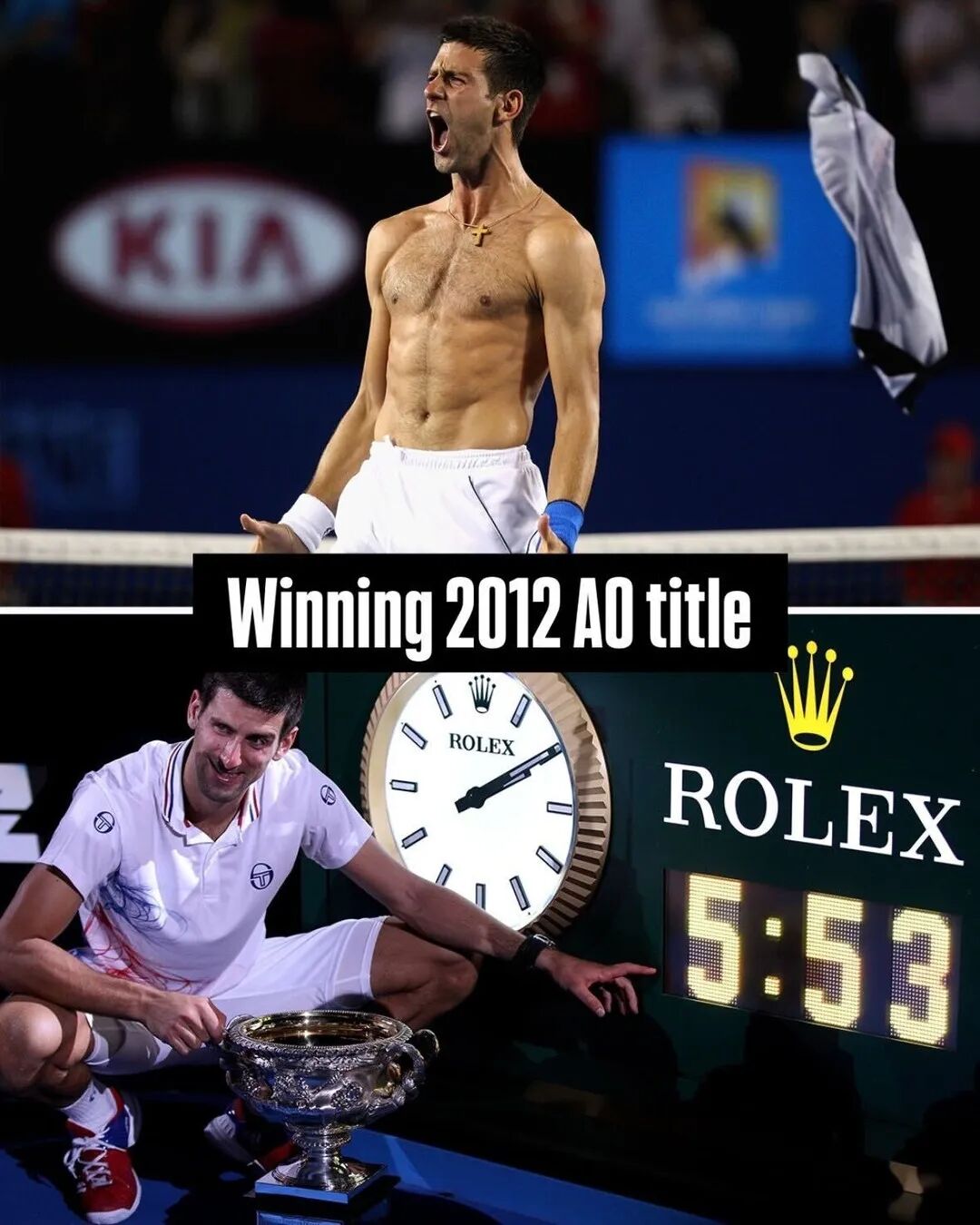
In the 2010 Wimbledon round of 16, Djokovic narrowly beat Hewitt 7-5, 6-4, 3-6, 6-4 and tore his shirt again at age 23. In the 2012 Australian Open final, Djokovic triumphed over Nadal in five sets after 5 hours and 53 minutes—the longest Grand Slam final ever—passionately tearing his shirt afterward to release the immense physical and mental pressure.
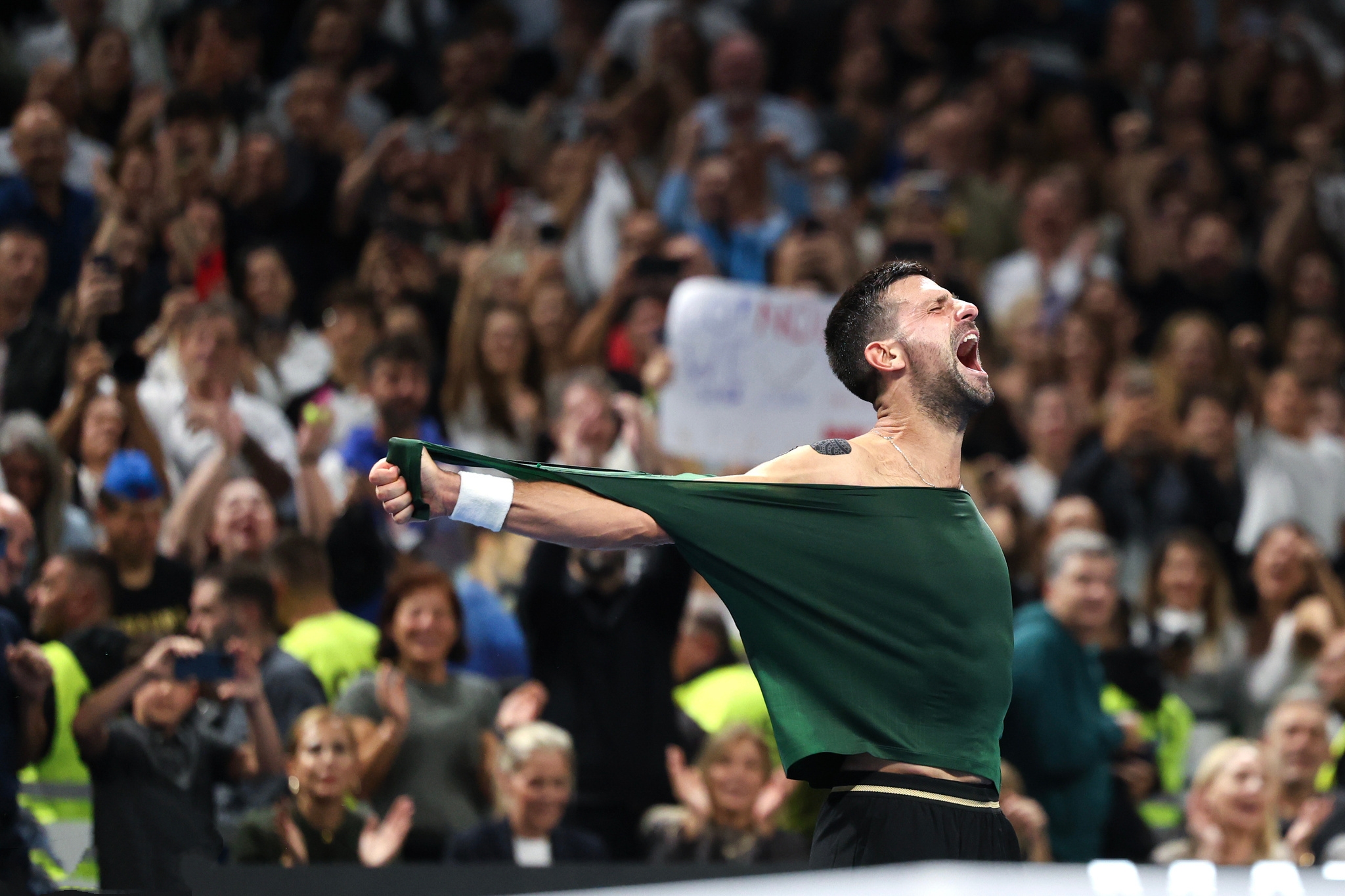
At the 2025 Athens final, Djokovic, aged 38, came back to defeat Musetti and win his 101st title, once again tearing his shirt post-match, symbolizing the tragic passion of the “veteran who refuses to die.”
Eating grass: A ritualistic expression of Wimbledon glory
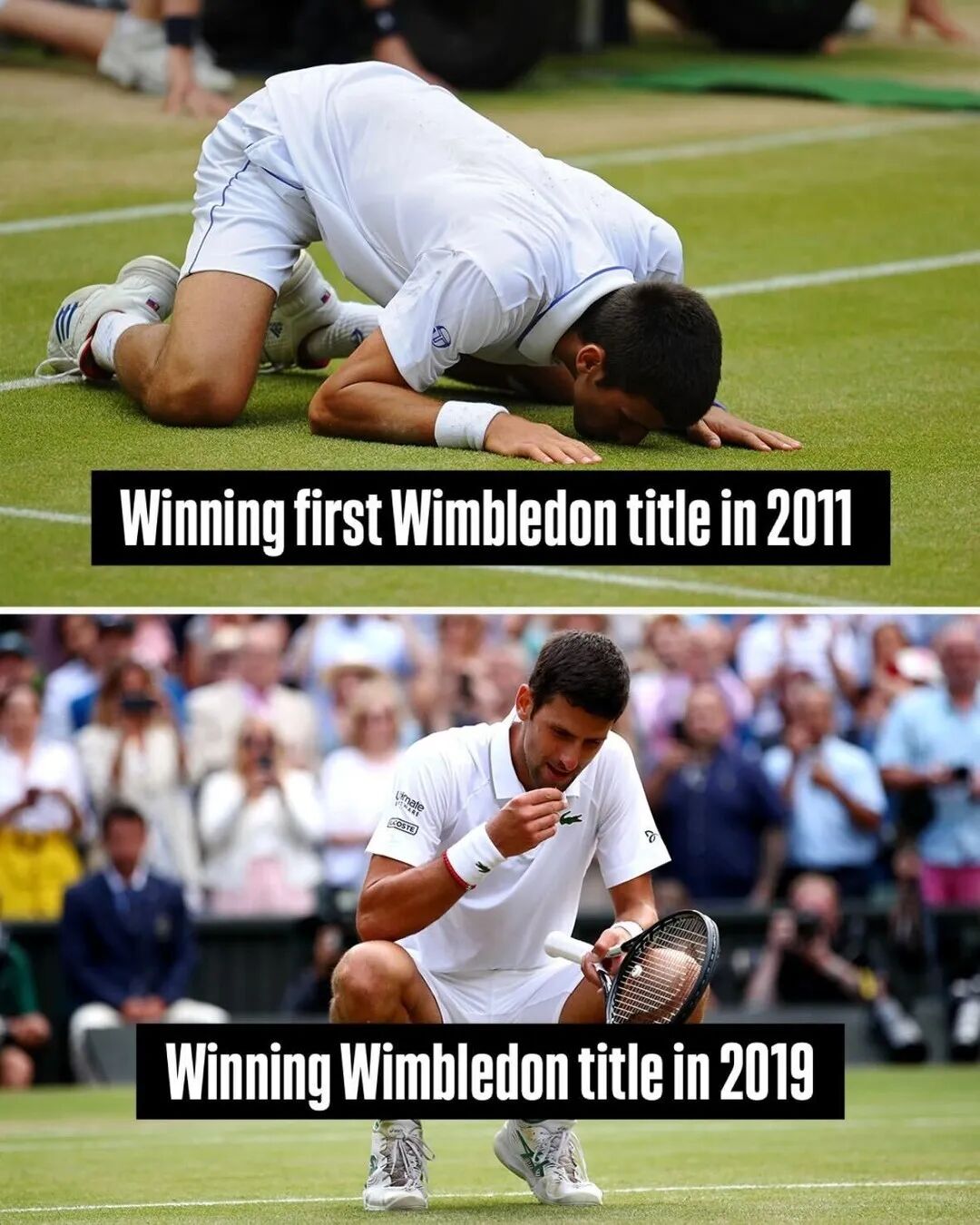
In the 2011 Wimbledon final, Djokovic defeated top seed Nadal 6-4, 6-1, 1-6, 6-3 to win his first Wimbledon title, bending down to kiss the grass as a unique way to celebrate this highly symbolic victory.
In the 2015 Wimbledon final, Djokovic beat Federer 3-1 to secure his second consecutive Wimbledon title. After winning the championship point, he crouched to pick up a blade of grass from Centre Court and put it in his mouth, calling it “gluten-free, organic, and a childhood dream come true.” His act of eating grass at Wimbledon was seen as a tribute to the All England Club’s traditions and a declaration that he was the rightful “King of Grass Court Tennis.”
In the 2018 Wimbledon final, Djokovic again ate grass after a 3-0 victory over Anderson. Having just returned from an elbow injury slump, this gesture was interpreted as an emotional release for his regained peak form at Wimbledon.
In the 2019 Wimbledon final, Djokovic saved two championship points and narrowly defeated Federer 13-12(3) in a long tiebreak. Afterward, he ate grass once more, showing a relaxed and satisfied expression that revealed his joy and relief, as well as pride in his mental toughness.
Wimbledon holds a very high status in Europe. Djokovic has said that winning Wimbledon was his most desired title and the tournament he dreamed of most as a child. I speculate that coming from a small Eastern European country where he was often overlooked in Western Europe, Djokovic sought to conquer Wimbledon to earn honor and respect for himself and his homeland.
Pretending to hang up the phone: An extension of psychological games on court
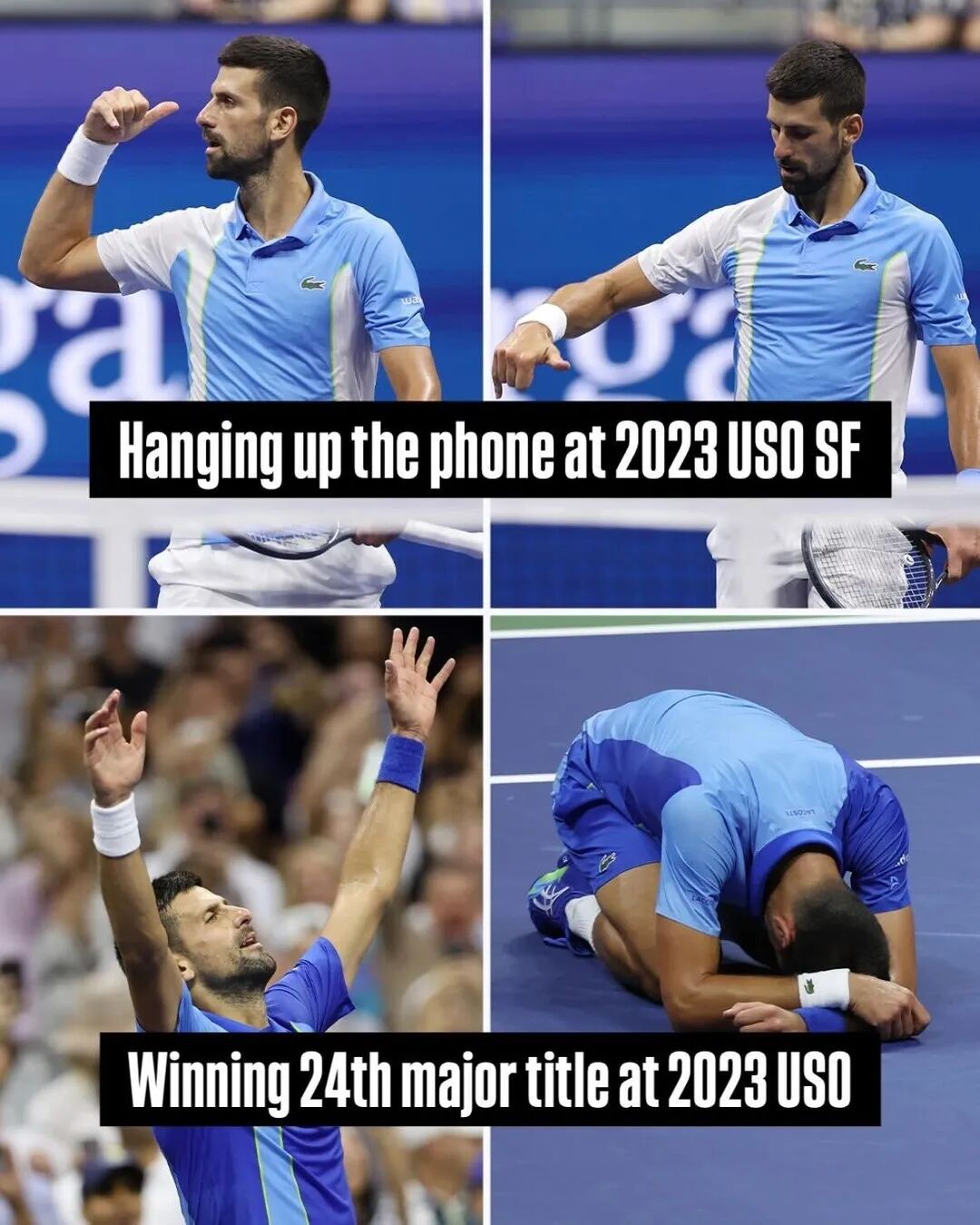
In the 2023 US Open semifinal, after defeating American rising star Shelton, Djokovic mimicked Shelton’s earlier “phone hang-up” celebration, provoking boos from the crowd and displeasure from Shelton. Previously, Shelton had celebrated beating Tiafoe with this gesture, seen as a provocation to the audience and opponents. Djokovic said afterward, “I just thought his celebration was original, so I ‘borrowed’ it.”
I believe Djokovic’s “phone hang-up” was not mere imitation but a lesson to the arrogant young Shelton, teaching him respect for opponents and spectators from a senior’s standpoint. At the same time, it was a strong response to the crowd’s earlier interference, showcasing Djokovic’s tough personality that refuses to cater to audience expectations.
The splits: A dynamic declaration of physical ability
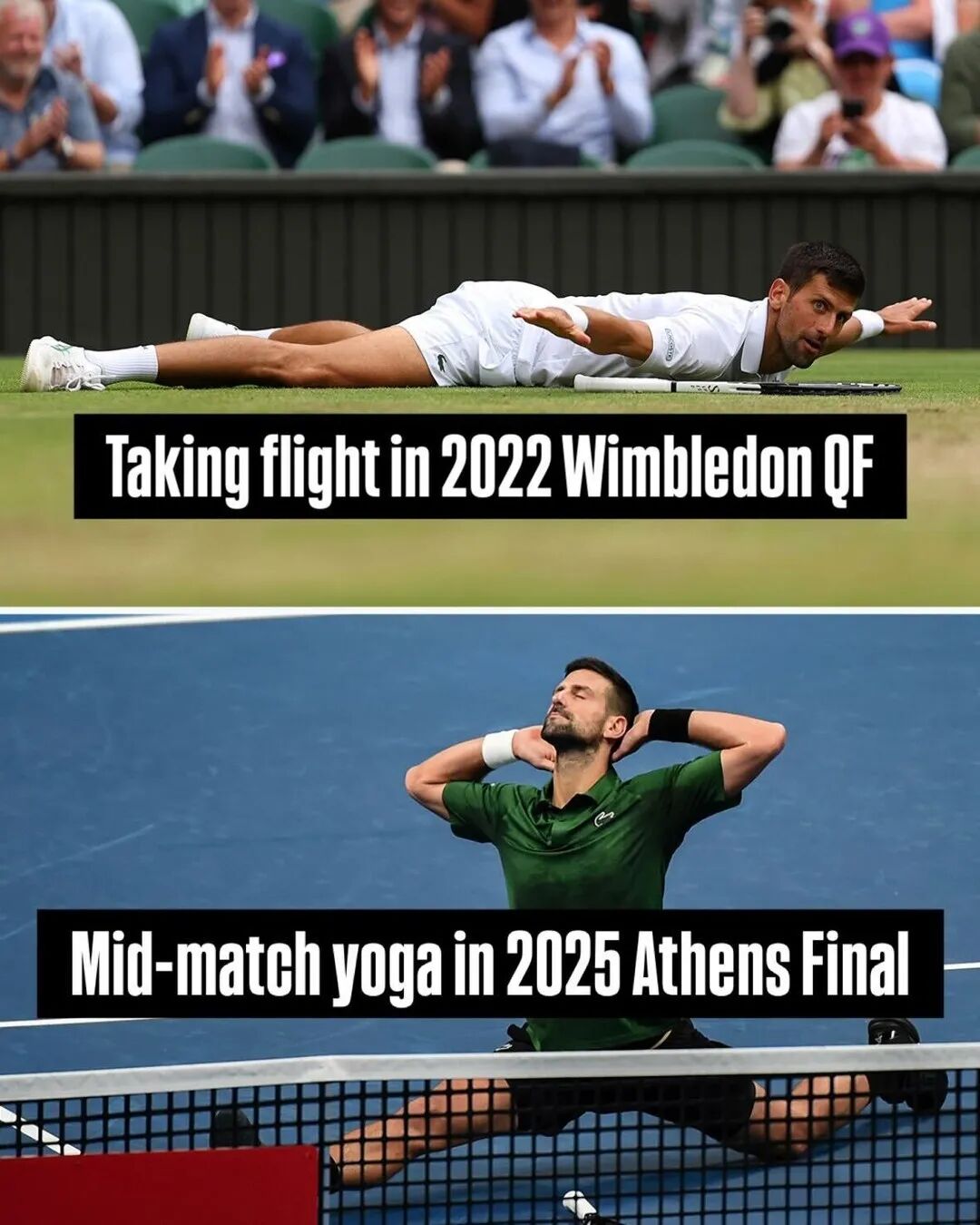
After beating Kyrgios in the 2022 Wimbledon final, Djokovic slid into a full split to celebrate, demonstrating remarkable flexibility that complemented his grass-court sliding technique.
In 2025 at Wimbledon, Djokovic reached 100 wins on the grass, celebrating again with a split. At the 2025 Athens tournament, after winning a point, he spontaneously performed a full split.
Known for his flexibility and a yoga enthusiast, Djokovic had previously done splits with other athletes at the Tokyo Olympics. Performing splits publicly on court, he proudly displayed his strong core and agile flexibility. Moreover, as an older athlete, Djokovic’s ability to execute a move difficult for younger players declared, “Time has not defeated me,” reinforcing his legendary “reverse aging” image.
Playing the violin: A paternal warmth projected onto the court
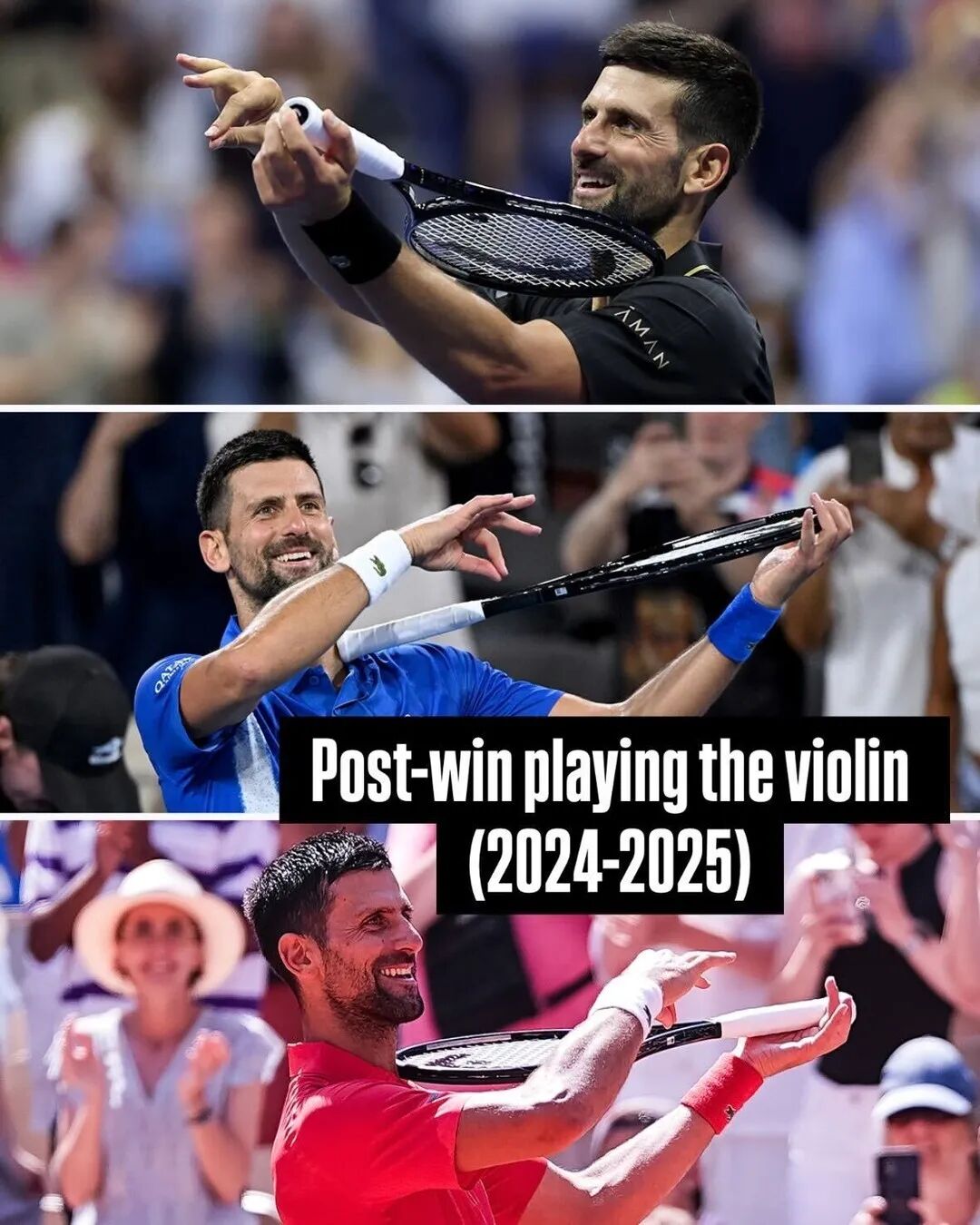
In the 2024 Wimbledon third round, Djokovic came back to win 4-6, 6-3, 6-4, 7-6(3) against Popyrin and for the first time publicly mimicked playing the violin with his racket, explaining afterward it was a promise to his daughter Tara, who had been learning violin for six months.
In subsequent Wimbledon matches and at the Paris Olympics, Djokovic repeated the “violin playing” gesture with his racket. I observed that sometimes he rests the racket head on his shoulder, other times the handle. This tender gesture signals Djokovic’s transition from a “winning machine” to a “family man and father,” softening the public’s image of him as a “cold competitor.” Additionally, I feel the classical imagery of the violin contrasts with tennis’s explosive power, reflecting Djokovic’s late-career pursuit of a balance between technique and artistry.
In summary, Djokovic’s celebration gestures may seem spontaneous but are in fact emotional expressions tied to different stages of his career.
Early in his career, Djokovic used shirt tearing to announce his rise; at his peak, eating grass symbolized his crowning; in maturity, playing the violin expressed warmth; and in his later years, doing splits defied time. These gestures fulfill the emotional release needs of competitive sports while serving as distinctive personal trademarks of Djokovic.
In tennis history, Federer is known for elegance and Nadal for resilience, each with their own labels. Djokovic’s celebrations, marked by diversity and contrast, best illustrate his “complex greatness” — he is both a conqueror on court and an emotionally rich individual. These celebrations enrich the image of this “record-breaking fanatic,” making him more relatable and charismatic.(Source: Tennis Home, Author: Yun Juan Yun Shu)

 Links
Links
 Contact
Address:UNIT 1804 SOUTH BANK TOWER, 55 UPPER GROUND,LONDON ENGLAND SE1 9E
Number:+85259695367
E-mali:[email protected]
 App
App


