



Both being hard-court Grand Slams, why is it so rare for players to win both the Australian Open and the US Open in the same year?



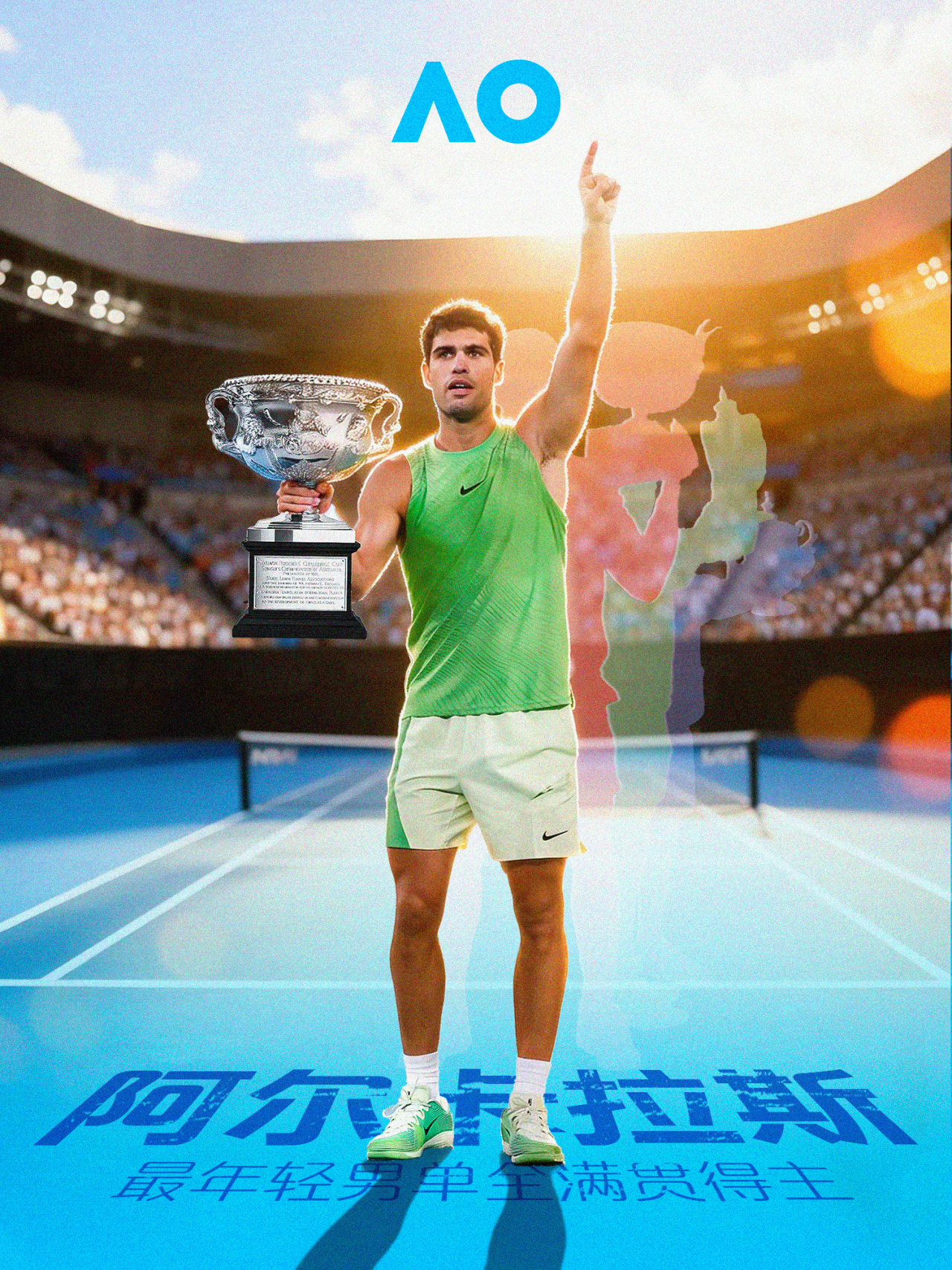
Last night, Alcaraz overcame Djokovic in four sets to secure the Australian Open championship, making him the youngest player in history to complete a career Grand Slam.
From his initial US Open victory in 2022 to yesterday’s first Australian Open win, Alcaraz spent around three and a half years achieving this feat. Following his career Grand Slam achievement, let's explore an intriguing question — why do so few players win both the Australian Open and US Open, two hard-court Grand Slams, in the same year?
Below is a set of statistics.
On the men's side, only four players in history — Wilander, Federer, Djokovic, and Sinner — have won both the Australian Open and US Open in the same year. Wilander did so in 1988; Federer achieved this in 2004, 2006, and 2007; Djokovic accomplished it in 2011, 2015, and 2023; and Sinner in 2024.
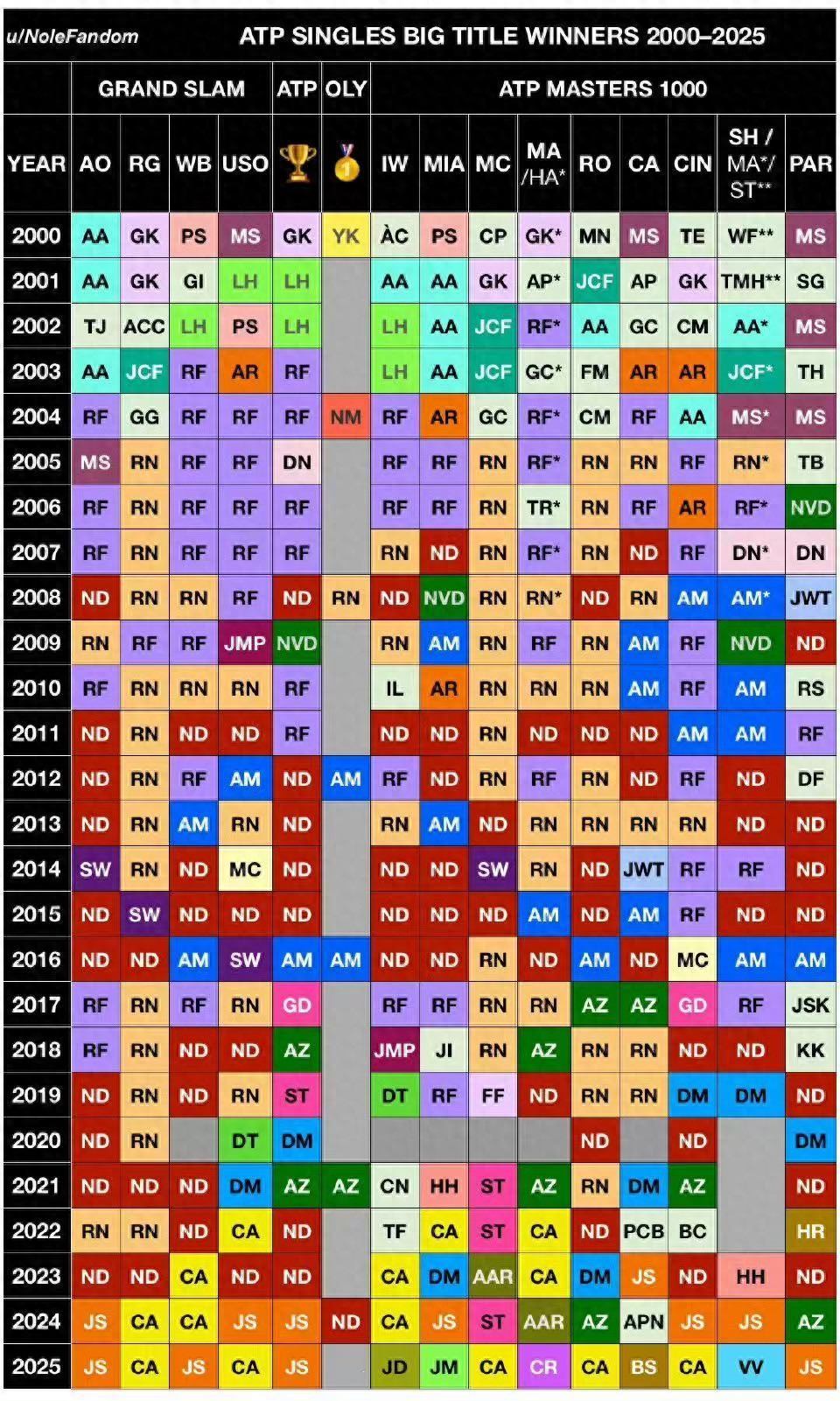
For the women, only five players have won both the Australian Open and US Open in the same year: Graf (1988 and 1989), Seles (1991 and 1992), Hingis (1997), Kerber (2016), and Sabalenka (2024).
Of course, these statistics are based on the period after both the Australian Open and US Open switched to hard courts. The US Open changed to hard courts in 1978, and the Australian Open in 1988. Prior to that, the US Open was played on outdoor grass from 1881 to 1974, outdoor clay from 1975 to 1977, and outdoor hard courts from 1978 onwards. The US Open is the only Grand Slam to have used grass, clay, and hard courts.
The Australian Open also underwent a major surface change; it was originally played on grass before switching to hard courts in 1978.
Because the surfaces of the Australian Open and US Open have changed significantly over time, winning both in the same year is not as straightforward as many might think. Even after both became hard-court events, the hard courts used at the two tournaments still differ.
The courts at the Australian Open are considered fast with a lower bounce, whereas the US Open courts tend to be slower with a higher bounce. Players with strong serving skills generally have an advantage at the Australian Open compared to the US Open.
Besides differences in ball speed and bounce height, the weather conditions at the Australian Open and US Open vary greatly. During the US Open, the weather in New York is humid and hot, which heavily taxes players’ stamina. For example, the Shanghai Masters last year experienced similar humid heat; although the temperature wasn’t extremely high, the high humidity caused players to sweat more and made evaporation difficult, resulting in a higher perceived temperature.
During the Australian Open, Melbourne’s weather tends to be dry and hot. We often see players competing under intense sun at the Australian Open, but because the humidity is relatively low, the perceived temperature for players is not as high as one might expect, causing less physical strain during matches.
Besides differences in courts and weather, the timing of the Australian Open and US Open also varies significantly. The Australian Open is held every January, right after the off-season. Players are rested, minor injuries have healed, and they have just completed winter training, so their physical condition is well prepared, helping them perform at their best during the Australian Open.
In contrast, the US Open takes place from late August to early September, by which time players have competed in many tournaments and generally feel fatigued. Many players carry some degree of injury, which affects their consistency.
Therefore, although both the Australian Open and US Open are hard-court Grand Slams, a detailed comparison reveals many differences between them. This explains why very few players manage to win both tournaments in the same year.
What will happen this year? Will Alcaraz, following Sinner in 2024, once again win both the Australian Open and US Open titles consecutively?(Source: Tennis Home, Author: Yun Juan Yun Shu)

 Links
Links
 Contact
Address:UNIT 1804 SOUTH BANK TOWER, 55 UPPER GROUND,LONDON ENGLAND SE1 9E
Number:+85259695367
E-mali:[email protected]
 App
App


