



Zheng Qinwen broke down in tears after missing the Australian Open, joking that at 95% fitness, it’s time to start beating players like Leylah Fernandez.


Recently, China’s leading player Zheng Qinwen gave an interview to reporter Carole Bouchard before the Doha event, describing her mental state during the hiatus.
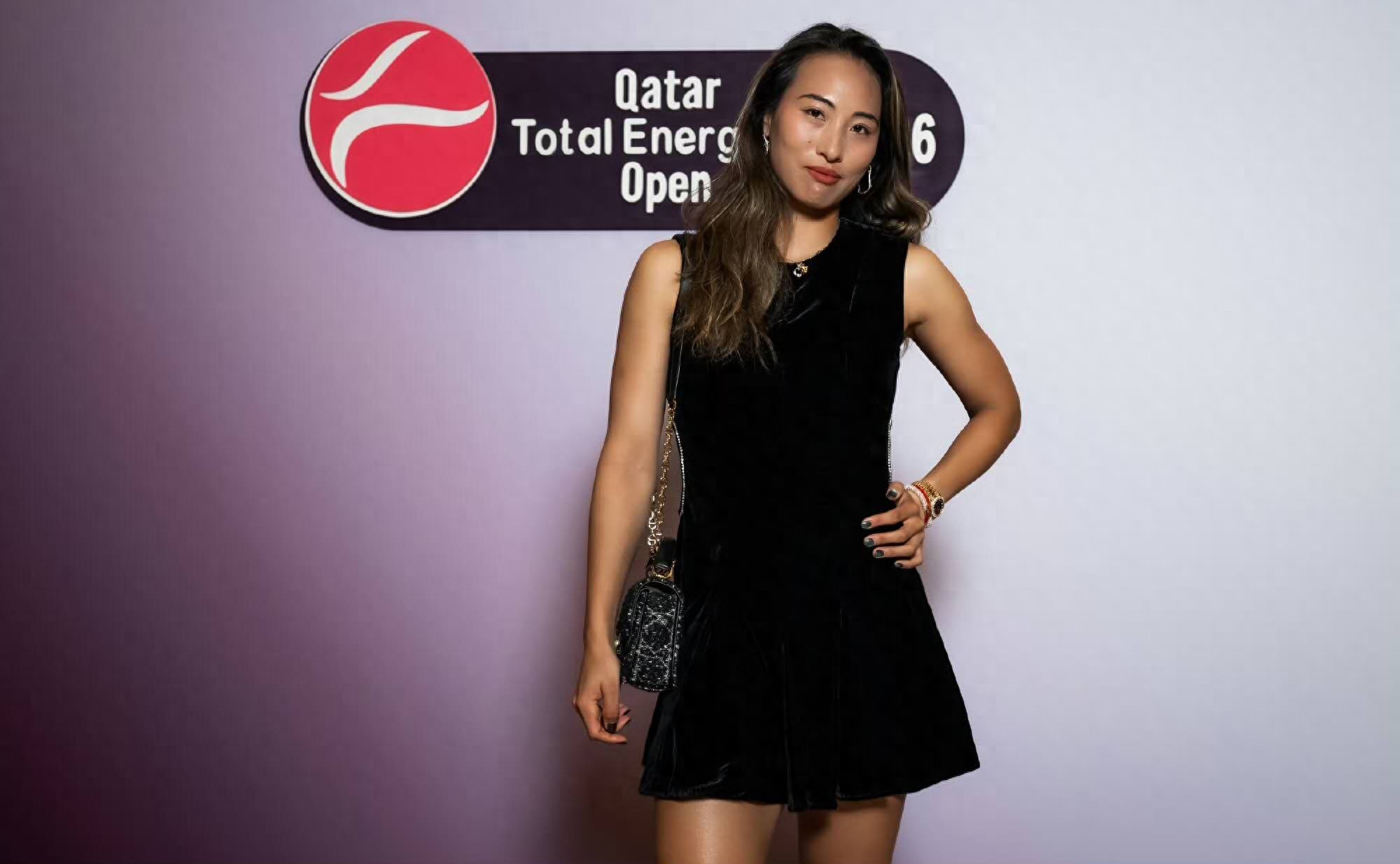
Zheng Qinwen disclosed in the interview that deciding to pull out of this year’s Australian Open was a difficult choice, and after making it, she wept in the bathroom, questioning herself repeatedly, “Why did we do that?”
“Choosing not to go to the Australian Open really hurt me because I knew it stemmed from a poor decision we made earlier,” Zheng said. Notably, the “earlier decision” she referred to was about participating in the 2025 China Open. At that time, doctors told her she could compete, and she and her team followed that advice. However, months later, she realized her elbow hadn’t fully healed. This experience caused her to miss several subsequent tournaments and prolonged her elbow recovery.
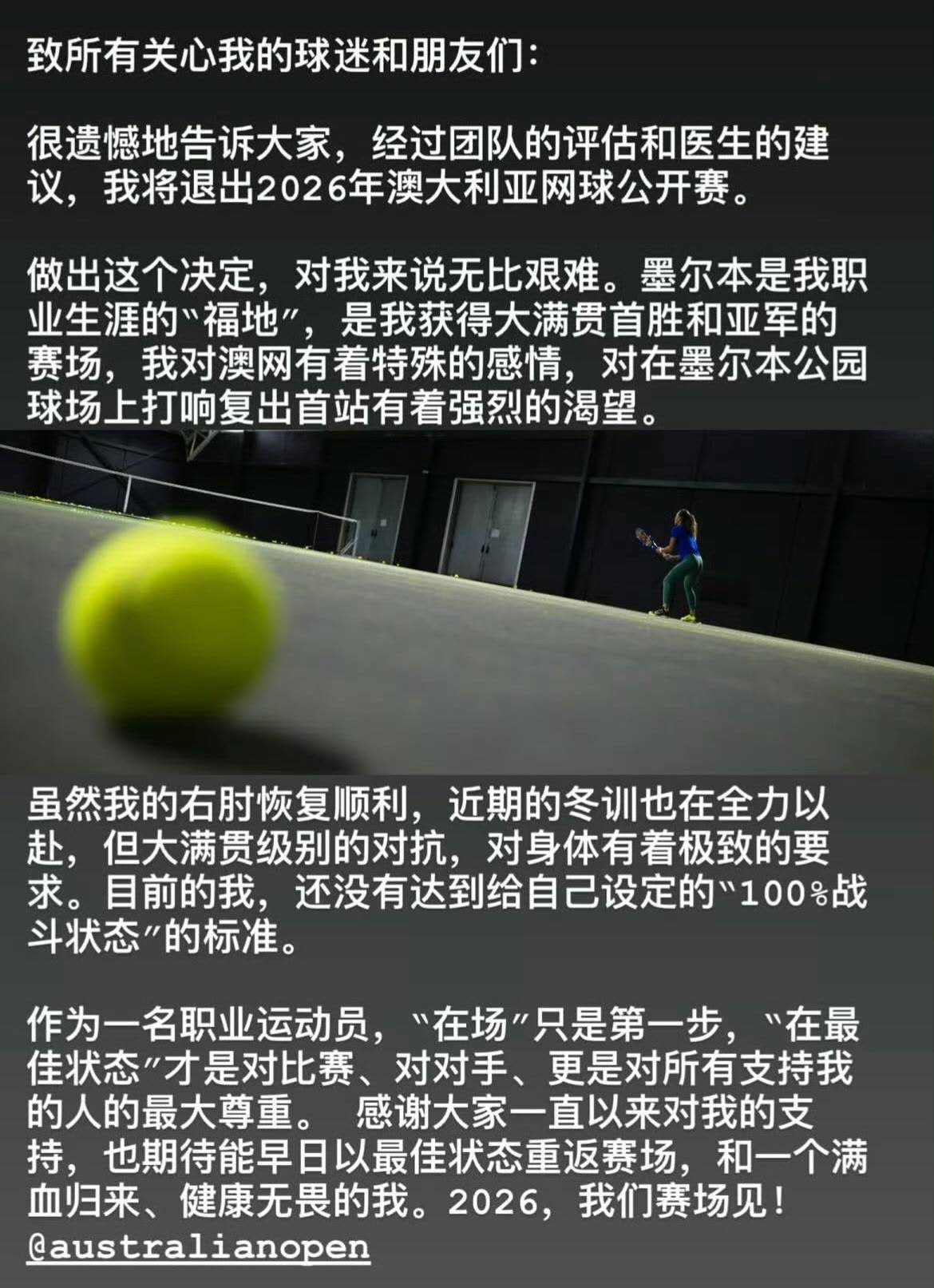
Zheng said she cried in the bathroom, filled with questions: “Why did we do that? Why hasn’t my elbow healed? Why?” But reason eventually overcame emotion, and she realized withdrawing was the right choice: “If I still can’t serve, what’s the point of traveling all the way to Australia? I can’t just go there and say, ‘Look at how I play.’”
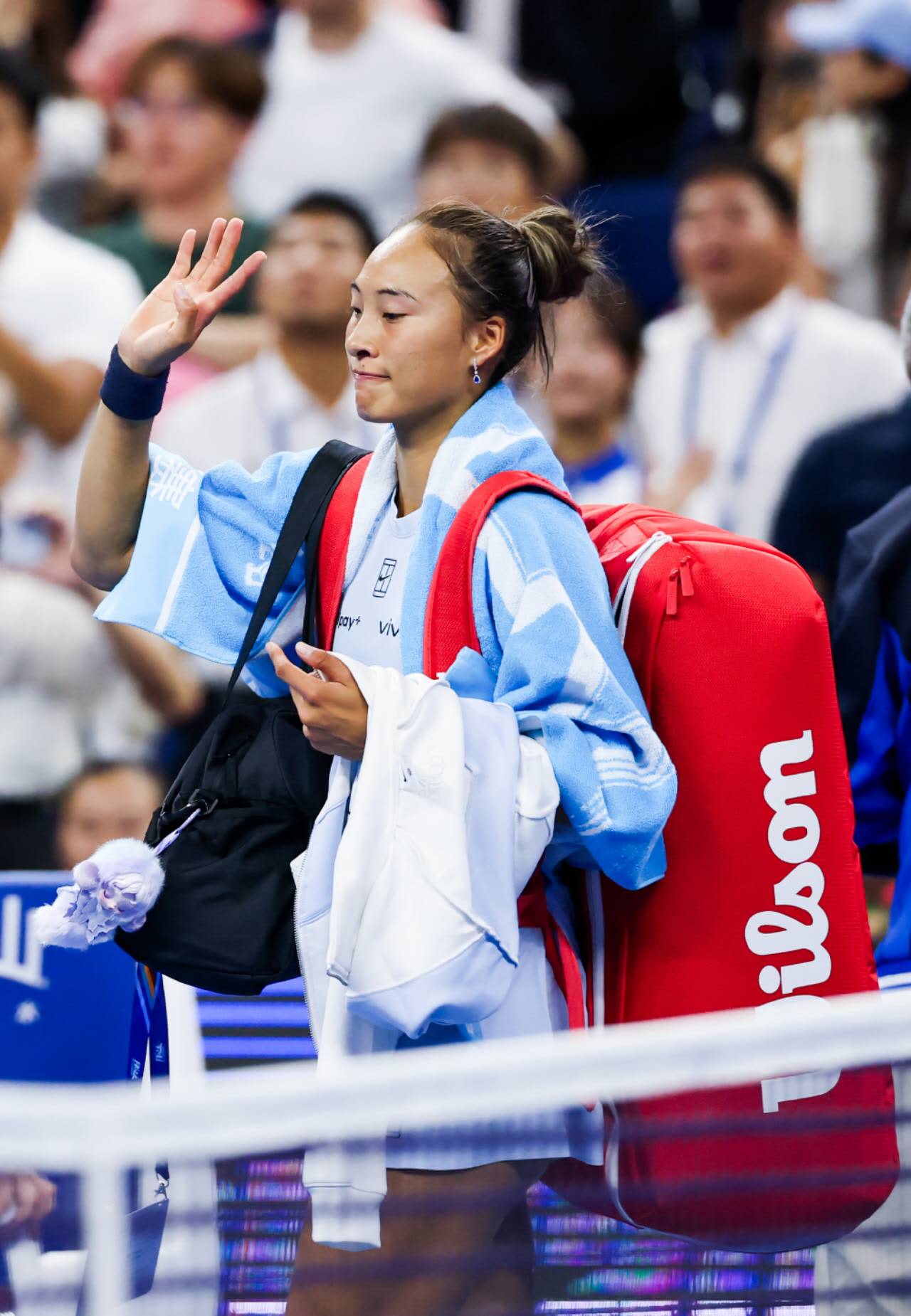
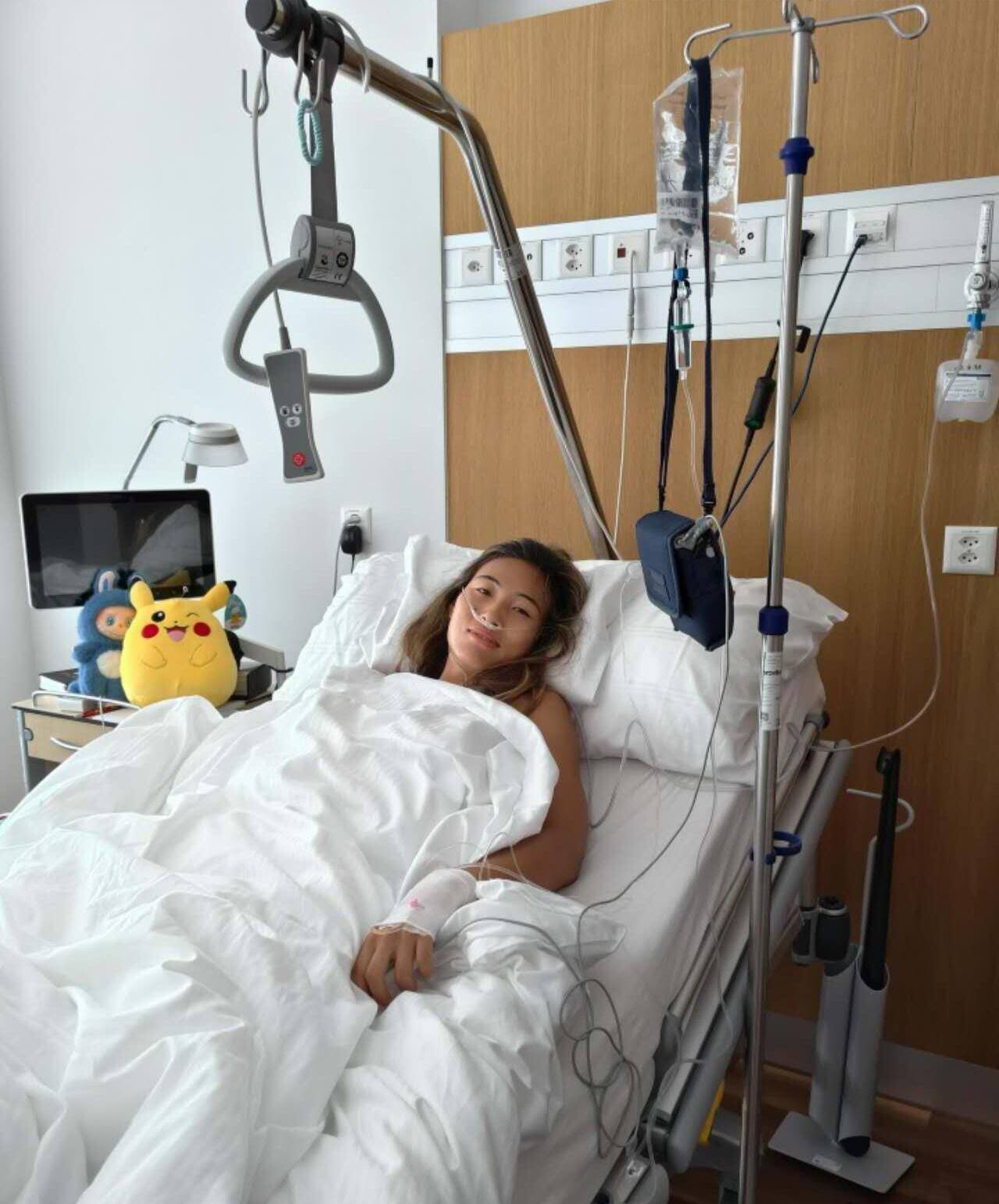
Zheng Qinwen’s elbow rehabilitation has been a tough journey. She underwent surgery after Wimbledon in July 2025, but recovery took much longer than expected. It wasn’t until November 2025, after playing in the China Open which caused swelling, that the edema finally disappeared. She recalled, “For a long time after surgery, my elbow couldn’t achieve a normal range of motion.”
Zheng admitted that two weeks before the Australian Open, she still couldn’t hit balls and had to start recovery very slowly. Only a week prior to the tournament could she rally from the baseline, though she still couldn’t serve. Now, Zheng says her physical condition has reached 95%. She learned a lesson: “We all learn from mistakes. So next time, I’ll be more careful about these things.”
Faced with career setbacks, Zheng showed maturity. She confessed, “This time was different. After surgery, knowing I’d miss the US Open, I watched the matches like an outsider, just a tennis fan.”
Zheng also admitted that during her recovery, she closely followed matches of top players like Alcaraz, Sinner, Djokovic, as well as Sabalenka and Rybakina. After watching their impressive performances at the Australian Open, Zheng realized: “It’s time to catch up. I can’t just be a fan sitting behind the screen, right? It’s time to get on court and try to beat them.”
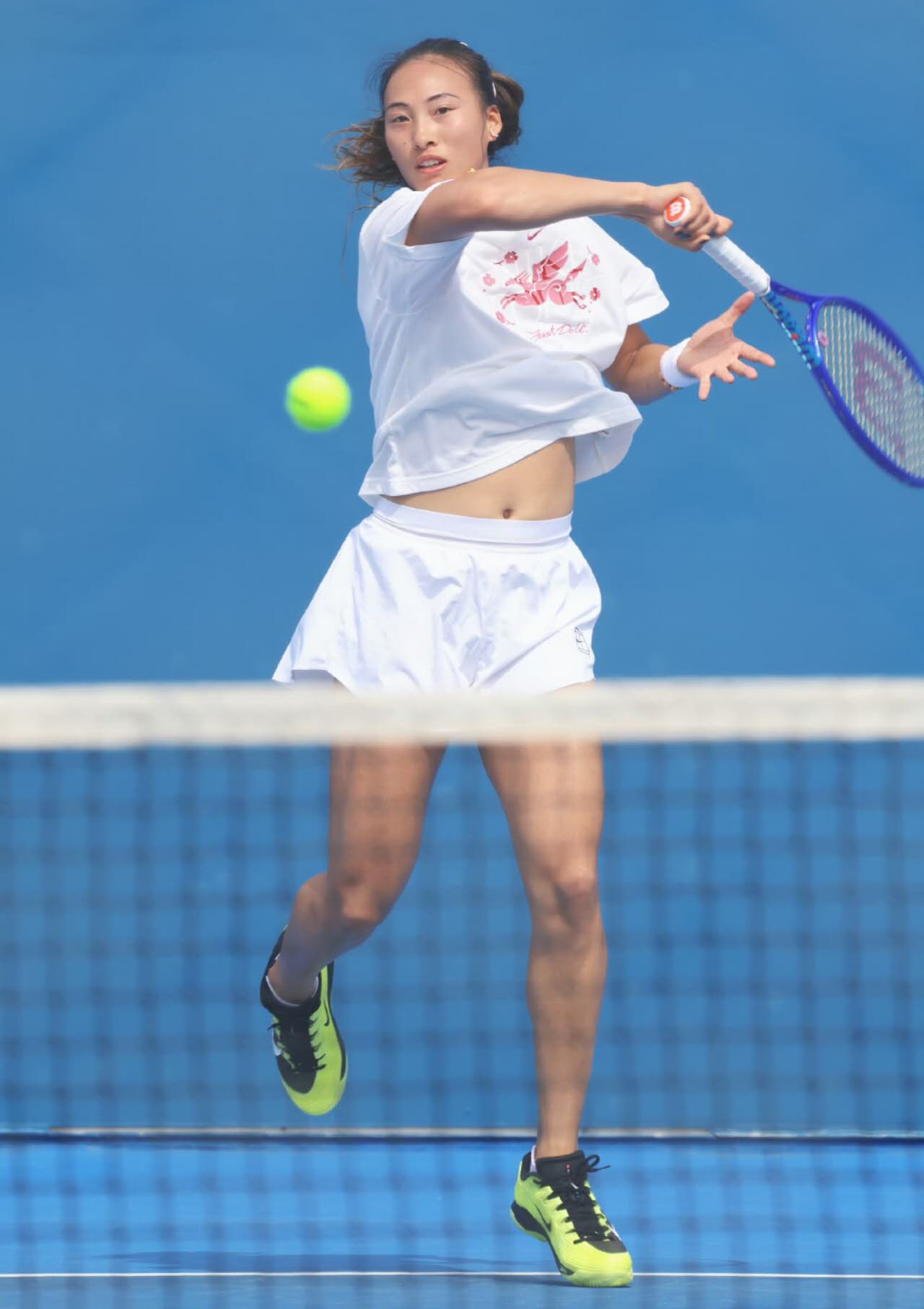
She said her tennis now feels different: “Because during these six months without matches, I learned a lot. Everything I did before is behind me, so now I have to start over.” Zheng acknowledged that with her ranking dropped, she needs to train and compete harder while staying humble.
Zheng’s decision to return after injury has drawn widespread attention. The Doha tournament marks her comeback, with a first-round match against former Australian Open champion Kenin, seen as a “test” by observers.
Supporters believe returning at a high-level event will help her quickly regain her competitive edge, saying, “Young players should fight hard; wasting the window of opportunity is the biggest risk.”
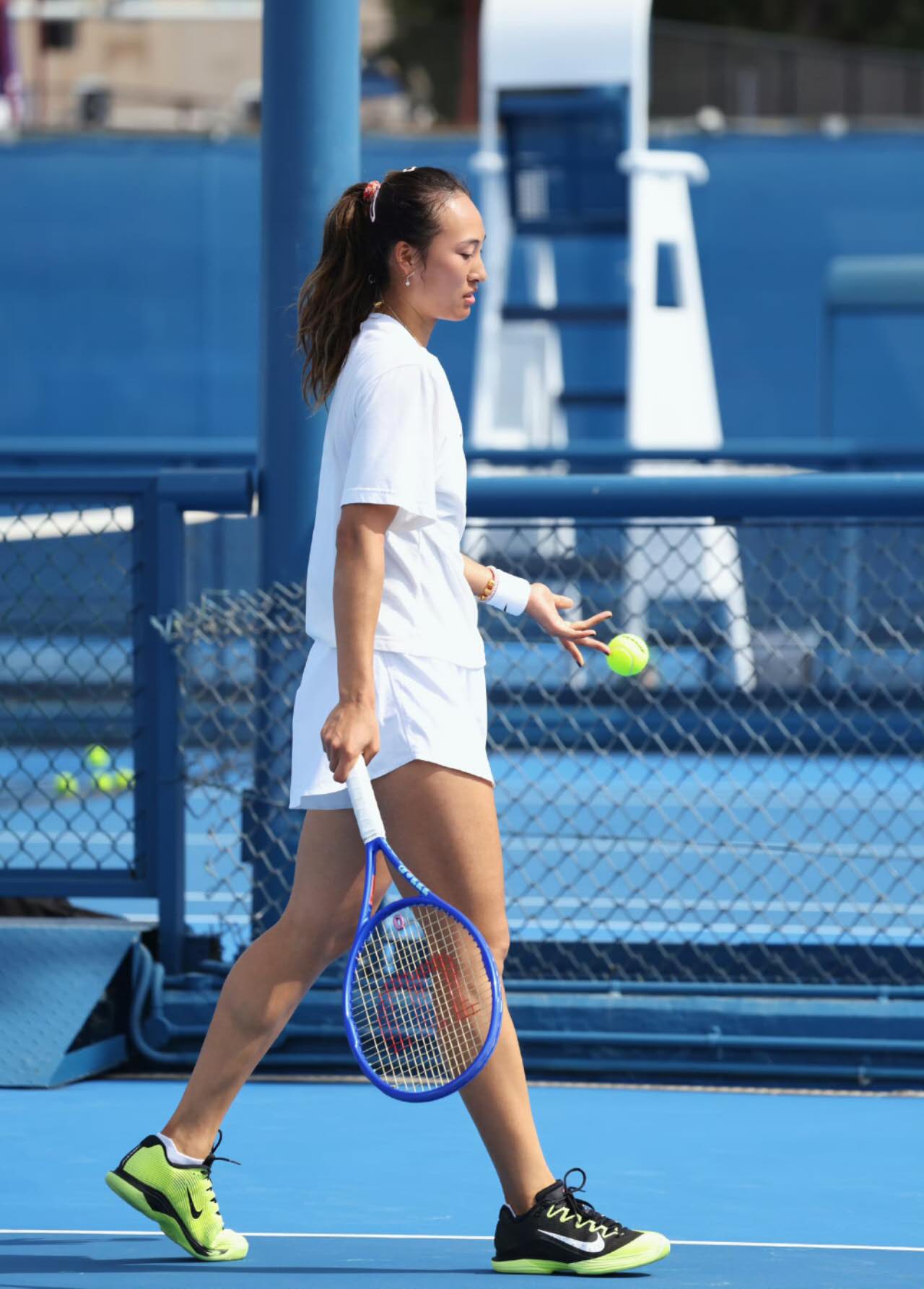
More cautious views emphasize that competing intensely soon after injury stabilization might cause setbacks, especially since Zheng withdrew from both the Australian Open and Abu Dhabi in January, citing not being at “100% fighting condition.”
However, Zheng’s team has set clear priorities for this comeback: “Adapting to the match rhythm and avoiding re-injury are the main goals; winning or losing is secondary.” This statement is seen as a preemptive reminder not to focus solely on scores.
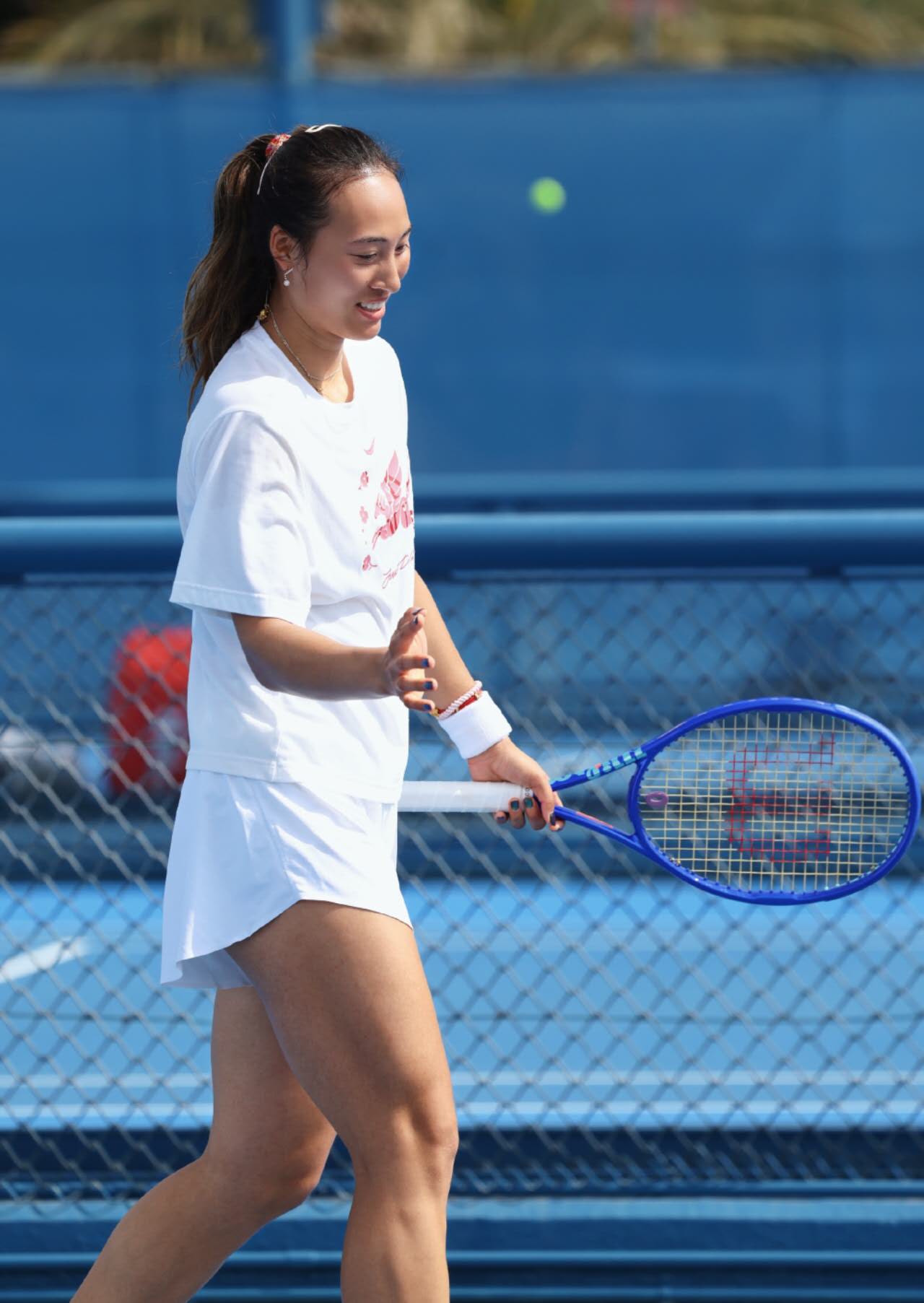
Social media has shown mixed reactions to Zheng’s return. Many fans express understanding and support: one commented, “An athlete’s body is their foundation. Zheng’s wise decision shows responsibility for her career. A brief break ensures a longer stay in the sport.”
Another fan wrote, “Seeing her drop from world No. 4 to No. 24 is heartbreaking. But with her talent and determination, she’ll soon return to the top. Take your time; we’re waiting for your full comeback!”
Some offered constructive advice: “Hope her team plans her comeback scientifically and doesn’t rush. Starting with lower-level tournaments to regain form and confidence step by step would be best.”
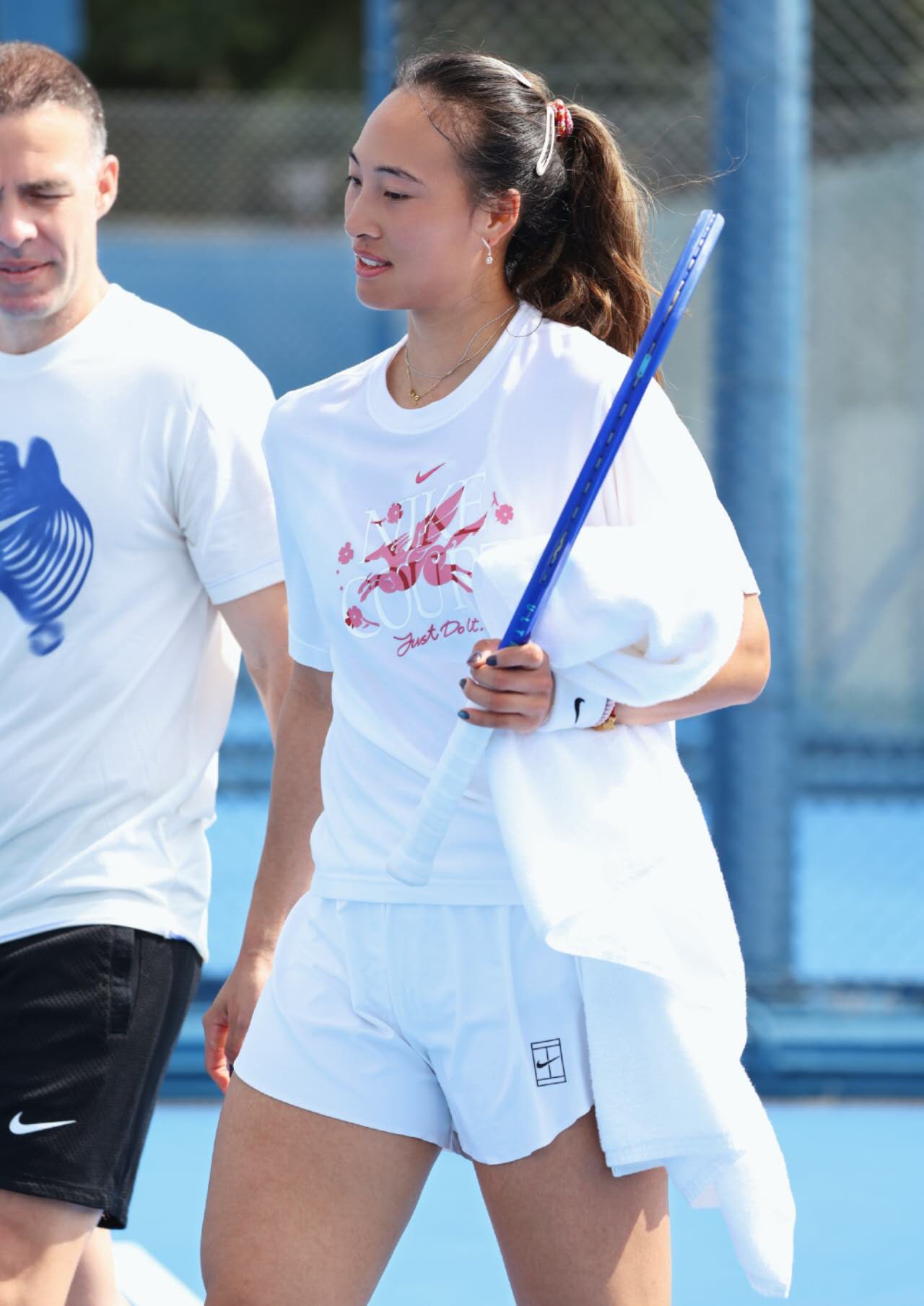
Others focused on tournament arrangements: “Isn’t it unfair that Zheng’s first match back isn’t scheduled on the main court? Given her popularity and level, she deserves better venue treatment.”
Zheng’s current world ranking has slipped to 24th, quite far from her previous No. 4 spot. Due to missing consecutive events, her ranking may continue to fall.
Looking ahead, Zheng remains clear-headed: “The goal has always been there.” But she stressed, “Now that my ranking has dropped, everything has started to decline. So if I want to regain my position, I must train harder and compete more.”
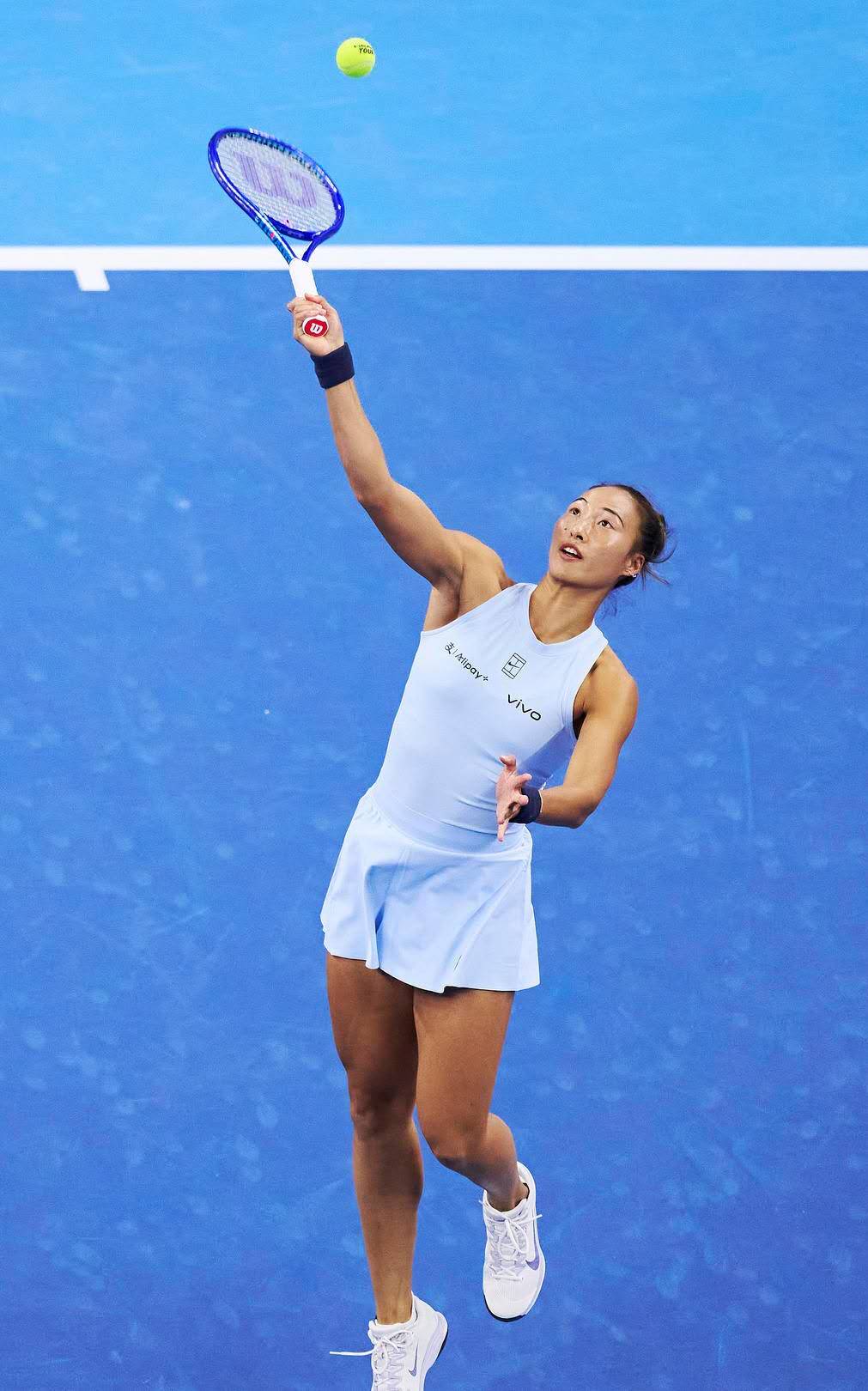
The Doha tournament, as the first WTA 1000 event of the 2026 season, holds great significance for Zheng. If she passes the first round, potential opponents include strong players like Schneider and Rybakina, each match testing her recovery progress rigorously.
At the end of the interview, Zheng showed a positive mindset: “Now, let’s see how things unfold.” This phrase conveys both hope for the future and a mature calmness born from past challenges.(Source: Tennis Home, Author: Lu Xiaotian)

 Links
Links
 Contact
Address:UNIT 1804 SOUTH BANK TOWER, 55 UPPER GROUND,LONDON ENGLAND SE1 9E
Number:+85259695367
E-mali:[email protected]
 App
App


