



Zheng Qinwen: Elbow recovery is going well, I could even play for another two hours


On the evening of February 9th Beijing time, Zheng Qinwen made her comeback debut at the WTA1000 Doha tournament, winning her first-round singles match 4-6/6-1/6-2 against former Australian Open champion Kenin, marking a successful return in her first match after recovering from injury. After her first-round loss at Wimbledon last year, she immediately had surgery on her right elbow in July to fix ongoing pain. Although she attempted a comeback at the China Open in October, she withdrew in the third round and ended her season early.
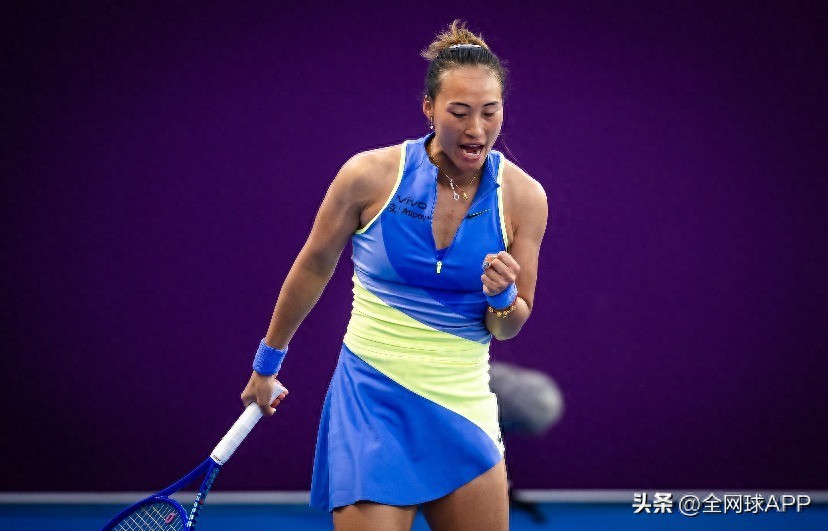
After the match, Zheng Qinwen spoke to the media, with the following Q&A:
Q: You served 20 aces today and your serving was outstanding. What aspects do you think you did particularly well?
Zheng Qinwen: I haven’t seen the stats yet, but clearly my team and I have put in a lot of work on this, especially considering my elbow issue which kept me sidelined for six months. It wasn’t easy, and I wanted to come back strong. I’m happy to have achieved that in my first match, but tennis is about consistency, not just one good round.
Q: Considering your elbow condition, did you feel completely pain-free during today’s match?
Zheng Qinwen: I think when you’re recovering from an injury, you’re never completely without pain. It’s always a process with ups and downs—some mornings feel better, others worse. Overall, I believe my elbow is in a good recovery phase because I can feel the progress.
When I played at the China Open, I wasn’t sure if I should compete. Now, my elbow is at a very good stage; I could even stay on the court for another two hours, continuously serving at 190 km/h.
Q: How has the rehabilitation and return to competition process been?
Zheng Qinwen: No one expected the recovery after surgery to take so long. We thought it would only be two months before I could easily return to the court. But when I played at the China Open, my elbow still couldn’t fully straighten.
Q: How do you evaluate your performance, especially your strong play from the baseline?
Zheng Qinwen: I hoped to play better, especially in the first set when I couldn’t read the rhythm well. I felt the pace wasn’t what I expected. But overall, I found a way to win, which is what matters most. In tennis, you can’t always feel perfect or hit winners on every shot, so I started to be more patient, adjusted my positioning, regained my rhythm, and then launched my attacks again.
I believe there are still many areas I can improve in this match. I’m glad to have the chance to perform better in my next match.
Q: During your recovery, did you watch tennis matches? How did it feel compared to your usual regular competition?
Zheng Qinwen: I watched more than usual. During the six months away from tennis, I would watch the Australian Open on a big screen while following another match on a smaller screen. I kept an eye on the most interesting players: Sabalenka, Sinner, Djokovic, Alcaraz, and Rybakina. Watching tennis as a fan from the screen can sometimes be quite fun.
(Translation/Wang Fei, Photo/Visual China)

 Links
Links
 Contact
Address:UNIT 1804 SOUTH BANK TOWER, 55 UPPER GROUND,LONDON ENGLAND SE1 9E
Number:+85259695367
E-mali:[email protected]
 App
App


