



Medvedev likens Dubai escape to Hollywood blockbuster, Sun Fajing confirms safety and thanks netizens



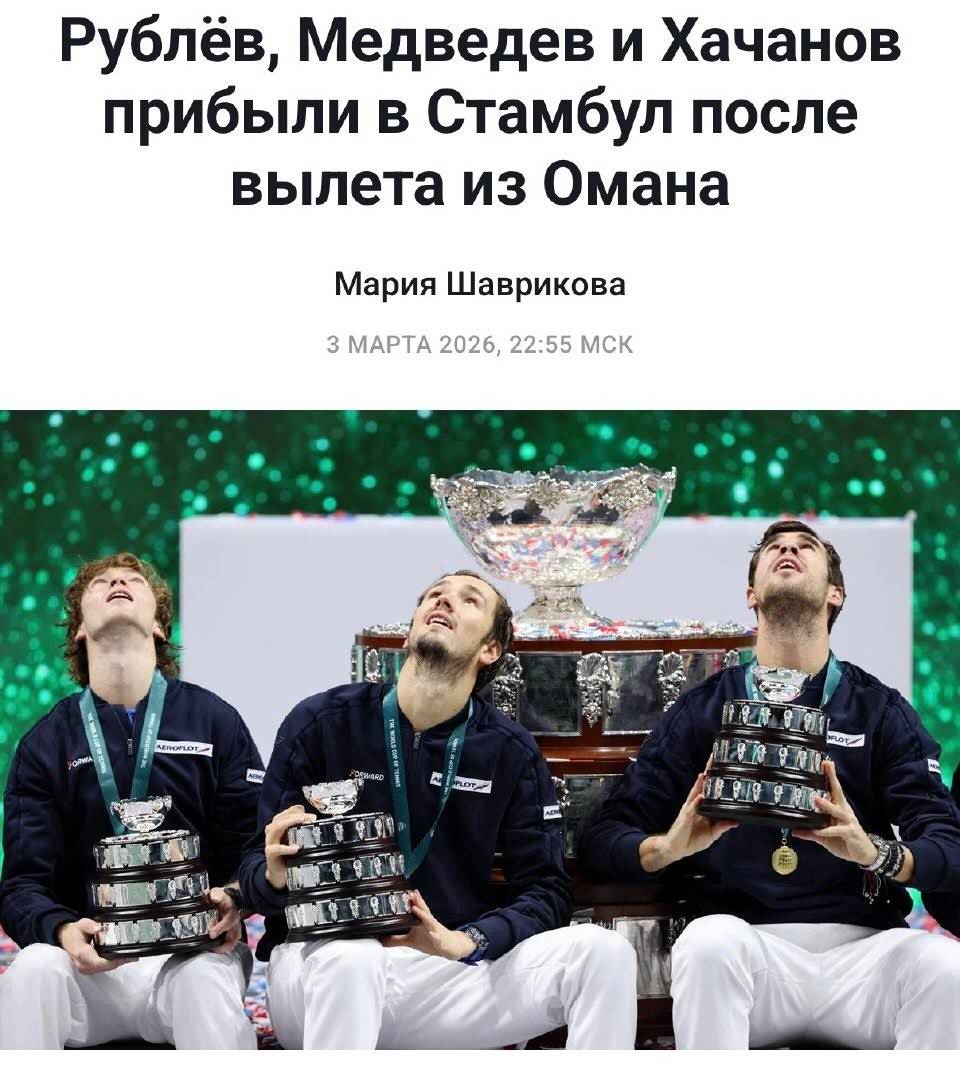
Recently, as tensions rose in the Middle East, numerous tennis players found themselves experiencing their own versions of a "great escape." After a harrowing journey, Dubai champion and Russian star Medvedev safely reached Indian Wells, remarking that the evacuation felt "like a Hollywood film." At the same time, Chinese player Sun Fajing took to social media to assure everyone of his well-being and thank all parties for their support.
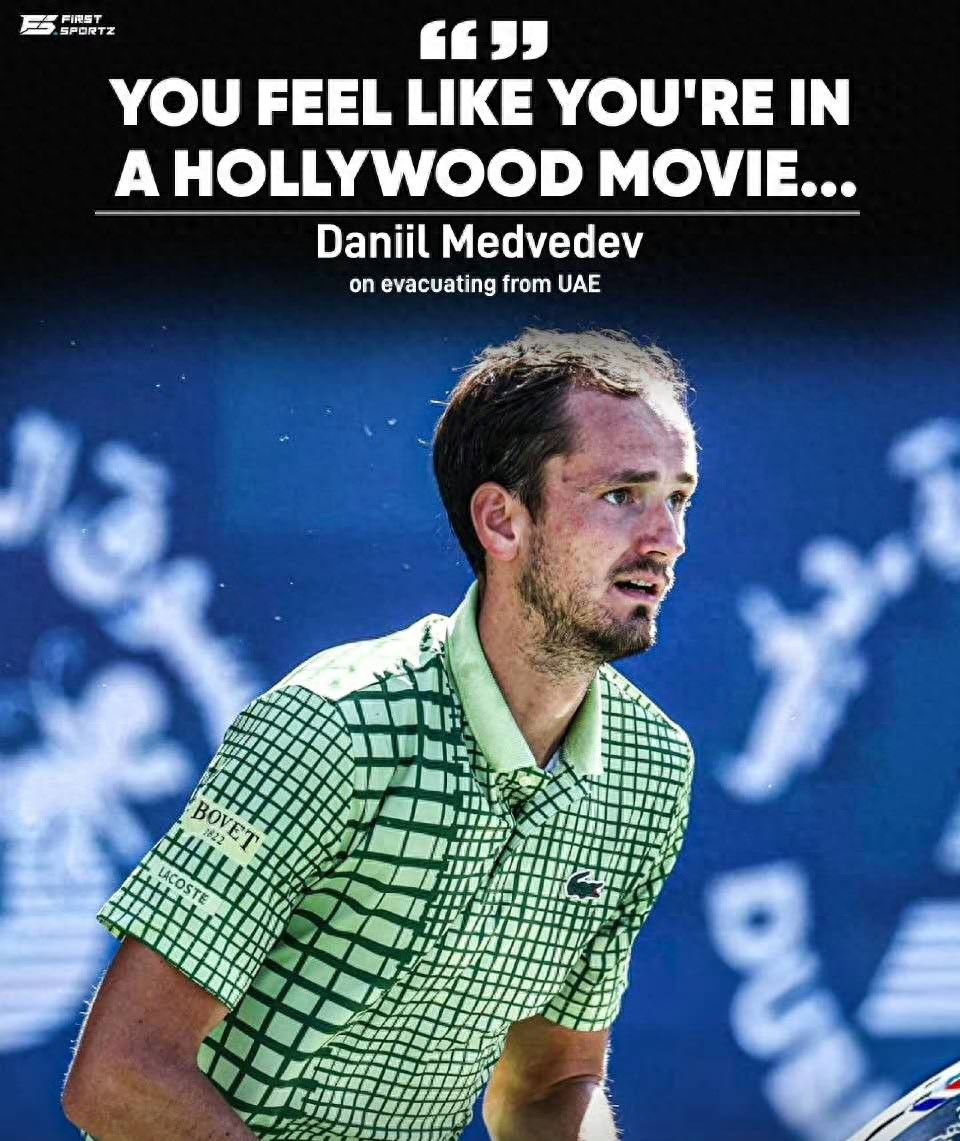
Medvedev detailed his evacuation process to "Bolshe Tennis," mixing frustration with relief. "We drove to Oman. Some were lucky and made it in four and a half hours, some took nine hours; our drive was seven hours," he said.
Adding to the drama, their driver couldn't find his passport at a critical moment. "We were the only group that had already crossed the border but had to turn back to the UAE," Medvedev explained. "He found his passport in the parking lot, and then we set off for Oman." This hiccup introduced further uncertainty into an already tense journey.
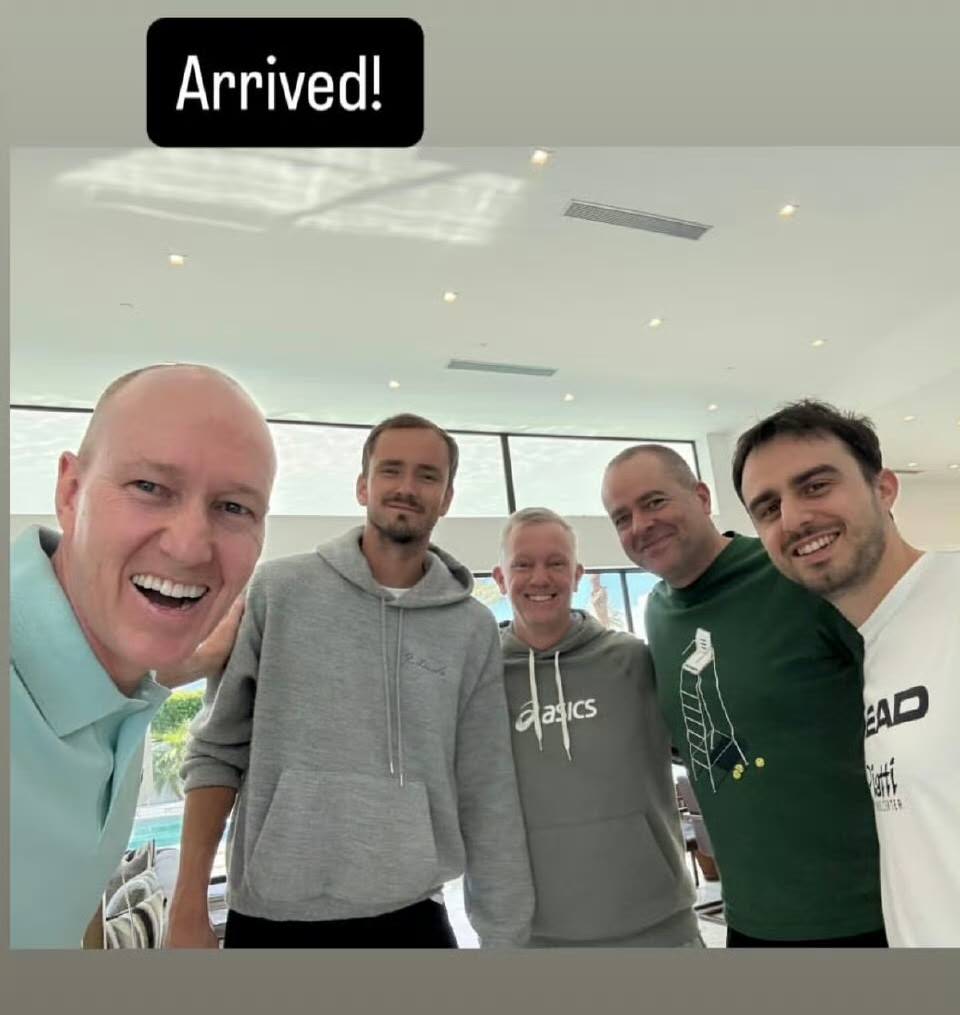
After arriving in Oman, they stayed overnight, flew to Istanbul the next day, spent another night in a hotel, and finally flew to Los Angeles. "If you describe all the details of this trip, it's truly extraordinary. You feel like you're in a Hollywood movie: crossing the border with others, arriving in Oman for the first time," Medvedev noted. He added that he, along with compatriots Khachanov and Rublev, reached Oman separately before flying together to Istanbul and Los Angeles.
Unlike Medvedev, who chose to evacuate westward, Chinese player Sun Fajing decided to return directly to China. He posted an update today detailing his journey home.
"Just updating everyone that I'm safe. I have evacuated from the UAE. This time, we didn't take the route arranged by ATP, as we wanted to leave the Middle East as quickly as possible," Sun Fajing wrote on social media.
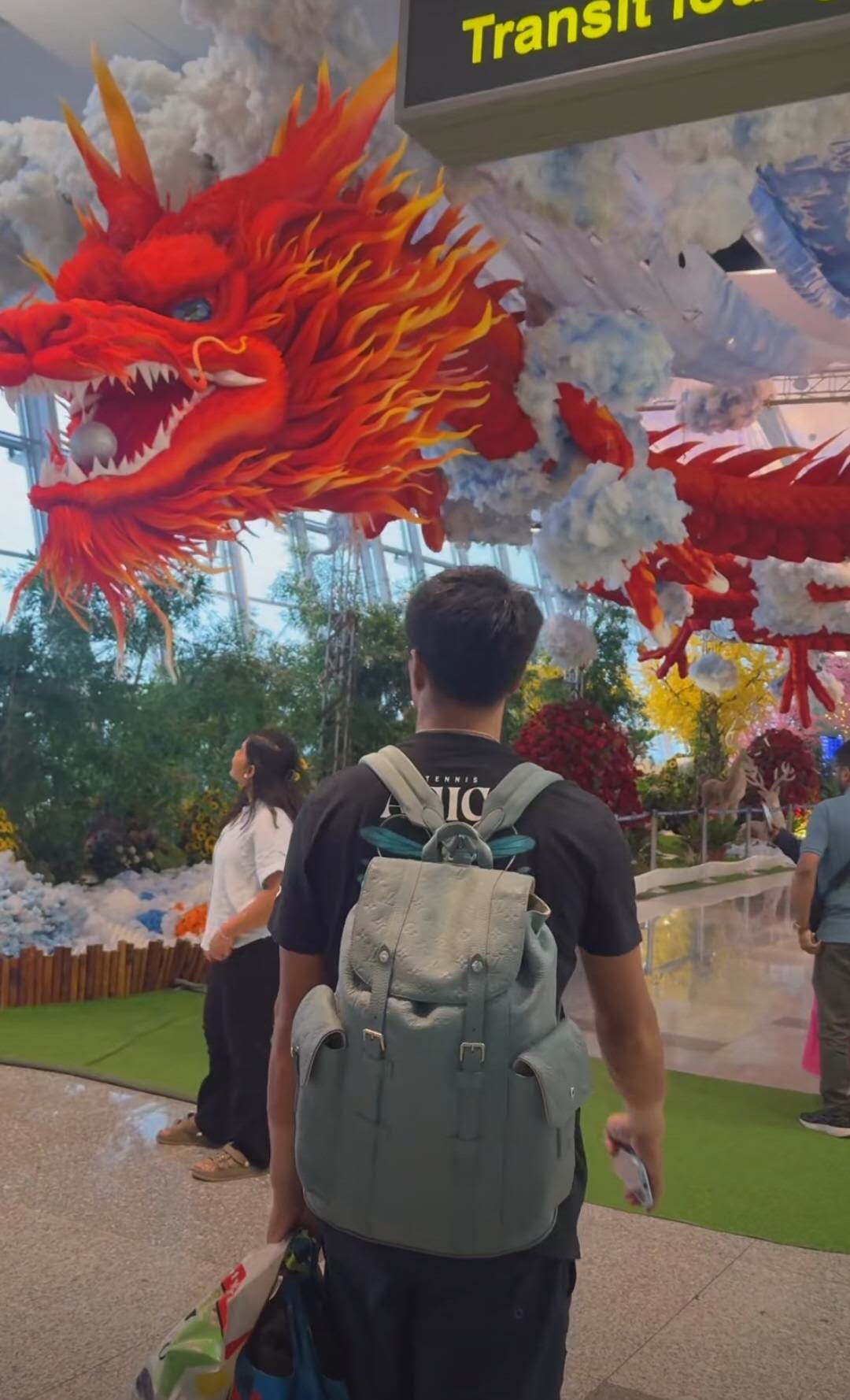
Sun Fajing specifically thanked helpful netizens: "Through reliable information provided by some trustworthy netizens, we learned that flights from Dubai to Guangzhou, Hong Kong, Taipei, Bangkok, Hanoi, and other places were operating smoothly in the past couple of days. So, we decided to try flying back from Dubai. Most Asian players also chose these routes."
His journey home was also fraught with challenges: "Fortunately, after several 'ghost flight' ticket cancellations, we finally managed to secure suitable tickets and successfully arrived in Hanoi. We are now transiting and expect to reach Beijing by 00:30 on March 6."
Sun described the evacuation scene: "There was no panic on the road, but more a sense of exhaustion among the stranded passengers at the airport. So, choosing the right flight was crucial, requiring quick action and reasonable prices."
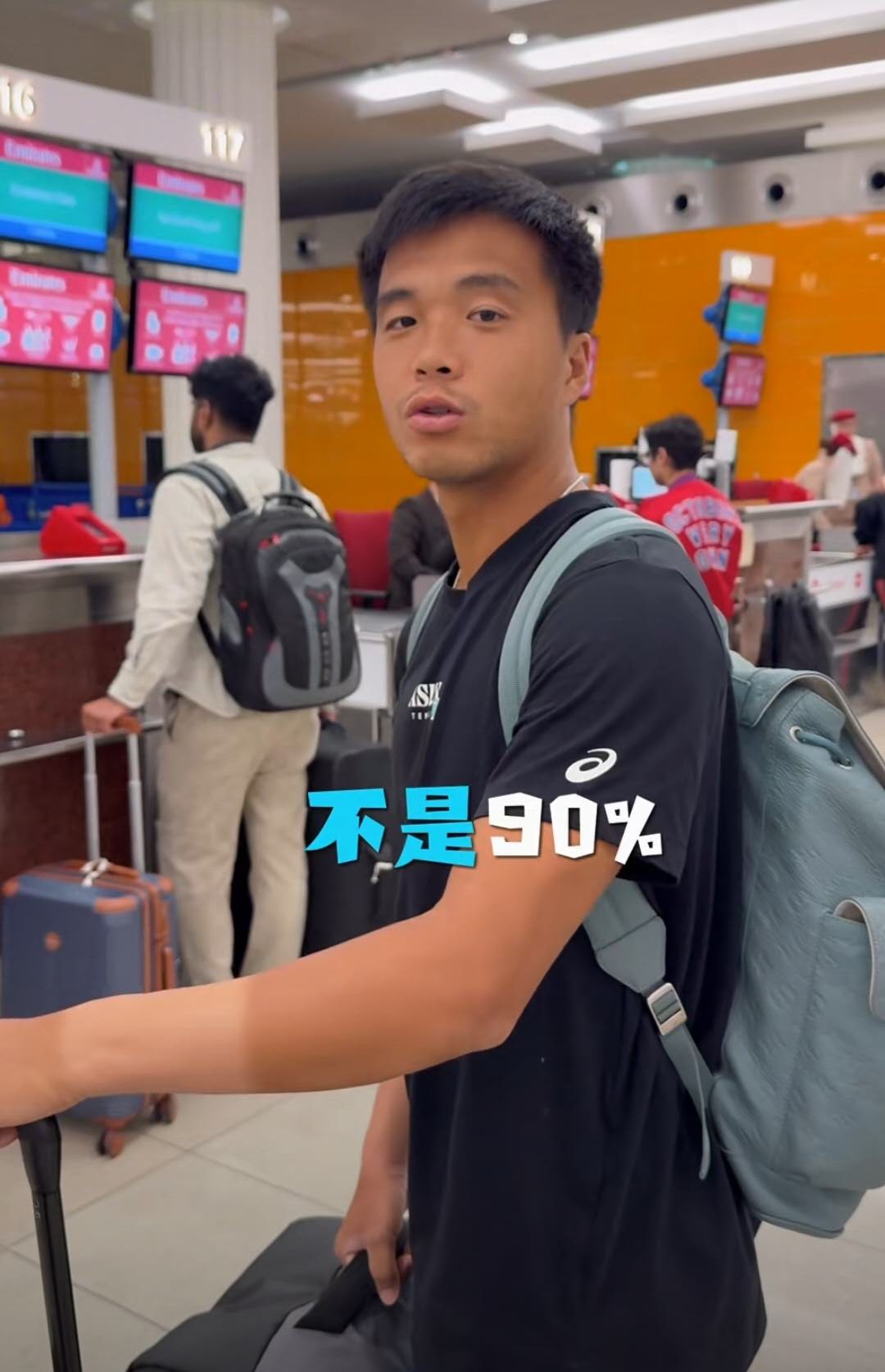
He expressed special thanks for the widespread concern: "In recent days, I have received care and attention from the CTA, the consulate in Dubai, and many friends and netizens. Thank you all for the help provided. This experience as an athlete in a conflict zone is unforgettable for a lifetime, but it was not a pleasant one. I hope no one else has to go through this. May the world be peaceful and the nation prosperous and secure."
This series of evacuation incidents sparked lively discussion online. Netizens abroad joked about Medvedev's experience: "Was Medvedev getting a sneak peek at the sequel to 'Plane'? The part about the driver losing his passport—even a screenwriter wouldn't dare write that."
Commenting on the two players choosing different evacuation directions, a netizen said: "Medvedev detoured west through Europe to compete in the US, while Sun Fajing headed east directly back to China. Both prioritized safety, just in different directions."
Some netizens noted Sun Fajing's mention of "trustworthy netizens": "In critical moments, it's our own people who come through. Sun Fajing specifically thanked netizens for providing information, highlighting the power of grassroots mutual aid."
Others reflected on the value of peace: "Seeing athletes trapped in a war zone really makes you wish for world peace. Sports competitions should be feasts in times of peace, not threatened by conflict."
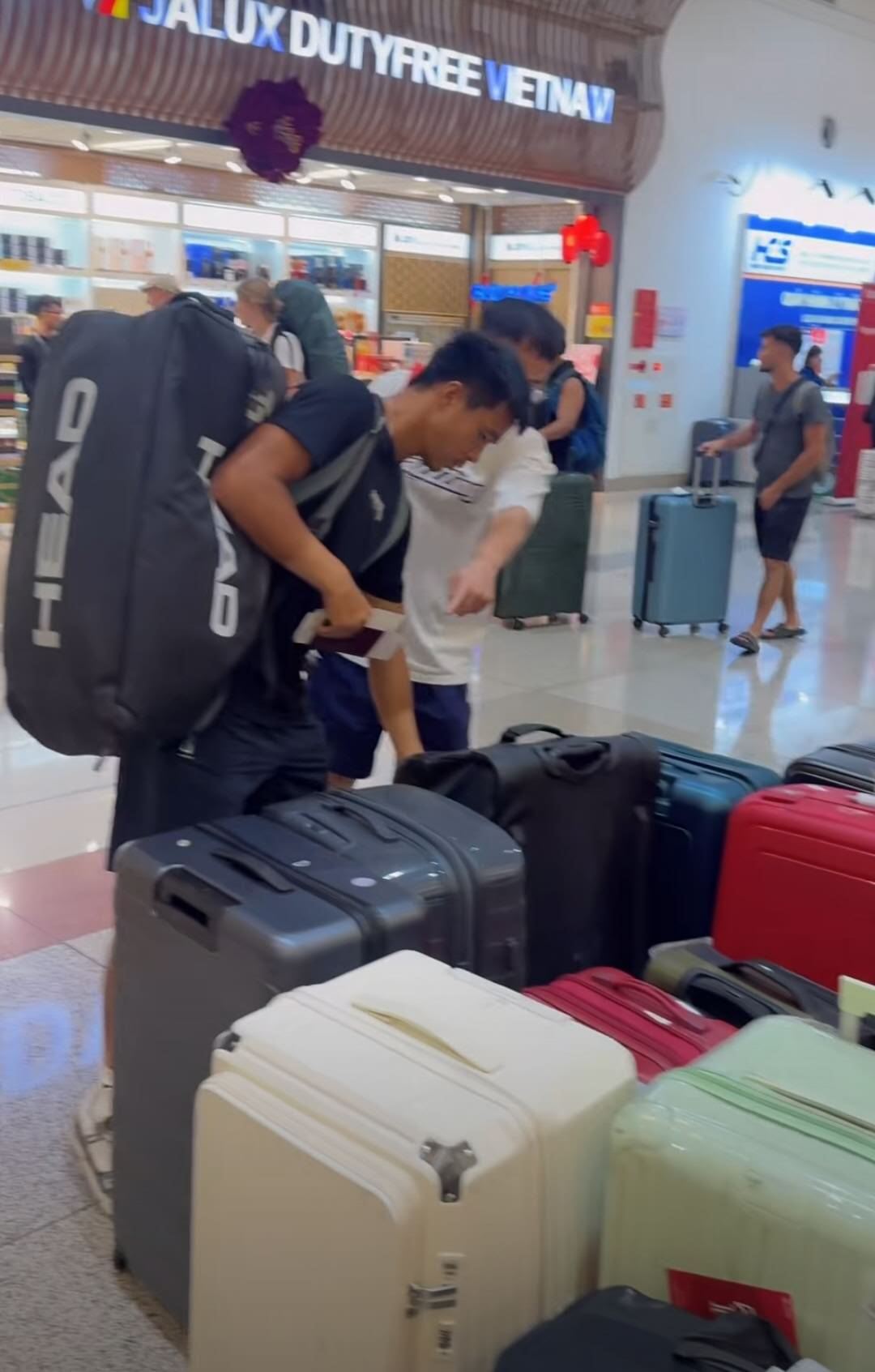
An international relations scholar saw another aspect of people-to-people diplomacy in Sun Fajing's experience: "Beyond official channels, the sharing of information among civilians played a vital role during the crisis. This reminds us that in the era of globalization, connections between individuals can sometimes be more flexible and effective than institutions."
The "harrowing evacuations" of the two players have finally concluded, allowing many fans to breathe a sigh of relief. However, these extraordinary experiences will undoubtedly remain unforgettable chapters in their careers. War is merciless; let us hope the world soon returns to its peaceful state!(Source: Tennis Home Author: Lu Xiaotian)

 Links
Links
 Contact
Address:UNIT 1804 SOUTH BANK TOWER, 55 UPPER GROUND,LONDON ENGLAND SE1 9E
Number:+85259695367
E-mali:[email protected]
 App
App


