



Zheng Qinwen pointed out three main reasons for her loss after the match, while foreign fans criticized the top-ranked Chinese player: she should consider retiring.


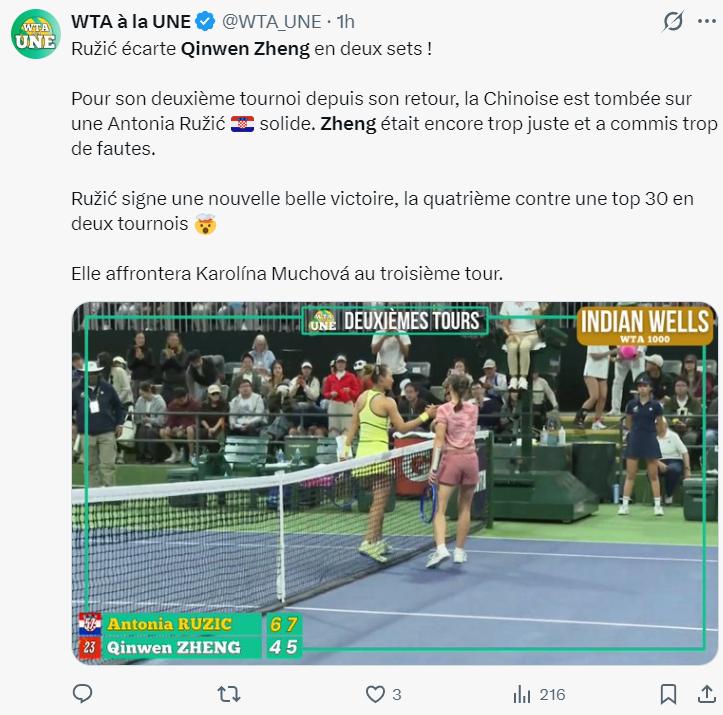
Zheng Qinwen's debut at the Indian Wells 1000 tournament was a disappointment. After losing to Ružić, the Chinese women's tennis team recorded their worst singles performance of the new season, losing from the qualifying rounds all the way to the main draw, with every match ending in a first-round exit.
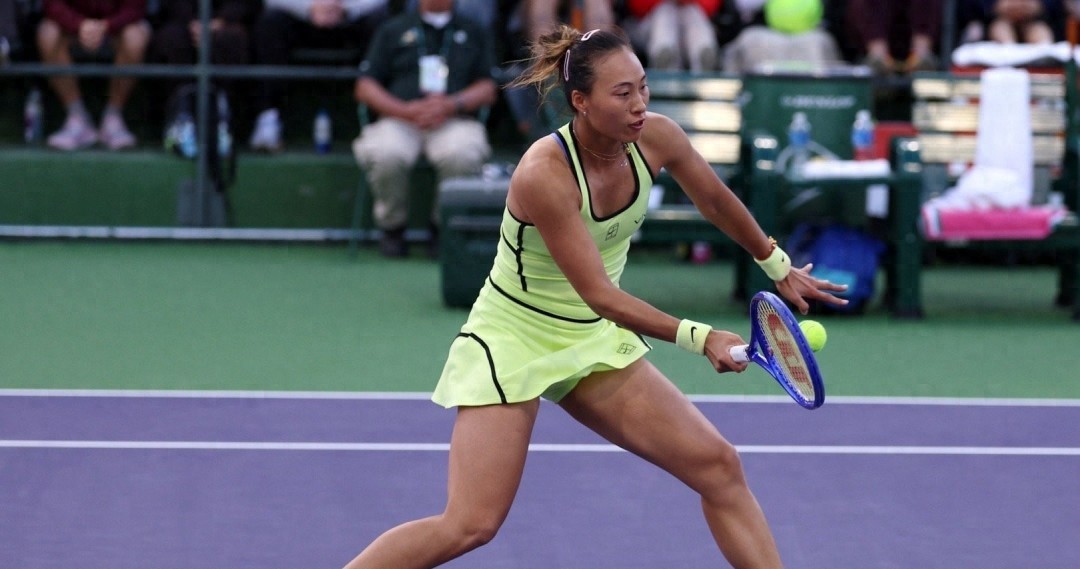
After the match, many wanted to hear Zheng Qinwen's assessment of her performance, and the top-ranked Chinese player promptly provided three reasons for her defeat.
After watching Zheng Qinwen lose to Ružić in two sets, many believed that the Chinese top player's serve was mediocre and severely hindered her performance. This assessment was later confirmed by Zheng herself after the match.
Zheng Qinwen admitted that her serving performance in the match against Ružić was very poor, which contributed to the low success rate. According to post-match statistics, Zheng's first-serve success rate was only 50%, lower than Ružić's 59%.
The top Chinese player explained the reason: "I haven't focused on practicing my serve these days." The rationale was to protect her elbow, which outsiders interpreted as a precaution against potential injury.
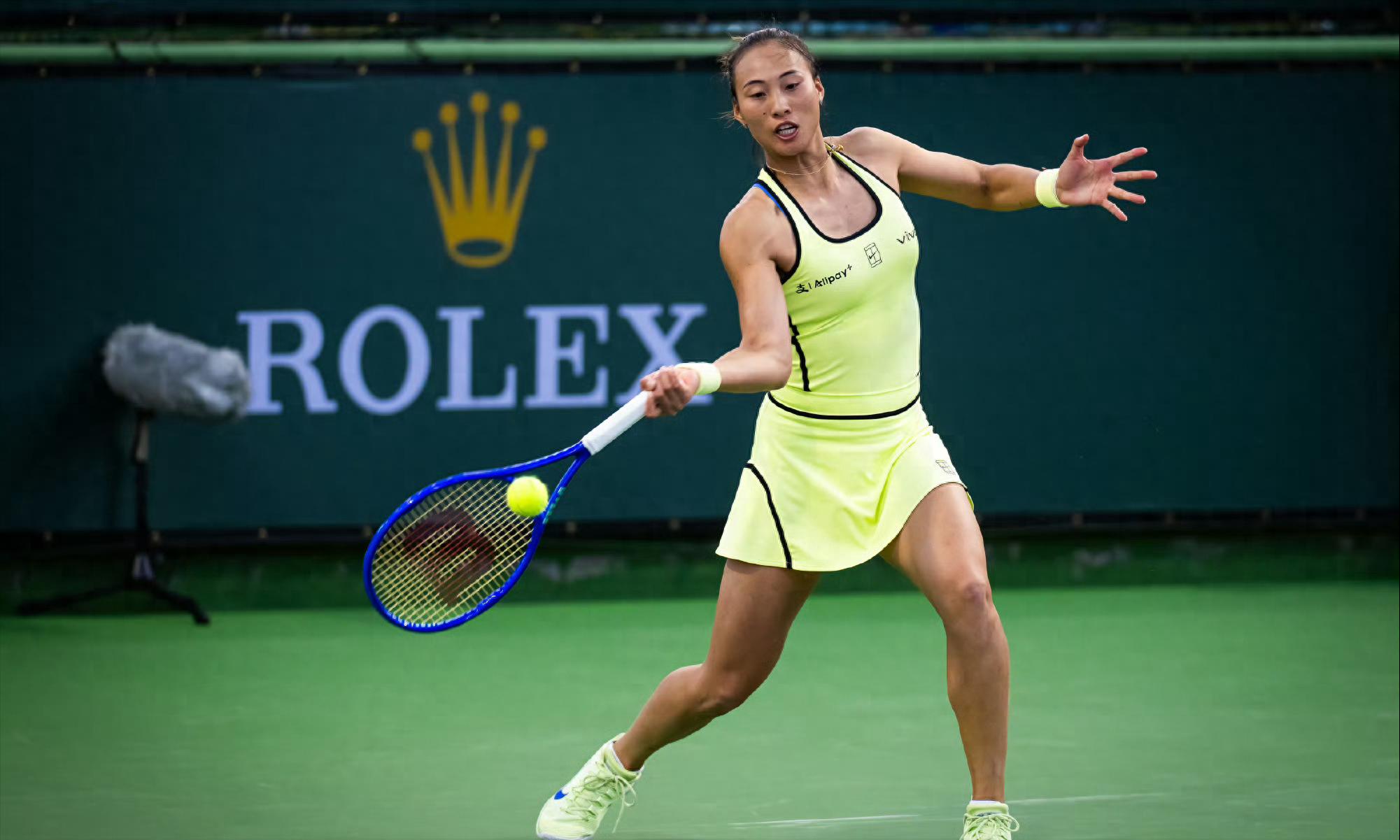
Additionally, Zheng Qinwen highlighted another factor affecting her serve success rate: "I felt the racket's string tension wasn't what I wanted, possibly due to incorrect pre-match preparation details."
Whether racket string tension was a major factor affecting Zheng's serve is a matter only the player herself can judge. Some argued that since Zheng mentioned it, it likely had an impact. Zheng pointed out this issue mainly because she felt the effect became more noticeable as the court temperature dropped later in the match.
After hearing Zheng's explanation, many fans and netizens noted that Zheng had withdrawn from the Dubai 1000 tournament, rested for 21 days, and returned for Indian Wells. Concerns about her form in her first match were already present beforehand. If racket tension issues emerged due to temperature changes during the match, it would obviously disadvantage the Chinese top player. Given that Ružić is a formidable opponent and outperformed Zheng in consistency and other aspects, Zheng's increasing passivity on court becomes understandable.
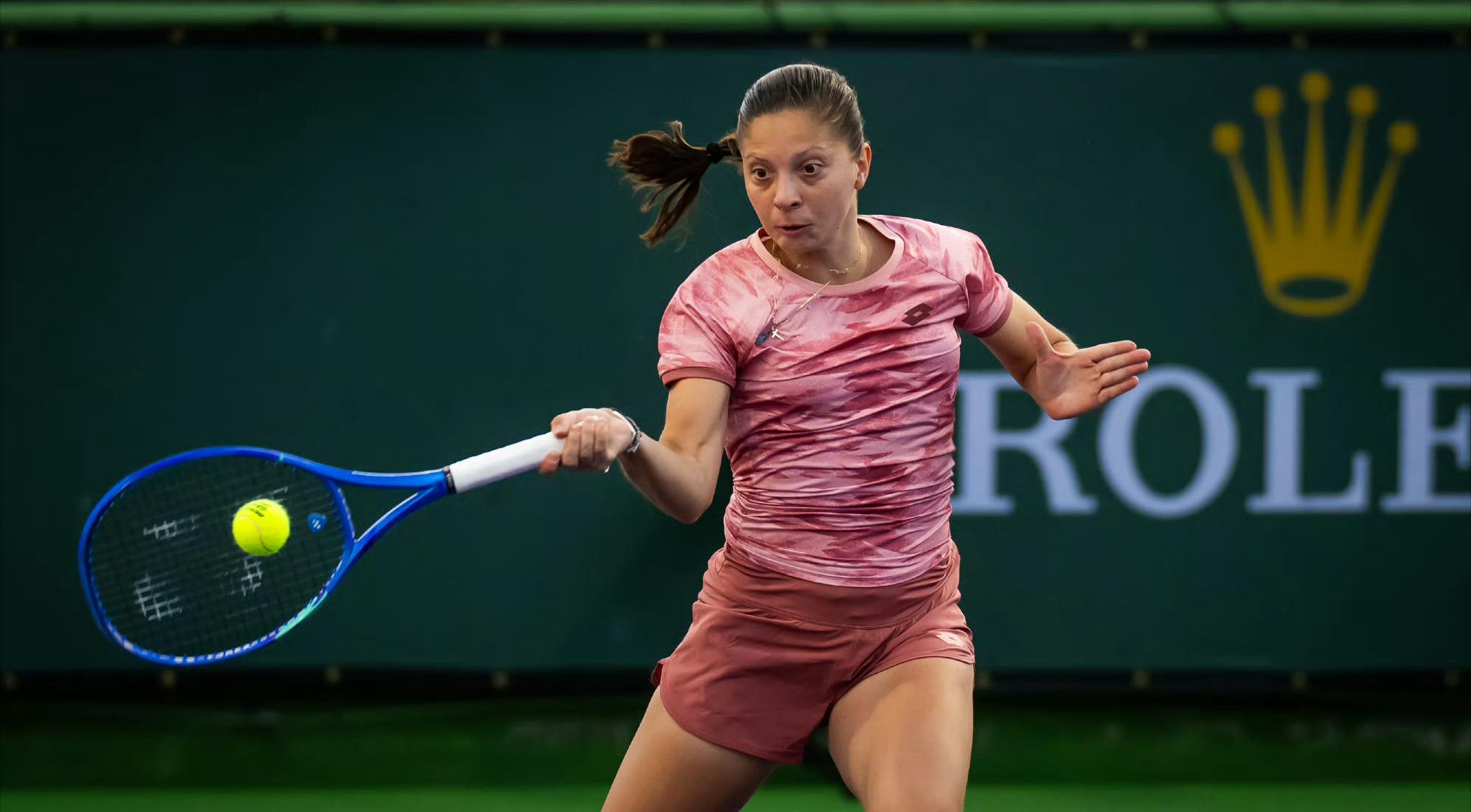
"This loss was mainly due to my own shortcomings in many areas, including handling key points and controlling the match rhythm. Overall, I feel I hadn't fully entered a competitive state," Zheng admitted after the match. Not being fully in match mode laid the groundwork for her eventual defeat.
This statement also explains why Zheng seemed to be "daydreaming" on court, appearing unenthusiastic. Whether she was the first to break serve in the opening set or suddenly rallied when trailing 2-5 in the second set, many viewers in the live stream commented that Zheng's performance faded midway. It was unclear whether she lacked desire to win, felt reversal was too difficult and gave up, or feared pushing too hard might aggravate an injury, opting instead for a passive approach.
Now it's understood that all this stemmed from Zheng not being fully in a competitive mindset. Otherwise, her ability to handle crucial points wouldn't have been so poor, and Ružić wouldn't have won in two sets so easily—the match likely would have stretched to three sets.
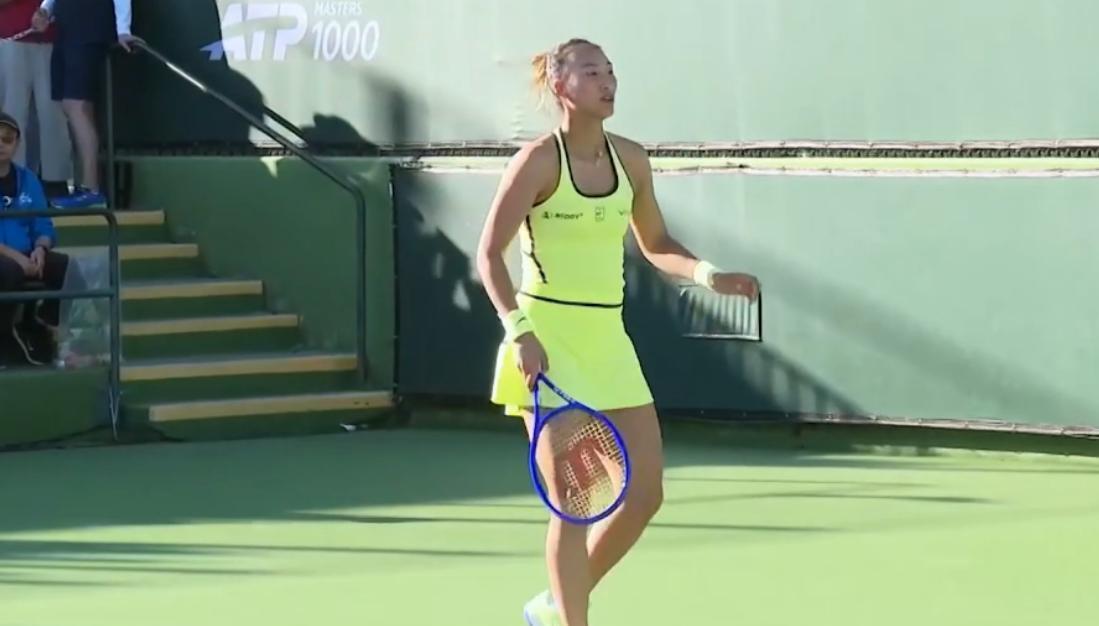
After attributing her loss to "not being fully in form, racket tension issues affecting her serve, and poor serving performance," many expressed sympathy, noting that despite these problems, Zheng still battled Ružić to that extent, and avoiding a quick defeat was already a consolation.
Compared to some domestic fans and netizens who showed maximum understanding and tolerance for Zheng's loss, even offering warm encouragement for her upcoming Miami tournament, foreign fans' reactions to Zheng's first-round exit were more intense.
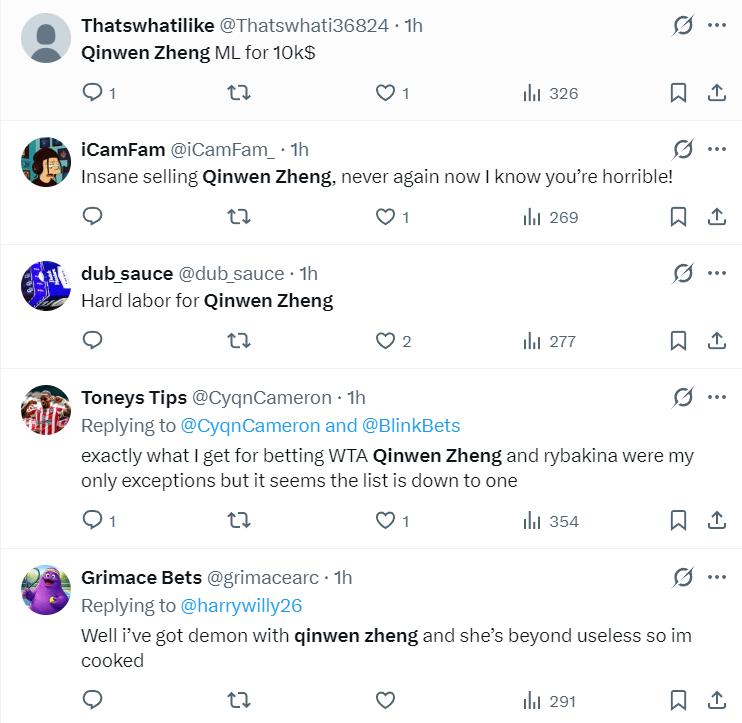
Besides some foreign fans calling "Ružić defeating Zheng Qinwen a huge surprise" to sarcastically highlight Zheng's underwhelming performance, American fans—perhaps out of deep disappointment or other reasons—not only stated they would no longer support the Chinese top player but directly criticized Zheng, saying "she should consider retiring from tennis." The harshness of these remarks was startling.
However, some European media took a milder stance on Zheng's loss, simply stating that Zheng's early exit due to poor form and excessive errors was regrettable.
After her first-round exit at the Indian Wells 1000 tournament, Zheng Qinwen stated she would head directly to Miami for early preparation, explaining: "When I lose a match, I prefer not to stay but move to the next destination to restart, with a different game plan. Miami indeed has different weather conditions that require gradual adaptation. For me, the most important thing is to play more matches and regain competitive feel."Source: Tennis Home, Author: Moon River's Sky

 Links
Links
 Contact
Address:UNIT 1804 SOUTH BANK TOWER, 55 UPPER GROUND,LONDON ENGLAND SE1 9E
Number:+85259695367
E-mali:[email protected]
 App
App


