



Alcaraz complained that every round feels as difficult as facing Federer, and Swiatek praised Muchova as the female version of Federer.


In the third round of the Indian Wells men's singles, world number one Alcaraz encountered a tough battle, ultimately spending 2 hours and 18 minutes to narrowly reverse Lindeknech with a score of 6-7(6), 6-3, 6-2, securing a 14-match winning streak in singles and maintaining an unbeaten season!
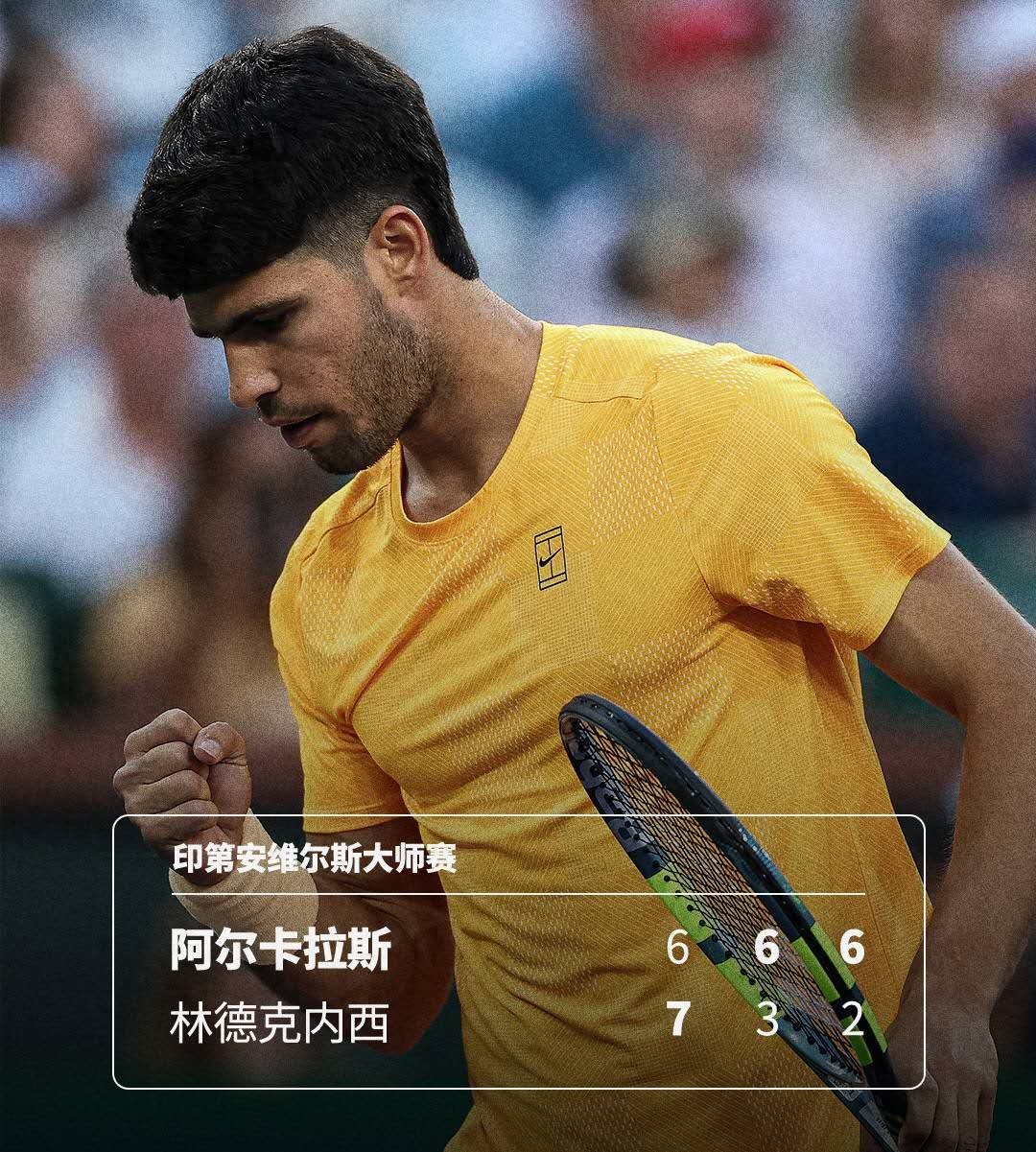
At the post-match press conference, Alcaraz entered a complaining mode, stating that every opponent he faces now seems to transform into Federer with heightened intensity when playing against him.
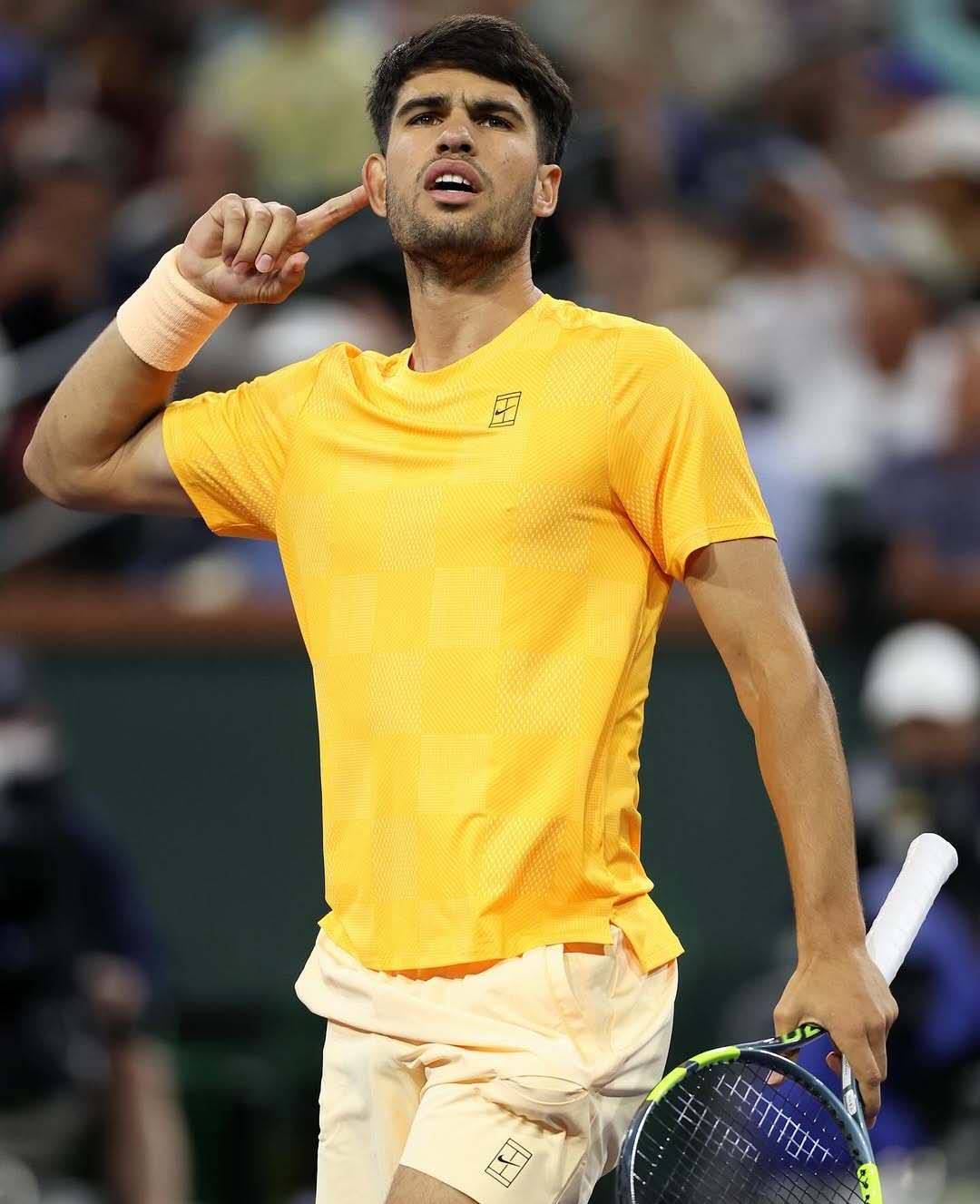
"Sometimes, I feel like every round is like playing against Federer," Alcaraz said to reporters with a smile. "Everyone seems to deliver astonishing performances when facing me. If they maintained this level in every match, their rankings would be much higher."
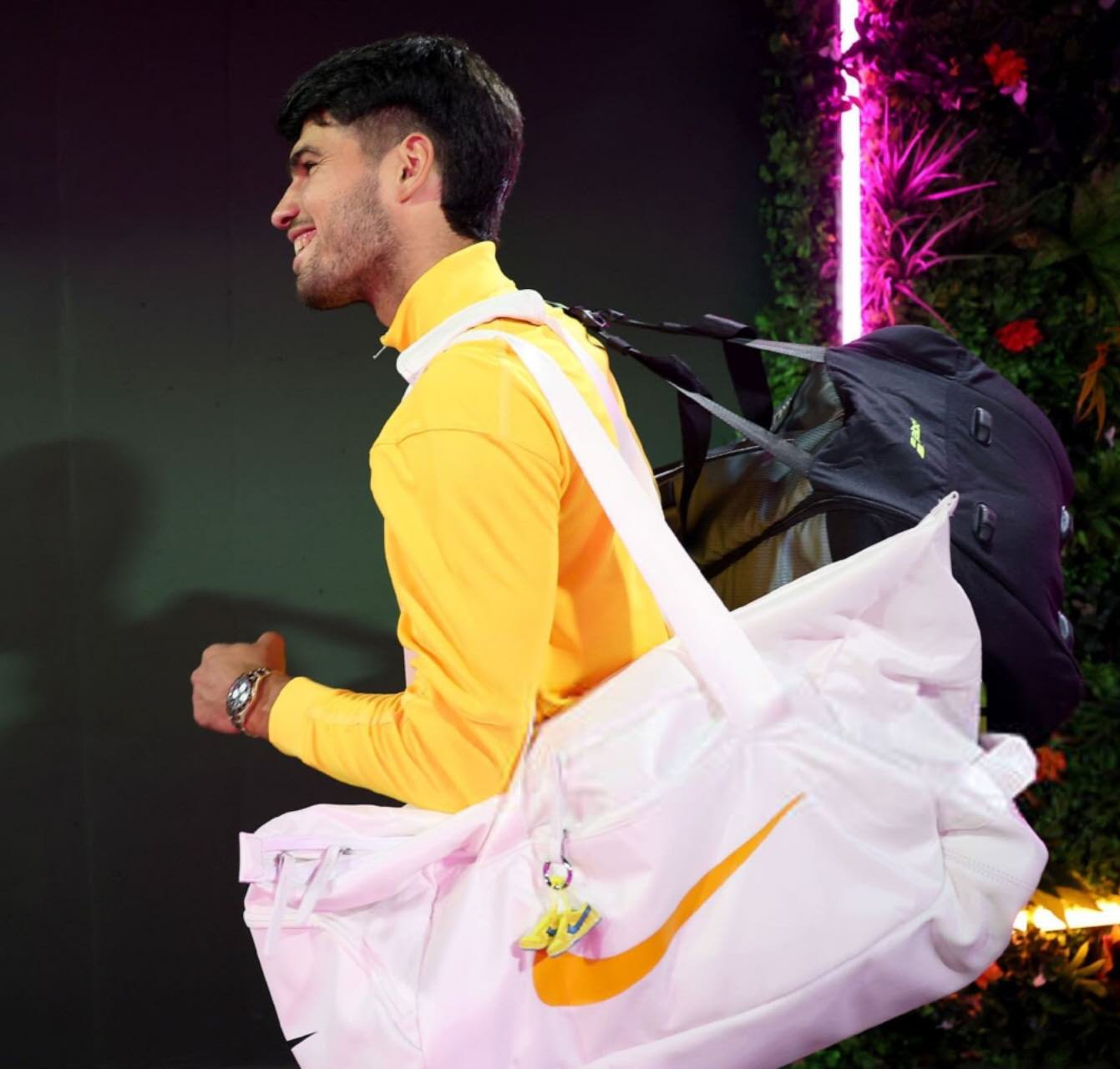
This self-deprecating complaint actually reveals a top player's frustration: as a seeded player and Grand Slam champion, Alcaraz has become the subject of study for everyone. Young players facing him often have no psychological burden and can instead play tennis beyond their usual level.
"I must be prepared to face everyone's best form," Alcaraz added. "This indicates that I still have room for improvement and need to find ways to win even when they play like world top five."
A tactical analyst pointed out the subtle difference: "Alcaraz saying opponents are like Federer is actually complaining about the helplessness after being heavily studied. But this also represents his current status in men's tennis; many want to challenge him, similar to how many in women's tennis were eager to defeat Serena Williams back then."
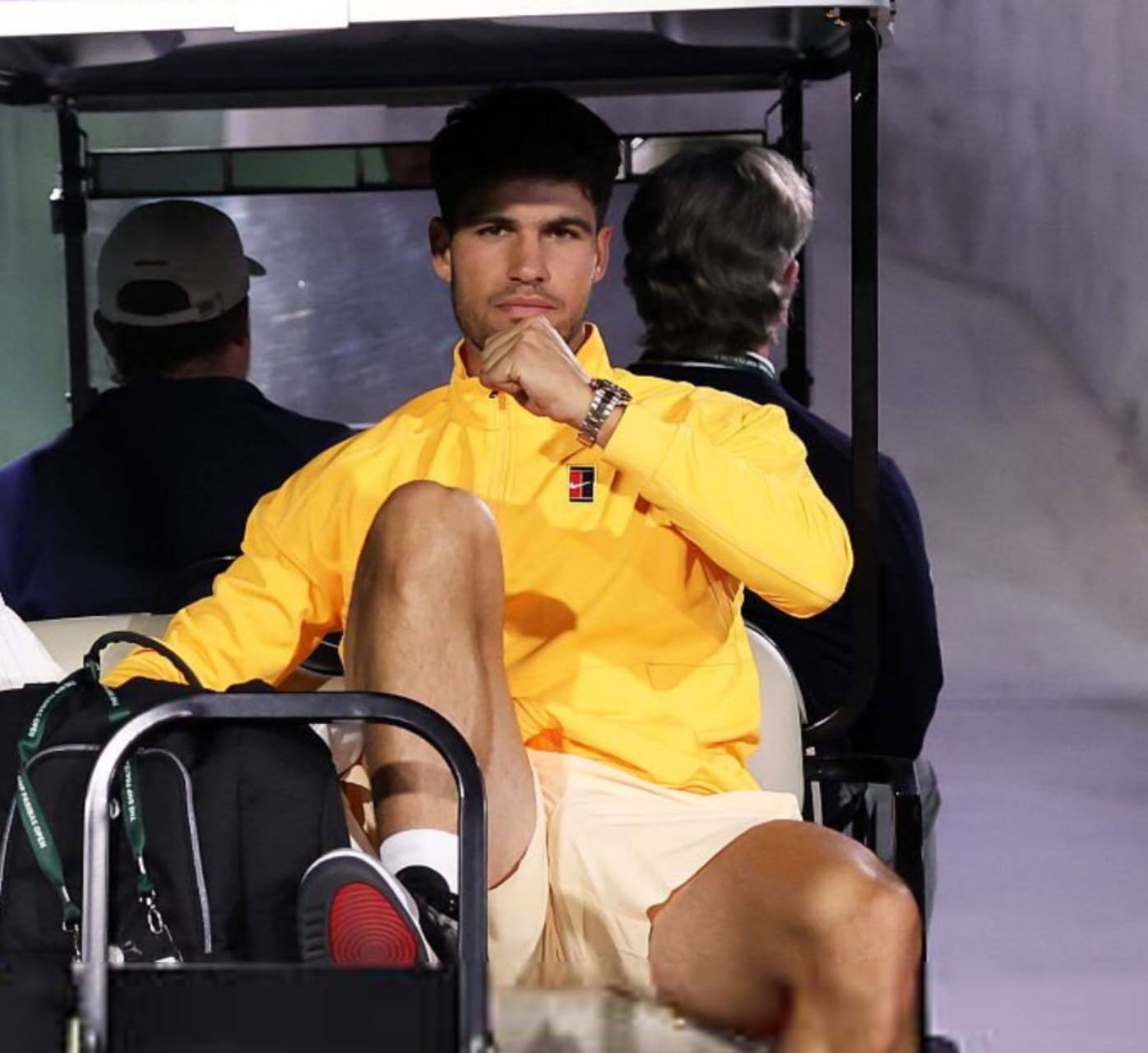
Some netizens joked, "Alcaraz's comment is akin to Versailles: everyone only becomes world top ten when playing against me." Others believed, "It's normal; Alcaraz now is like seeking defeat in solitude. Many hope to end his winning streak, and no one wants tennis to be dominated by one forever."
Soon after Alcaraz's statement, world number two Swiatek gave a similarly surprising analogy at another press conference, this time focusing on her longtime opponent—Czech star Muchova.
When asked about facing Muchova in the upcoming fourth round, Swiatek generously praised, "The match record might favor me, but I remember every duel with her. Sometimes I fell behind first, even lost in the third set. She is an excellent player, and most of our matches were closely contested. It's really hard to get into form and prepare to engage in battle."
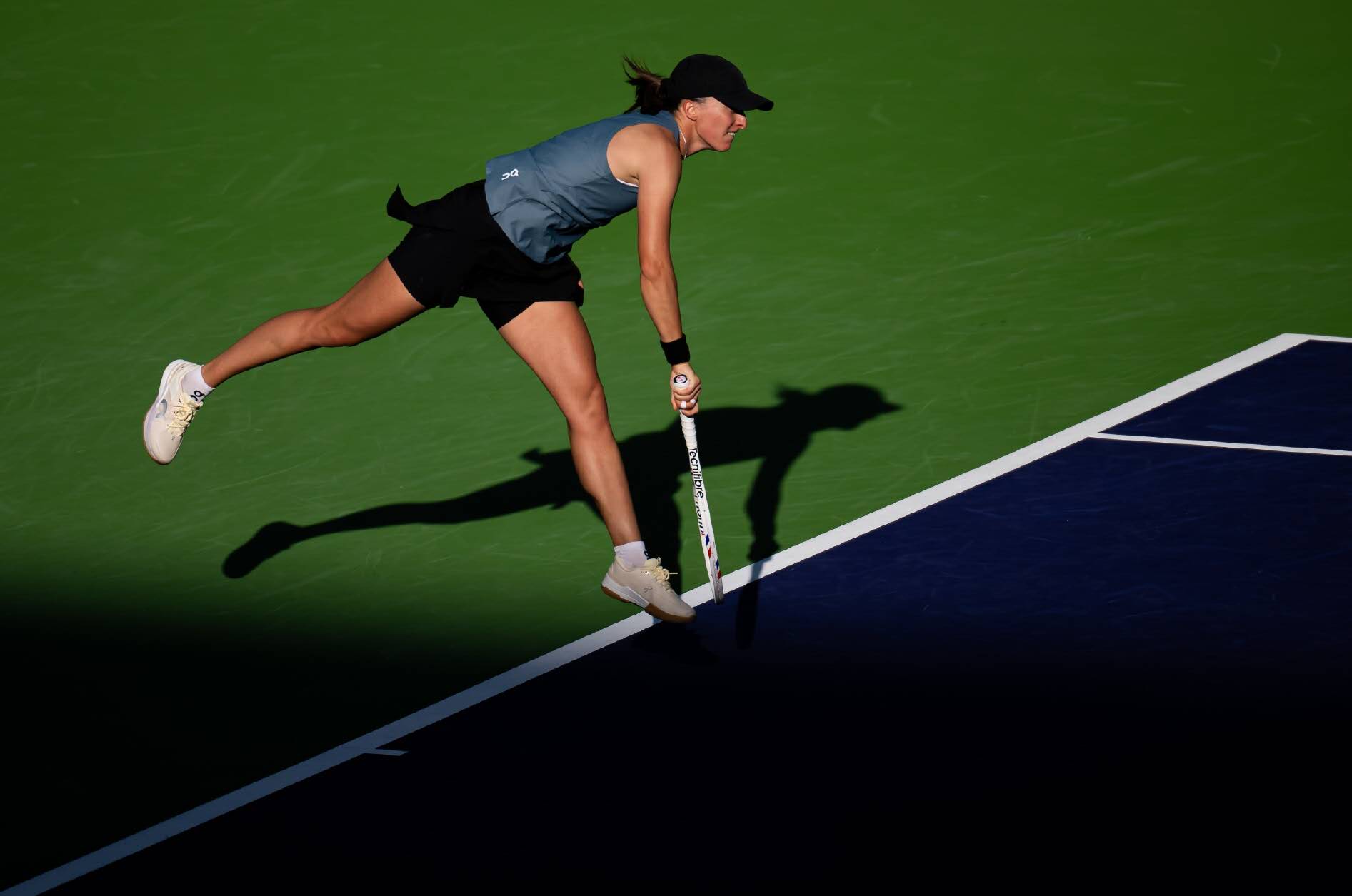
Then she delivered the analogy that ignited the room: "Honestly, I enjoy playing against her and watching Karolina play. It's truly beautiful to see a player so intelligent and fluid. She is like the female version of Roger Federer."
This evaluation quickly spread on social media. Muchova is indeed known for her versatile style, delicate touch, and rich tactics, resembling Federer's effortless style.
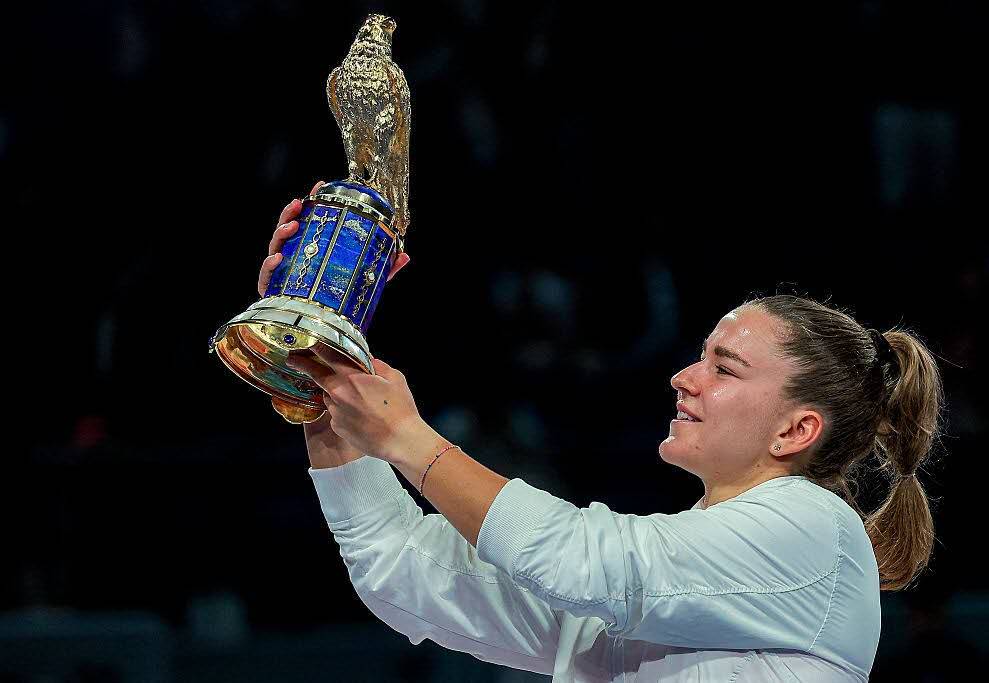
It's worth noting that in another major tournament recently, Muchova, long plagued by injuries and repeatedly missing championships, finally broke the curse of "no major title," winning the most significant championship of her career. This "female Federer" is announcing her return in the strongest manner.
Although Swiatek holds multiple Grand Slam titles, her matches against Muchova have never been easy. Among her four victories, many went to three sets. Muchova's飘逸变线 (graceful line changes) and unexpected net drops often put Swiatek, accustomed to baseline battles, in被动 (a passive position).
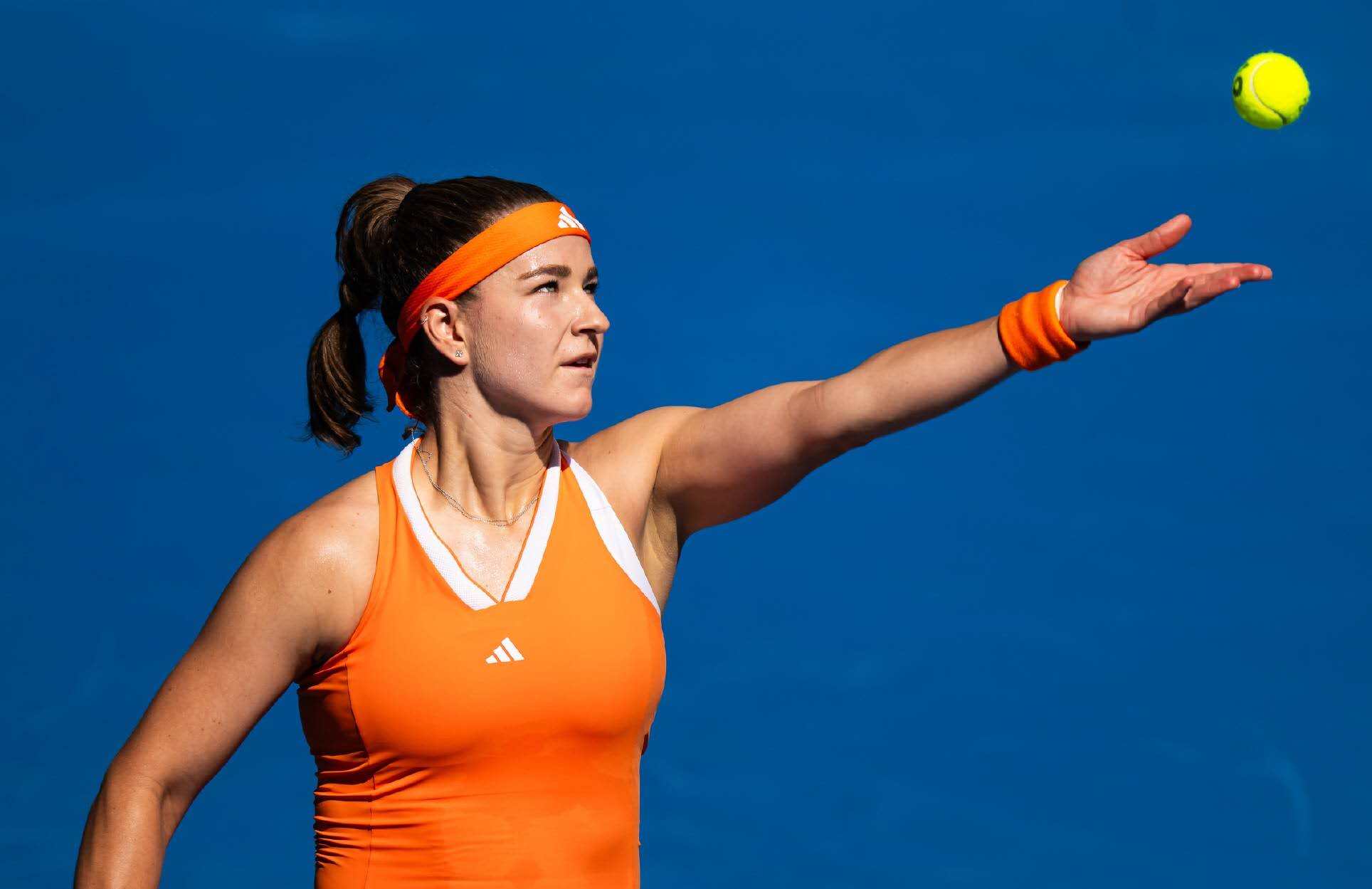
"Female Nadal" vs. "Female Federer"—some netizens have already labeled this matchup. Swiatek is known for her unstoppable spin and movement, resembling Nadal's style; Muchova is as effortless and随性 (free-spirited) as Federer. The collision of two截然不同 (completely different) tennis philosophies注定 (is destined) to be a visual feast.
Regarding this,著名网球记者 (famous tennis journalist) Jon Wertheim wrote on social media: "Federer has retired, but his name remains the highest praise in tennis. Calling someone like Federer is the ultimate recognition of creativity, elegance, and talent. Swiatek saying Muchova is like Federer is genuine praise—she acknowledges Muchova's exceptional talent, even though her own match record is advantageous."
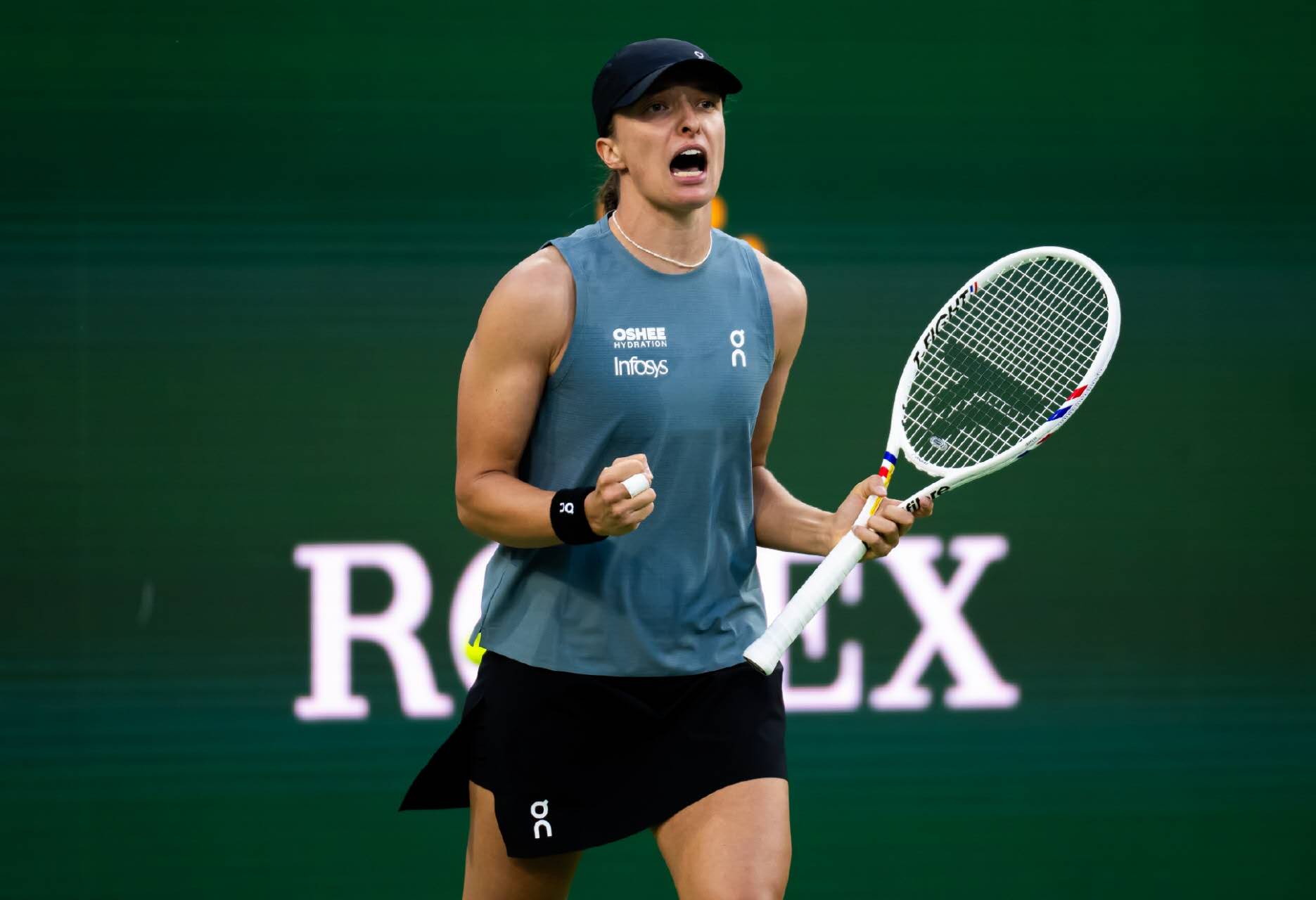
Netizen comments were同样热闹 (also lively): Some said, "Female Federer vs. female Nadal? This match ticket is worth it!" Others said, "Muchova's playing style is indeed unique; the most Federer-like active player in men's singles is Dimitrov, and in women's singles, it's Muchova."还有网友表示 (Some also said), "Swiatek's情商 (emotional intelligence) is high; praising an opponent like this means losing isn't embarrassing and winning gains more面子 (face)."
Regardless of external热议 (heated discussion), the match will ultimately be decided on the court. Muchova just broke her mental barrier,信心正处于巅峰 (confidence is at its peak); Swiatek is world number two and maintains a psychological advantage over Muchova.
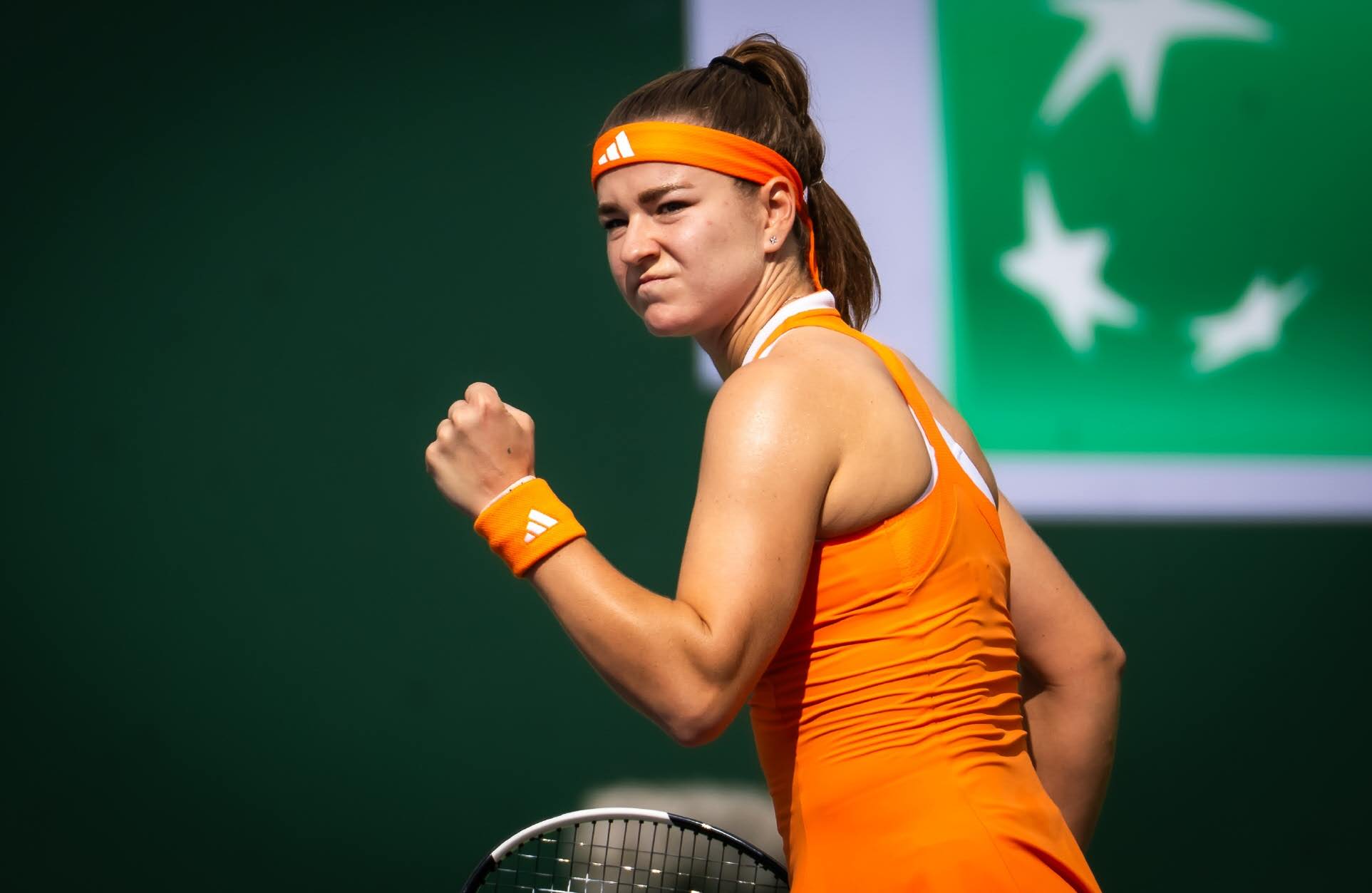
Netizens have already提前为波兰人打了预防针 (pre-warned the Polish player), stating that Swiatek needs to guard against Muchova's神来之笔 (magical strokes) on关键分 (key points), especially her changes from front to back on the baseline, rather than only focusing on baseline拉锯战 (grinding battles). Although the match hasn't started, it can be foreseen that this is not just a ranking较量 (contest), but a对决 (duel) between "wisdom" and "power," "灵动" (agility) and "稳定" (stability).
Tomorrow at Indian Wells, Federer won't appear, but his "successors" will take turns上场 (taking the stage).(Source: Tennis Home Author: Lu Xiaotian)

 Links
Links
 Contact
Address:UNIT 1804 SOUTH BANK TOWER, 55 UPPER GROUND,LONDON ENGLAND SE1 9E
Number:+85259695367
E-mali:[email protected]
 App
App


