



Medvedev claims he is currently very aggressive, while Pavlyuchenkova says she initially disliked Sharapova's aloofness.



The Indian Wells Masters is fiercely contested. After reaching the semifinals, former world No. 1 Daniil Medvedev is quite pleased with his current state,直言 stating that when he is in peak condition, he is an aggressive player hard for opponents to crack. At the same time, Russian fellow Anastasia Pavlyuchenkova reminisced about the difficulties of starting her professional career, exposing the "icy, aloof" environment in the WTA locker room during the early days.

After making it to the semifinals at the Indian Wells Masters this week, Medvedev gave a confident assessment of his current form. The former US Open champion emphasized that when he is performing at his best, the stereotype of him as a "defensive player" is completely inaccurate.
“When I play at this level, I am tough to beat because I serve well, can produce winners when needed, and defend excellently,” Medvedev explained in his post-match interview. He further elaborated on his unique playing philosophy: “I have a fairly complete game style, sometimes opponents find it hard to figure out a solution... When I am confident, I am an aggressive player.”
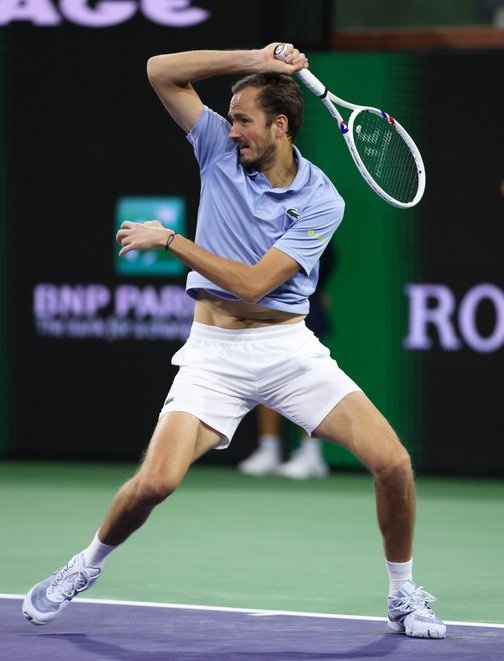
To support his point, Medvedev specifically mentioned his match data against purely offensive players. “If you look at my matches reaching Grand Slam finals, facing opponents like Rublev or Alcaraz who are extremely aggressive, I actually hit more winners than them,” Medvedev explained. “That’s because I defend well, can suppress their winners, but I also attack when opportunities arise.”
The Russian also revealed key indicators for judging his own form. “I switch to defense only when I’m not playing well, but it’s not a choice; it happens because my ball speed drops slightly and my first-serve percentage decreases,” he admitted. “When I hit the ball like I am now, I can be aggressive, apply pressure on opponents, while maintaining solid defense. That’s why it’s difficult to play against me.”
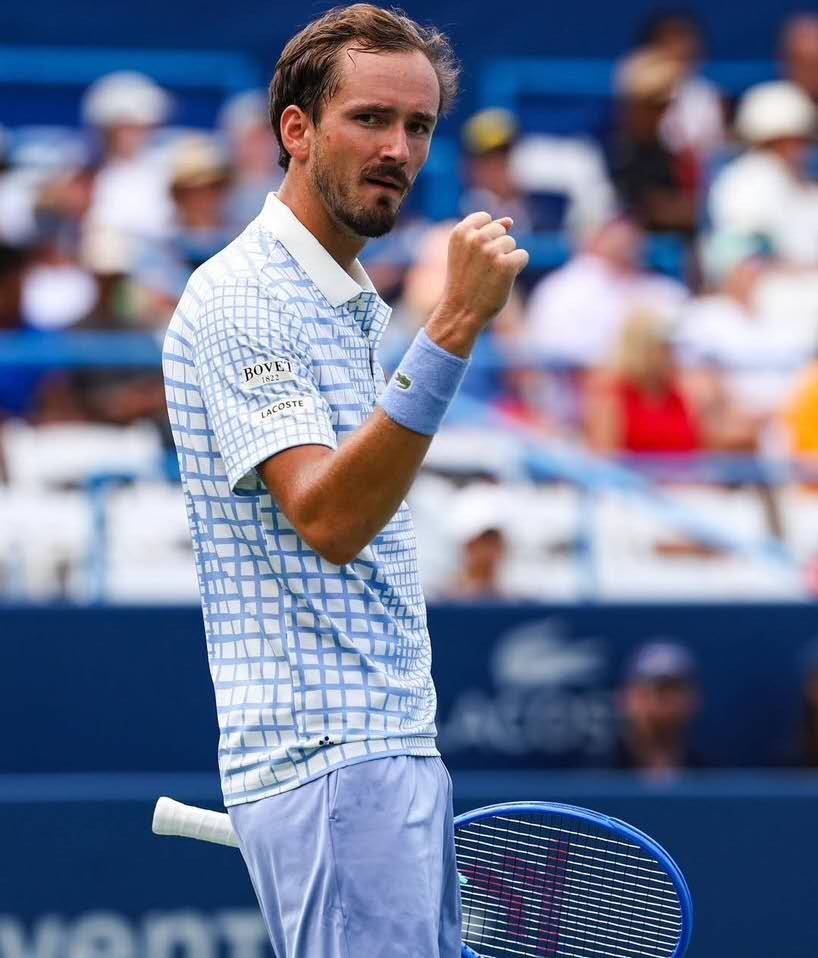
These remarks sparked lively discussions among tennis fans. A netizen commented on social media: “This is Medvedev’s most terrifying aspect—he can force errors through defense, then suddenly switch from defense to offense.” Another fan noted: “When his first serve is on, he can indeed be anyone’s nightmare.” External analysis suggests Medvedev is trying to move away from the long baseline grind battles of the past, adopting more proactive early strikes to counter the challenge of the new generation. Hall of Fame member John McEnroe once described him as “a chess master on the court.”
While men's tennis debates technical styles, the “ interpersonal relationships” in women's tennis also became a topic. Russian star Anastasia Pavlyuchenkova, reflecting on her career, opened up about the locker room culture she encountered when transitioning to professional tennis early on,直言 it was an “ unwelcome” experience.

“When I moved from juniors to professional, they immediately made me feel unwelcome. Just a glance was enough,” Pavlyuchenkova recalled the past, her words still conveying the sense of alienation.
She specifically mentioned the iconic figure of that era, Maria Sharapova. “Sharapova gave the impression of someone who didn’t look at anyone, didn’t talk to anyone—and there were many such people back then,” Pavlyuchenkova described. This reflected the prevalent tense atmosphere in the WTA tour during that period, with a noticeable distance between top players and younger competitors.
However, Pavlyuchenkova also pointed out that times have changed dramatically. “The atmosphere now is quite friendly, people communicate, it’s normal. There are no more those cold, distant queens,” she expressed欣慰. “Of course, there are still some differences, but overall, everyone gets along quite well.”

These remarks sparked widespread discussion among fans. A veteran tennis commentator noted: “The Sharapova era represented a ‘focus culture’ in professional sports, but it indeed created interpersonal barriers. Nowadays Gen Z players are more willing to socialize, and the overall WTA atmosphere is indeed more open.” A netizen also strongly agreed: “When watching matches back then, it felt like they were cold towards each other. Now seeing players taking selfies in the locker room, training together, it’s indeed more loving.” However, some fans joked: “Is the improved atmosphere because the competition isn’t as ‘cutthroat’? That aura back then was also what made them fighters.”
Medvedev will continue his journey at Indian Wells, striving to prove his declaration of being “hard to beat” with action; while Pavlyuchenkova’s recollections provide a真实 footnote for outsiders to glimpse the cultural evolution behind the scenes of professional tennis.(Source: Tennis Home, Author: Lu Xiaotian)

 Links
Links
 Contact
Address:UNIT 1804 SOUTH BANK TOWER, 55 UPPER GROUND,LONDON ENGLAND SE1 9E
Number:+85259695367
E-mali:[email protected]
 App
App


