



Draper loses point due to video challenge, collapses and fails to defend title: Discussing the rules of video challenge adjudication.



A controversial scene occurred in a men's singles quarter-final at Indian Wells yesterday morning Beijing time. When the set score in the second set reached 5-5, Medvedev, after hitting a shot into the net, believed his opponent Draper had interfered during the previous point and requested a video challenge.
After reviewing the video replay, the umpire determined that Draper indeed made a non-stroke interference action and awarded that point to Medvedev. Subsequently, Draper was broken, and then Medvedev smoothly held his serve, thus defeating Draper 6-1, 7-5.
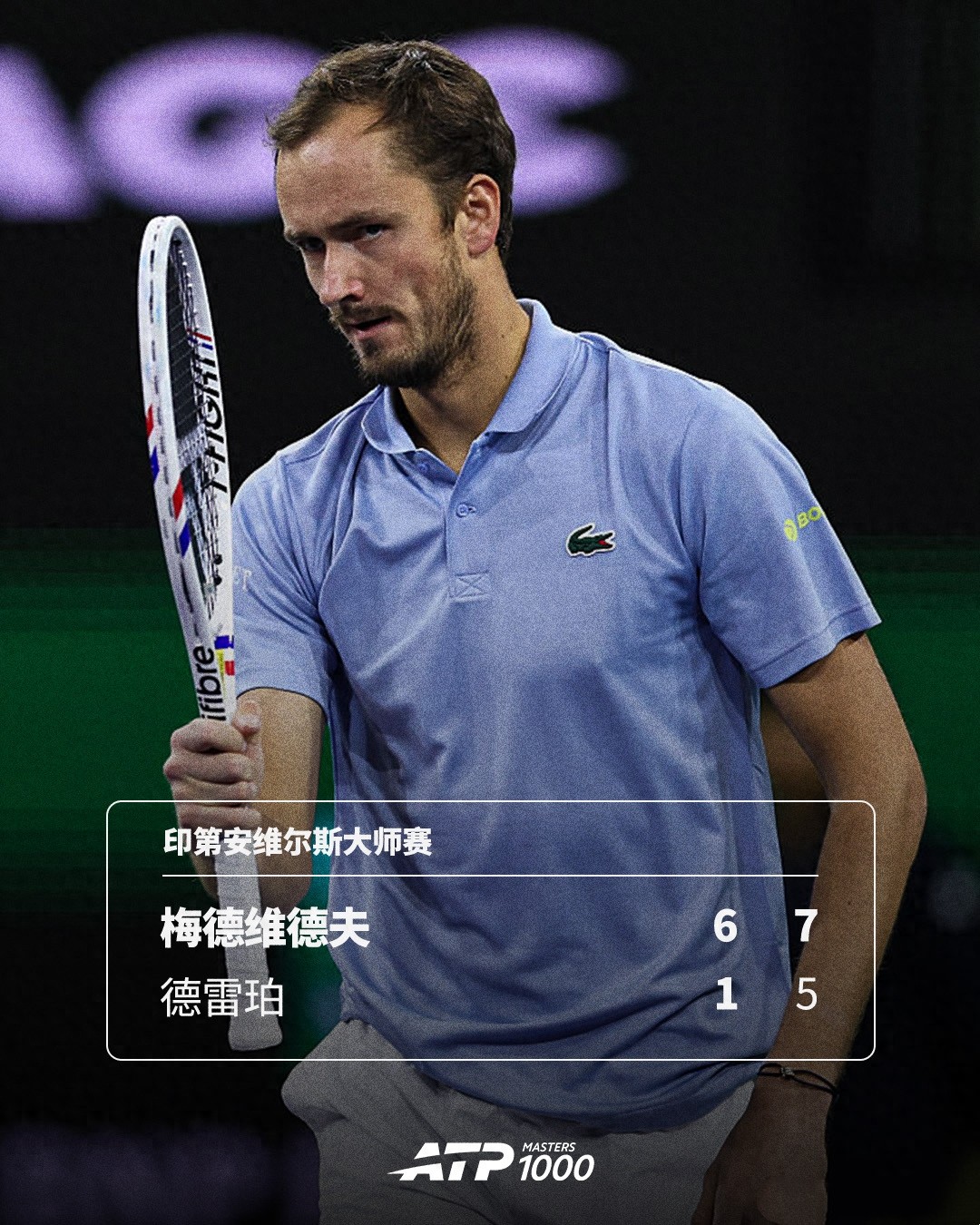
The specific situation at that time was: Medvedev won the first set 6-1, and the second set reached 5-5. The 11th game was Draper's service game; he lost the first point, trailing 0-15. On the second point, Medvedev's return landed near Draper's baseline. Draper possibly suspected the ball was out; after hitting the ball, he made a shrugging gesture. At that moment, the electronic line judge did not call it out, the rally continued, and Medvedev hit the ball into the net after two more shots.
At this point, Medvedev requested a video challenge from the umpire, arguing that Draper's shrugging gesture constituted interference.
According to the video challenge rules, if a player believes the opponent has interfered, they can immediately stop play and request a video challenge. If the umpire, after reviewing the video, determines that the opponent indeed interfered, the challenger is awarded the point; otherwise, the point is awarded to the opponent.
Of course, a player can also request a video challenge after the point concludes, regardless of whether they lost the point due to their own error or the opponent's error. Generally, if the side claiming interference wins the point, they are less likely to challenge, perhaps only complaining to the umpire. If the side claiming interference loses the point, they are more likely to challenge because a successful challenge regains the point, and even if the challenge fails, they still lose the point, incurring no additional loss. In yesterday's match, Medvedev's challenge fell into the latter category.

Many question the timing of the challenge. Without electronic line judges, if a player believes the opponent's return is out or that an interference action occurred without the umpire's call, they must immediately stop play to be allowed to challenge; missing this timing forfeits the chance to challenge.
With electronic line judges, the rules regarding video challenges are: the challenger can immediately stop play to request a challenge, or they can finish the point before applying for a challenge.
Given the rules, the safest choice for the challenger is to finish the point before deciding whether to challenge. If they lost that point, a successful challenge retrieves it; a failed challenge still loses that point, with essentially no loss.
Medvedev thought this way and acted accordingly.
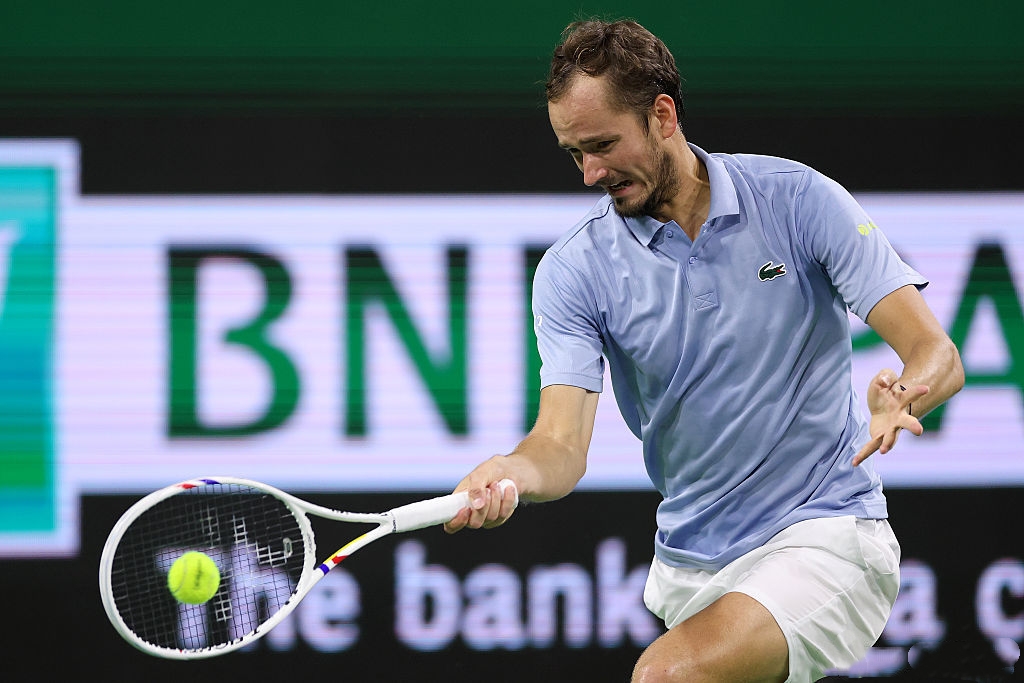
Understanding the rules on challenge timing, the next key point is to understand how to determine whether a player's action constitutes interference.
This rule is simple: it depends on whether the player's action is a normal part of the stroke motion. If the umpire considers it not a normal part of the stroke motion, it is judged as interference.
Therefore, after reviewing the video replay, umpire Toth immediately confirmed with Draper: "This action is not part of your normal stroke, right?"
Draper certainly understood what the umpire's words implied. He immediately stepped forward to argue, stating that the gesture was not exaggerated enough to interfere with the opponent, and then said many players make similar gestures in similar situations. Next, Draper called Medvedev to the net and asked if that gesture really interfered with him. Medvedev did not directly answer but retorted, "Why else would I challenge?"
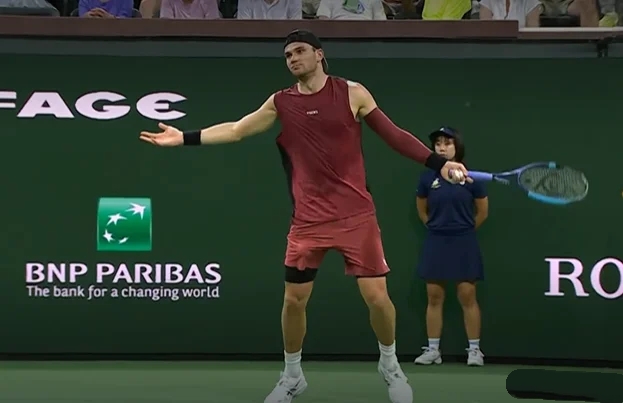
Facing a very unfavorable situation, Draper protested to the umpire: if there was interference, why didn't Medvedev challenge immediately on the next shot instead of waiting until the entire rally ended? After all, he didn't make an error on the next shot, indicating no interference.
The umpire explained the video challenge rules on-site to Draper, stating that the rules do not require immediate stoppage of the rally; they allow reviewing disputes in a rally after the point concludes.
At this point, Draper could only accept that the point was awarded to Medvedev. The score changed from potentially 15-15 to 0-30, and the entire audience booed.
Next, Draper won one point, advancing the score to 15-30. Subsequently, Draper lost two consecutive points, thus losing this crucial service game.
After the inter-game break, Medvedev lost only one point in his service game to win the match, converting the match point at 40-15 to end Draper's title defense journey.
Some fans might think that even if Draper's action interfered with Medvedev, the latter should have challenged immediately. Otherwise, allowing a challenge after several shots, especially after losing the point, seems to favor the player allegedly interfered with.
Actually, Medvedev had already seen the opponent's "non-normal stroke action" at that moment, indicating he was indeed interfered with. Being interfered inevitably affects subsequent shots; it cannot be said that no error on the next shot means no impact.
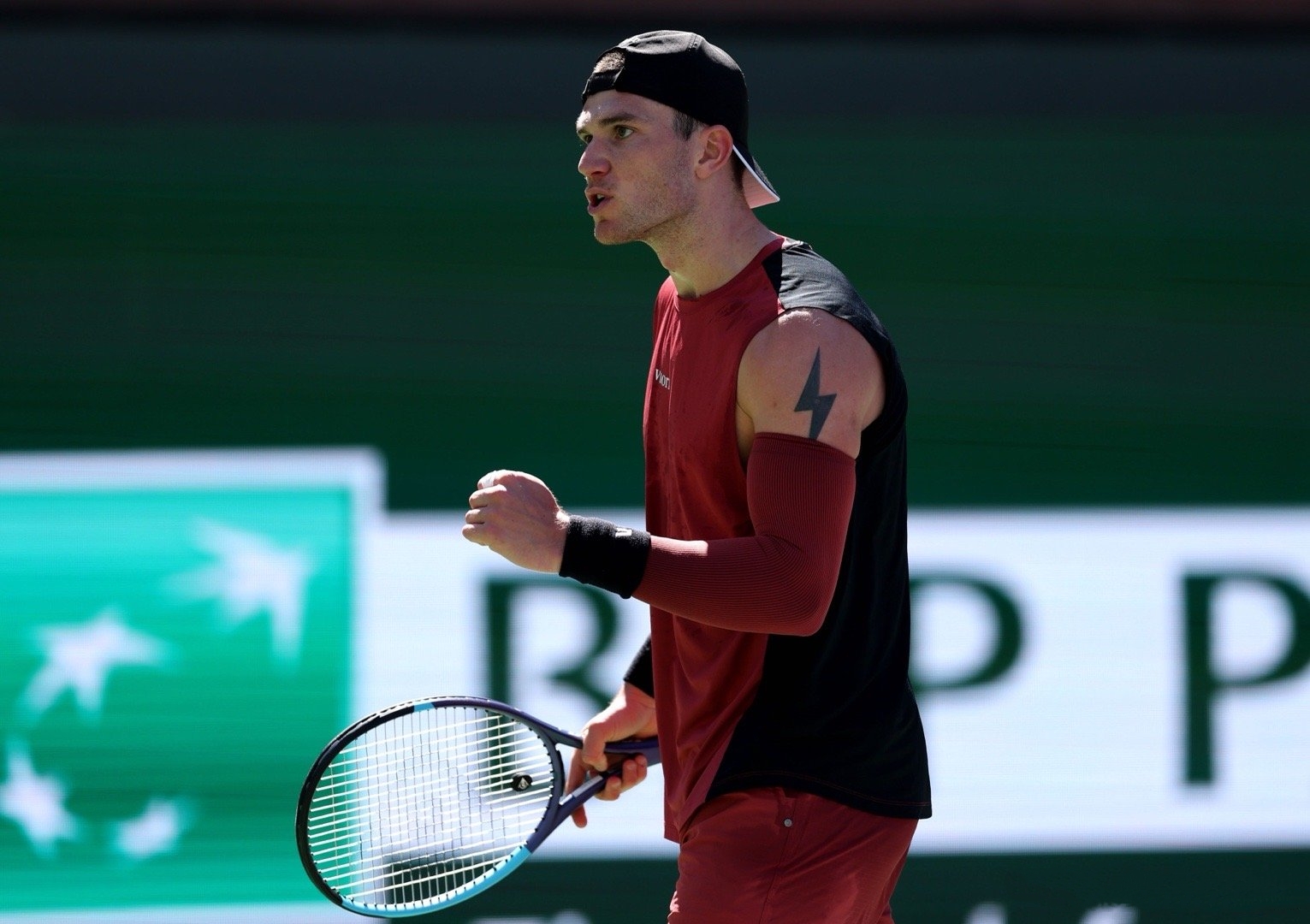
Some fans also consider this rule unreasonable. They believe that after confirming interference via video replay, the umpire should warn the interfering player and order the point to be replayed. If similar interference occurs later, then directly award the point loss, which might be more reasonable and fair.
In fact, non-subjective interference is adjudicated exactly that way. For example, if a ball accidentally falls from a player's pocket during a rally (not intentional), the umpire orders the point to be replayed. If the player drops a ball again, a warning is issued.
Draper's shrugging gesture clearly belongs to subjective interference. If not directly penalized with point loss but only changed to a warning, then Draper could intentionally make interfering gestures when the opponent is about to win a crucial point, trading a warning for a replay opportunity, which would be even more unfair.
What are your thoughts on the video replay challenge rules and this adjudication? Feel free to leave comments in the comment section.Source: Tennis Home, Author: Yun Juan Yun Shu

 Links
Links
 Contact
Address:UNIT 1804 SOUTH BANK TOWER, 55 UPPER GROUND,LONDON ENGLAND SE1 9E
Number:+85259695367
E-mali:[email protected]
 App
App


