



Iron Lady: With Zverev's current playing style, he will never be able to defeat Sinner and Alcaraz.


In the Indian Wells semifinals, Zverev only managed to win 6 games against Sinner. The embarrassment wasn't just the score; he failed to break serve throughout the match, securing only one break point. Post-match, the awkward record of his six consecutive losses to the Italian added to the humiliation. The score appeared utterly feeble, casting a more ironic light on his so-called "playing style reform." Is the change effective? Is it correct? These questions linger in the minds of many fans.

Regarding this, Martina Navratilova, the "Iron Lady," offered a notably stern technical dissection during an interview with Sky Sports.
"Zverev stands too close to the baseline; he lacks sufficient weapons to truly trouble Sinner," analyzed the 18-time Grand Slam champion. "I think his playing style lacks variety. He doesn't use backhand slice shots to force Sinner to come forward. He only makes his opponent run side to side, but lacks the touch to push him off the court. Sinner can play like this all day until he gains the upper hand in the rally, and from that point, the point is essentially over."
When discussing whether Zverev still has the ability to defeat Sinner or Alcaraz, Navratilova's response was even sharper: "He must deliver a perfect performance, and they must severely underperform to lose. With his current playing style, he will never beat them. They are slightly superior to him in every aspect. Especially in transition shots, this match clearly showed: Sinner came forward to volley at the net more frequently and won the point every time."
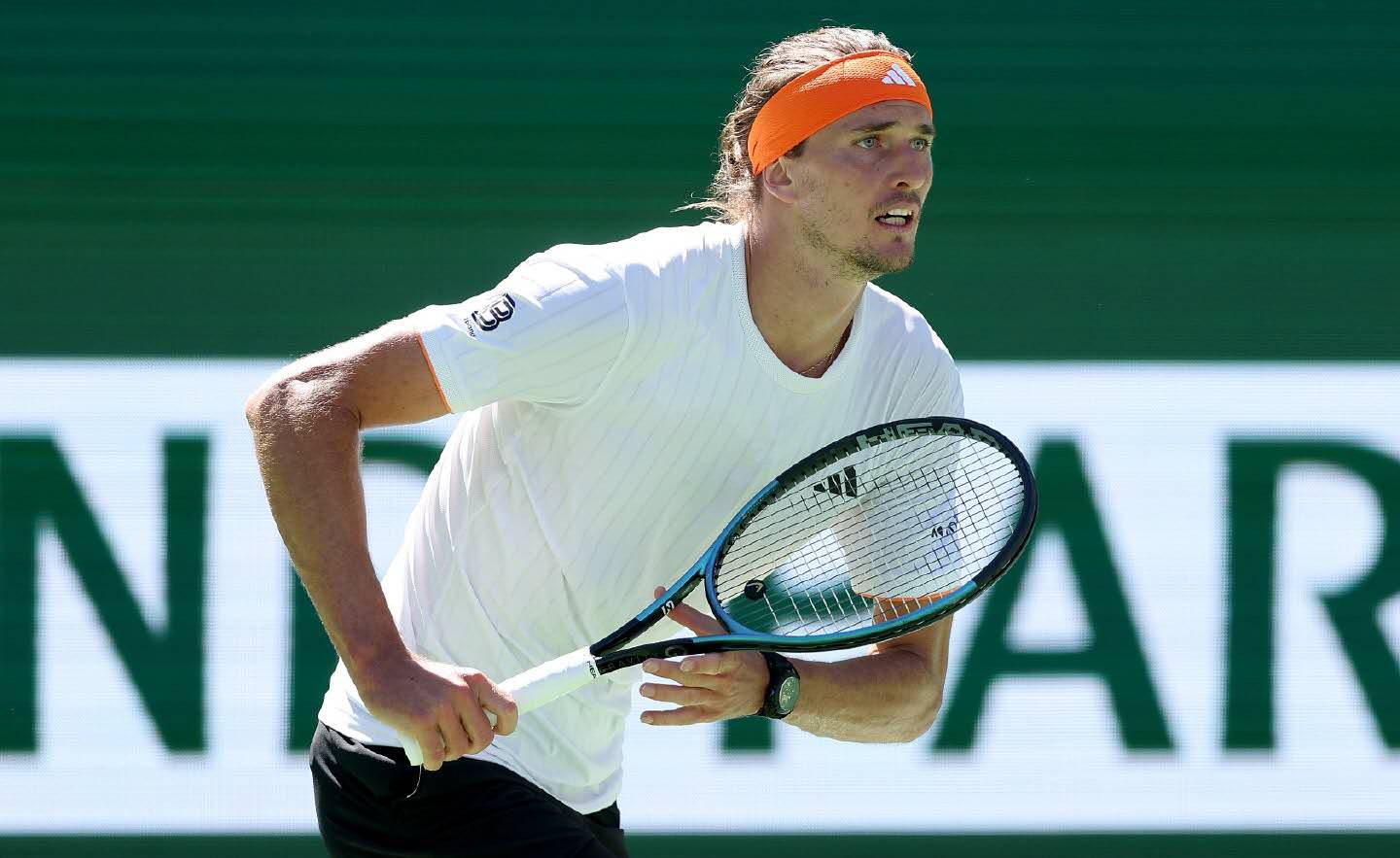
These words acted like a scalpel, precisely dissecting the core flaws in the German's technique.
In fact, for Zverev, "playing style reform" resembles a forward step taken while standing at the edge of a cliff. Over the past two years, results and statistics have clearly shown: using his previous methods, he cannot gain any advantage against Sinner and Alcaraz, nor can he win a Grand Slam title. Moreover, at Zverev's current age, his physical fitness cannot sustain his exhausting defensive style. Therefore, change is inevitable, but how to change remains a contentious topic.
Reflecting on the Indian Wells semifinal, Zverev abandoned his usual "conservatism." After serving, he resembled a shark sensing blood, advancing a step after each shot. On the third shot, he unleashed a near-line-crushing forehand cannon to the corner. Following the old script, he would have retreated, waiting for Sinner's return, then entering a prolonged baseline grind.
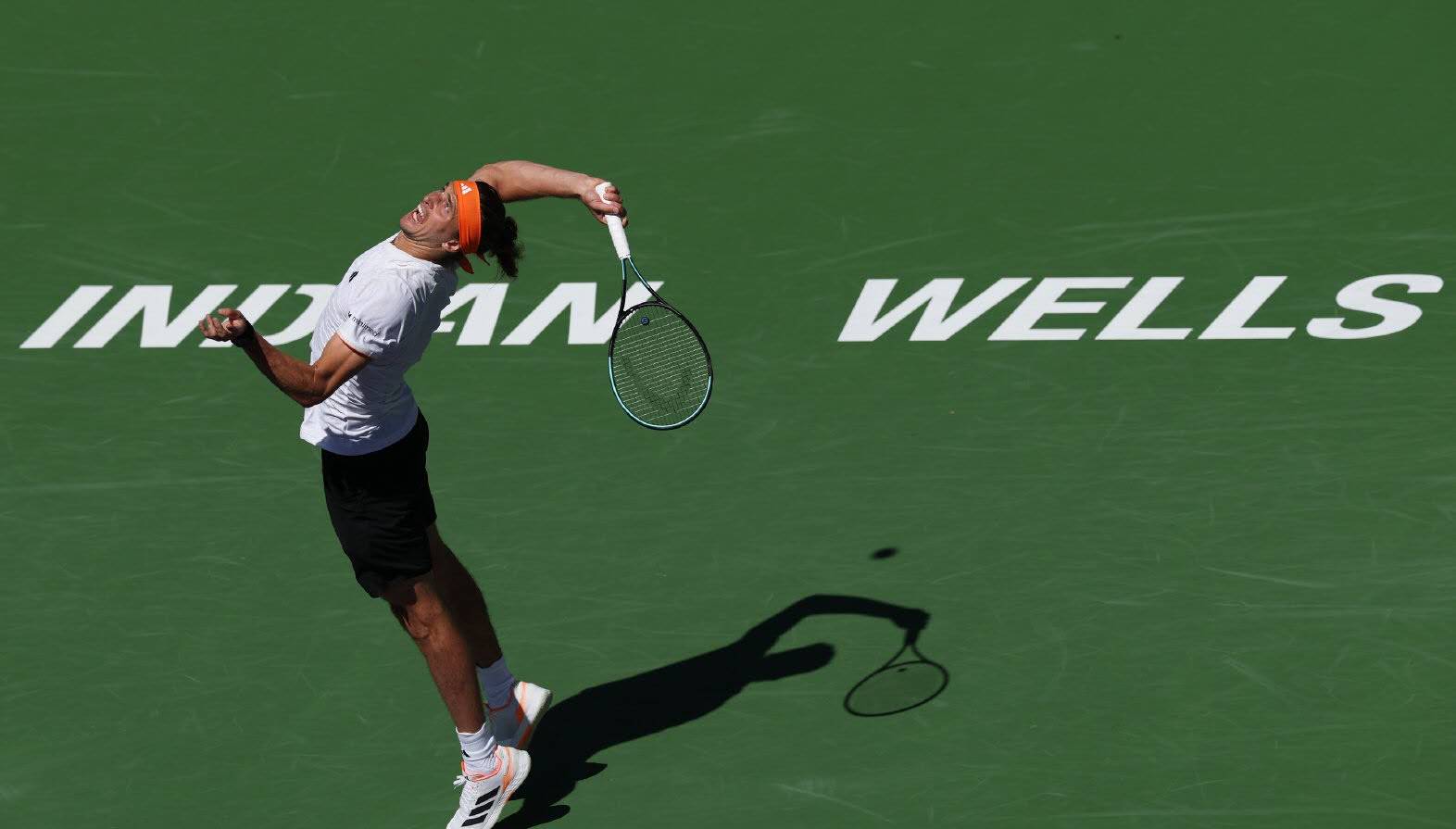
However, "having momentum doesn't necessarily equal scoring points"; instead, it might lead to losing points due to one's own "recklessness" and impatient errors. This match precisely validated this viewpoint. Zverev didn't fall behind in baseline exchanges, but his error rate at crucial moments remained high. This resembles the paradox between "attack and defense": being proactive means errors, being cautious means conservatism and being dominated by the opponent.
When examining the technical statistics, everything恰好 confirmed Navratilova's observations.
Zverev's backhand side,一向 known for its steadiness—the weapon criticized by the Iron Lady for "not using slice enough"—produced 3 winners in this match, but also delivered a staggering 15 unforced errors. His forehand errors, however, were only 3.
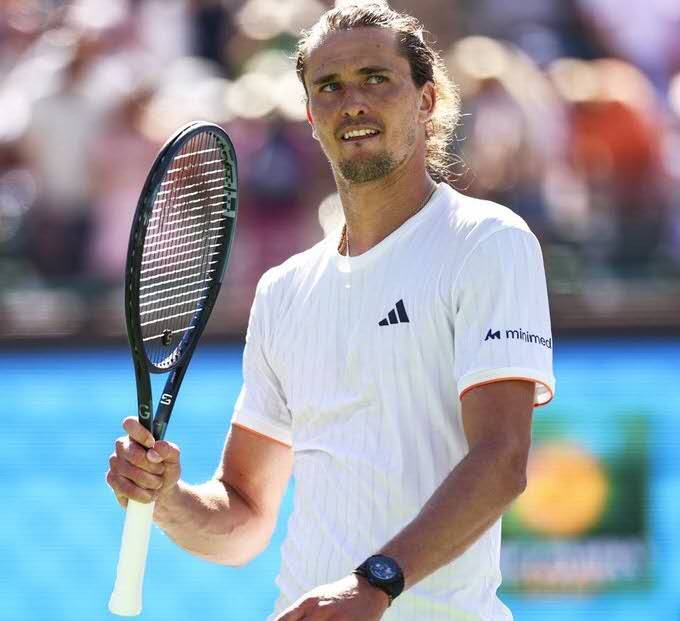
This wasn't a lapse in form, but a shift in strategic focus. After the "Iron Lady" pointed out his lack of variety, Zverev evidently attempted to make adjustments on his backhand side. He wanted to增加 slice, advance to attack aggressively, and use more diverse weapons to disrupt Sinner's rhythm. But Sinner didn't give him the chance. The Italian used airtight deep baseline shots to turn every Zverev冒险 into a suicidal charge. The more he tried to move forward, the more he missed his timing; the more he tried to change, the more he lost his rhythm.
Regarding this, Navratilova stated: "He确实 wants to change, which deserves respect. But change requires time, and Sinner and Alcaraz won't give you time. Today's match proved that attempting to challenge the top tier with a半成品 state comes at a painful cost."
Tennis legend Becker was even more incisive during commentary: "When facing a player like Sinner, if you强行尝试 unfamiliar tactics, the result is只有一个: your errors will double compared to usual. Sascha wasn't playing tennis today; he was battling his inner demons."

Former Australian Open finalist Baghdatis posted on social media: "I saw a different Sascha. The score was ugly, but his choices were interesting. This is the pain of growth, better than stagnating."
Discussions in fan communities were even more polarized. Fans supporting the变革直言: "Has Zverev figured it out? Rather than being worn down,不如 fight to the end.虽然 he lost, it looked much more spirited than those timid baseline exchanges before! The Iron Lady is right, he must change, even if it means paying some学费."
Others冷嘲热讽: "Is this the传说中的 'suicidal assault'? Making errors and giving away points first—is this his response to the Iron Lady's criticism? 15 backhand errors,这叫改进?这叫找死."
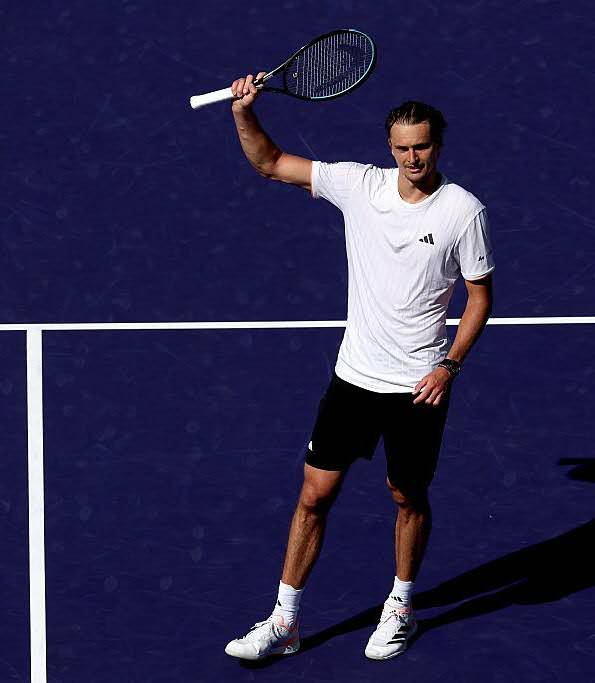
The中立派 viewed it more通透: "Actually, the Iron Lady's words, though刺耳, pinpointed the core issue. Sinner has now established his own 'territory'; his movement, attack, and defense are almost flawless. If Zverev doesn't change, he's waiting to die; if he changes, he's seeking death. But the question is, in competitive sports, does one choose to die fighting with dignity, or be磨死 in humiliation?"
The six consecutive losses record is固然冰冷, but when Zverev walked through the player tunnel with his bag, his eyes或许 were more complex than after any previous惨败. He lost the match, but he might be trying to win back himself. Navratilova说得固然对; he确实 is很难击败 Sinner currently. But if Zverev continues坚持 this painful重塑之路,谁知道 what the future holds? Perhaps only time can give us the answer.(Source: Tennis Home Author: Lu Xiaotian)

 Links
Links
 Contact
Address:UNIT 1804 SOUTH BANK TOWER, 55 UPPER GROUND,LONDON ENGLAND SE1 9E
Number:+85259695367
E-mali:[email protected]
 App
App


