



Alcaraz's new tattoo sparks a clash of values between two generations



Yesterday, world number one Alcaraz, who is preparing for the Miami Masters, posted a series of new photos on social media, officially announcing his latest tattoo: a cute little kangaroo. This little kangaroo quietly rests on the front side of his left calf, positioned discreetly, almost completely covered by his tennis socks.

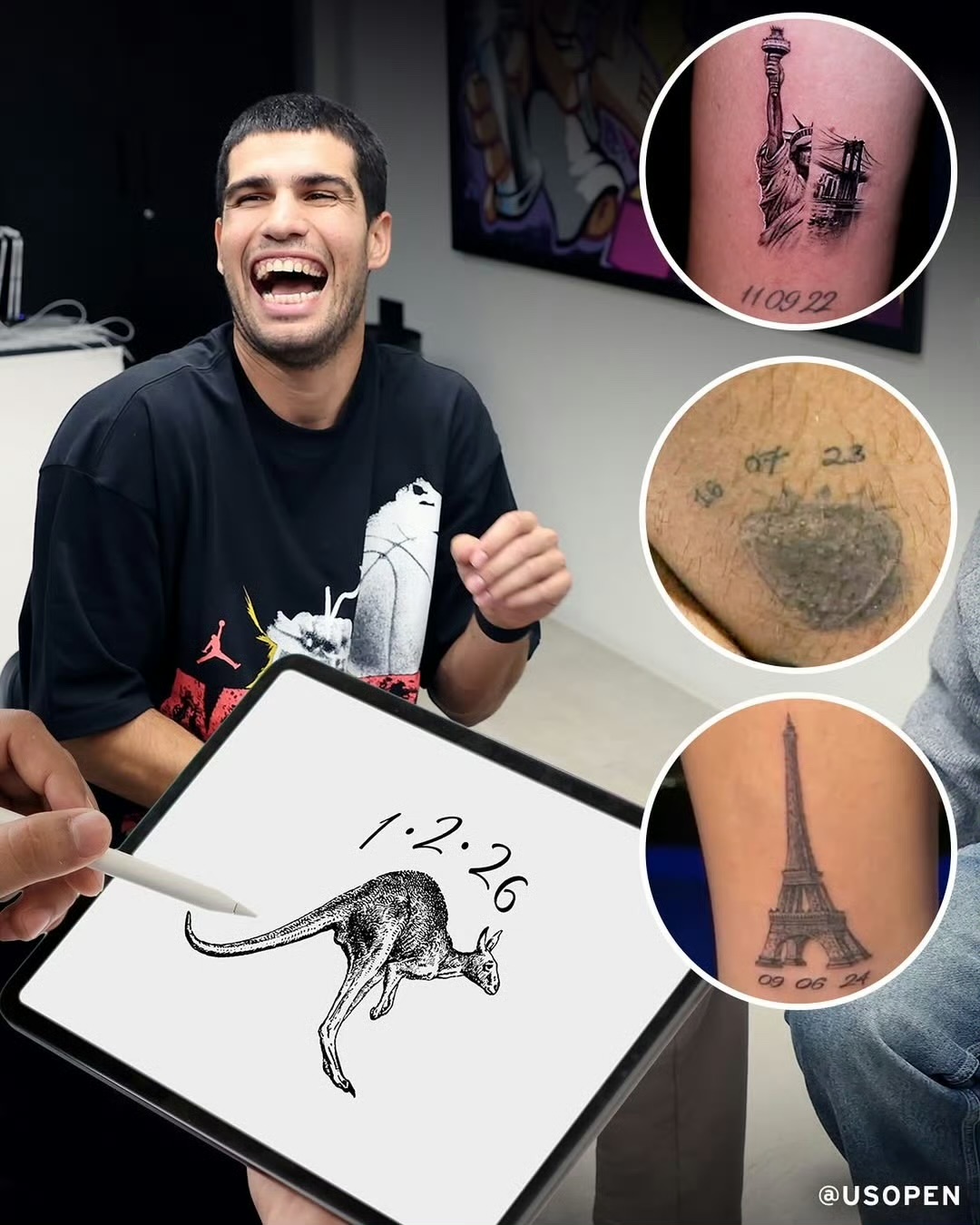
This ink mark is a gift Alcaraz gave himself for winning the Australian Open. In the men's singles final of this year's Australian Open, Alcaraz defeated legendary star Novak Djokovic, not only lifting the trophy at Melbourne Park for the first time but also becoming the youngest Grand Slam champion in tennis history at the age of 22. After the match, he revealed that he would use Australia's national treasure, the kangaroo, to commemorate this glorious moment.
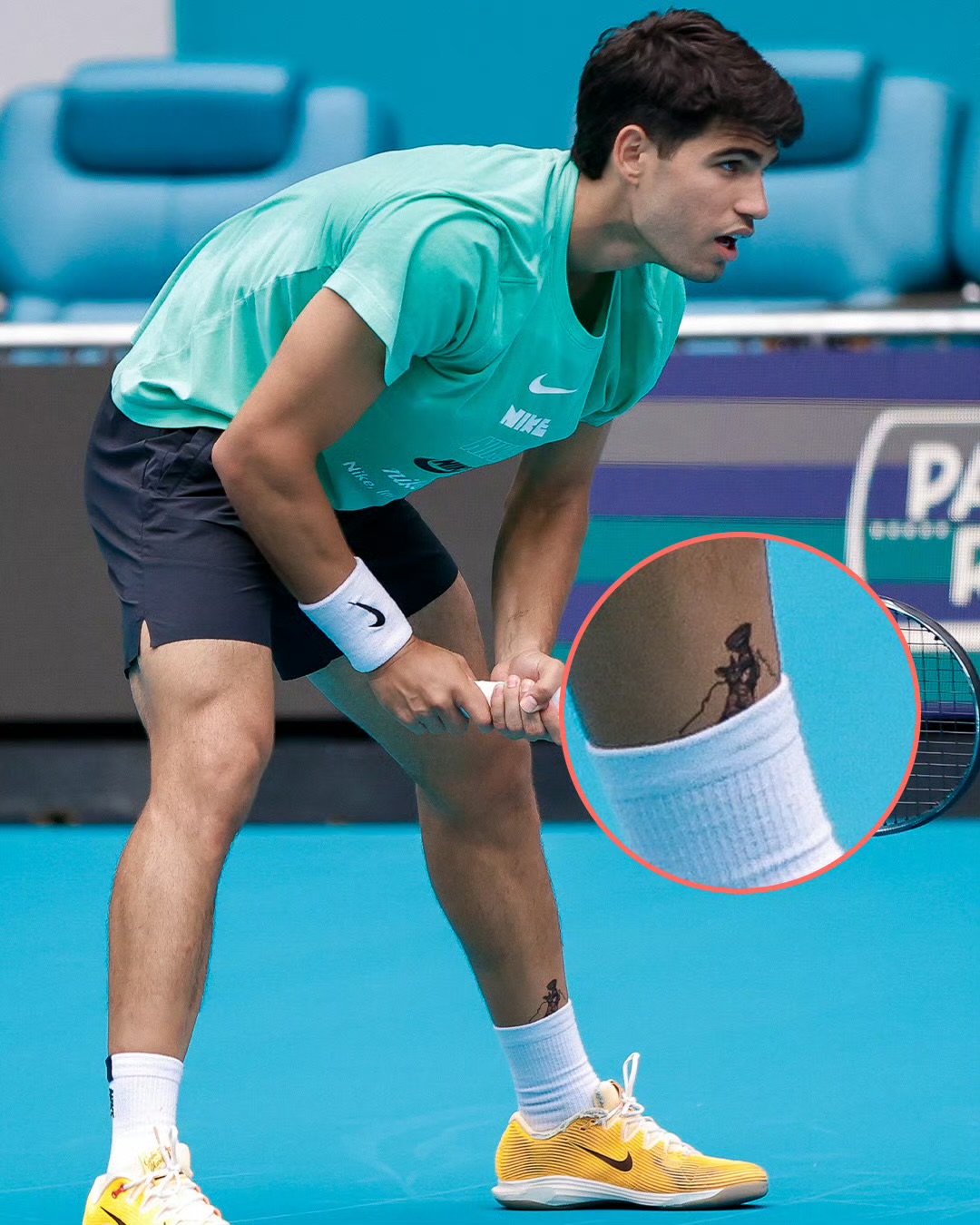
For Alcaraz, using tattoos to etch honors has long become a tradition full of ritual significance. Looking through his body's collection is like reading a condensed personal championship history:
· The Wimbledon victory record is left on his ankle, a strawberry symbolizing the "strawberries and cream" tradition, with the date fixed on July 16, 2023;
· The red clay of Roland Garros transforms into the Eiffel Tower on his left ankle, recording his French Open coronation on June 9, 2024;
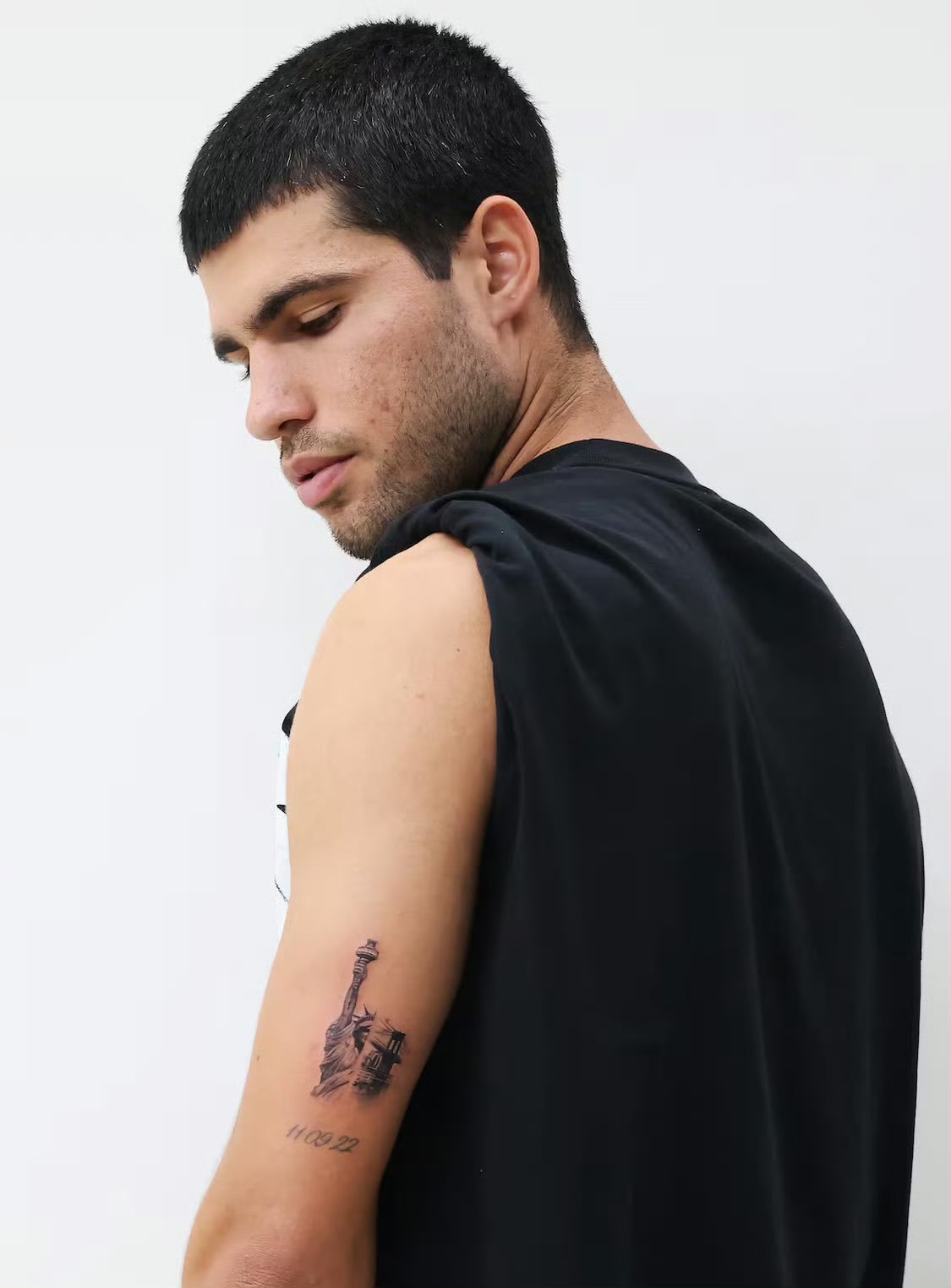
· New York's Flushing Meadows is witnessed by the Statue of Liberty and Brooklyn Bridge on his arm, commemorating his two US Open triumphs;
Besides these major tournament commemorations, he also carries a life motto given by his grandfather—the three "C"s representing "head, heart, and courage."
However, not everyone around this 22-year-old young man fully embraces this unique hobby. Alcaraz's coach, former tennis star Lopez, publicly expressed his disapproval, staging a humorous clash over generational aesthetics.

It is reported that Lopez feels quite helpless about his disciple's habit of adding ink to his body, even issuing a stern remark: "I don't like tattoos at all. I've already told him, next time he gets one, I'll forcibly remove it for him." The coach used seemingly exaggerated language to express his puzzlement over the young man's behavior, complaining: "Young people nowadays ruin their skin with these graffiti-like tattoos. If this continues, they might even fail to find jobs like cutting olive trees."
This "cutting olive trees" jest is filled with typical Spanish humor and rustic flavor. In the older generation's view, having clean skin is essential for engaging in traditional manual labor and living a steady life. Tattoos, in their eyes, might still be seen as unconventional and incompatible with mainstream professional norms.
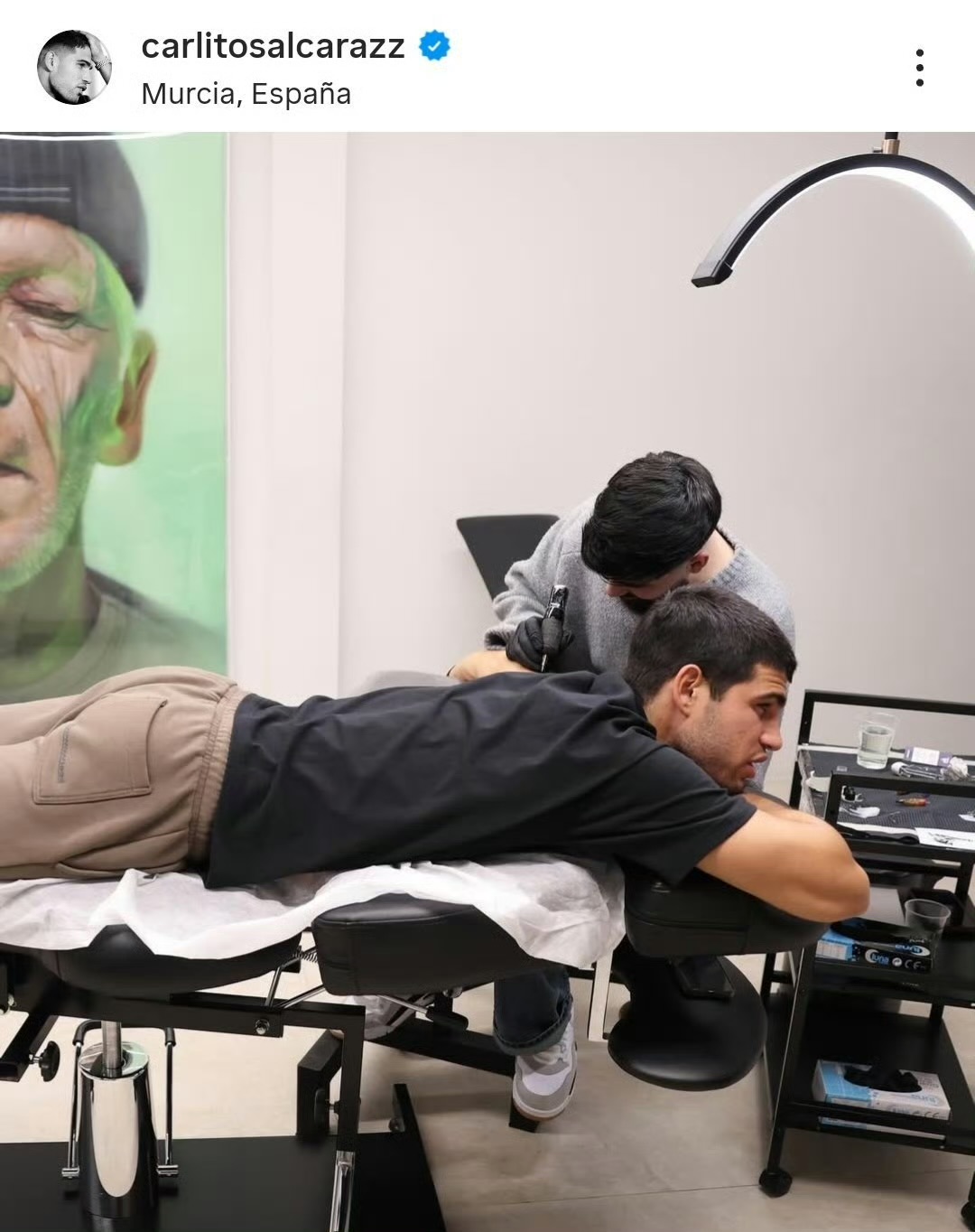
Facing his coach's "threat" and his parents' concerns, Alcaraz actually has a strategy. Previously in an interview, he reassured his family, stating that he is very restrained: "No, absolutely not (on the face). I choose very discreet locations, not on the face or between the thighs, for instance. And they are relatively small, medium-sized tattoos. So this doesn't raise any 'red flags'; everything is under control."
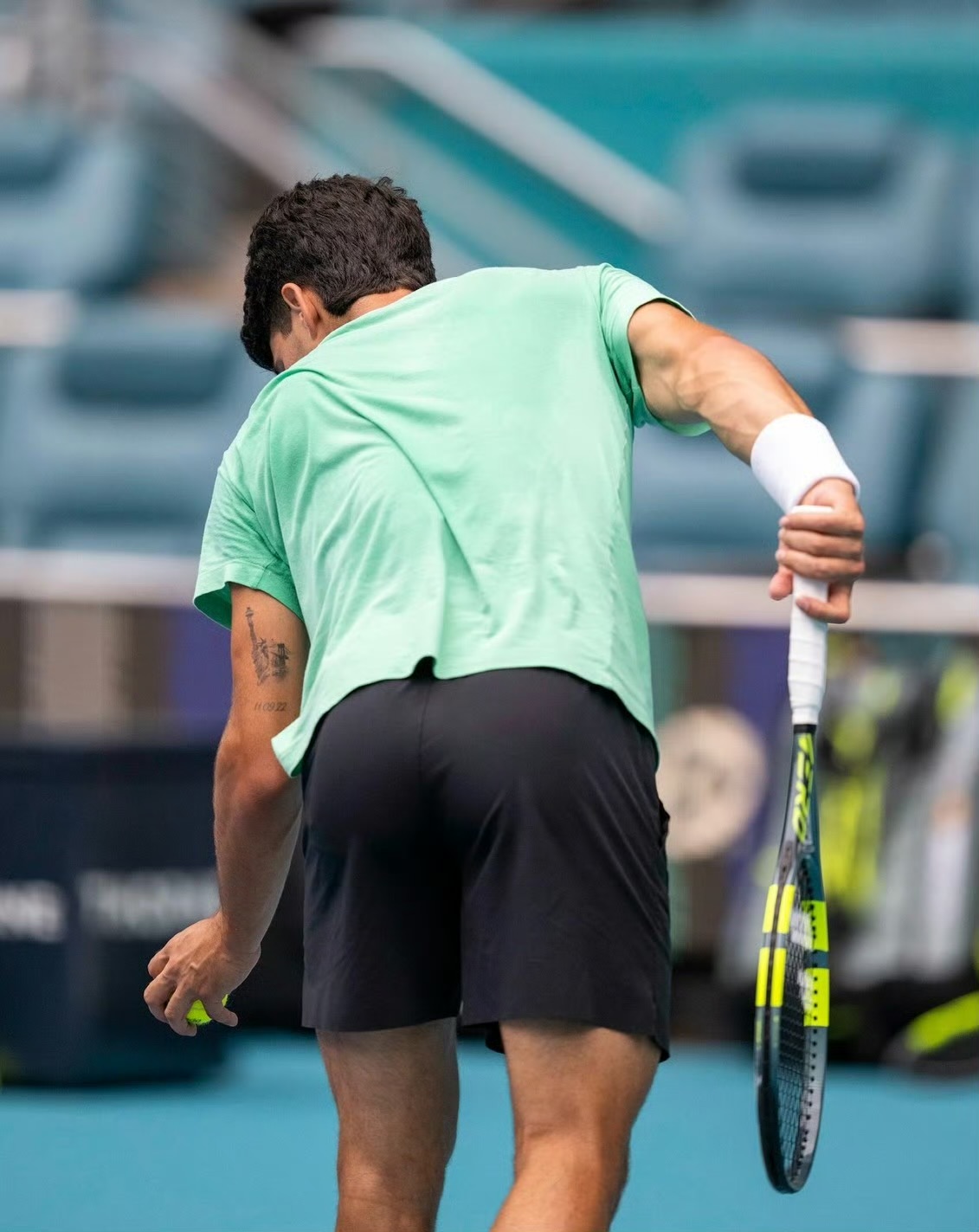
Indeed, as he himself said, whether it's the strawberry on his ankle, the tower on his calf, or now this kangaroo hidden by his sock, Alcaraz's tattoos follow the principle of "discreet, concealable, meaningful." This satisfies his emotional needs as a young person to express himself and etch memories, while also considering the commercial image and competition requirements of a professional athlete—after all, the elegant sport of tennis doesn't require full-body tattoos to showcase individuality.
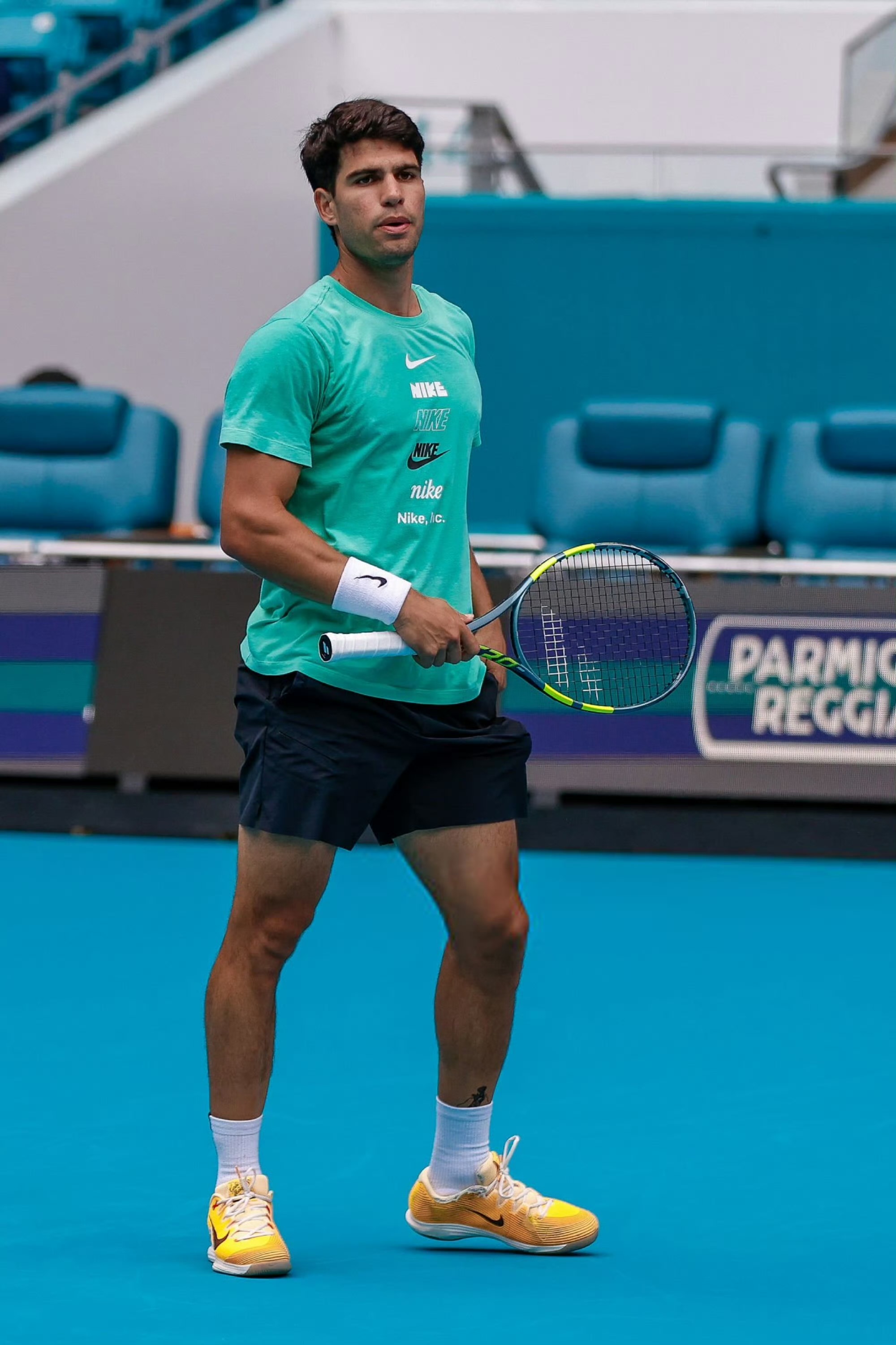
This small "controversy" over tattoos is more a benign clash of values between two generations than a real conflict. Lopez's "forcibly remove it" is clearly a joke, reflecting paternal-like care and a teasing "wishing he were better" attitude toward his disciple; while Alcaraz's persistence embodies the new ways Z-generation athletes seek personal expression within professional frameworks.
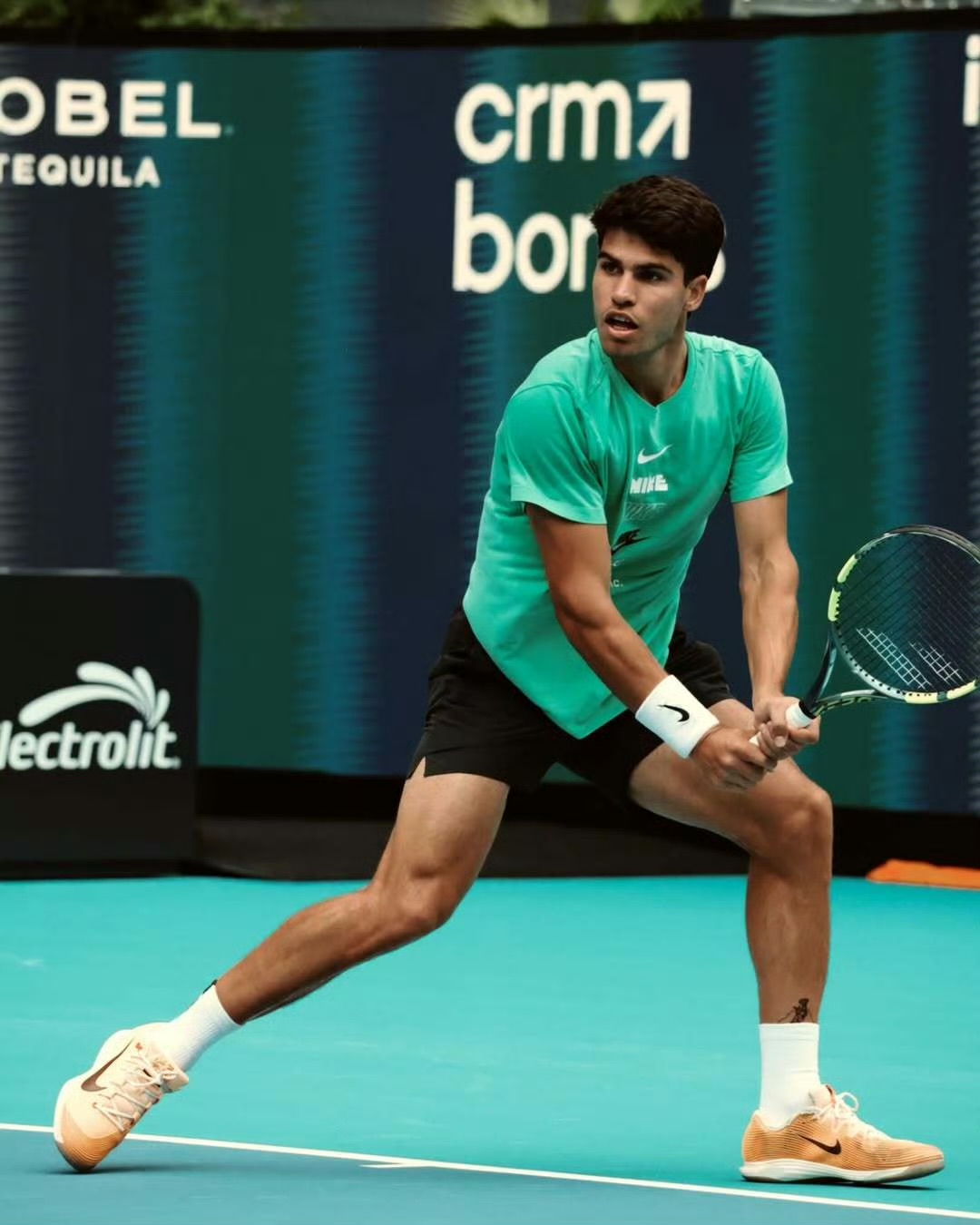
Now, the little kangaroo is officially on his leg. Although Coach Lopez might still frown upon it, on the training court, when he sees this small tattoo representing another milestone for his disciple, a smile might curl at the corner of his mouth. After all, for competitive sports, as long as the champion's blood still surges, those ink marks on the skin are merely the most vivid footnotes in the legend. And for Alcaraz, there is plenty of space left on his body; the next one might wait until he wins the ATP Finals or achieves a Golden Slam.(Source: Tennis Home Author: Mei)

 Links
Links
 Contact
Address:UNIT 1804 SOUTH BANK TOWER, 55 UPPER GROUND,LONDON ENGLAND SE1 9E
Number:+85259695367
E-mali:[email protected]
 App
App


